
Moret at Sunset — History & Facts
A hush settles over the river at the hour when the day’s last light lingers, and it is this hush that Alfred Sisley captures in Moret at Sunset. The eye is drawn first to the pale, expansive sky, its surface streaked with strokes of rose and blue, suggesting the fading warmth of the sun just below the horizon. The river, a mirror for the sky, carries the colors downward, doubling the sense of calm and enclosure.
Across the water, the clustered houses and the arched bridge are rendered with a softness that blurs the boundary between architecture and nature, while the tall trees, their leaves touched with gold, stand as silent witnesses to the closing day. This painting belongs to the world of late nineteenth-century Impressionism, a movement that sought to capture the fleeting effects of light and atmosphere rather than the fixed details of a scene. Painted in 1888, Moret at Sunset exemplifies the kind of quiet, everyday poetry that Sisley found in the French countryside, far from the bustle of Paris. Such works were rarely grand commissions; instead, they were often painted for a growing market of middle-class collectors eager for scenes of rural peace and modern light.
History has kept few traces of this particular canvas’s journey, but its gentle radiance invites us to pause, breathe, and see the world as Sisley saw it—moment by moment, color by color.
More Artworks by Alfred Sisley
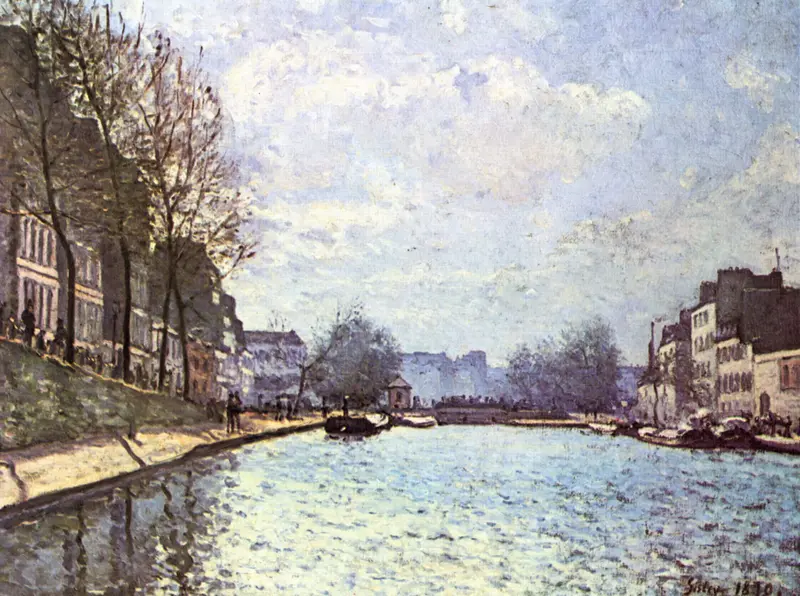
View of the Canal Saint-Martin
Alfred Sisley

Le Loing à Saint-Mammès
Alfred Sisley
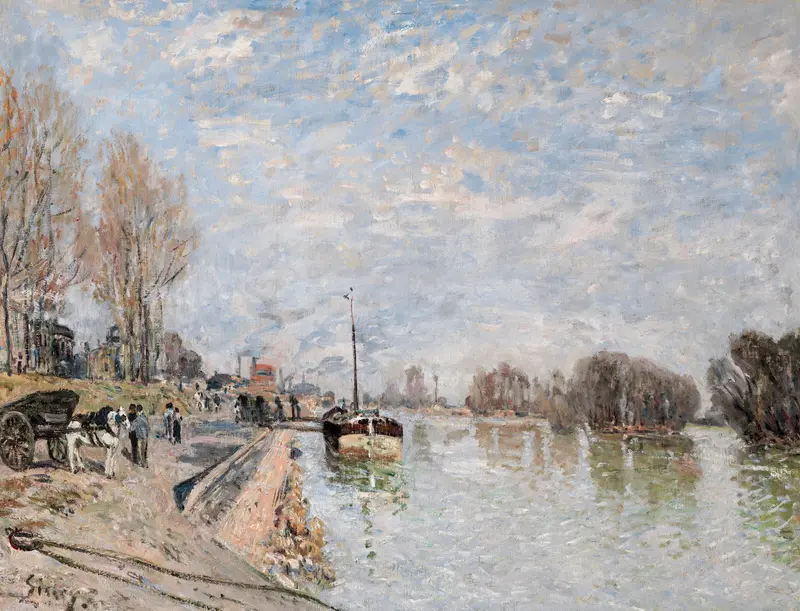
La Seine à Suresnes
Alfred Sisley
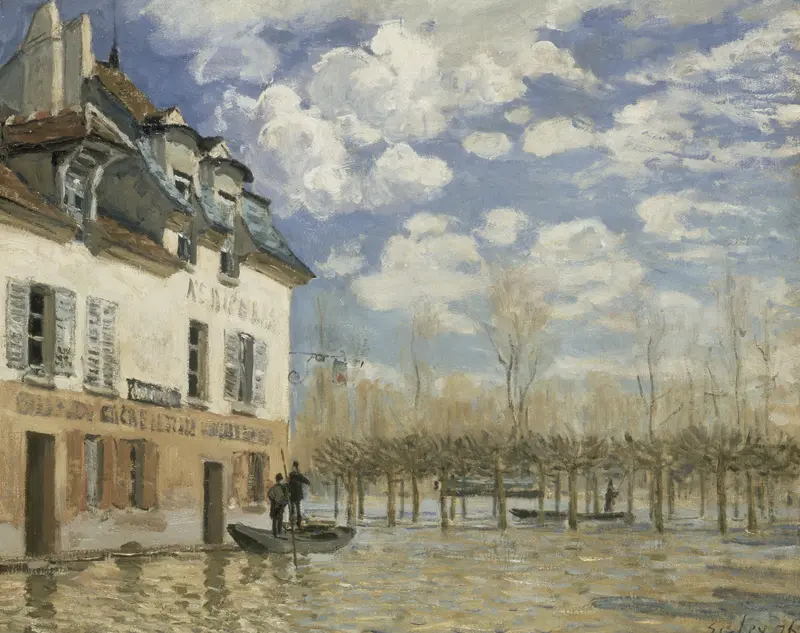
Boat in the Flood at Port Marly
Alfred Sisley
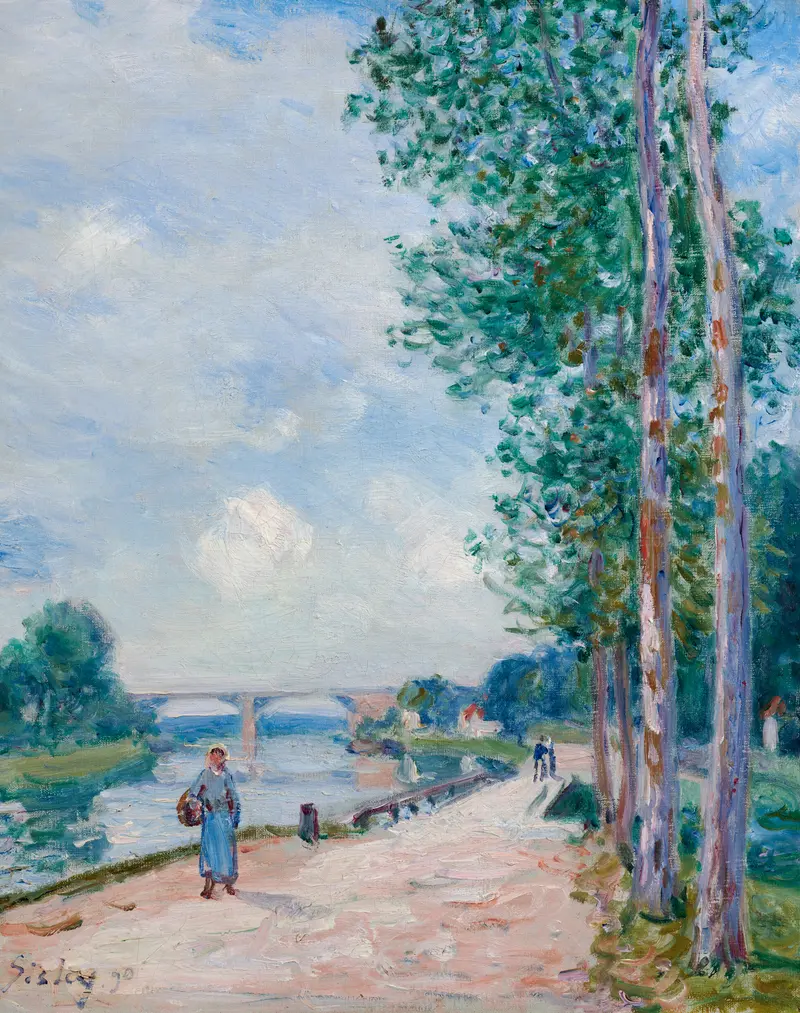
Les bords du Loing près de Moret
Alfred Sisley
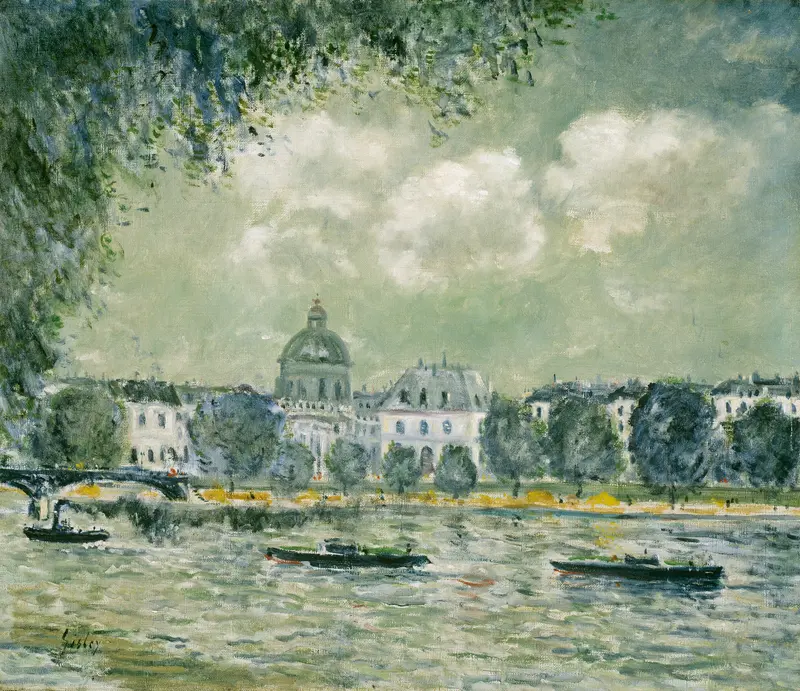
Landscape along the Seine with the Institut de France and the Pont des Arts
Alfred Sisley

Printemps au bord du Loing
Alfred Sisley
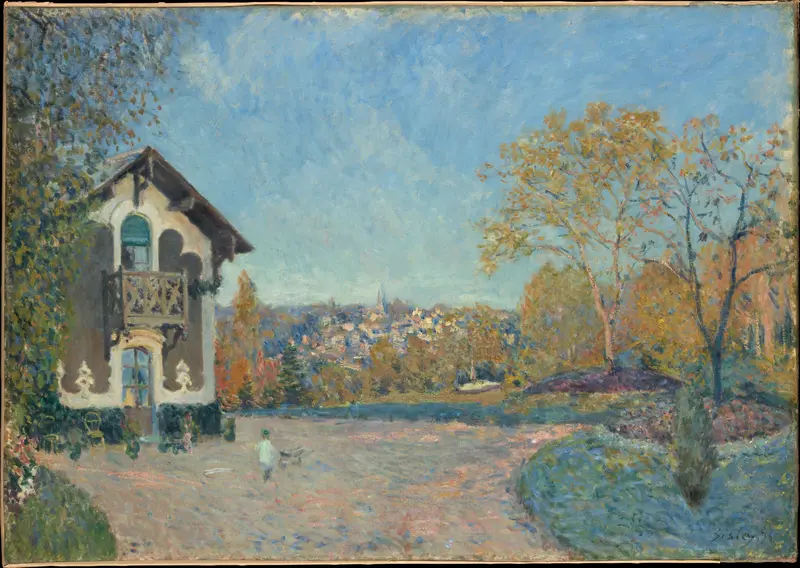
View of Marly-le-Roi from Coeur-Volant
Alfred Sisley
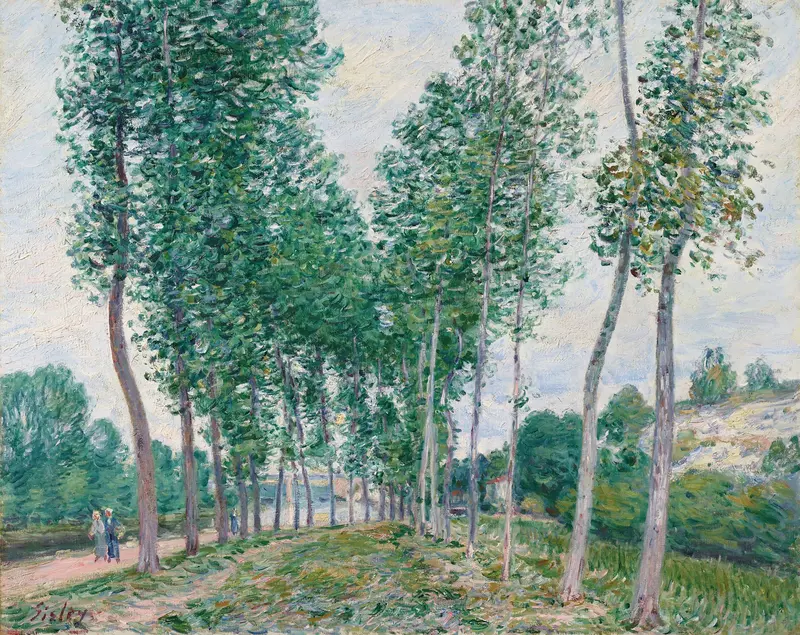
L’allée des peupliers au bord du Loing
Alfred Sisley
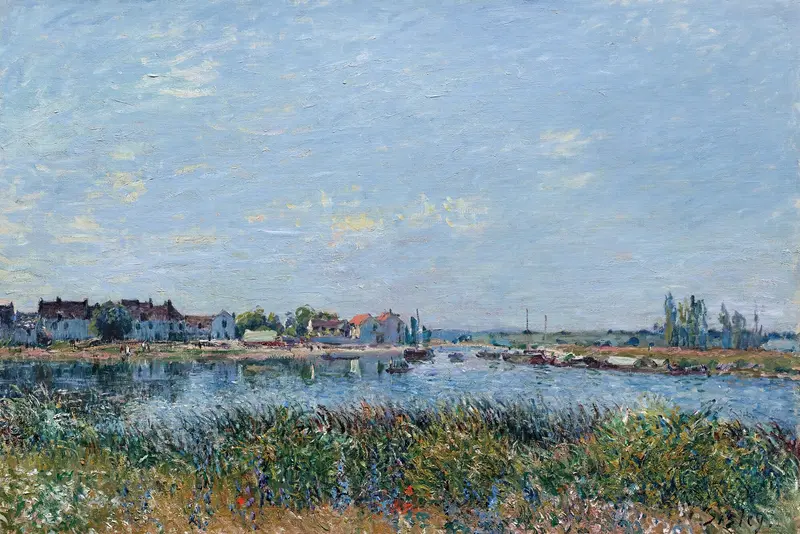
Saint-Mammès, Le Matin
Alfred Sisley
More Landscape Art

The Starry Night
Vincent van Gogh

View of Delft
Johannes Vermeer

Water Lilies
Claude Monet

The Grand Canal, Venice, looking north-west from the Ca' Corner to the Ca' Contarini degli Scrigni, with the campanile of Santa Maria della Carità
Canaletto

Windsor Castle
Canaletto

The Grand Canal looking North-East from the Palazzo Dolfin-Manin to the Rialto Bridge
Canaletto