
Moret-sur-Loing under the Rain — History & Facts
What first catches the eye in Moret-sur-Loing under the Rain is the shimmering, dappled light that dances across the wet cobblestones, as if the rain itself has left a memory on the ground. The figures, scattered and small beneath their dark umbrellas, seem to drift through a world made gentle by the storm. The church rises quietly on the left, its pale walls softened by the moisture in the air, while a horse-drawn cart waits patiently, its driver half-sheltered.
Sisley leads your gaze along the glistening street, where reflections and shadows merge, turning a simple village scene into a study of movement and stillness. The palette—muted golds, greens, and blues—sets a mood of calm after disruption, inviting the viewer to linger in the hush that follows rain. Painted in 1888, this work belongs to the late flowering of Impressionism, when artists like Alfred Sisley found endless inspiration in the changing weather and light of rural France. Such paintings were rarely grand commissions; instead, they were made for a new, growing market of middle-class collectors who wanted scenes from daily life, rendered with immediacy and freshness.
The Yorck Project’s collection, where this image is preserved, gathers works that history has sometimes overlooked, yet each one offers a window onto the quiet revolutions of its era. Look again at the puddles and the figures—here, the ordinary becomes luminous, and the fleeting moment is held fast.
More Artworks by Alfred Sisley
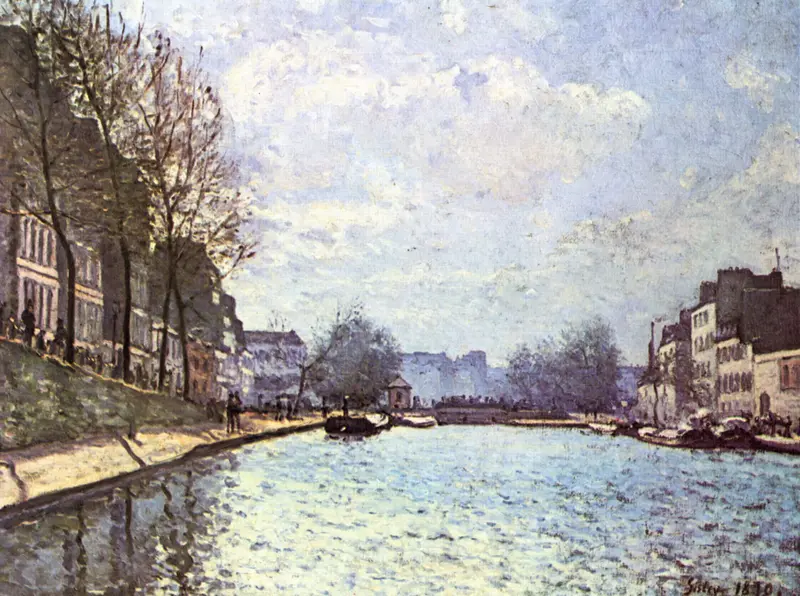
View of the Canal Saint-Martin
Alfred Sisley

Le Loing à Saint-Mammès
Alfred Sisley
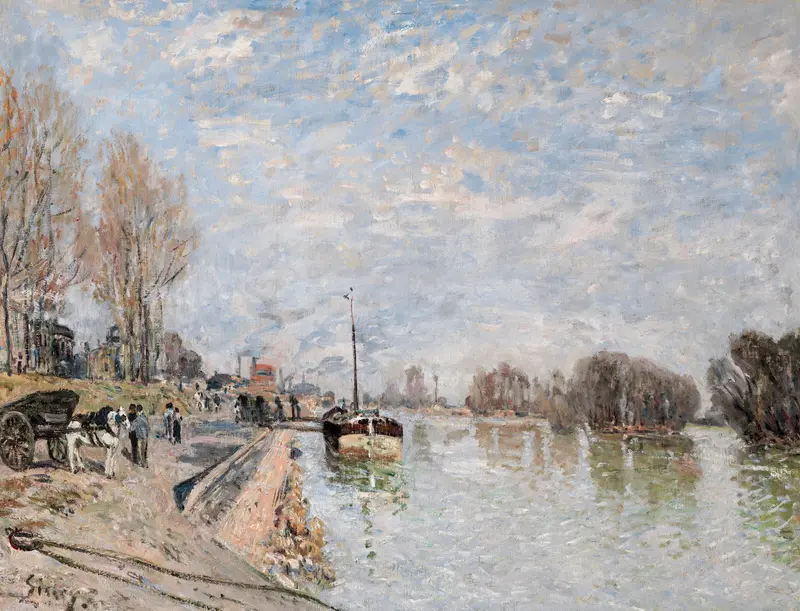
La Seine à Suresnes
Alfred Sisley
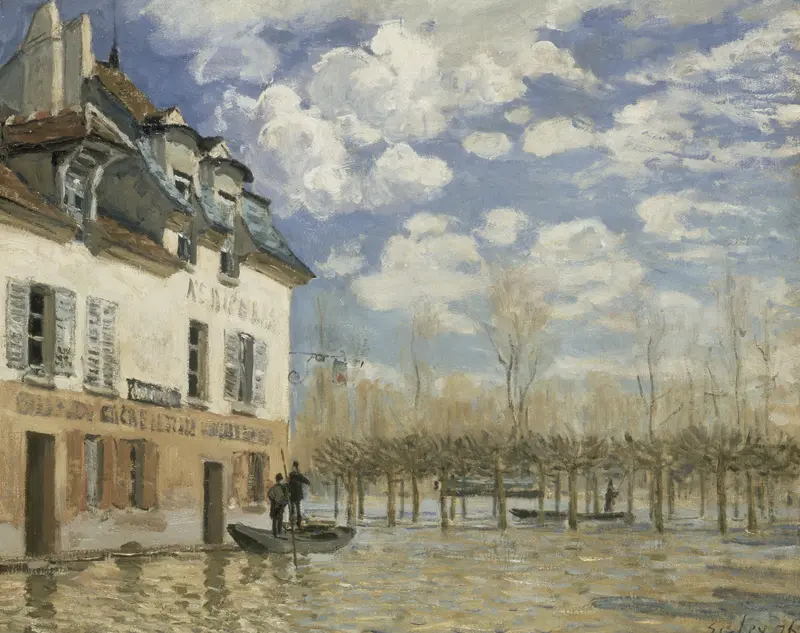
Boat in the Flood at Port Marly
Alfred Sisley
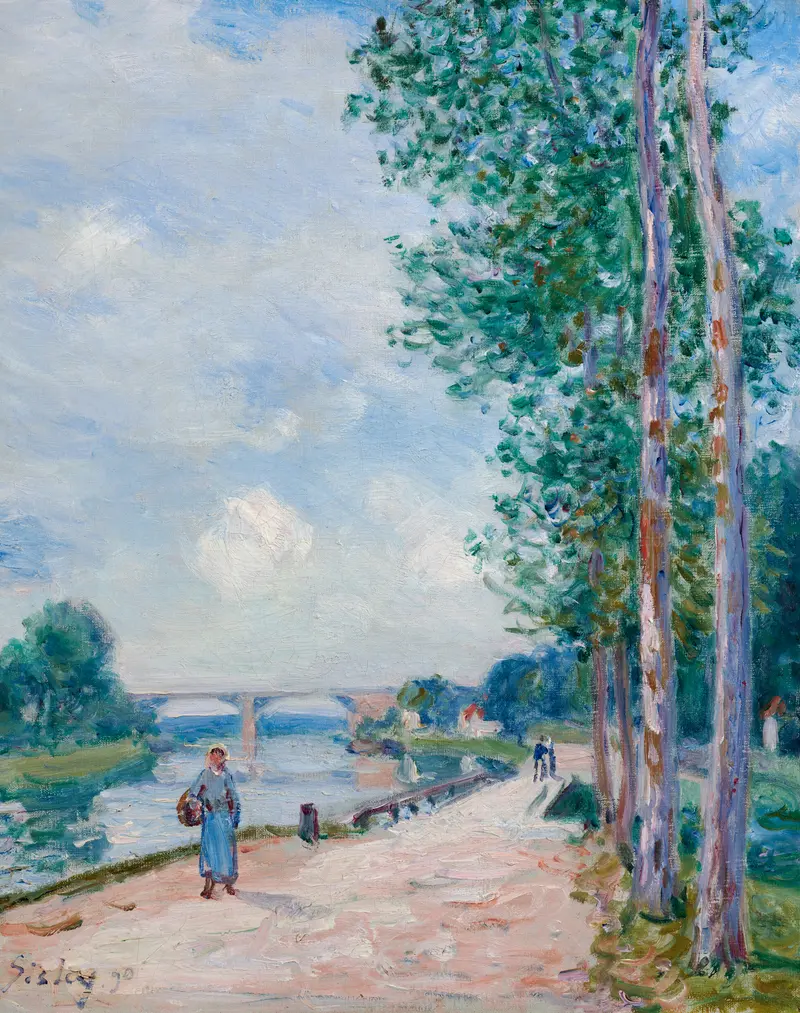
Les bords du Loing près de Moret
Alfred Sisley
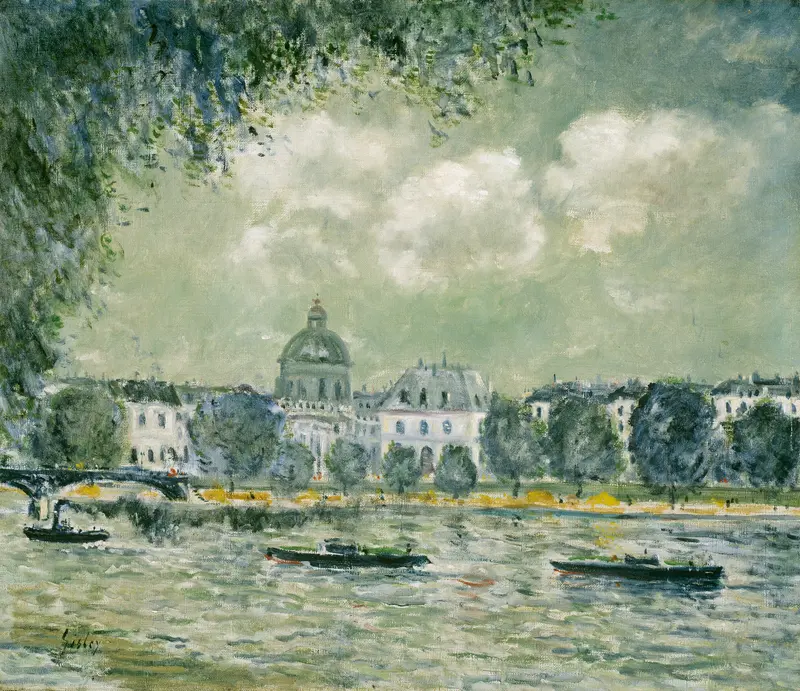
Landscape along the Seine with the Institut de France and the Pont des Arts
Alfred Sisley

Printemps au bord du Loing
Alfred Sisley
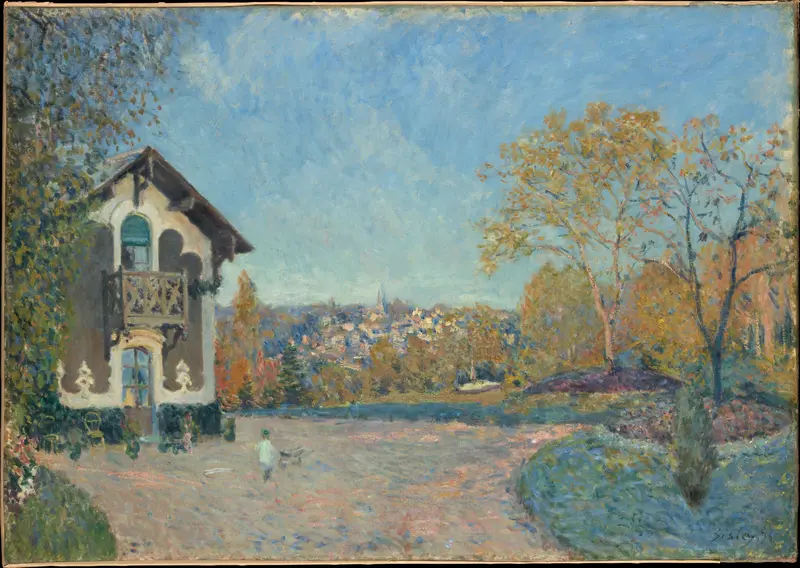
View of Marly-le-Roi from Coeur-Volant
Alfred Sisley
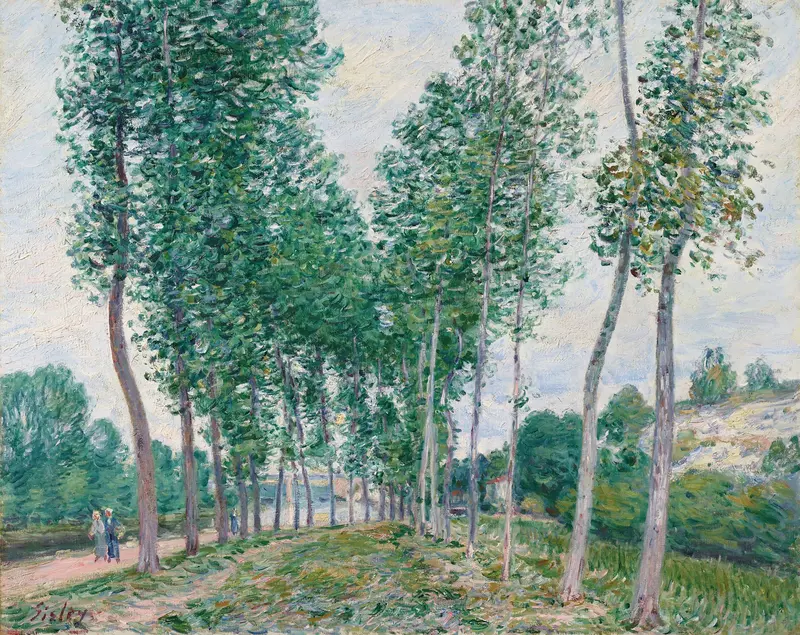
L’allée des peupliers au bord du Loing
Alfred Sisley
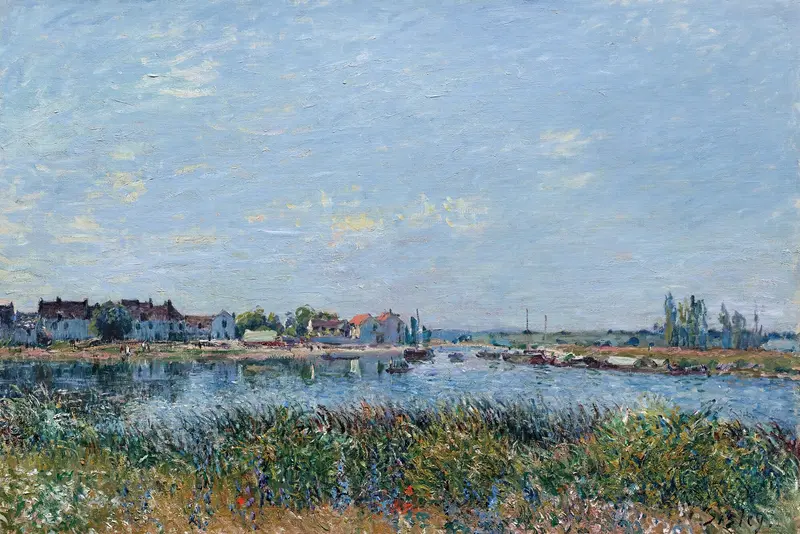
Saint-Mammès, Le Matin
Alfred Sisley
More Landscape Art

The Starry Night
Vincent van Gogh

View of Delft
Johannes Vermeer

Water Lilies
Claude Monet

The Grand Canal, Venice, looking north-west from the Ca' Corner to the Ca' Contarini degli Scrigni, with the campanile of Santa Maria della Carità
Canaletto

Windsor Castle
Canaletto

The Grand Canal looking North-East from the Palazzo Dolfin-Manin to the Rialto Bridge
Canaletto