Morgat — History & Facts
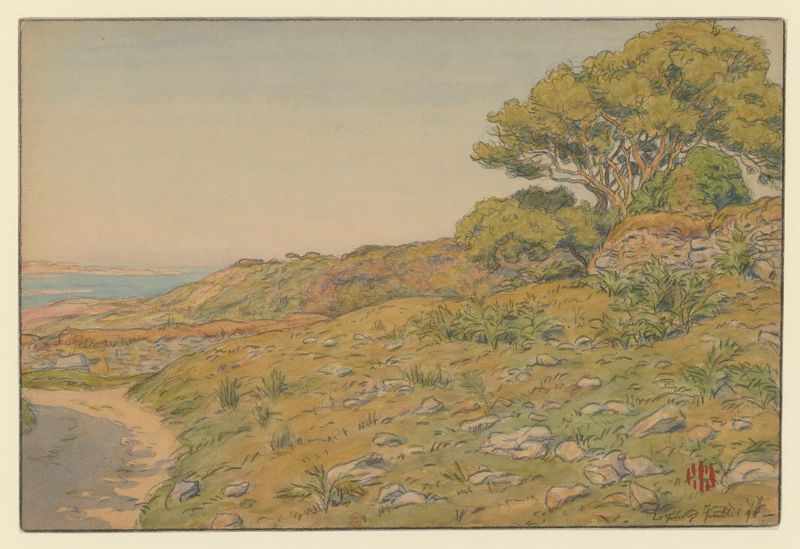
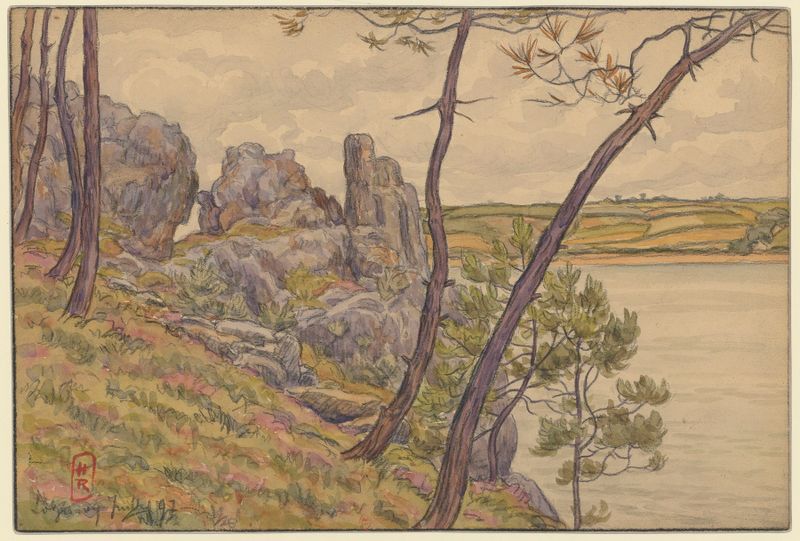
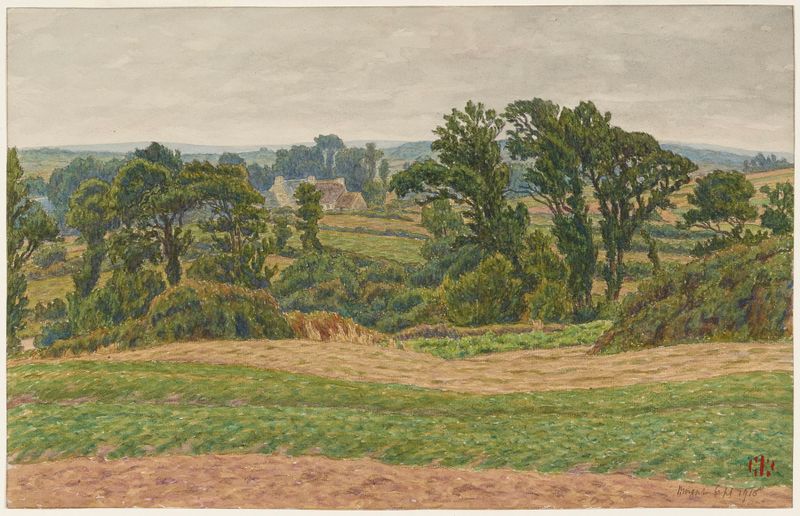
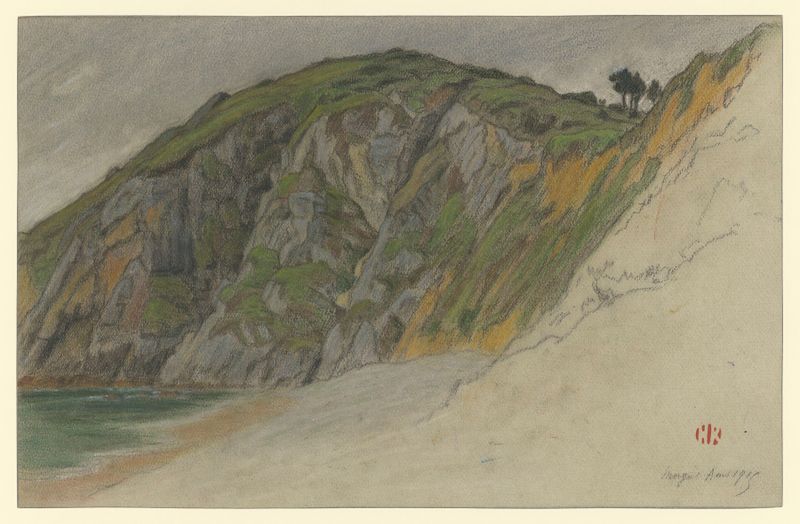
When did color learn to lie? The vivid hues in Morgat evoke a world that teeters between reality and imagination, drawing us into an enigmatic void. Look to the center where a luminous bay unfolds, its turquoise waters shimmering under an ethereal light. Rivière's delicate brushwork creates undulating waves that dance against the rocky shoreline, inviting the eye to trace the contours of the landscape. Notice how the warm oranges and deep blues clash harmoniously, offering a visual tension that captivates the viewer while evoking a sense of restless longing.
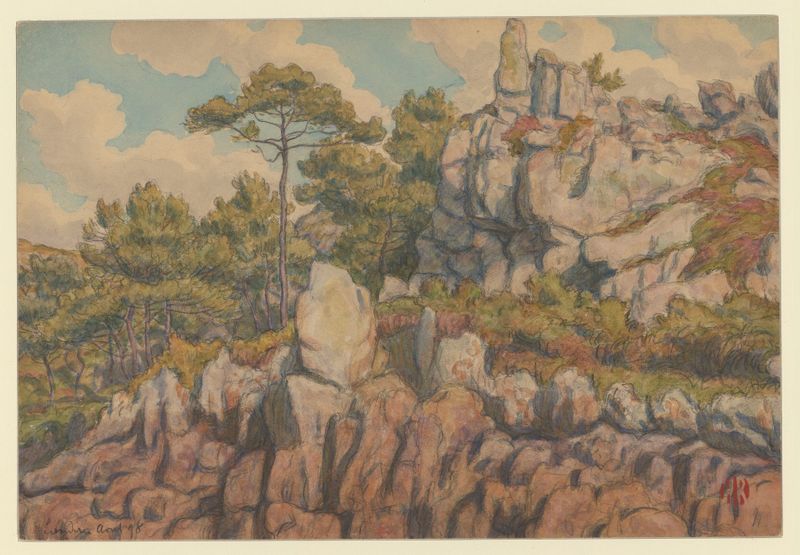
The interplay of color and light infuses the scene with a breath of life against the stark solidity of the cliffs. Beneath the surface of this tranquil setting lies a complex emotional narrative. The void suggested by the horizon hints at both isolation and possibility, as if the vastness of the sea stretches infinitely beyond what is visible. The juxtaposition of the vibrant colors against the muted browns of the cliffs suggests a transient beauty, reminding us that moments of peace often harbor underlying chaos.
This duality invites contemplation—what lies beneath the serene façade, waiting to be explored? Henri Rivière created Morgat in 1910 during a time of artistic experimentation and transition. Living in Paris, he was influenced by the emerging movements of modernism and the Symbolist style, which sought to express emotions and ideas through abstraction. This period of his life coincided with a broader shift in the art world, where painters began to challenge traditional representations, leading to a new understanding of color and form.