
Mother Pichard’s Canteen — History & Facts
In a world awash with the ephemeral, how do we capture the essence of life and mortality in a single frame? Look to the center of the composition, where an elderly woman sits surrounded by the hum of everyday life, her gnarled hands resting on a wooden table. The warm, earthy tones envelop her, with deep ochres and gentle greens that breathe life into the canteen's bustling atmosphere. Notice how the soft light cascades from an unseen source, illuminating her face and revealing a tapestry of wrinkles that tell stories of years gone by, each line a testament to her resilience.
The interplay of shadow and light not only enhances the contours of her form but accentuates the fragile nature of existence. Delve deeper into the details — the worn utensils on the table, the flickering shadows that dance upon the walls, and the distant figures engaged in conversation. These elements juxtapose the vibrancy of life with the quiet specter of mortality. The canteen, a sanctuary of comfort, stands in stark contrast to the inevitability of time, suggesting that while life flourishes, it is always tinged with the awareness of its fleeting nature.
Here, the artist invokes a meditation on the bonds of community and the personal histories that intertwine within these walls. Painted in 1890, during a transformative period in French art, the creator was deeply influenced by the emerging Impressionist movement. Working in a Parisian suburb, he sought to capture the authenticity of everyday life, a reflection of both personal and collective experiences. This was a time when art began to challenge traditional forms, and the artist embraced new techniques that allowed him to explore the delicate relationship between memory and mortality through the lens of ordinary moments.
More Artworks by Auguste Louis Lepère
Browse all →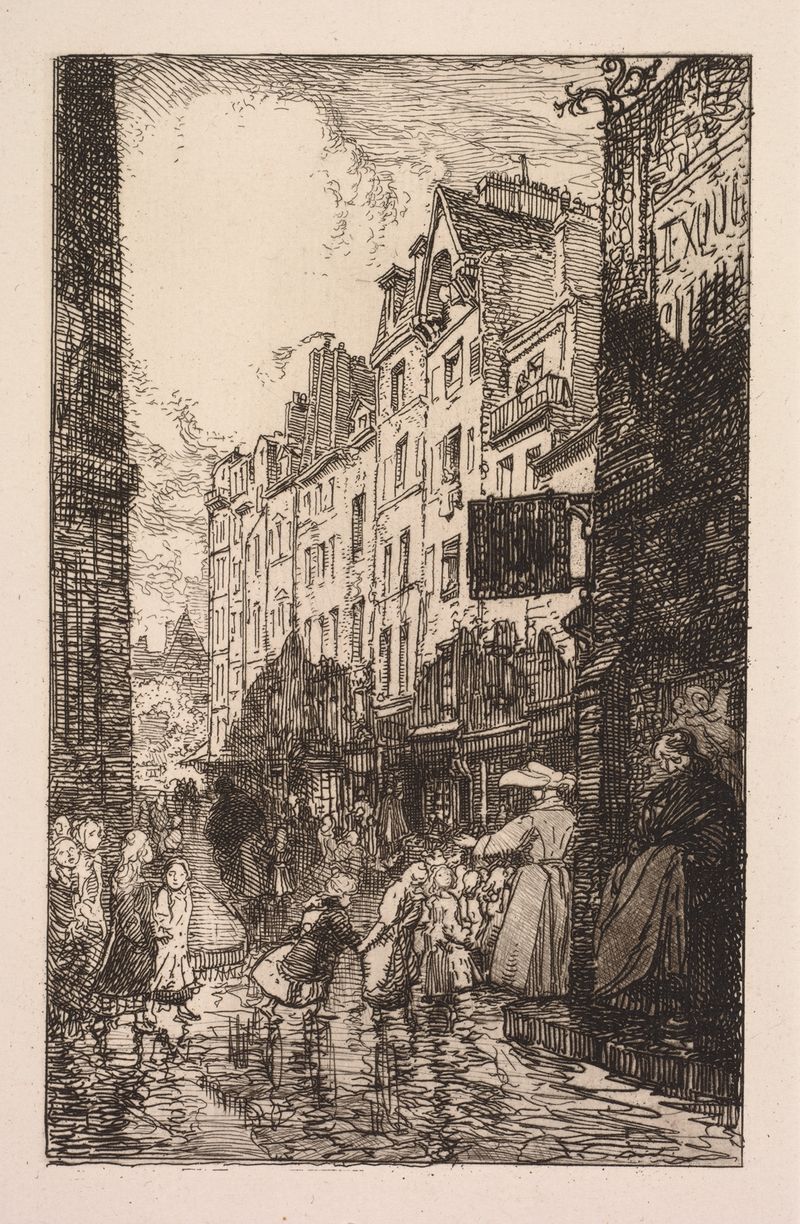
La Rue des Prêtres Saint-Séverin
Auguste Louis Lepère
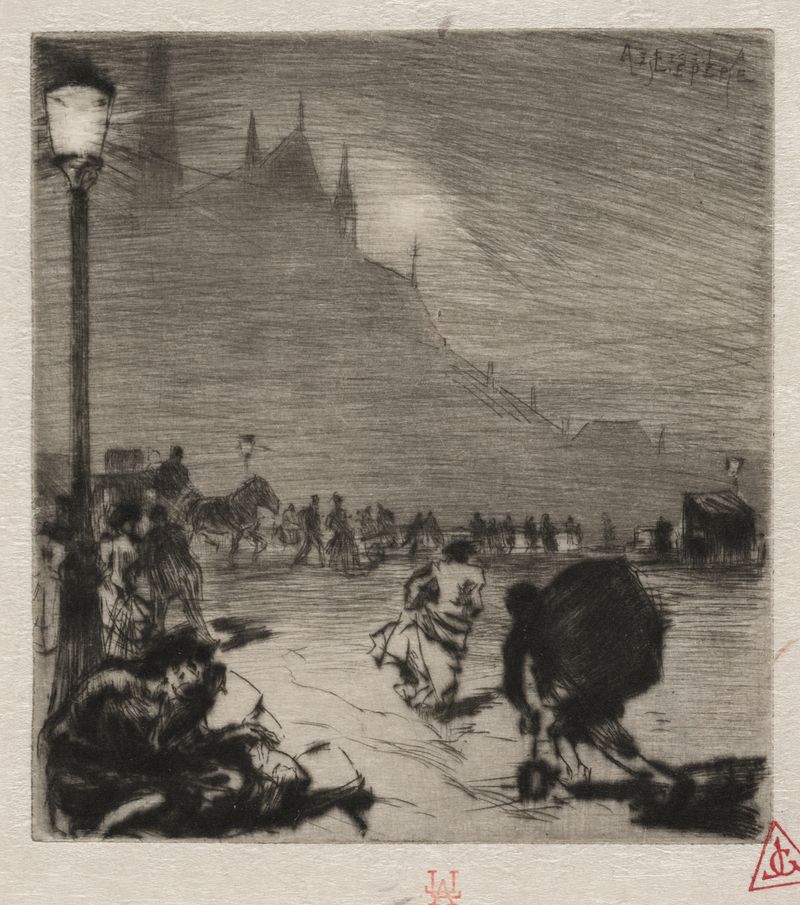
Au Coin du Pont-aux-Doubles
Auguste Louis Lepère
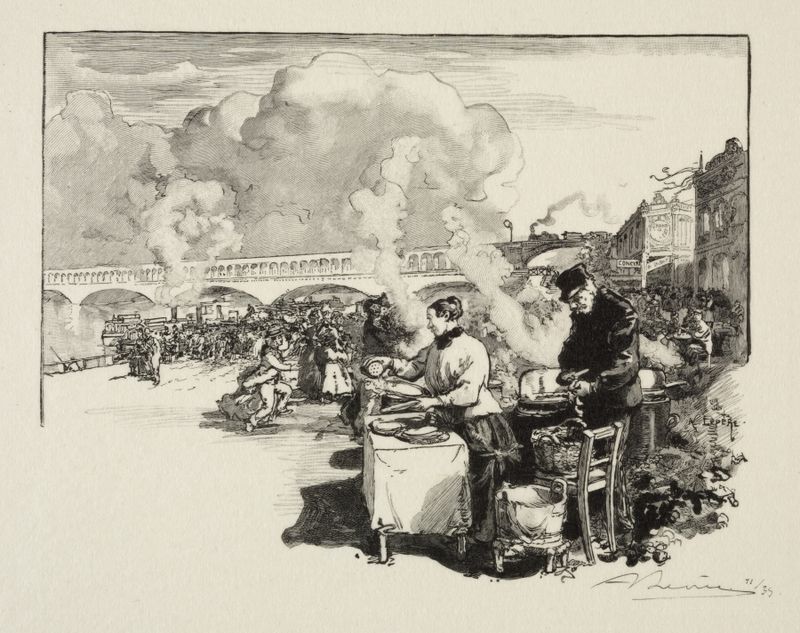
Debarcadère des bateaux-omnibus
Auguste Louis Lepère

La Seine, au quai de la Rapée
Auguste Louis Lepère
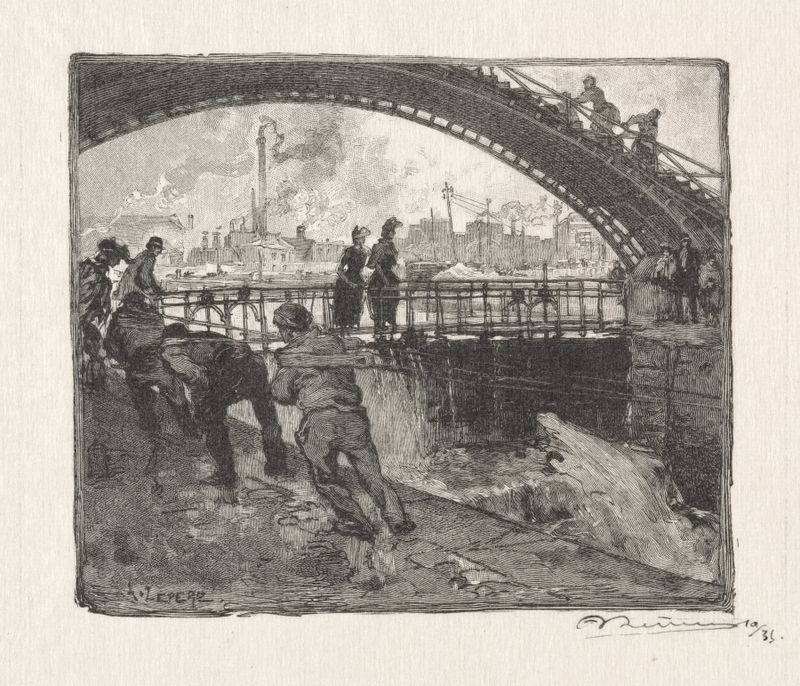
L’Ecluse du Canal St. Martin
Auguste Louis Lepère

Le Boulevard Montmartre, le Soir
Auguste Louis Lepère

Une Chasse au Mont Gérard
Auguste Louis Lepère
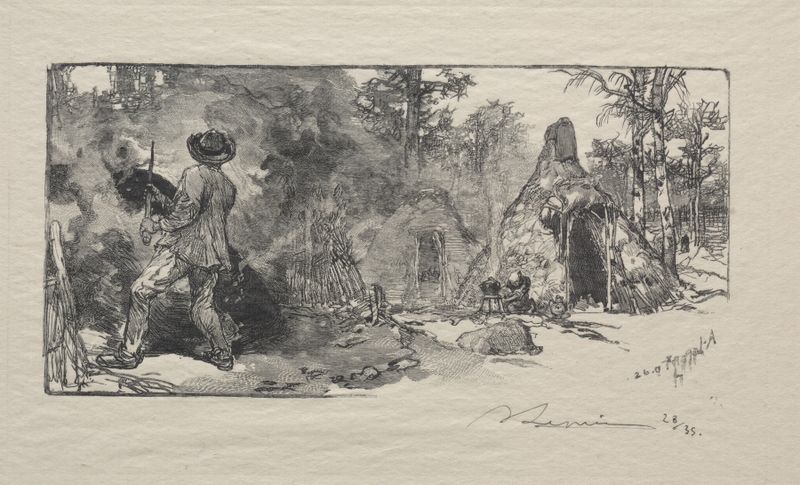
Les Charbonniere
Auguste Louis Lepère
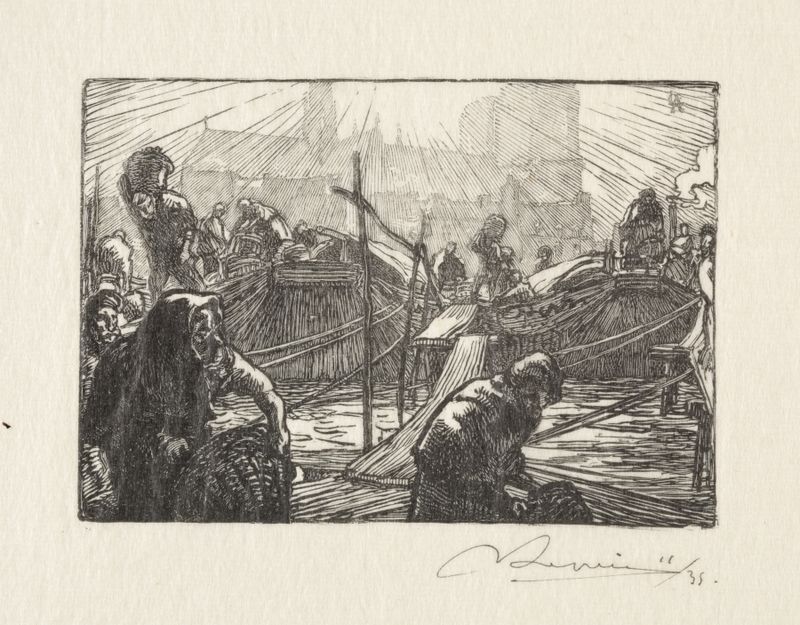
Notre Dame vue du Marché aux pommes
Auguste Louis Lepère

Le Palais des Arts Liberaux, Intèrieur
Auguste Louis Lepère





