
Mount Katahdin from Lake Millinocket — History & Facts
Who listens when art speaks of silence? In a world filled with noise, the quiet majesty of nature reveals profound truths waiting to be discovered. Focus on the sweeping horizon where the imposing peaks of Mount Katahdin rise, a testament to the raw beauty of the American wilderness. Notice the subtle gradient of colors—deep greens of the forest giving way to the striking browns and whites of the mountain, bathed in delicate light. The tranquil lake reflects these hues, its stillness mirroring the grandeur above, creating a symbiotic relationship between water and earth.
The composition, balanced yet dynamic, draws the viewer's eye toward the pinnacle, inviting contemplation. Within the serene landscape lies a tension between the towering mountain and the calm water below. The stony peaks, while a symbol of strength and permanence, seem to whisper of the passage of time, their ruggedness softened by the lush foreground. The interplay of light creates an ethereal atmosphere, hinting at the fragility of such beauty.
This duality encompasses both the fleeting moments of human experience and the enduring presence of nature, suggesting an invitation to find truth in stillness. Frederic Edwin Church painted this piece during the mid-19th century, a period marked by the rise of the Hudson River School, a movement known for its romantic portrayal of American landscapes. Deeply influenced by his travels and the burgeoning appreciation for the natural world, Church sought to capture the sublime beauty of the American wilderness. His meticulous attention to detail and atmospheric effects reflect both his technical prowess and the yearning of a society increasingly captivated by the outdoors.
More Artworks by Frederic Edwin Church
Browse all →
Niagara
Frederic Edwin Church
Cotopaxi
Frederic Edwin Church
Cotopaxi
Frederic Edwin Church
Niagara Falls, from the American Side
Frederic Edwin Church
Twilight in the Wilderness
Frederic Edwin Church
Hudson Valley at Sunset
Frederic Edwin Church
The Hintersee, near Berchtesgaden, Bavaria
Frederic Edwin Church
Mountains near Baalbec
Frederic Edwin Church
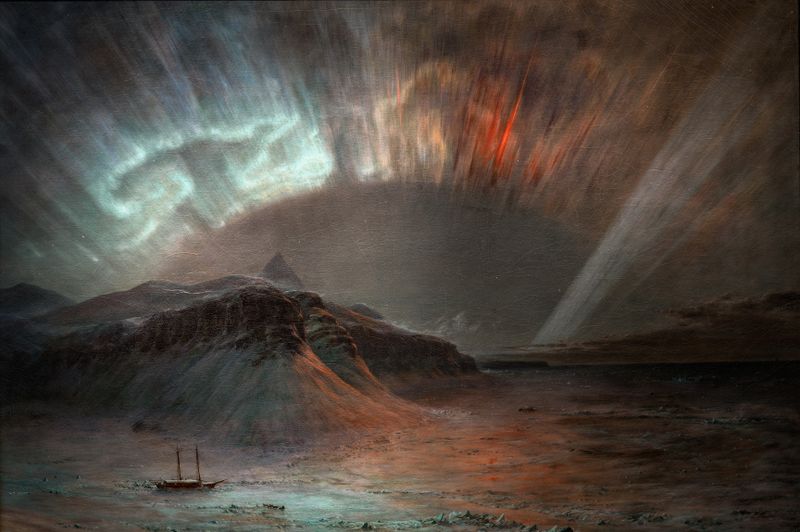
Aurora Borealis
Frederic Edwin Church
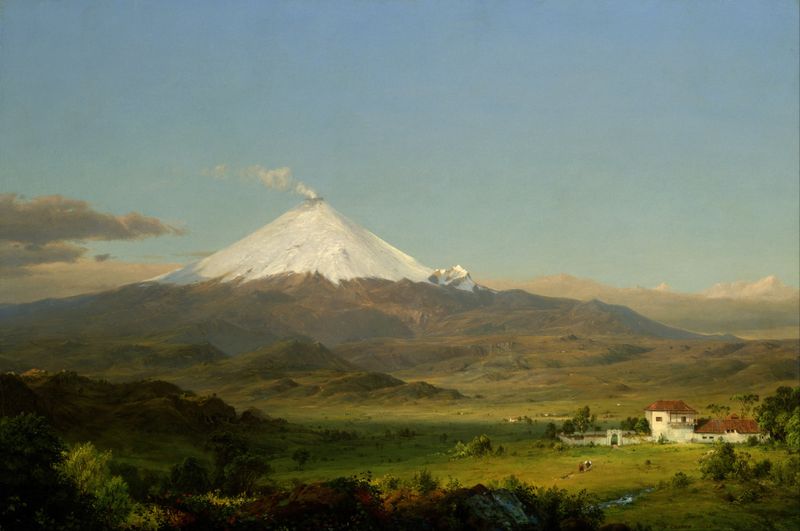
Cotopaxi
Frederic Edwin Church





