
Mount Olympus from Larissa, Thessaly, Greece — History & Facts
In the soft haze of memory, how do we reconcile the splendor of a landscape with the heartache it may invoke? Focus on the striking peaks of Mount Olympus that tower majestically in the background, their form etched against a diaphanous sky. The gentle gradient of colors transitions from soft blues to warm golds, inviting the eye to wander across the canvas. Notice how Lear employs a delicate touch in his brushwork, creating an ethereal quality that seems to breathe life into the scene, while the foreground’s lush greenery grounds the viewer in the tangible world. The interplay between light and shadow reveals deeper emotional tensions.
The luminous glow of the mountain suggests a distant, unattainable beauty, hinting at a longing that resonates within the viewer. Hidden in the delicate brushstrokes, there lies a juxtaposition between the tranquil scenery and an underlying sense of nostalgia—perhaps a yearning for a vanished past or the bittersweet nature of cherished memories. Edward Lear painted this landscape during a prolific period of his life, between 1850 and 1885, while traveling across Greece. At this time, he was not only recognized for his whimsical illustrations and poetry but also for his ability to capture the grandeur of nature.
Amidst the romanticism of the era, Lear’s work began to reflect a more personal connection to the landscapes he encountered, infusing them with layers of memory and emotion.
More Artworks by Edward Lear
Browse all →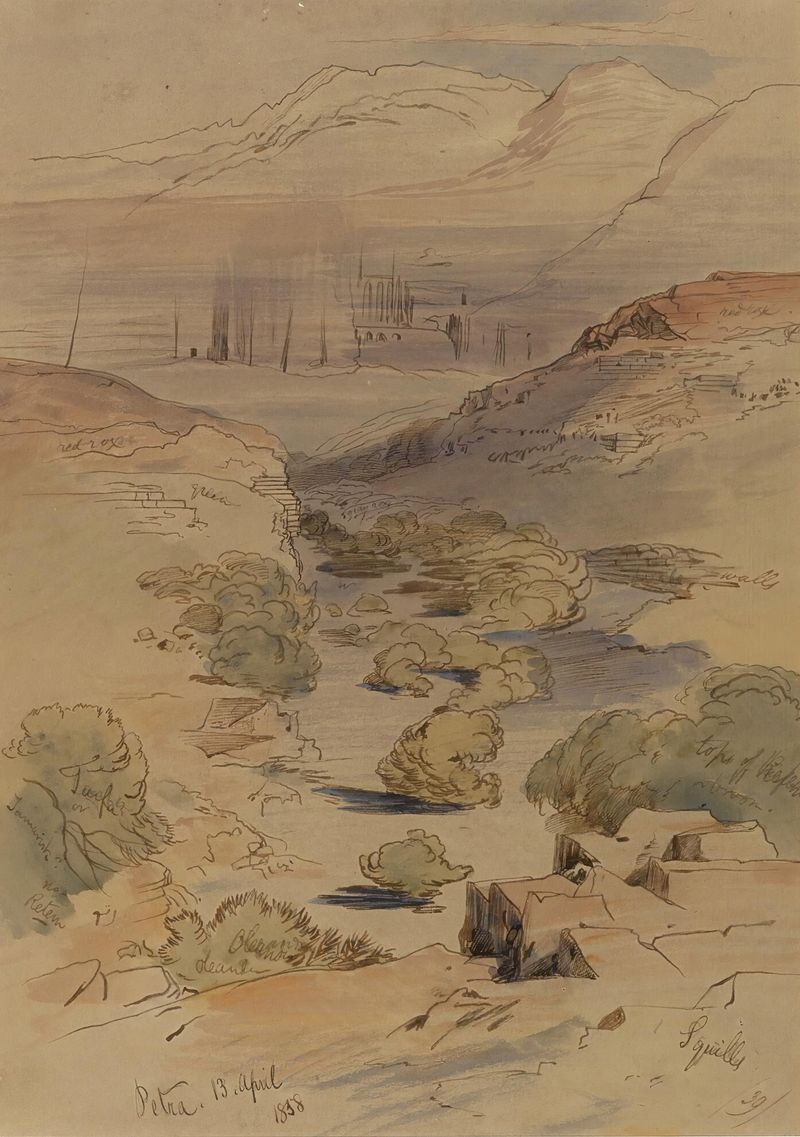
Petra
Edward Lear
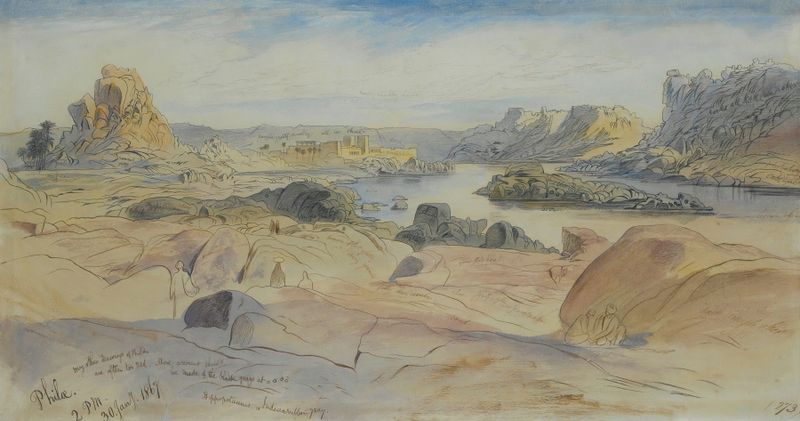
Philae, Egypt
Edward Lear
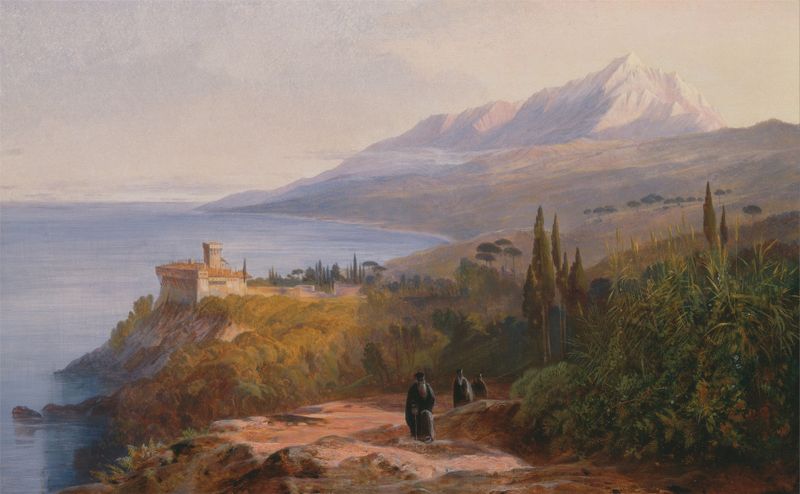
Mount Athos and the Monastery of Stavronikétes
Edward Lear
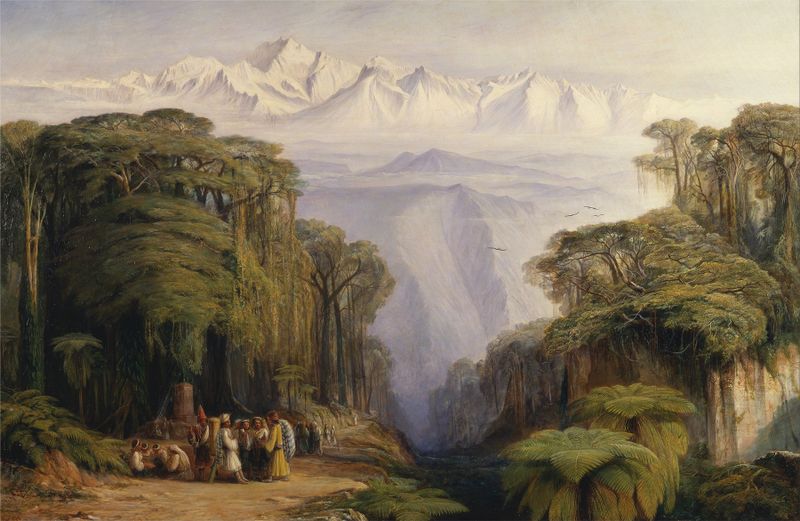
Kangchenjunga from Darjeeling
Edward Lear
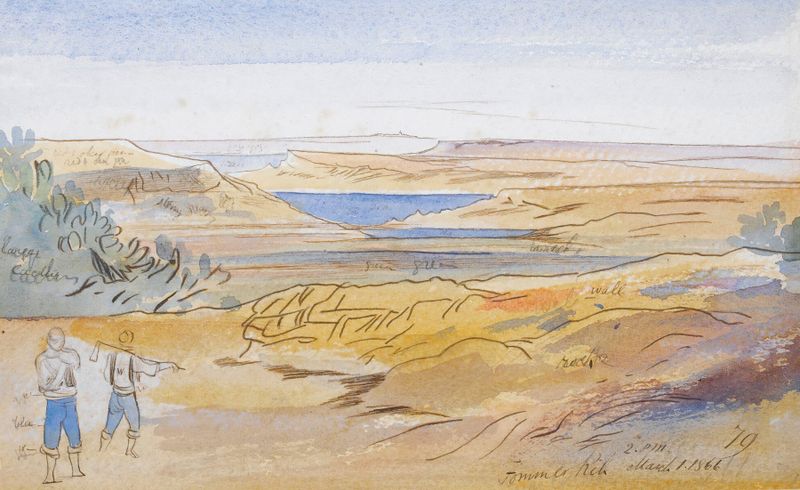
Fomm Ir-Rih, Malta
Edward Lear
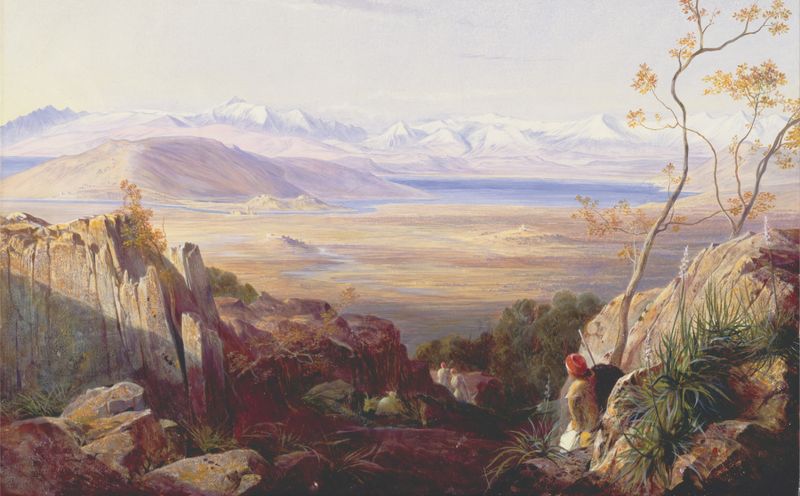
Butrinto, Albania
Edward Lear
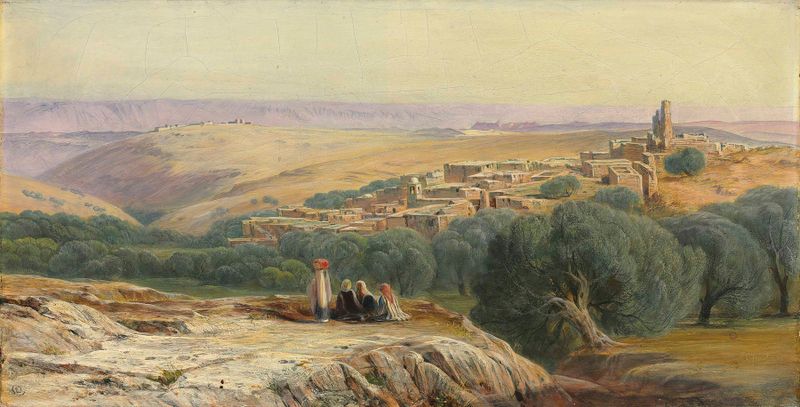
The Plains of Bethany
Edward Lear

Karnak, 9-30 pm, 22 January 1867
Edward Lear
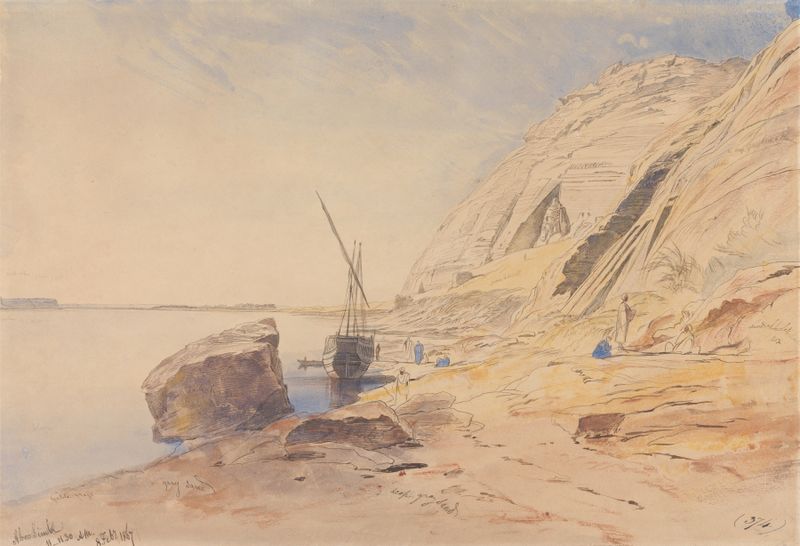
Abu Simbel, 11-11;30 am, 8 February 1867 (374)
Edward Lear

A View Of Mount Athos And The Pantokrator Monastery, Greece
Edward Lear





