
Mountain Carriage (Saugerties) — History & Facts
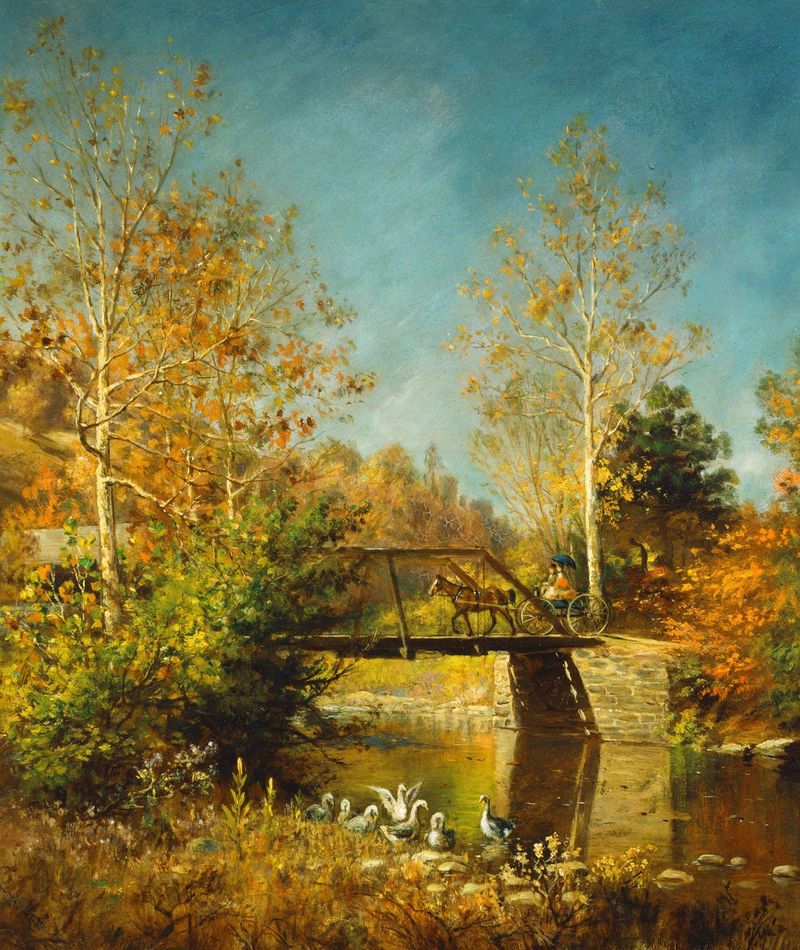
In the solitude of the mountains, how does one reconcile the beauty of nature with the quiet ache of loneliness? Look closely at the lower right corner, where a lone carriage snakes its way along a winding path. The muted color palette, dominated by deep greens and earthy browns, evokes both the majesty of the landscape and the isolation of the travelers. Notice the way the light filters through the canopy above, casting dappled shadows that dance upon the ground, mimicking the fleeting moments of connection and solitude experienced by those who traverse this terrain. The two figures inside the carriage, though positioned together, seem worlds apart, their body language hinting at unspoken thoughts.
The expansive backdrop of the mountains looms above, enveloping them in a vast embrace that feels both protective and stifling. This contrast between the grandeur of nature and the smallness of human presence reflects a deeper tension: the struggle between seeking connection and grappling with the inevitability of isolation. In 1896, while creating Mountain Carriage, the artist found himself in a world increasingly filled with industrial growth and urbanization. Henry, who had spent many years painting scenes of American life, was drawn to the serene beauty of the Hudson Valley, capturing its essence amidst a time of change.
This work encapsulates his desire to document the subtle narratives of existence, where the vastness of nature often mirrors the intimate stories of the individuals who wander within it.
More Artworks by Edward Lamson Henry
Browse all →
The Attack on Chew's House during the Battle of Germantown, 1777
Edward Lamson Henry
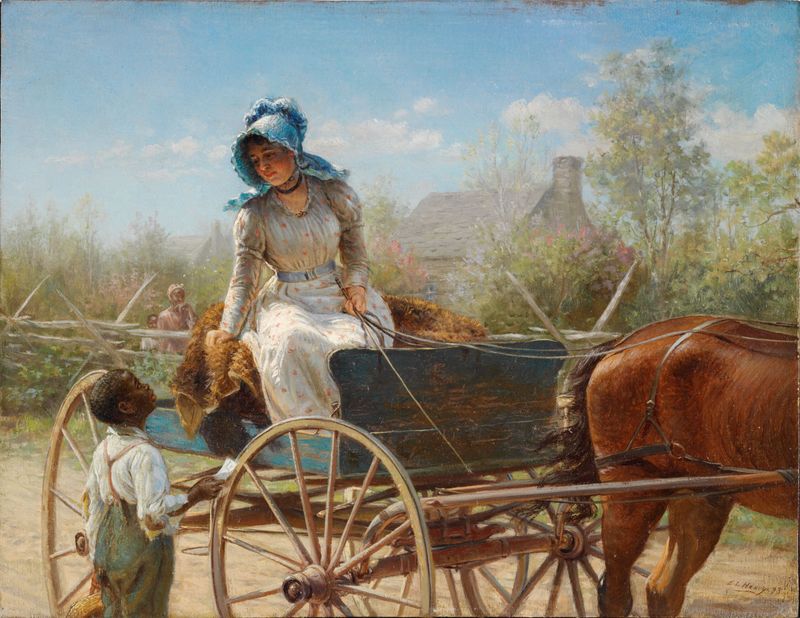
The Message
Edward Lamson Henry
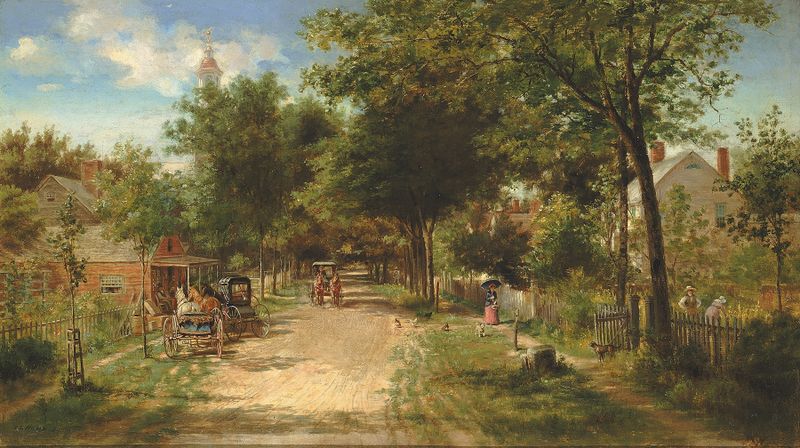
The Country Store
Edward Lamson Henry
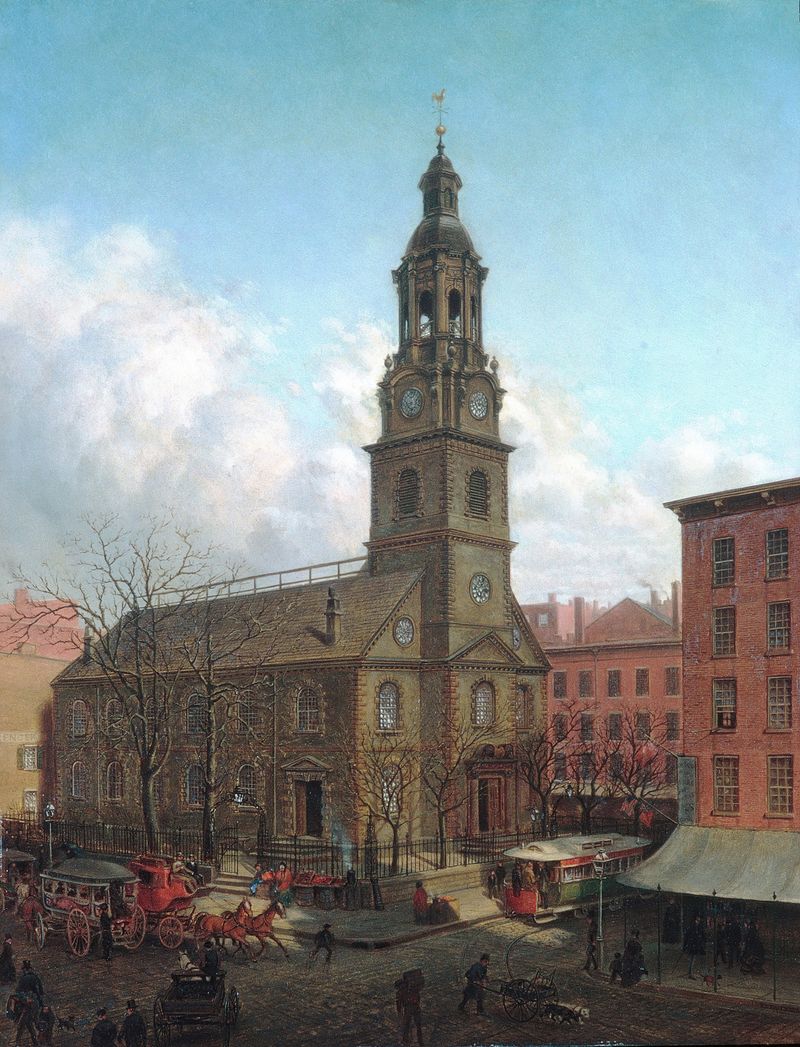
The North Dutch Church, Fulton and William Streets, New York
Edward Lamson Henry
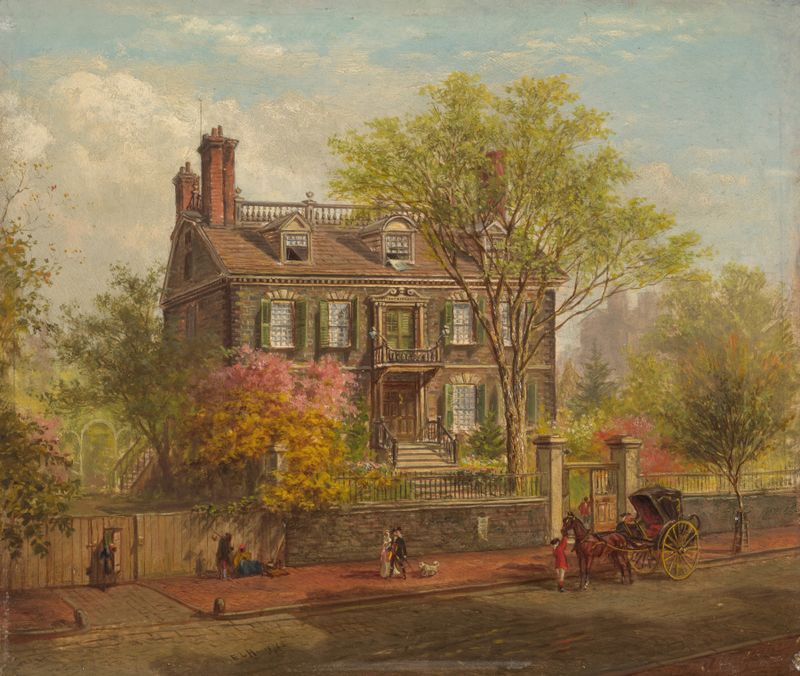
The John Hancock House
Edward Lamson Henry
Going to Town
Edward Lamson Henry

Old Hook Mill, Easthampton
Edward Lamson Henry
The Old Westover House
Edward Lamson Henry

Homestead
Edward Lamson Henry

The 9;45 A.M. Accommodations, Stratford, Connecticut
Edward Lamson Henry





