
The John Hancock House — History & Facts
Could a single brushstroke hold eternity? In Edward Lamson Henry's The John Hancock House, the facade of history looms, inviting both reverence and apprehension. The weight of time rests heavily upon the viewer, evoking lingering questions about legacy and memory, especially in a world where the past often feels fragile and fleeting. Look to the center of the canvas where the grand structure of the house commands attention, its stately architecture rendered in delicate, yet authoritative strokes. Notice how the soft pastels of the sky contrast with the deep, robust hues of the brick, creating a tension that draws the eye inward.
The light dances upon the surface, highlighting the intricate details of the windows and doorways — portals into a story that breathes within the walls themselves. Each element is meticulously composed, allowing the viewer to appreciate not just the scene, but the very act of creation. Hidden within the layers of paint lies a profound commentary on the passage of time. The house, an emblem of American independence, stands resilient against the encroachment of shadows, a reminder that history can be both a sanctuary and a specter.
The juxtaposition of light and dark invites introspection; it speaks of aspirations and the fear of obsolescence, encapsulating the struggle to preserve what is meaningful amidst inevitable change. Every brushstroke breathes life into memories, yet hints at their eventual decay. Henry created this work in 1865, during a period of great national upheaval following the Civil War. His focus on this historic landmark was reflective of a broader movement in American art that sought to capture the essence of national identity and pride.
Situated in Massachusetts, the painting emerged from a time when artists were grappling with the weight of history and the desire to memorialize it, marking a significant moment when art became intertwined with the very fabric of American consciousness.
More Artworks by Edward Lamson Henry
Browse all →
The Attack on Chew's House during the Battle of Germantown, 1777
Edward Lamson Henry
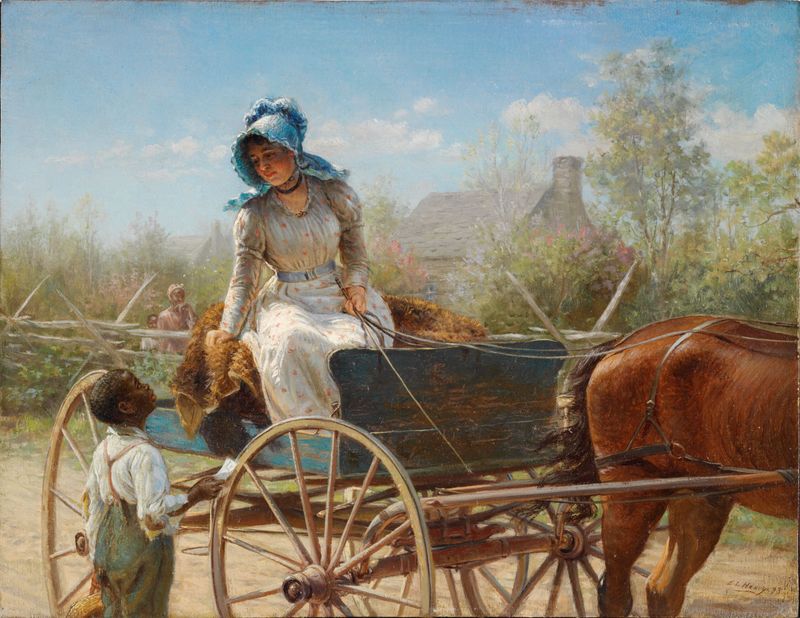
The Message
Edward Lamson Henry
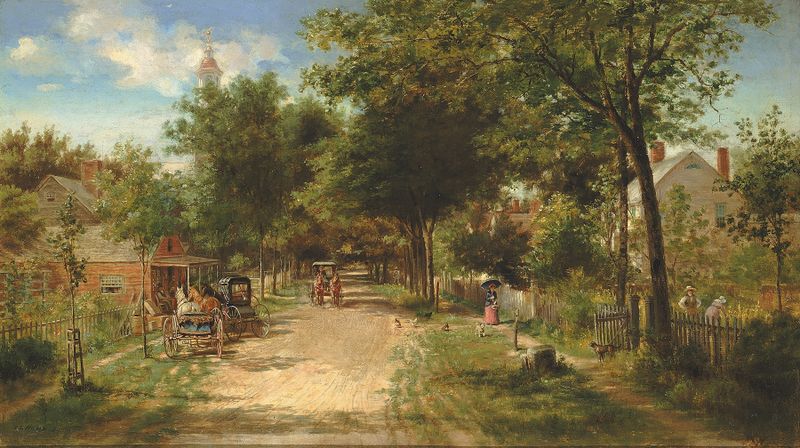
The Country Store
Edward Lamson Henry
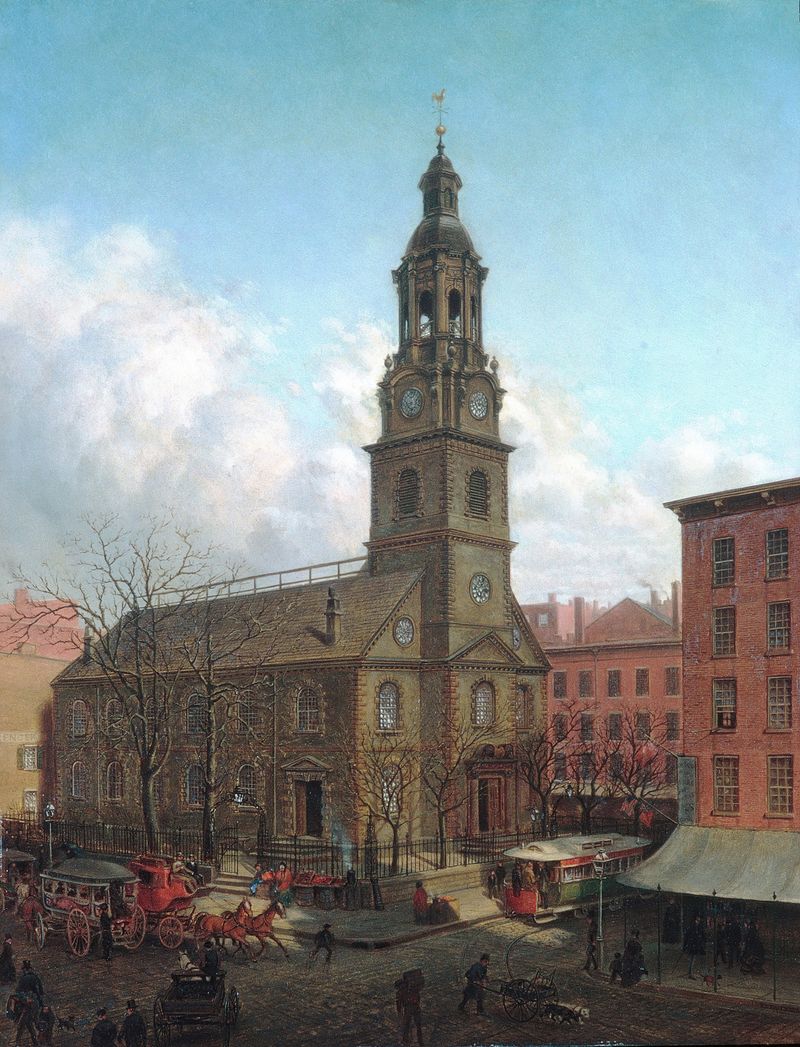
The North Dutch Church, Fulton and William Streets, New York
Edward Lamson Henry
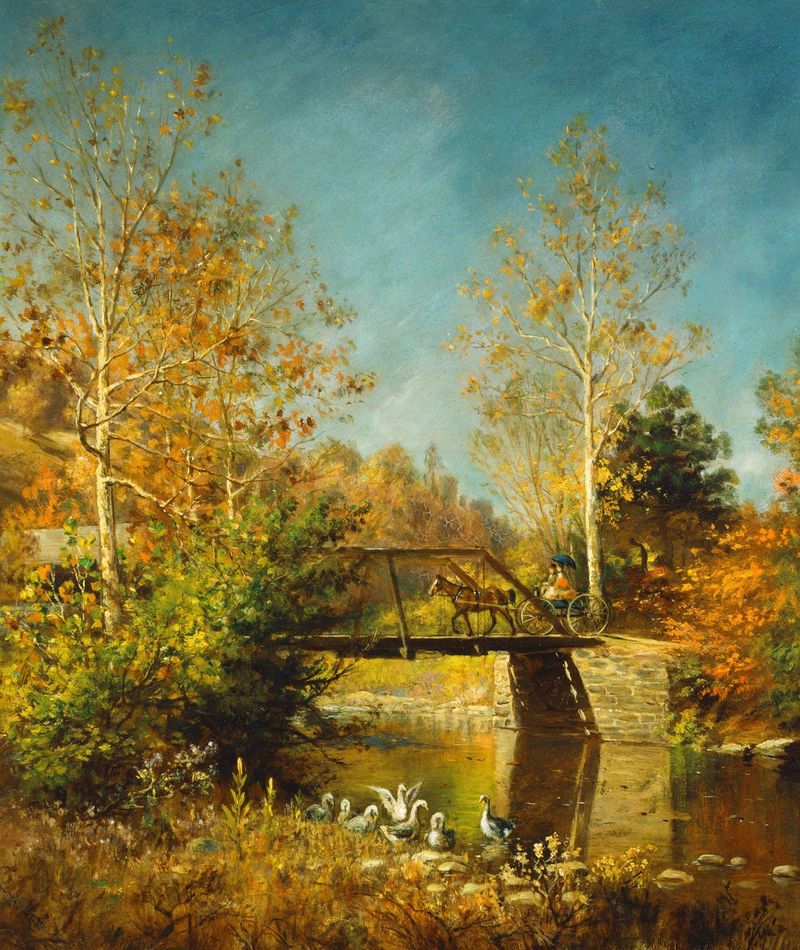
Going to Town
Edward Lamson Henry
Mountain Carriage (Saugerties)
Edward Lamson Henry

Old Hook Mill, Easthampton
Edward Lamson Henry
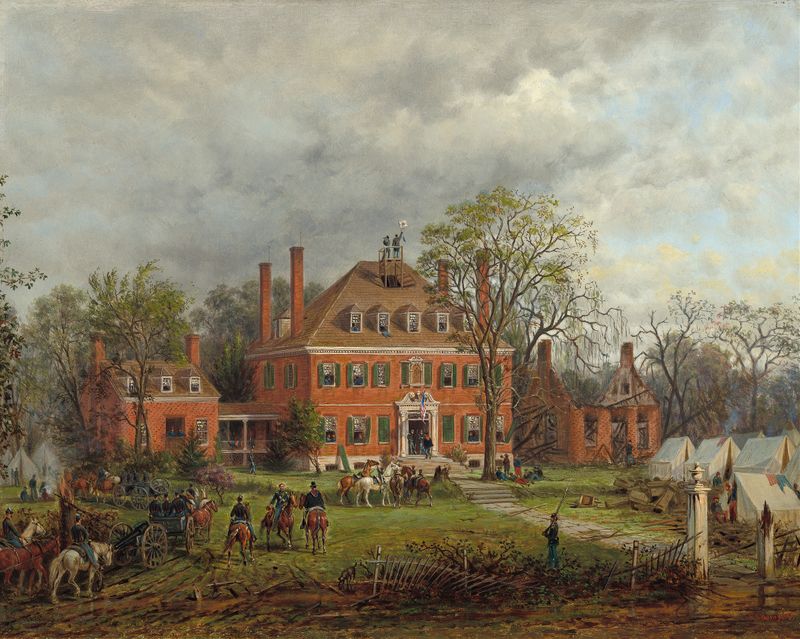
The Old Westover House
Edward Lamson Henry

Homestead
Edward Lamson Henry

The 9;45 A.M. Accommodations, Stratford, Connecticut
Edward Lamson Henry
More Architecture Art
Browse all →
The statue of Liberty
Frédéric Auguste Bartholdi

View of Houses in Delft, Known as ‘The Little Street’
Johannes Vermeer

View of Houses in Delft, Known as ‘The Little Street’
Johannes Vermeer

The Cathedral in Rouen. The portal, Grey Weather
Claude Monet

The yellow house
Vincent van Gogh

The Church in Auvers-sur-Oise, View from the Chevet
Vincent van Gogh