
The Old Westover House — History & Facts
What secret hides in the quiet of the canvas? In The Old Westover House, a stillness envelops the scene, inviting us to ponder the whispers of history held within its walls. Look to the foreground where the weathered house stands, its sturdy structure framed by lush greenery. Notice how the dappled sunlight plays upon the facade, illuminating the textured shingles and casting gentle shadows that hint at the passage of time. The artist employs a palette of soft earth tones, grounding the work in a sense of permanence and nostalgia, inviting the viewer to share in a moment of serene contemplation. Within this idyllic setting lies a tension between the allure of the past and the inevitability of change.
The house, though robust, hints at decay with its chipped paint and sagging roof, symbolizing the fragility of memory. A subtle reflection of the surrounding trees in the upper windows suggests a dialogue between nature and architecture, reminding us of the transient nature of human endeavors in contrast to the enduring beauty of the landscape. Edward Lamson Henry painted this work in 1869 while living in a country transforming under the weight of industrialization and societal change. At this time, artists sought to capture the essence of American life, and Henry, with his keen eye for detail, embraced the charm of rural settings.
His focus on the familiar domestic scene reflects a yearning for simplicity amid the complexities of modernity, making this painting a poignant testament to a fleeting moment in history.
More Artworks by Edward Lamson Henry
Browse all →
The Attack on Chew's House during the Battle of Germantown, 1777
Edward Lamson Henry
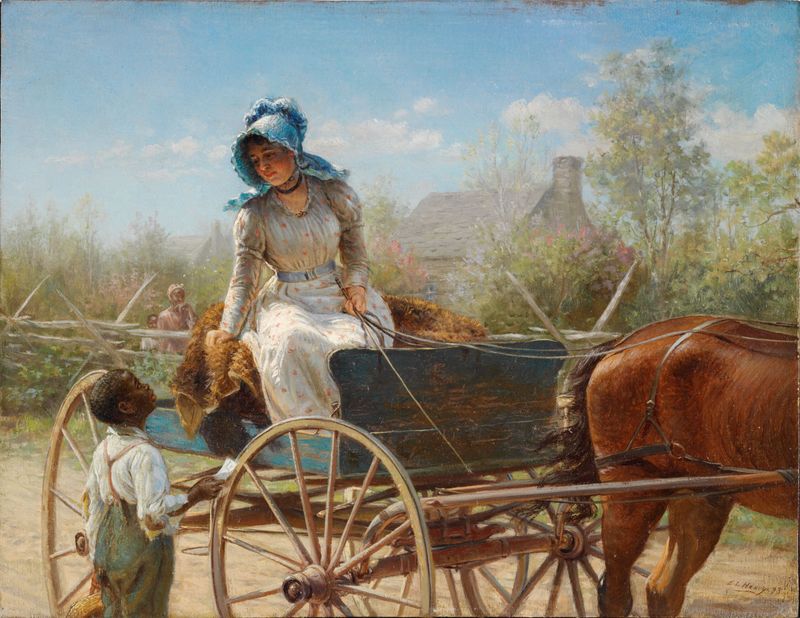
The Message
Edward Lamson Henry
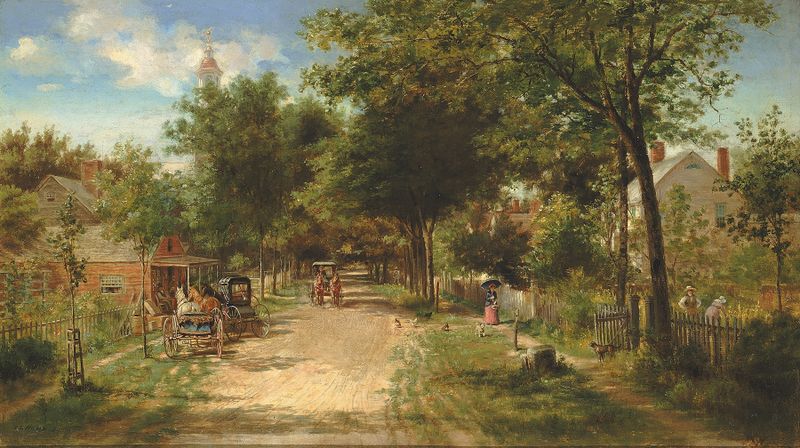
The Country Store
Edward Lamson Henry
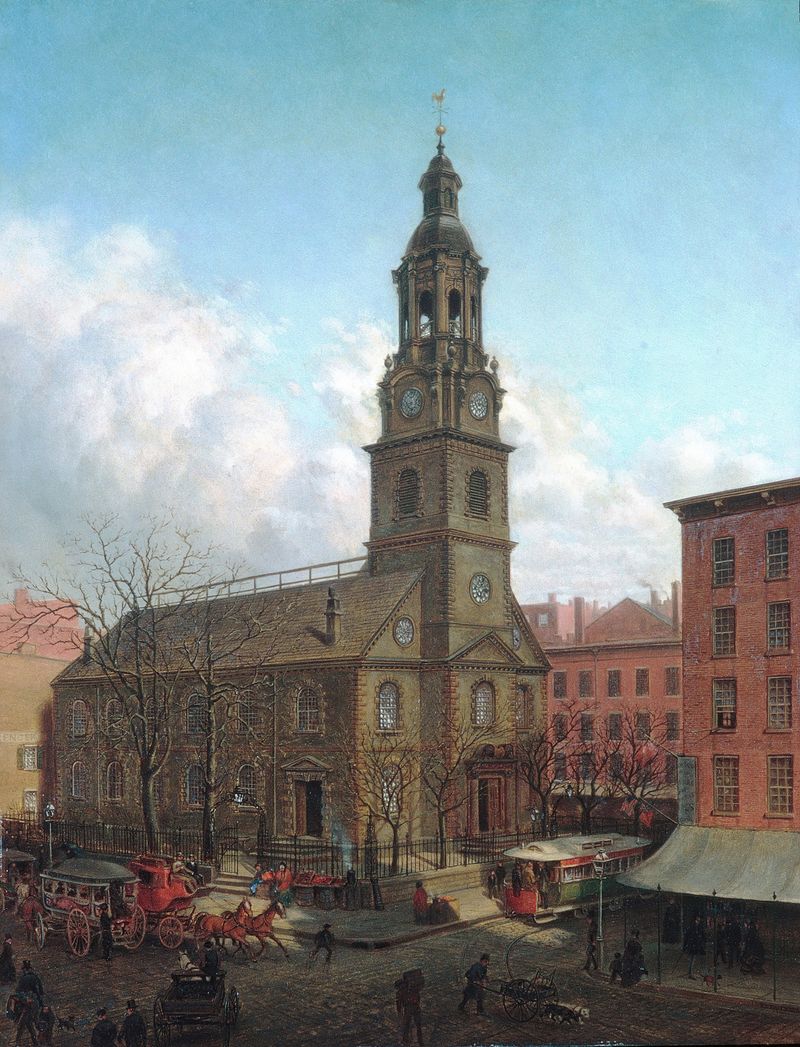
The North Dutch Church, Fulton and William Streets, New York
Edward Lamson Henry
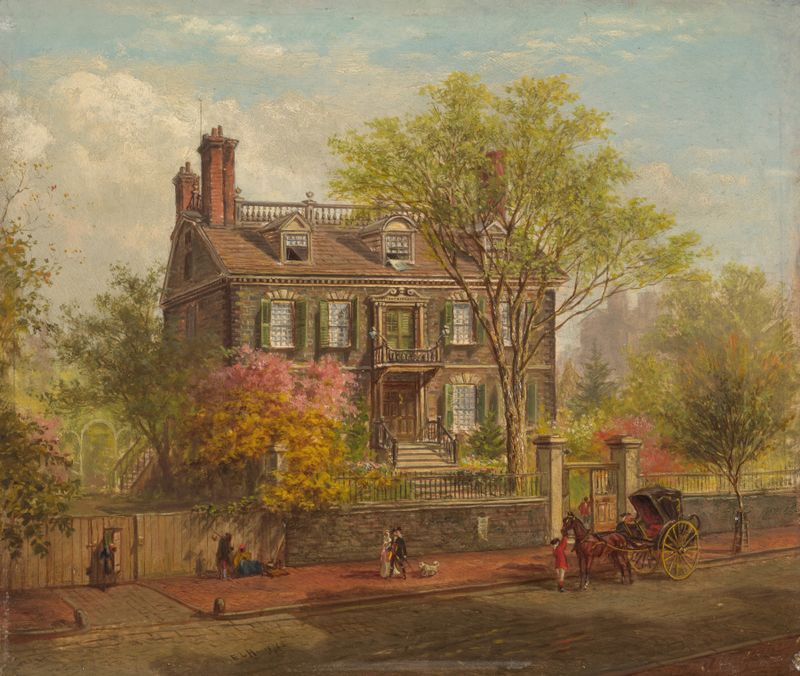
The John Hancock House
Edward Lamson Henry
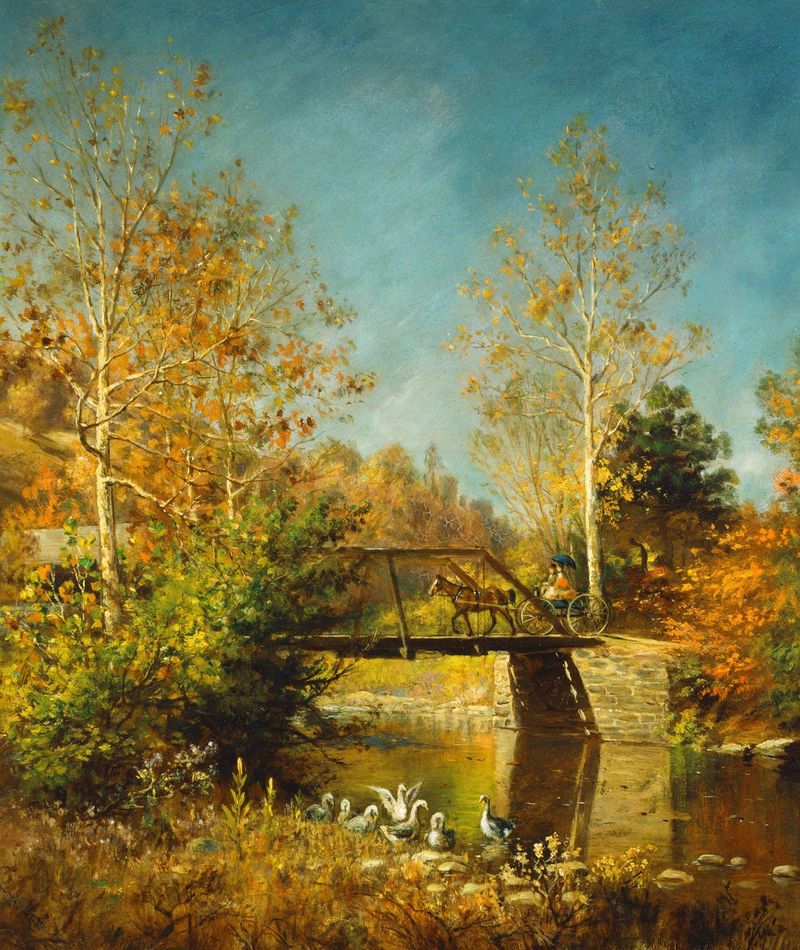
Going to Town
Edward Lamson Henry
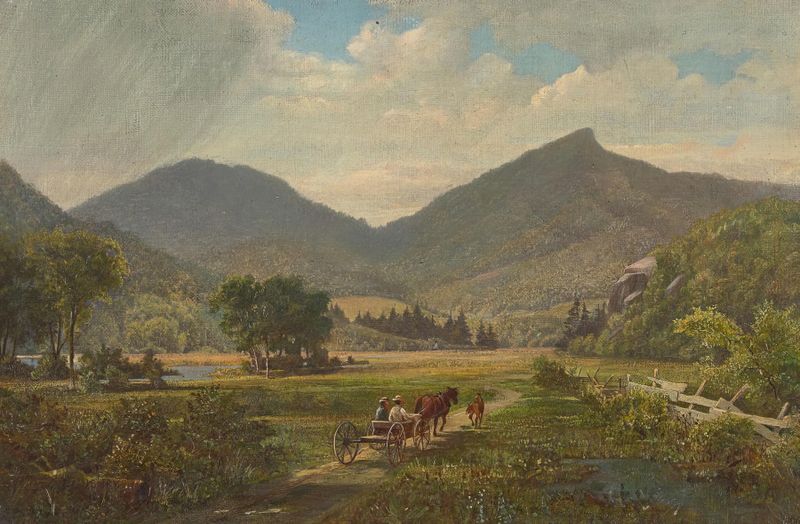
Mountain Carriage (Saugerties)
Edward Lamson Henry

Old Hook Mill, Easthampton
Edward Lamson Henry

Homestead
Edward Lamson Henry

The 9;45 A.M. Accommodations, Stratford, Connecticut
Edward Lamson Henry
More Architecture Art
Browse all →
The statue of Liberty
Frédéric Auguste Bartholdi

View of Houses in Delft, Known as ‘The Little Street’
Johannes Vermeer

View of Houses in Delft, Known as ‘The Little Street’
Johannes Vermeer

The Cathedral in Rouen. The portal, Grey Weather
Claude Monet

The yellow house
Vincent van Gogh

The Church in Auvers-sur-Oise, View from the Chevet
Vincent van Gogh