
Mountain landscape — History & Facts
In the vast expanse of our existence, how often do we truly confront the emptiness that lies between our moments? Look closely at the foreground, where the gentle curves of rolling hills lead your gaze upward, inviting you to lose yourself in the distant peaks. The muted palette of greens and browns creates a sense of calm, while the textured brushstrokes suggest a world both tangible and ethereal. The soft blending of hues captures the play of light across the landscape, revealing a depth that oscillates between tranquility and solitude. As you explore further, notice the stark contrast between the serene lower half and the towering, jagged mountains above.
This juxtaposition evokes a silent tension, a dialogue between the earth and the sky that hints at the emotional weight of isolation. The expanse of blue enveloping the peaks amplifies the feeling of emptiness, yet it also instills a profound sense of freedom. Each mountain seems to stand as both a guardian and a barrier, encapsulating the paradox of beauty and desolation. Władysław Ślewiński painted this masterpiece in 1903, during a formative period of his career in Poland.
At that time, the artist was embracing an impressionistic style that captured the essence of nature through simplified forms and colors. The early 20th century witnessed an artistic shift, as many sought to express their inner landscapes through their work, mirroring the broader changes occurring in society.
More Artworks by Władysław Ślewiński
Browse all →
Rough sea
Władysław Ślewiński
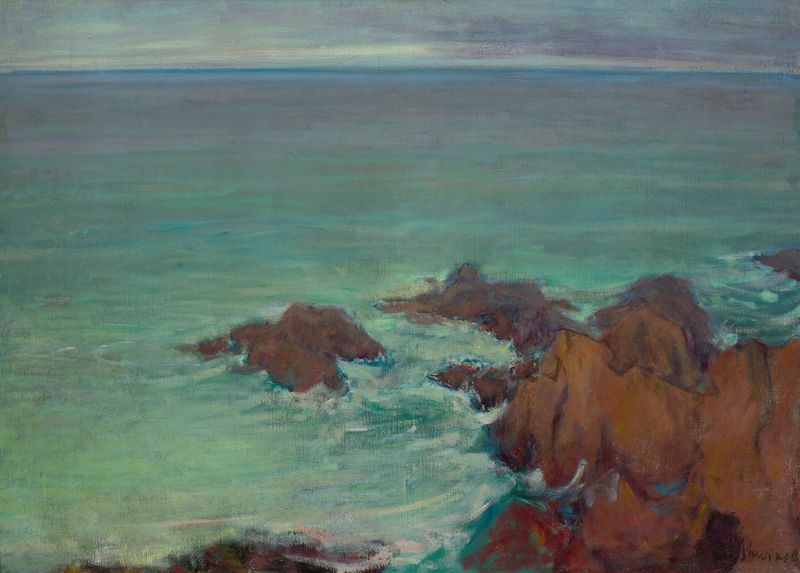
Sea in Brittany
Władysław Ślewiński
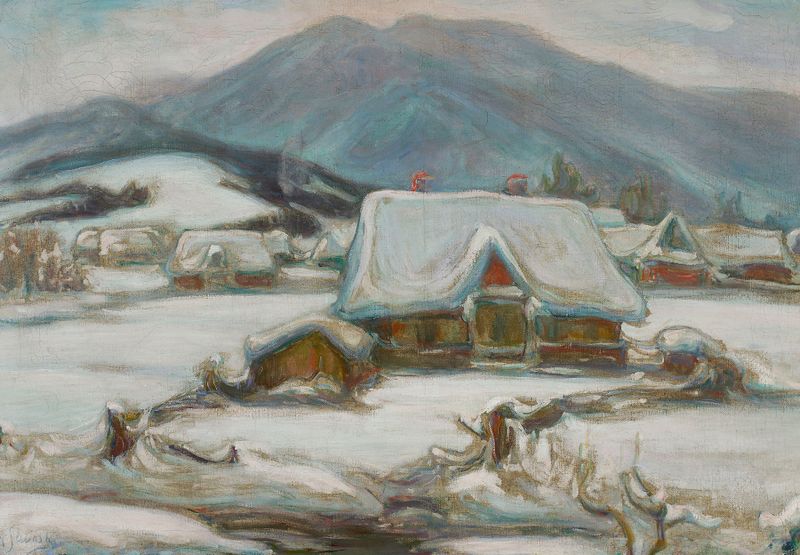
Cottages in the snow
Władysław Ślewiński

Sea
Władysław Ślewiński

Waves in a rocky bay
Władysław Ślewiński

Sea with white waves
Władysław Ślewiński
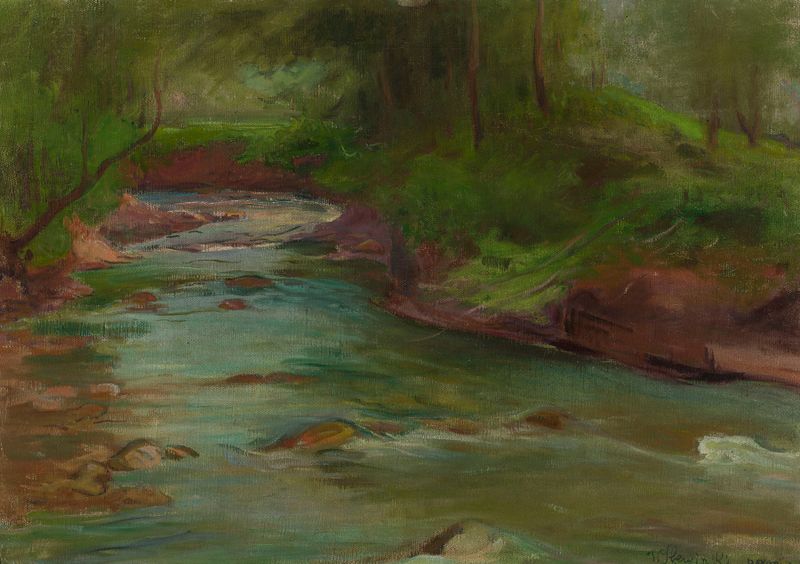
Mountain stream – in the Tatra Mountains below Mt Nosal
Władysław Ślewiński
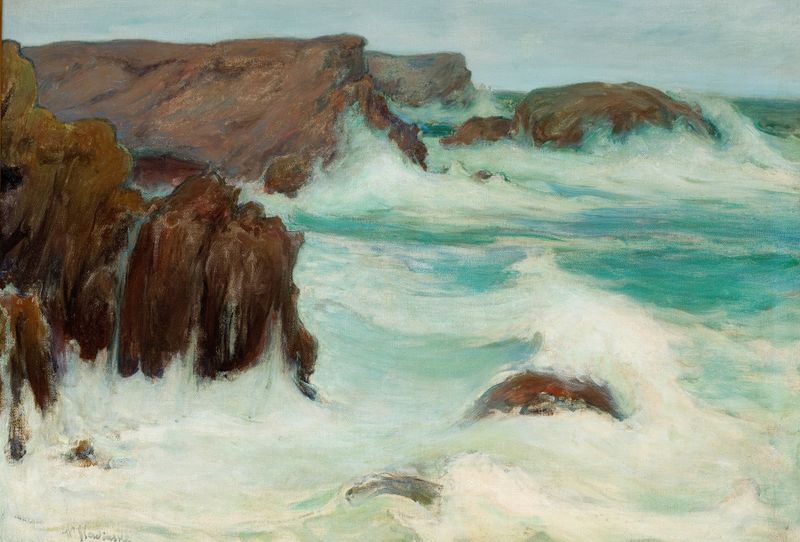
The Sea in Brittany
Władysław Ślewiński

A Coastal Landscape
Władysław Ślewiński

Sea at night
Władysław Ślewiński





