
Mountain Landscape at Sunset — History & Facts
Could a single brushstroke hold eternity? In Mountain Landscape at Sunset, evanescent hues blend seamlessly to evoke the depth of sorrow and beauty intertwined in nature's embrace. Look to the foreground where soft, verdant hills roll gently, contrasting against the backdrop of dramatic, fiery clouds. Notice how the light falls upon the peaks, catching them in a luminous glow that seems to both invite and withdraw. The brushwork is fluid, with dappled strokes that capture the fleeting moments before twilight, leading the viewer’s eye upward toward the horizon, where the sun's descent creates a cacophony of warm oranges and cool purples. As you explore further, observe the subtle tension between the tranquil landscape and the tumultuous sky.
The mountains, stoic and immovable, reflect the weight of grief, while the dynamic clouds suggest the chaos of emotions that accompany loss. Each stroke carries a whisper of longing, suggesting that even in beauty, there lies an undercurrent of melancholy. The serene scene becomes a meditation on the passage of time and the bittersweet nature of existence. Fragonard painted this work around 1765, during a period marked by the Rococo movement's playful excess.
At this time, he was transitioning from light-hearted themes toward deeper emotional expressions, coinciding with personal losses that influenced his artistry. The world was undergoing shifts in thought, as Enlightenment ideas gained traction, challenging artists to explore not just beauty, but the profound meanings hidden within the human experience.
More Artworks by Jean-Honoré Fragonard
Browse all →
The Swing
Jean-Honoré Fragonard
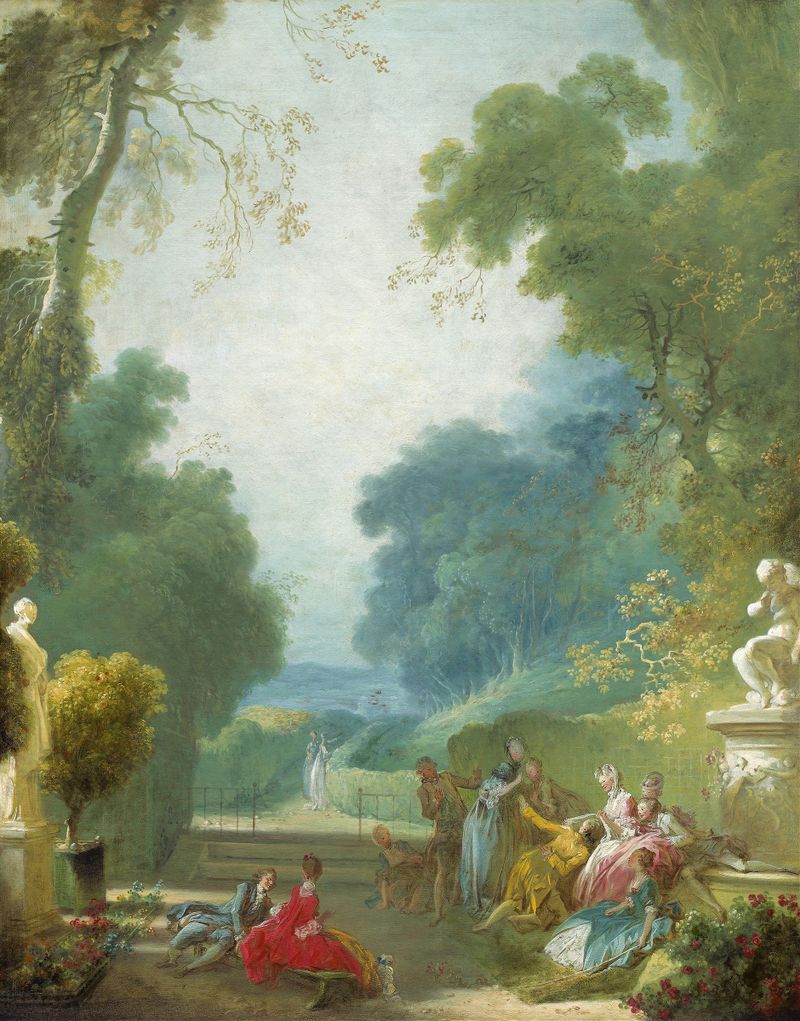
A Game of Hot Cockles
Jean-Honoré Fragonard
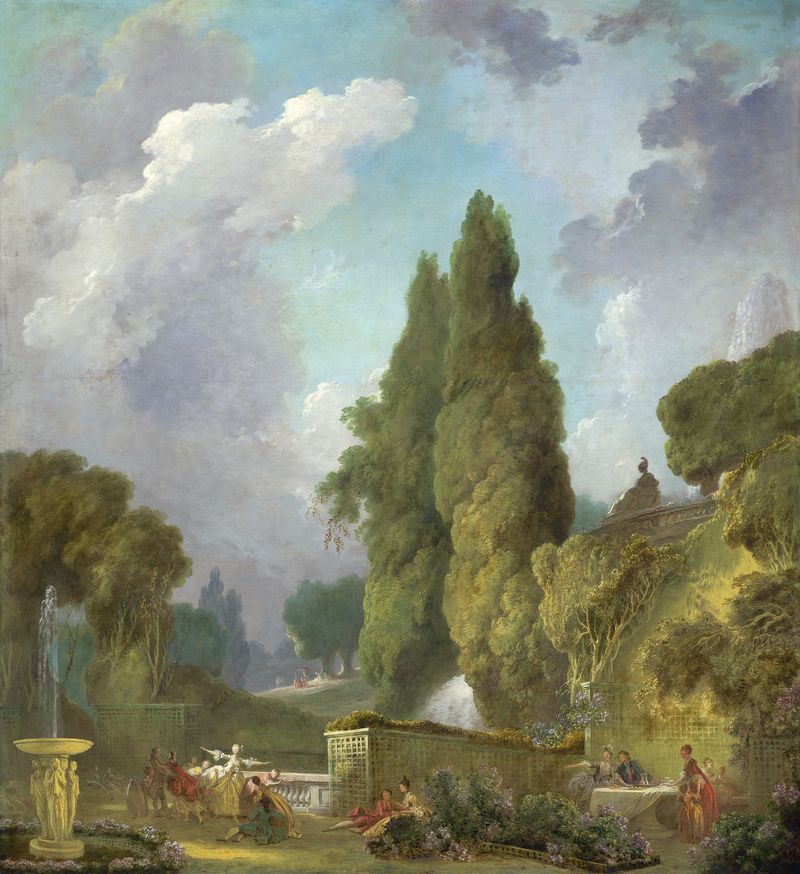
Blindman’s Buff
Jean-Honoré Fragonard

The First Steps
Jean-Honoré Fragonard
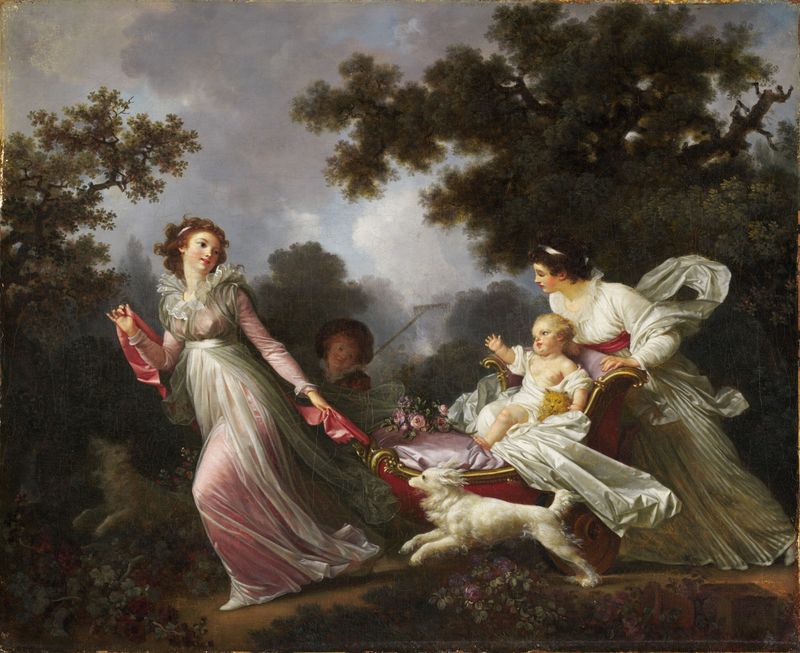
The Beloved Child
Jean-Honoré Fragonard
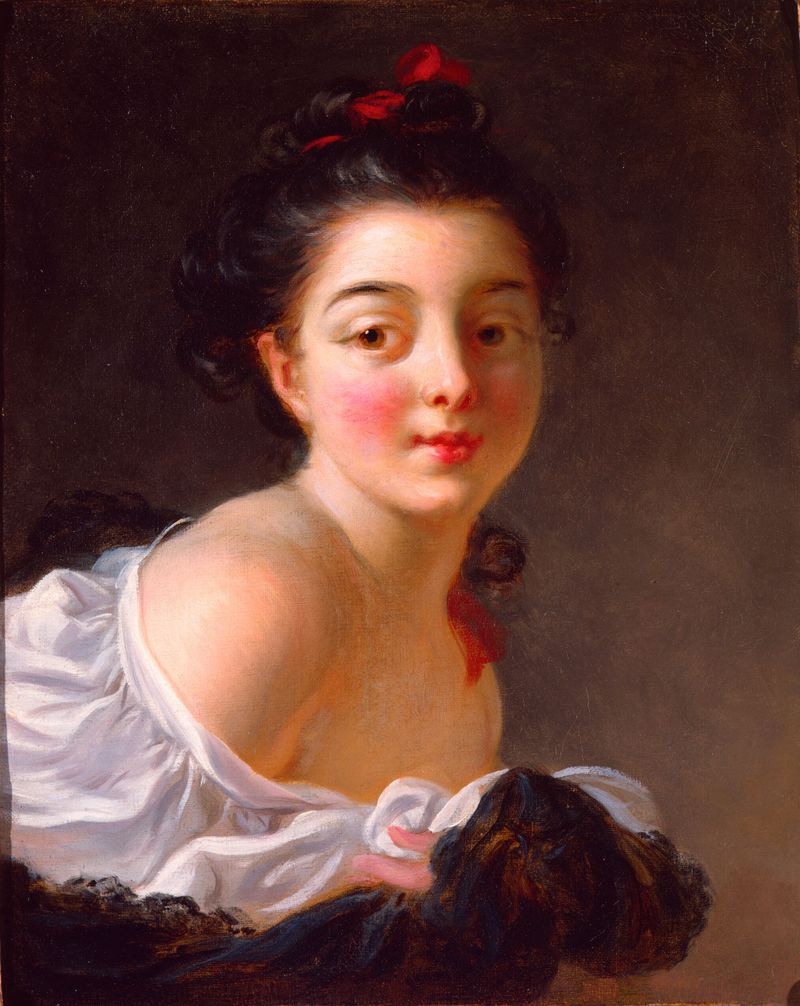
Young Woman with Brown Hair
Jean-Honoré Fragonard
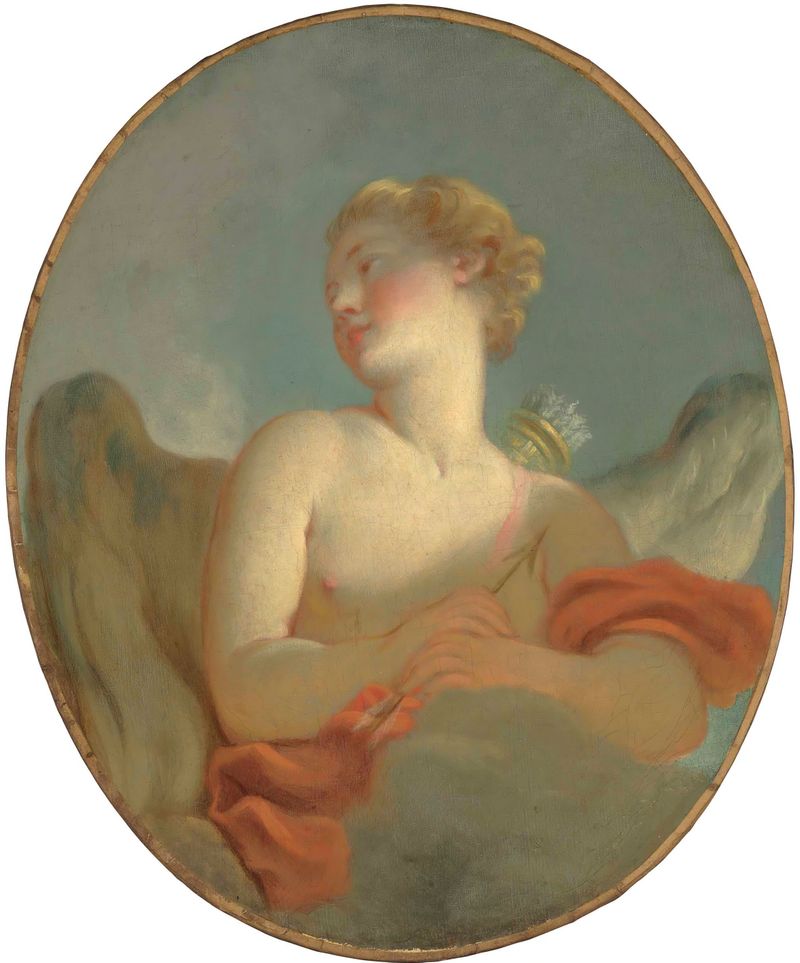
‘L’Amour’; said to be a Portrait of Marie Catherine Colombe (1751-1830) as Cupid
Jean-Honoré Fragonard
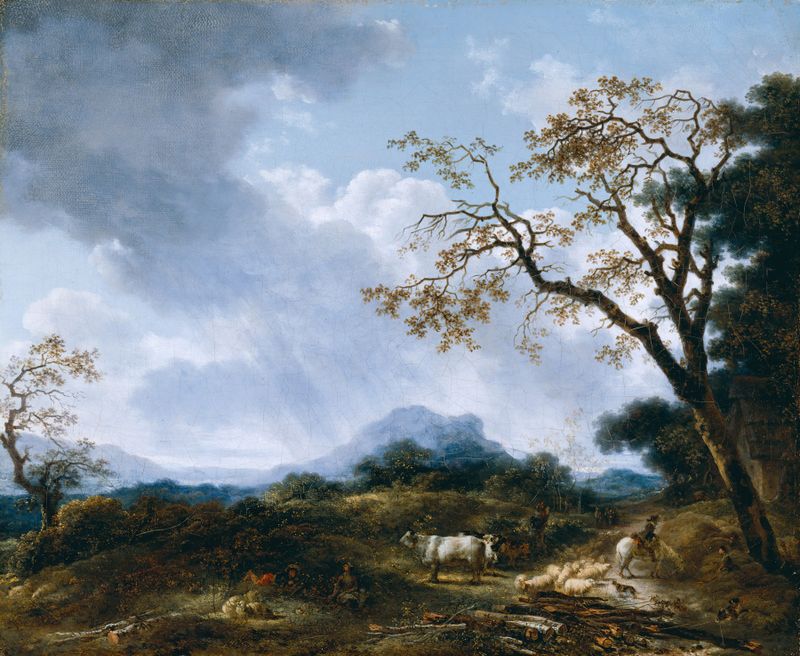
Landscape With Passing Shower
Jean-Honoré Fragonard

The Grand Staircase of the Villa d’Este at Tivoli
Jean-Honoré Fragonard

A Game of Horse and Rider
Jean-Honoré Fragonard





