
Mountain Landscape with a Hunting Party — History & Facts
What if silence could speak through light? In Mountain Landscape with a Hunting Party, a haunting stillness envelops the scene, urging us to listen to nature's breath and the invisible rhythms of life. Look to the left at the majestic mountains, their peaks illuminated by a soft, golden hue that hints at the setting sun. The lush greenery below contrasts starkly with the rugged terrain, creating a visual dialogue between gentleness and strength. The figures of the hunting party are small yet purposeful, their positioning suggesting intent but also a disconnection from the vastness surrounding them.
Notice how the interplay of shadows adds depth, shaping the narrative of their expedition while inviting contemplation about their place within this grand landscape. The subtle tension arises from the juxtaposition of man against nature. The hunters, poised and alert, embody the pursuit of life, yet they appear insignificant beneath the towering mountains. This contrast speaks to the void that exists in the human experience—a reminder of our fleeting endeavor against the permanence of the natural world.
The painting evokes a sense of existential reflection, as the viewer is drawn into the serene solitude of the mountains, pondering man's ephemeral pursuits in the face of eternity. Johann Georg Pforr painted this work in 1787 while residing in Germany, a time marked by the burgeoning Romantic movement that sought to celebrate nature's beauty and complexity. In a period when artists were increasingly exploring emotional depth and the sublime, Pforr was influenced by the ideals of his contemporaries, seeking to capture the awe-inspiring landscapes that surrounded him and provoke introspection in his audience.
More Artworks by Johann Georg Pforr
Browse all →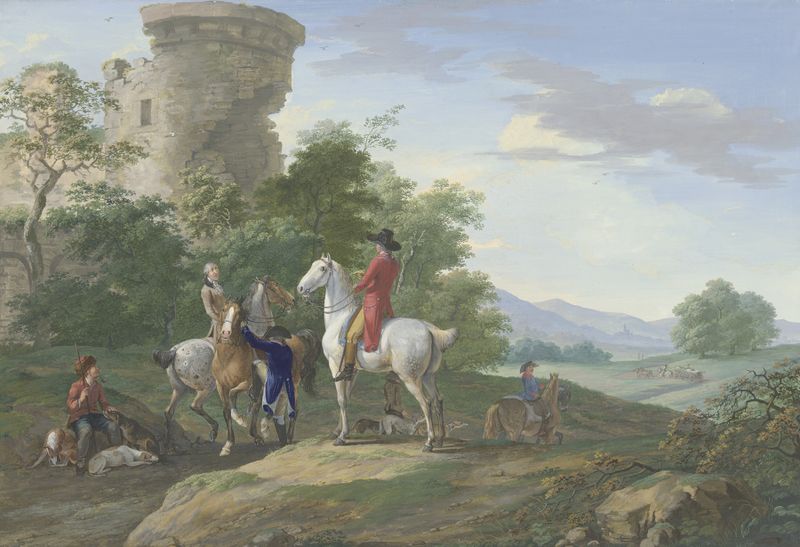
Jäger mit Pferden und Jagdhunden machen bei einer Ruine halt
Johann Georg Pforr
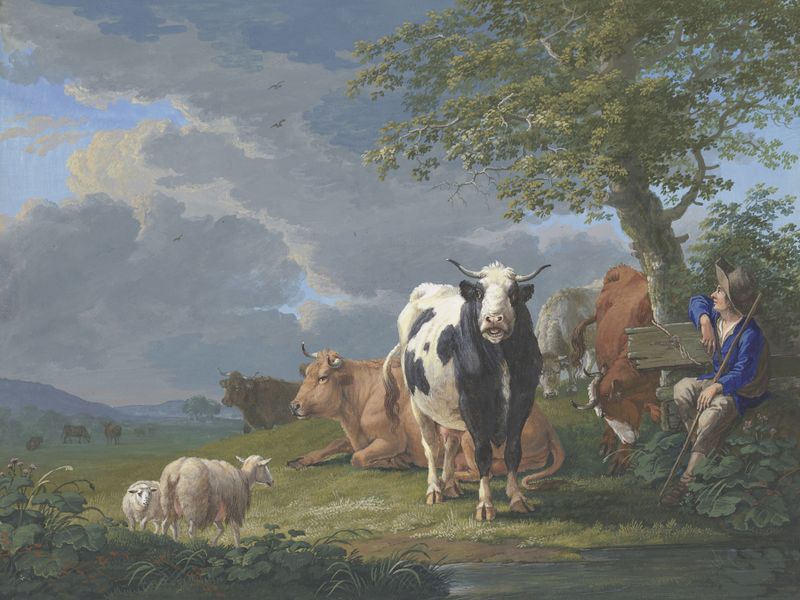
Hirte unter einem Baum mit seiner Rinderherde und zwei Schafen
Johann Georg Pforr
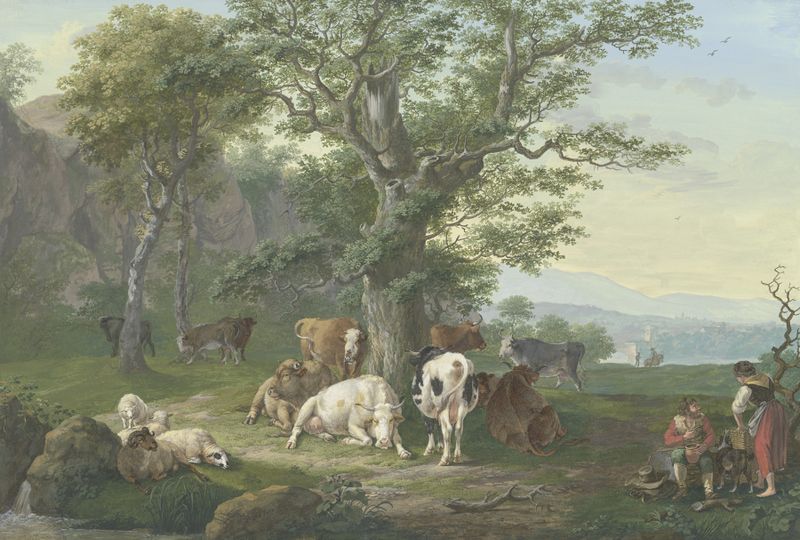
Lagernde Herde unter einer Eiche, rechts Hirte und Hirtin bei der Mahlzeit und Ausblick in die Ferne
Johann Georg Pforr
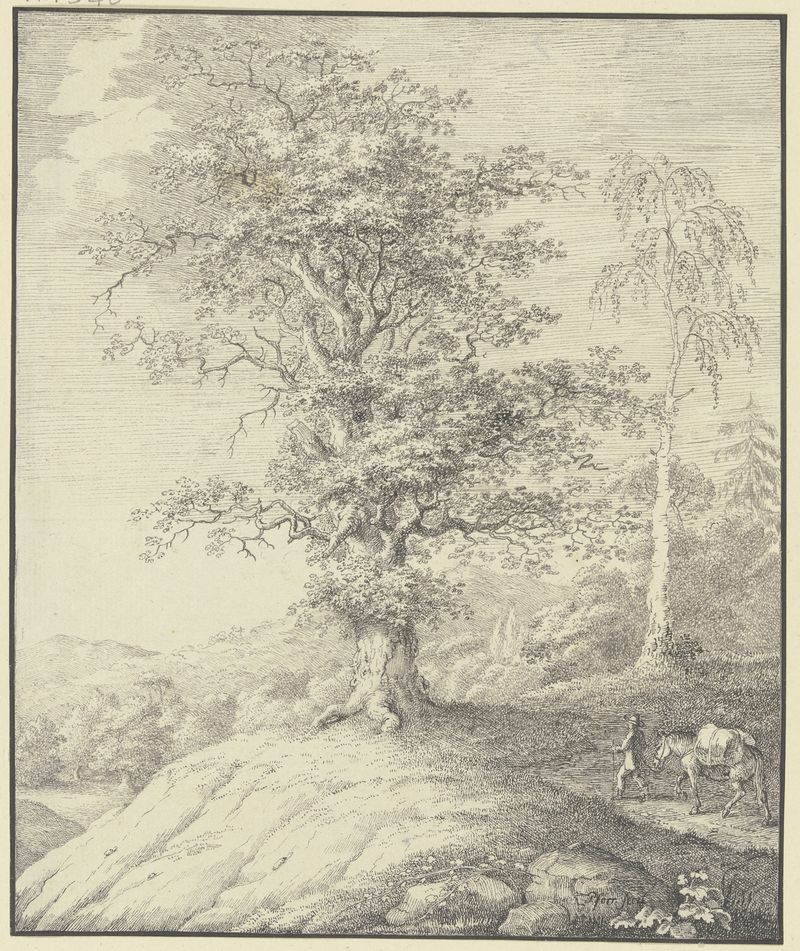
Eichbaum und Birke auf einer Anhöhe, von rechts führt ein Mann ein bepacktes Pferd herbei
Johann Georg Pforr
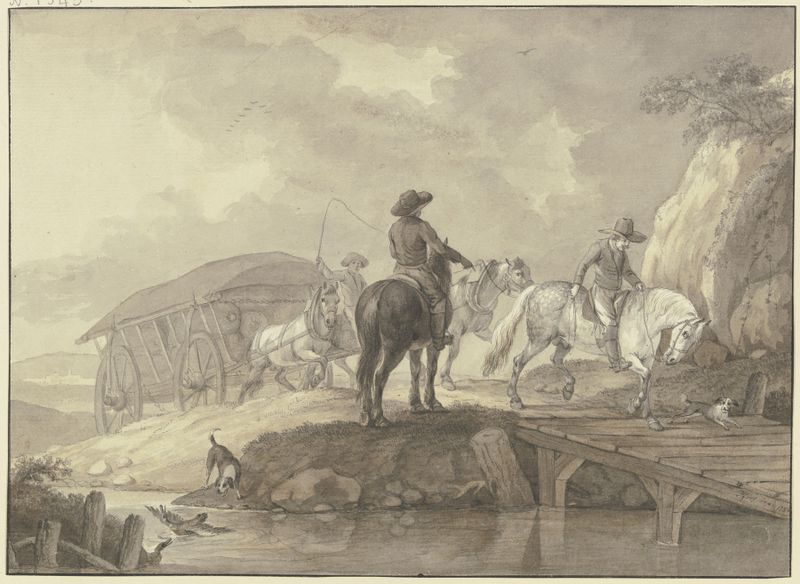
Ein mit Säcken beladener Lastwagen, begleitet von zwei Reitern und zwei Hunden, fährt über eine Brücke
Johann Georg Pforr
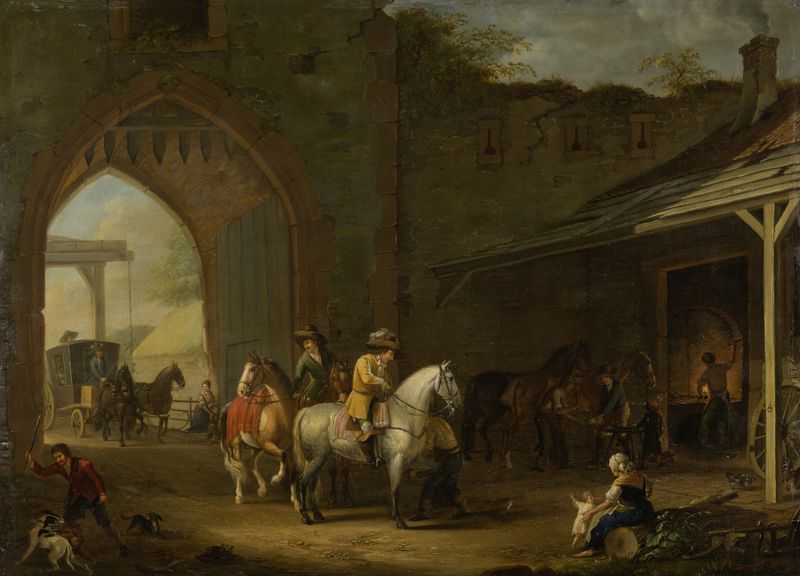
Horsemen at the Blacksmith’s
Johann Georg Pforr
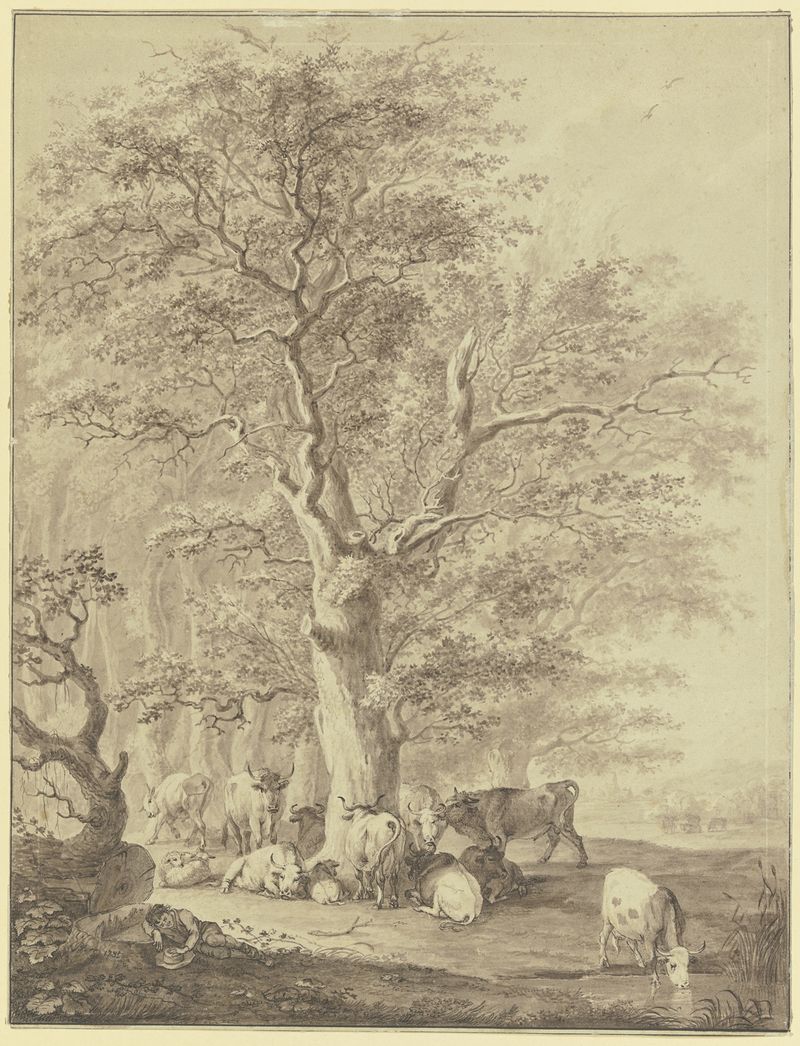
Rinderherde mit zwei Schafen und dem Hirten unter einer Eiche rastend
Johann Georg Pforr

Mondscheinlandschaft an einem Fluß, Hirte und Hirtin treiben das Vieh zum Hof
Johann Georg Pforr
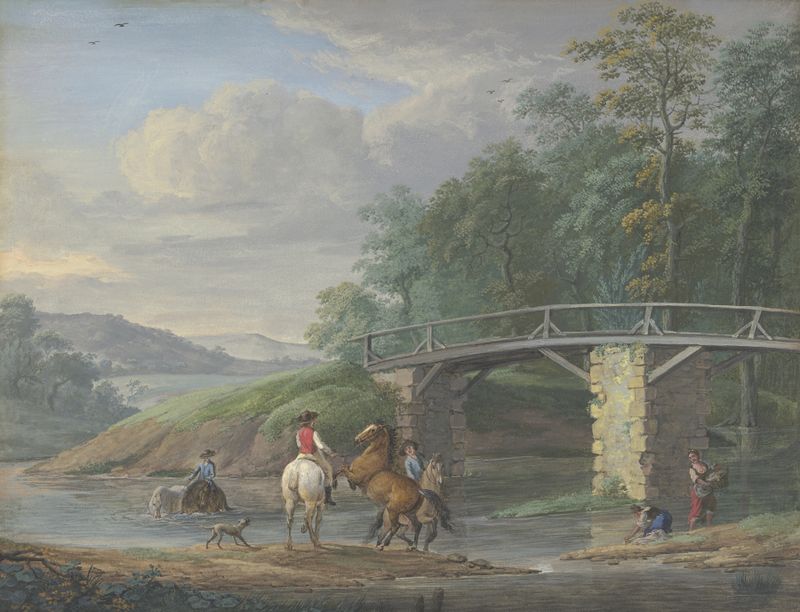
Pferde in der Schwemme bei einer Brücke, rechts zwei Wäscherinnen
Johann Georg Pforr

Viehherde mit zwei Hirten, bei einer Steinbrücke durch das Wasser schwimmend
Johann Georg Pforr





