Myślewicki Palace in Łazienki — History & Analysis
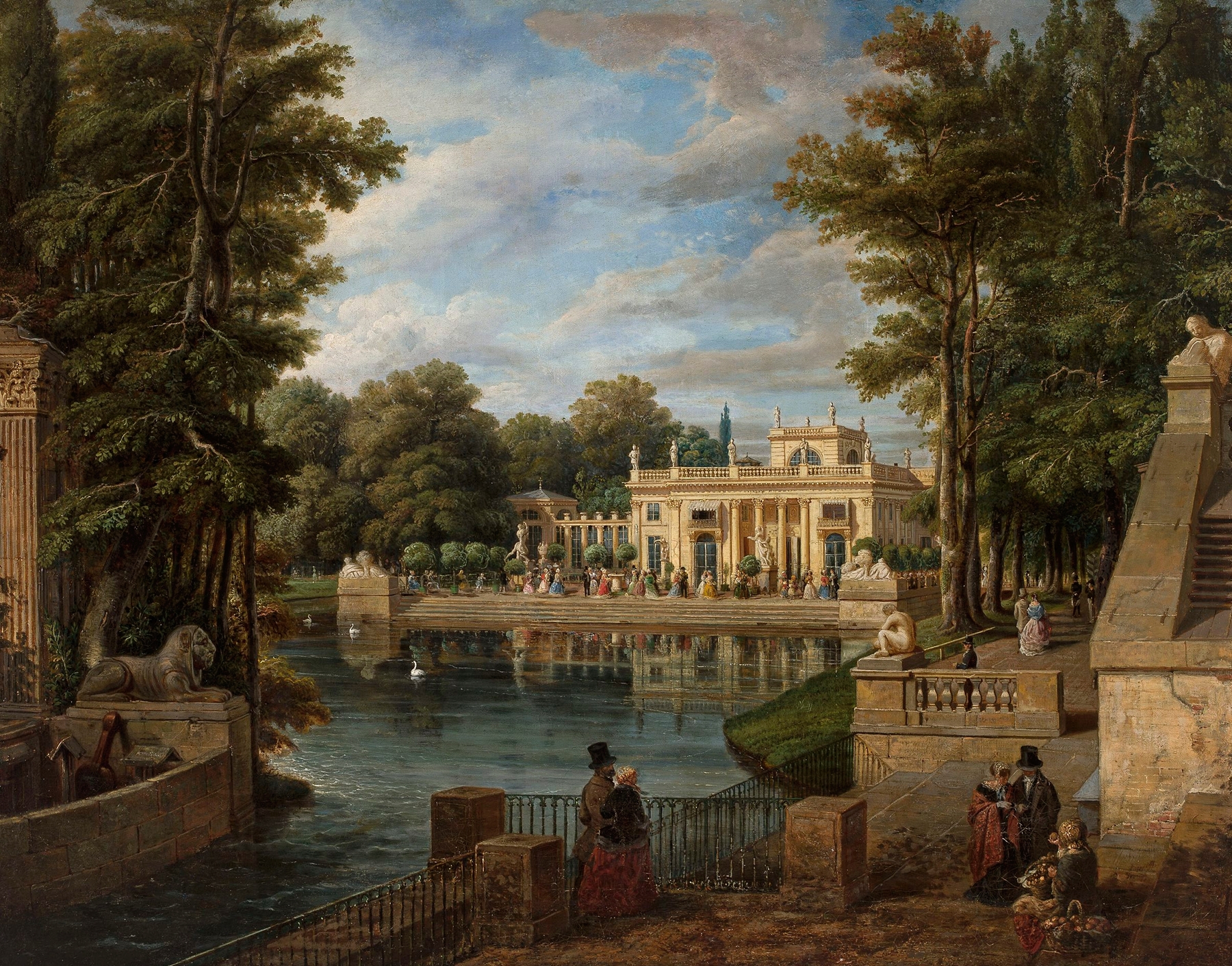
“Every silence here is a confession.” In the stillness of a moment, nostalgia wraps around us like a soft blanket, inviting reflection on what once was and what remains. Focus on the grand structure of the palace, the focal point of this composition, where strong lines draw the eye upward toward the graceful roof. Notice how the light falls upon its façade, illuminating the delicate play of shadows that dance along the stonework. The surrounding greenery, lush and vibrant, envelops the palace, creating a harmonious balance between architecture and nature, while the serene waters of the reflecting pool mirror the beauty above, drawing a sense of tranquility from every element.
Delve into the contrasts present in the artwork; the solidity of the palace against the fluidity of the water evokes a feeling of permanence amidst the passage of time. The reflection in the pool not only serves as a visual echo of the building but also suggests deeper layers of memory and longing. The lush foliage hints at the comfort of nature and its ability to preserve history, while the stillness of the scene belies an underlying melancholy, as if the palace, despite its grandeur, longs for the voices and laughter that once filled its halls.
Marcin Zaleski painted this work in 1870, capturing a moment in the cultural renaissance of Poland, where the romantic spirit thrived amidst tumultuous political changes. Working in Warsaw, he sought to encapsulate not just the beauty of the landscape but the essence of a nation reflecting on its own identity. Through this piece, he gifted viewers a glimpse into the spirit of a bygone era, wrapped in the layers of his own artistic narrative.