
Mytton Hall — History & Facts
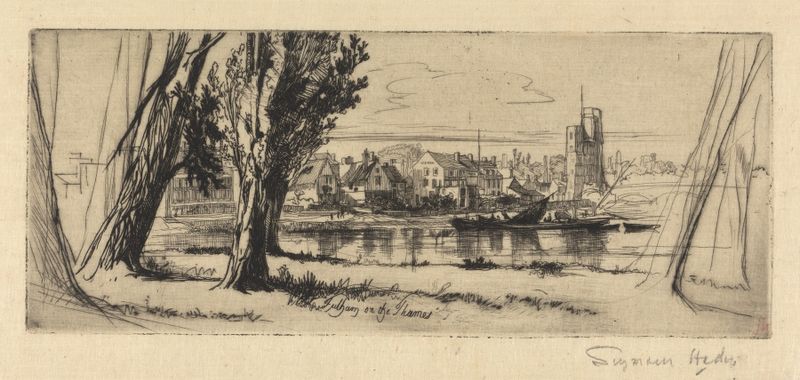
Where does light end, and longing begin? In the tender embrace of shadow and illumination, we find innocence captured through time, forever suspended in the pulse of a fleeting moment. Look to the left at the intricate play of light dappled across the lush trees, where the sun filters through verdant leaves, casting soft shadows on the ground. Notice the serene reflection in the gentle waters of the river, a mirror to both the sky and the surrounding landscape. The delicate etching technique, with its fine lines and soft textures, evokes a sense of tranquil nostalgia, inviting contemplation and a connection to nature's untouched beauty. As you explore the composition, deeper meanings emerge—the juxtaposition of light and shadow represents the duality of innocence and experience.
The figures, perhaps a family or a couple, seem lost in their own world, embodying a moment of stillness amid the flowing river—this balance between movement and pause speaks to the ephemeral nature of life itself. The gentle curves of the landscape serve as a reminder of fleeting moments that shape our memories, blurring the lines between reality and reflection. In 1859, Haden was deeply engaged in the art of etching, working in London where the art scene pulsated with innovative ideas and techniques. This period marked a transition in his life; he was not only refining his craft but also grappling with the artistic shifts around him.
As he rendered Mytton Hall, he captured not just a physical location but a profound sense of connection to the innocence of nature, articulated through the intricate dance of light and shadow.
More Artworks by Francis Seymour Haden
Browse all →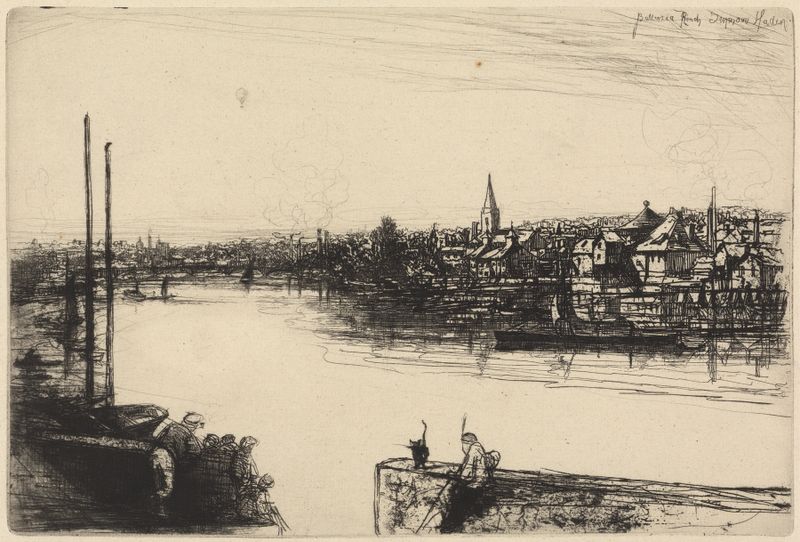
Battersea Reach
Francis Seymour Haden

Nine Barrow Down
Francis Seymour Haden
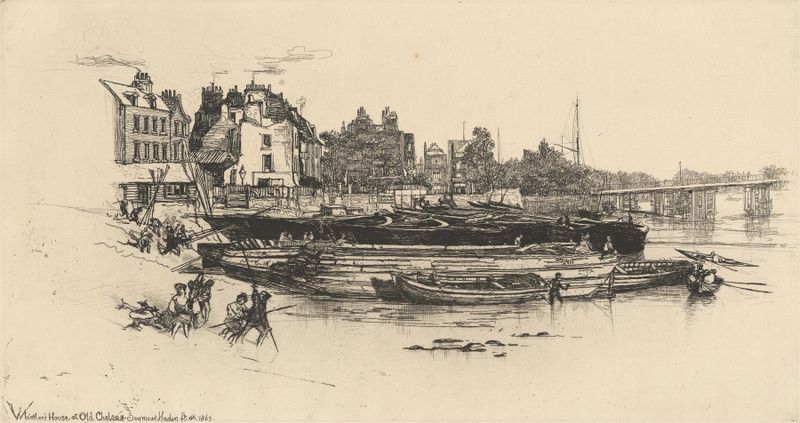
Whistler’s House at Old Chelsea
Francis Seymour Haden

The Mill-Wheel
Francis Seymour Haden
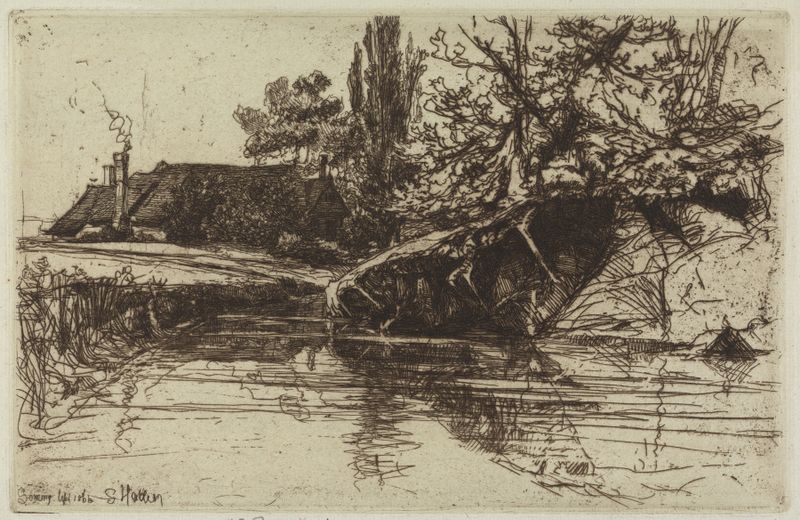
The Moat House
Francis Seymour Haden

By Twickenham
Francis Seymour Haden

Newcastle Emlyn
Francis Seymour Haden
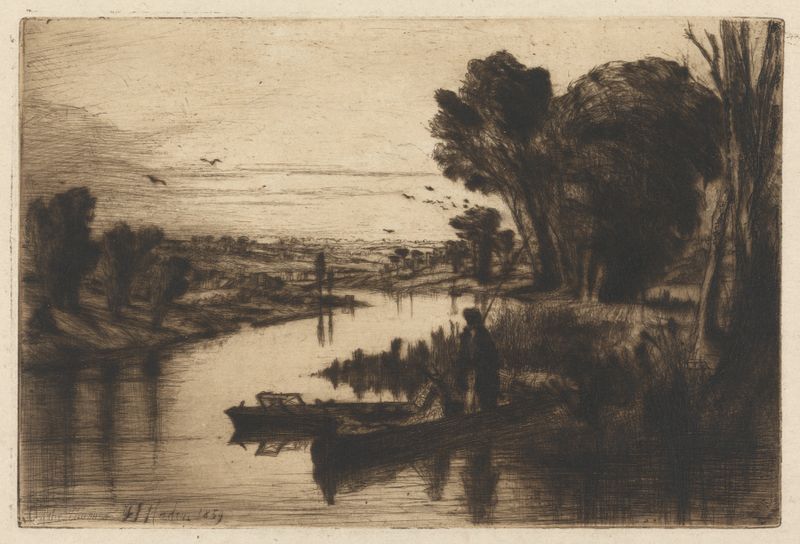
On the Thames
Francis Seymour Haden

Kidwelly Castle
Francis Seymour Haden
Fulham on the Thames
Francis Seymour Haden





