Discover insights about this artwork
Naked Figures — History & Facts
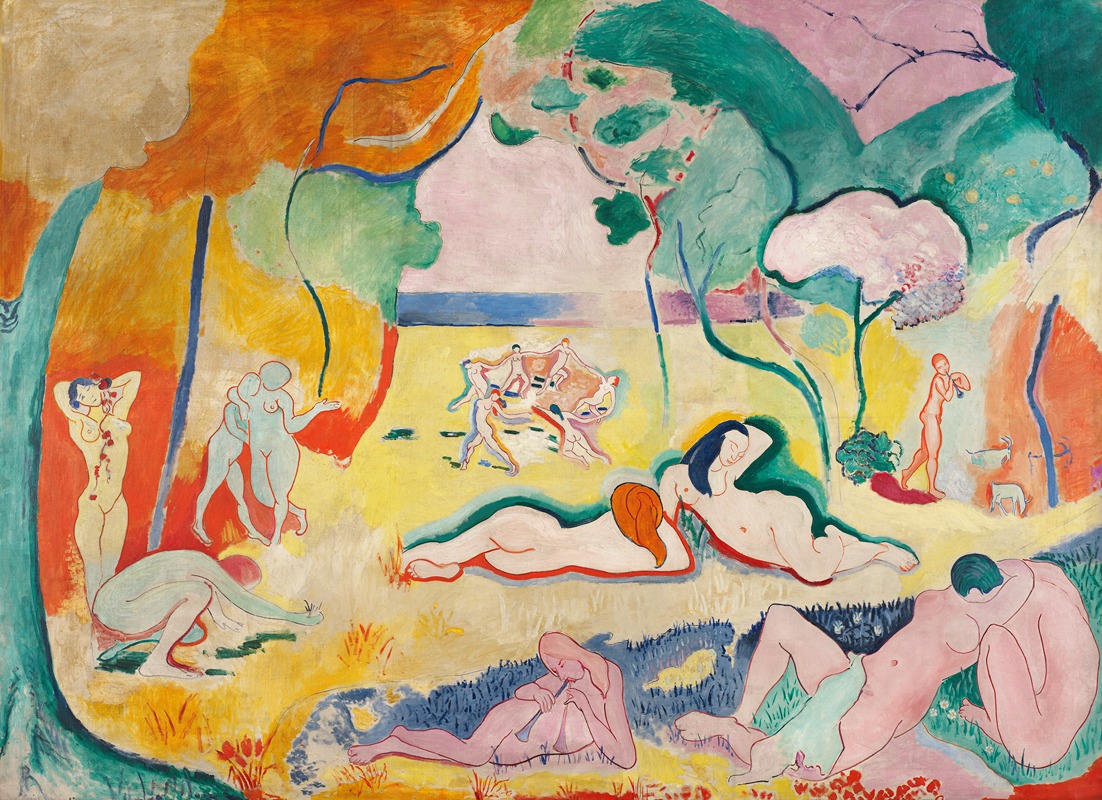
In Naked Figures, Edvard Munch presents a striking composition of human forms, rendered in a raw and expressive manner. The figures are intertwined, their bodies exposed and vulnerable, set against a muted background. The color palette is dominated by earthy tones, with hints of red and blue that add to the emotional intensity of the scene.
The overall effect is one of discomfort and raw humanity, inviting the viewer to reflect on the nature of existence. The painting is executed in oil on canvas, a medium that allows for rich texture and depth. Munch's brushwork is loose and dynamic, contributing to the sense of movement and emotional turmoil within the figures. The dimensions are approximately 100 x 120 cm, making it a substantial piece that commands attention.
Viewers can observe the way Munch captures the human form with both sensitivity and urgency. Edvard Munch was a key figure in the development of Expressionism, and Naked Figures exemplifies his exploration of human emotion and vulnerability. Created in the 1890s, this work reflects Munch's interest in the psychological aspects of human relationships. An interesting fact about this painting is that it was part of a series of works where Munch sought to depict the complexities of love and desire.
This piece stands out for its raw portrayal of the human condition, making it a significant work in Munch's oeuvre.