
Naval Battle between Dutch and Spanish Ships of the Line — History & Facts
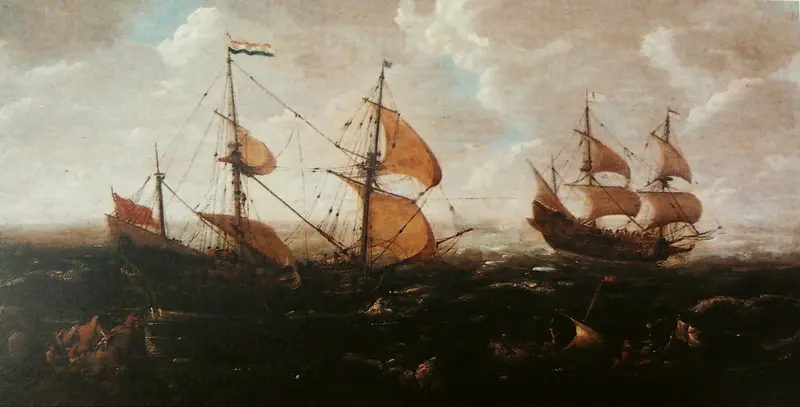
What first catches the eye in Naval Battle between Dutch and Spanish Ships of the Line is not the violence of battle, but the sheer breadth of sea and sky that dwarfs the ships themselves. The painter, Abraham de Verwer, leads the viewer’s gaze from the clustered sails on the left—flags snapping, rigging taut—outward into a luminous haze where the horizon dissolves. Each vessel is meticulously rendered, but it is the play of light that commands the scene: a shaft of brightness breaks through the clouds, illuminating the ships and suggesting both the hope and peril of naval conflict.
The calm, almost contemplative sea in the foreground, with a pod of dolphins skimming its surface, hints at the uneasy balance between nature’s indifference and human ambition. Works like this, produced between 1618 and 1669, belong to a period when maritime painting flourished in the Dutch Republic and beyond. Such scenes were commissioned by merchants, naval officers, or city councils eager to celebrate victories or commemorate the might of their fleets. The genre thrived on the technical challenge of rendering water, sky, and ship with convincing detail, while also serving as a visual record of national pride.
Today, this painting is housed in the collection accessible through the Statens Museum for Kunst, its precise origins and journey largely unrecorded. What remains is the artist’s vision: a world where the fortunes of nations unfold beneath an ever-changing sky, and the viewer is left to imagine the stories behind each distant sail.
More Artworks by Abraham de Verwer

An Amsterdam East Indiaman
Abraham de Verwer
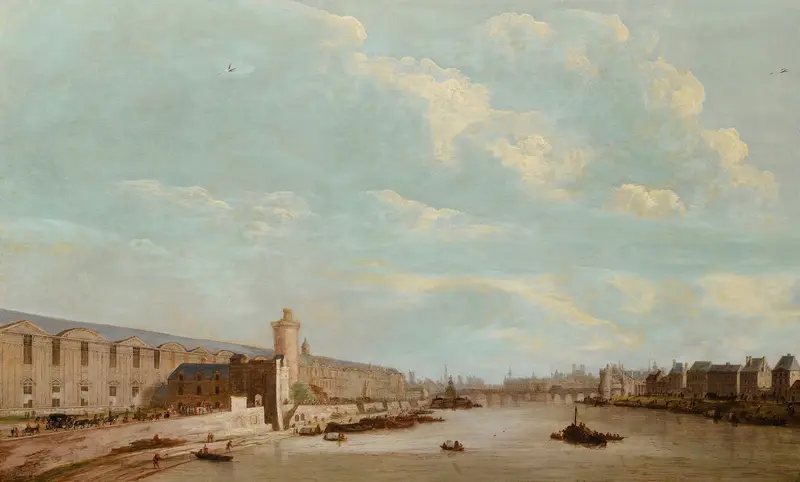
View of Paris from the Pont-royal with the Grande galerie du Louvre, the Pont-Neuf and the Nesle tower
Abraham de Verwer
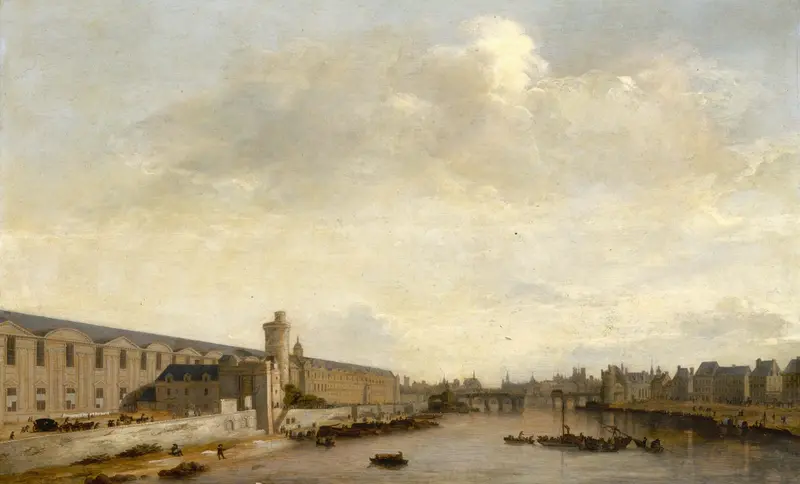
La Grande Galerie du Louvre, avec la porte Neuve et la tour de Bois
Abraham de Verwer
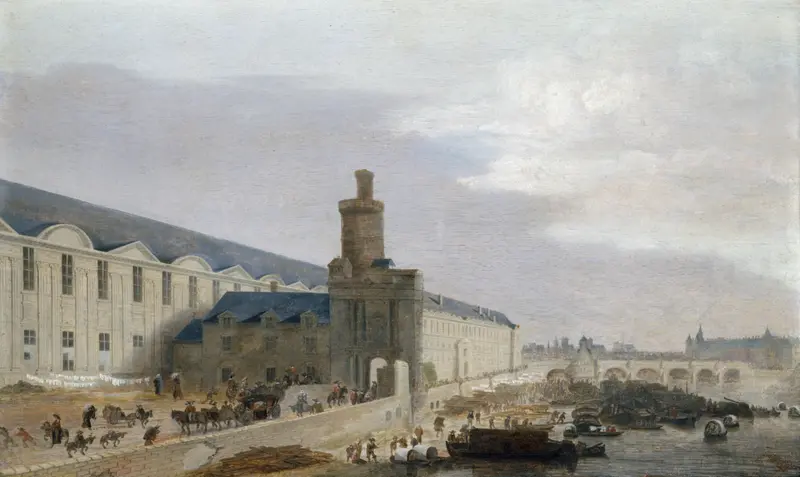
La Grande Galerie du Louvre avec la porte Neuve et la tour de Bois
Abraham de Verwer
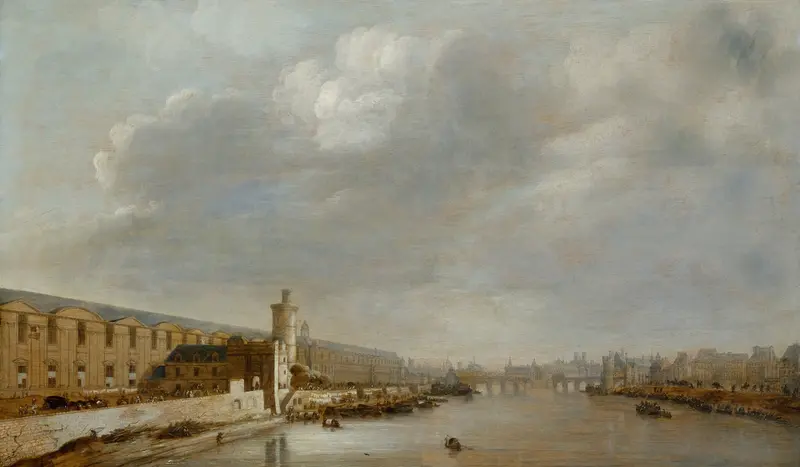
La Grande Galerie du Louvre avec la porte Neuve et la tour de Bois
Abraham de Verwer
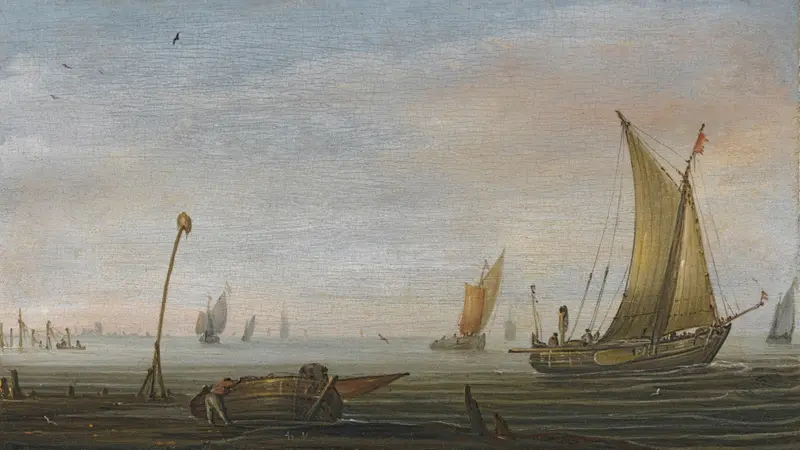
Small Vessels On The Zuider Zee
Abraham de Verwer
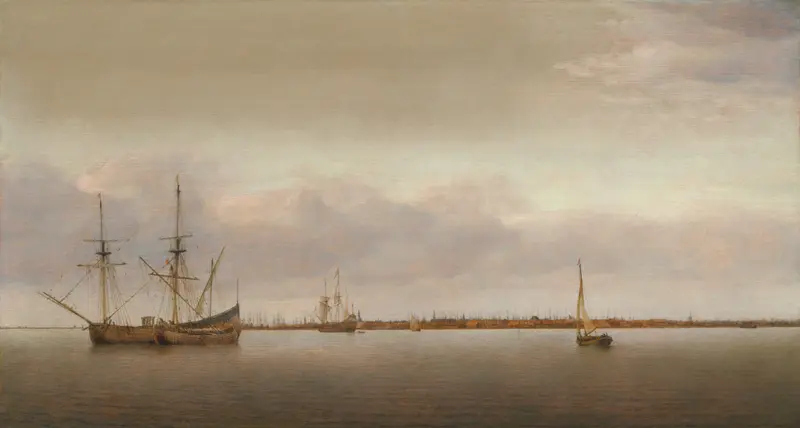
View of Hoorn
Abraham de Verwer
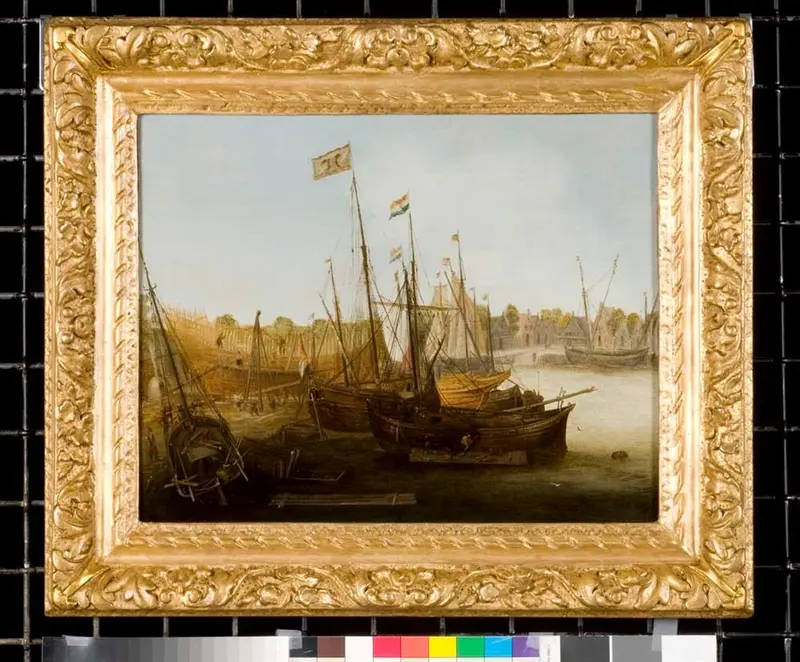
A shipyard with vessels being built
Abraham de Verwer
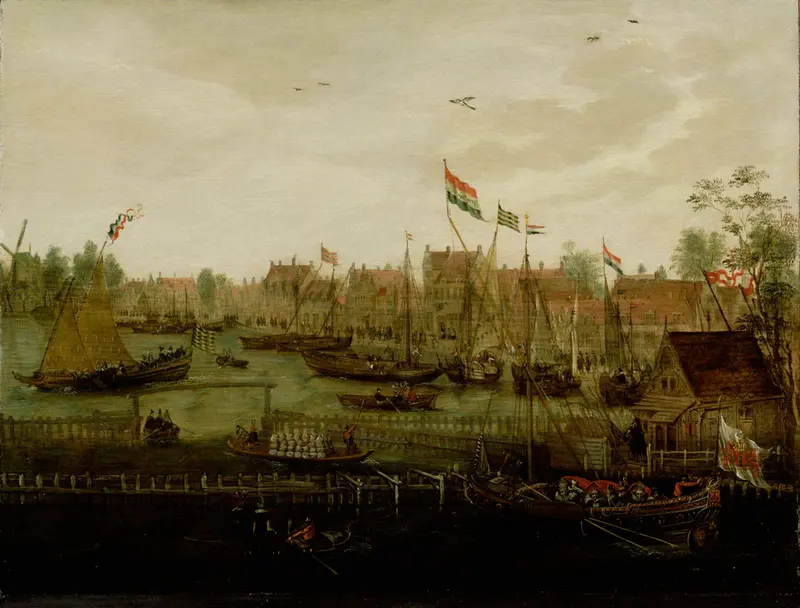
Gezicht vanaf de Blauwbrug over de Amstel-Schepen op de Amstel-View across the river Amstel from the Blauw Bridge
Abraham de Verwer
Sailboats at sea.
Abraham de Verwer





