
View of Hoorn — History & Facts
What first seizes the eye in View of Hoorn is the sheer expanse of sky, claiming nearly three-quarters of the canvas and dwarfing the ships and the distant town. The painter, Abraham de Verwer, draws us into a world where the horizon sits low, allowing the pale, cloud-brushed heavens to set the mood—tranquil, expectant, and quietly grand. The ships, rendered with careful rigging and subtle flags, anchor the foreground, their dark hulls mirrored in the calm water.
The town of Hoorn itself is a thin, intricate silhouette, its church spires and masts blending into a single, industrious line. Every detail—the angled sails, the delicate reflections, the faint orange glow along the shore—speaks of a harbor at rest, yet alive with the promise of trade and travel. Painted around 1650, this work belongs to a period when Dutch artists turned their attention to their own landscapes and cities, celebrating the prosperity brought by maritime commerce. Town views like this were often commissioned by proud city officials or wealthy merchants eager to display their connection to the bustling world of trade.
Abraham de Verwer was one among several painters who specialized in these panoramic vistas, capturing both the physical reality and the civic pride of places like Hoorn. Today, the painting resides in the collection of the National Gallery of Art, a quiet testament to the era when Dutch towns looked outward to the world, their fortunes tied to the ships that filled their harbors. Let your gaze linger on the horizon—imagine the journeys beginning and ending just beyond the frame.
More Artworks by Abraham de Verwer

An Amsterdam East Indiaman
Abraham de Verwer
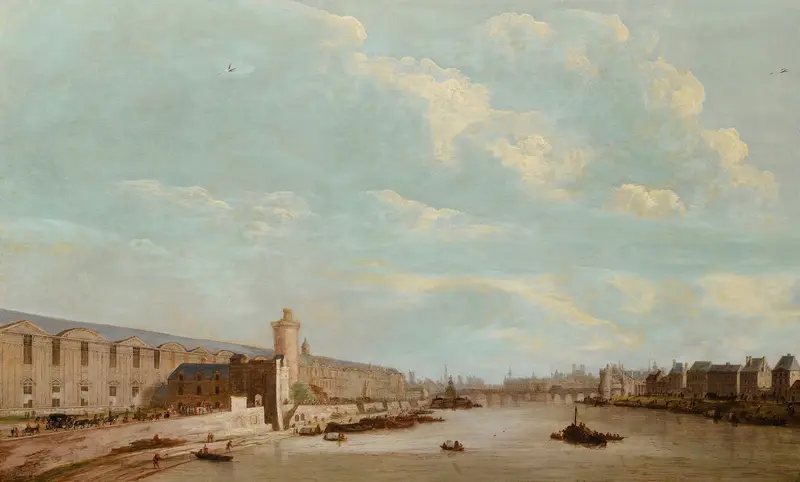
View of Paris from the Pont-royal with the Grande galerie du Louvre, the Pont-Neuf and the Nesle tower
Abraham de Verwer
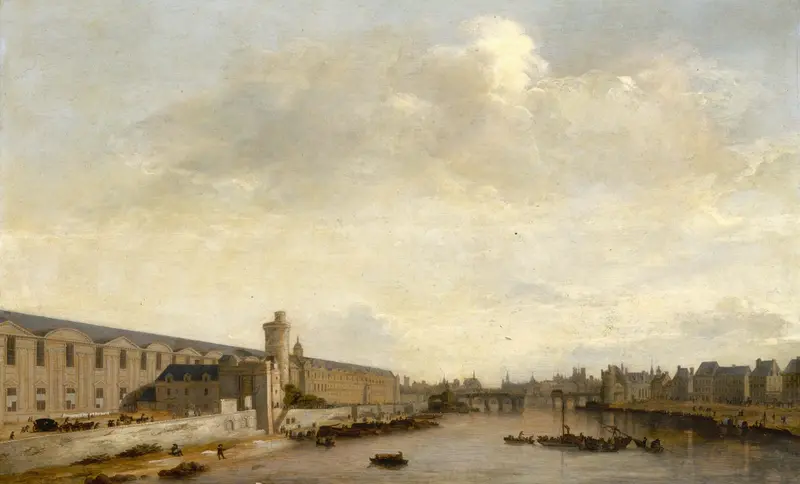
La Grande Galerie du Louvre, avec la porte Neuve et la tour de Bois
Abraham de Verwer
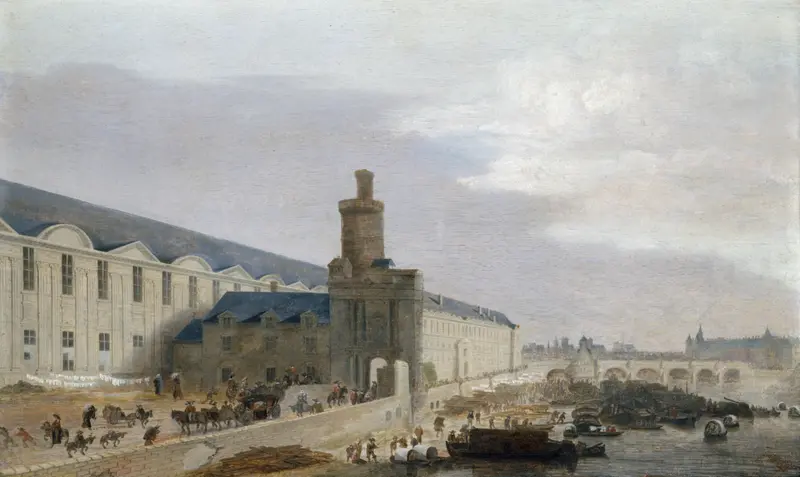
La Grande Galerie du Louvre avec la porte Neuve et la tour de Bois
Abraham de Verwer
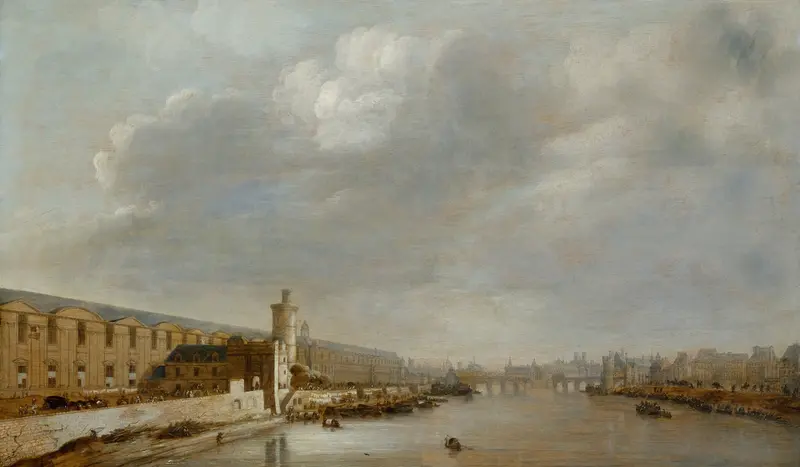
La Grande Galerie du Louvre avec la porte Neuve et la tour de Bois
Abraham de Verwer
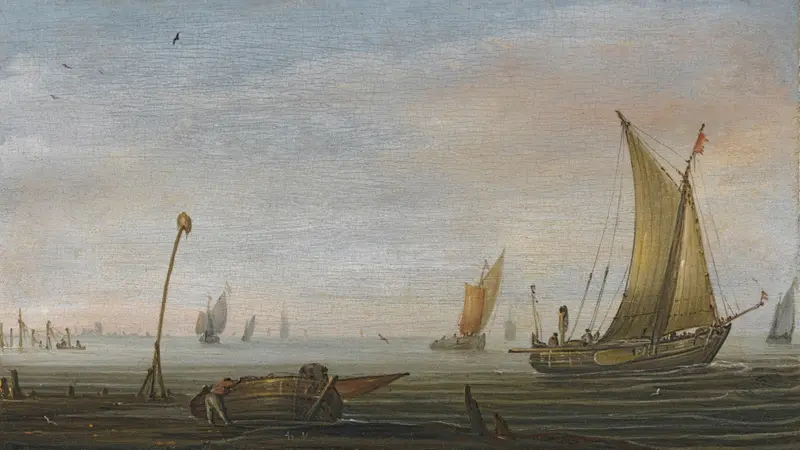
Small Vessels On The Zuider Zee
Abraham de Verwer
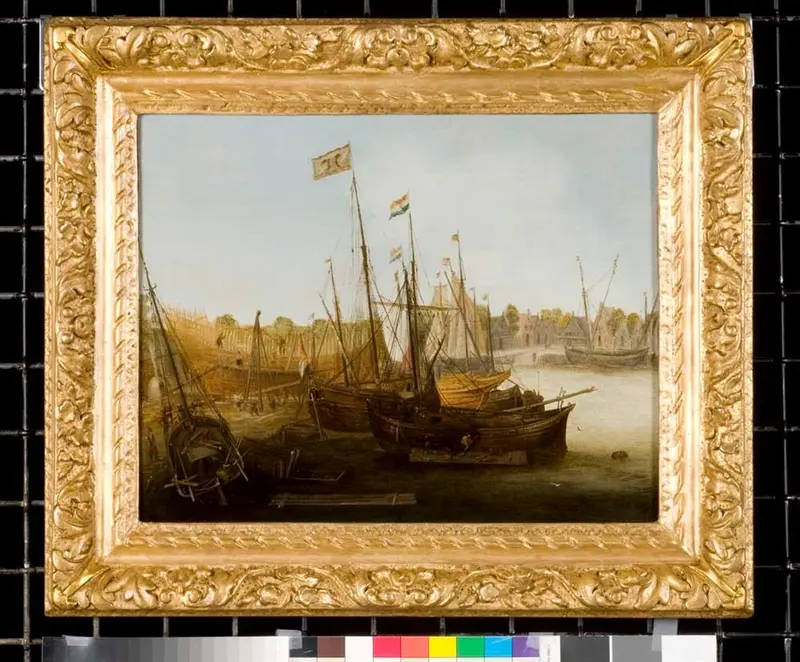
A shipyard with vessels being built
Abraham de Verwer
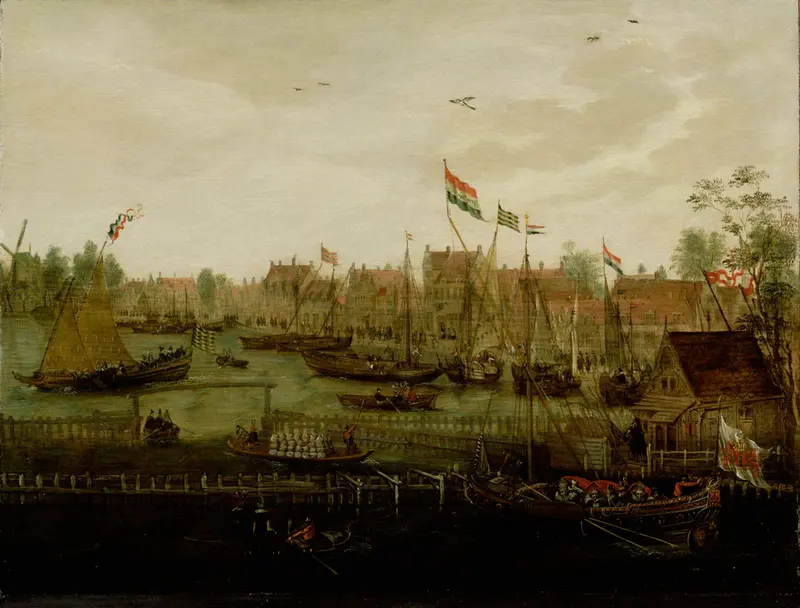
Gezicht vanaf de Blauwbrug over de Amstel-Schepen op de Amstel-View across the river Amstel from the Blauw Bridge
Abraham de Verwer
Naval Battle between Dutch and Spanish Ships of the Line
Abraham de Verwer
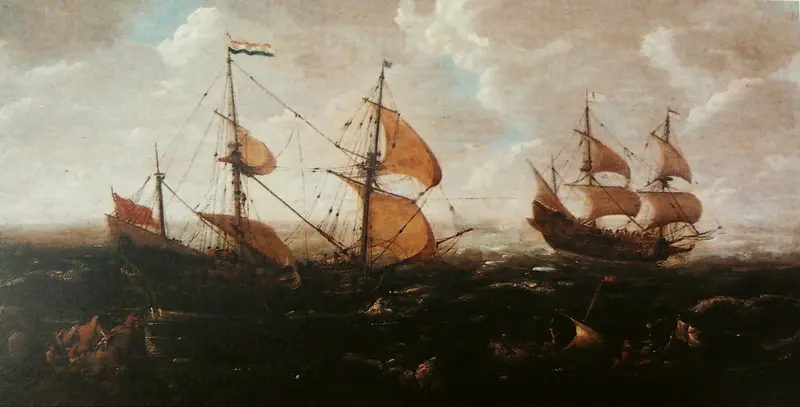
Sailboats at sea.
Abraham de Verwer





