
New Inn — History & Facts
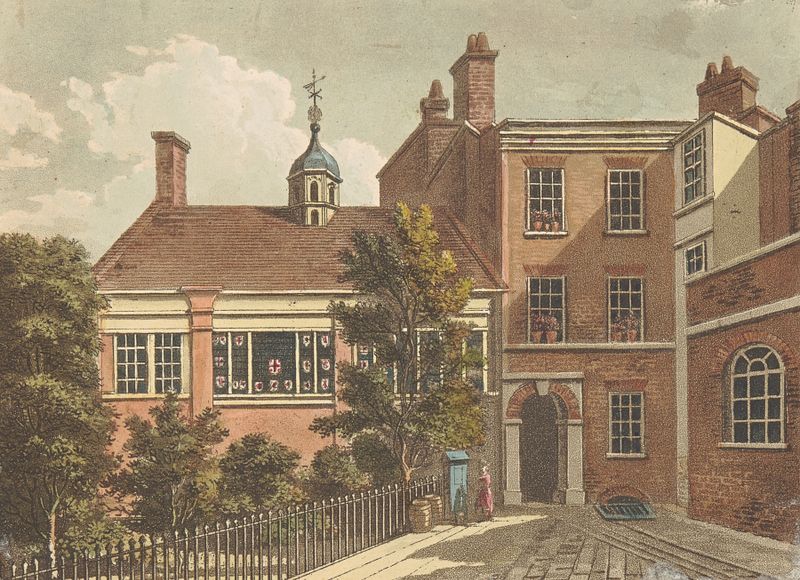
Could beauty survive in a century of chaos? Look closely at the serene countryside, where delicate brushstrokes breathe life into a landscape that feels both inviting and foreboding. Notice how the inn stands at the center, its warm facade contrasting with the cool, vibrant greens that surround it. The artist employs a soft palette, allowing the golden light to cascade gently over the building, inviting viewers to step inside while simultaneously hinting at the shadows lurking in this seemingly tranquil haven. As you delve deeper, examine the figures gathered around the inn’s entrance.
Their postures reveal a subtle tension—some appear engaged in conversation, while others cast wary glances, suggesting narratives of betrayal and unspoken histories. The tranquil setting belies a deeper emotional undercurrent, as the distance between the figures speaks of fractured relationships, each cloaked in the silence of shared secrets. The painting’s composition mirrors the precarious balance between safety and betrayal, beauty and chaos. Samuel Ireland painted this landscape in England during a time marked by political upheaval and social strife, between 1794 and 1800.
The artist was deeply influenced by the Romantic movement's reverence for nature and emotion, reflecting a world grappling with the effects of the French Revolution. As he navigated his own life, marked by personal turmoil and the pressures of artistic society, he sought to capture the essence of beauty amidst uncertainty, creating a poignant dialogue between the idyllic and the tumultuous.
More Artworks by Samuel Ireland
Browse all →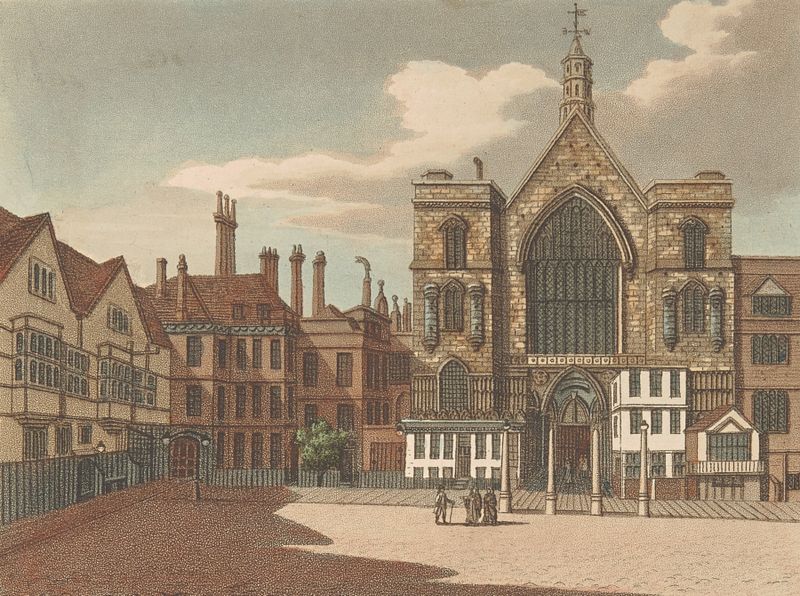
Westminster Hall
Samuel Ireland

Southwest View of Middle Temple
Samuel Ireland
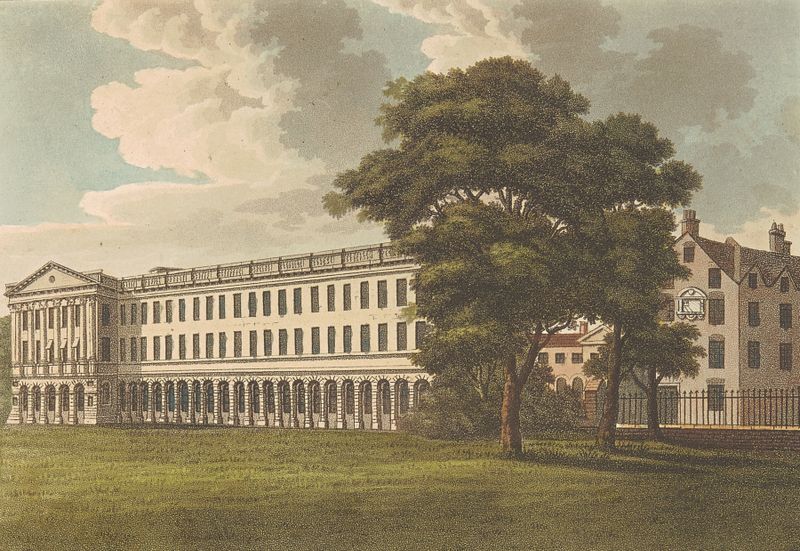
Stone Buildings, Lincoln’s Inn
Samuel Ireland
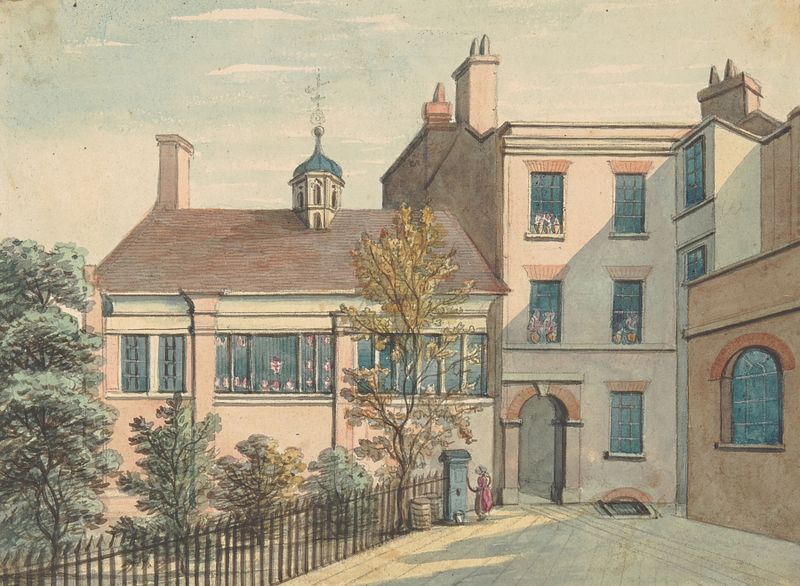
Barnard’s Inn
Samuel Ireland

Lincoln’s Inn Hall and Chapel
Samuel Ireland

Lion’s Inn
Samuel Ireland
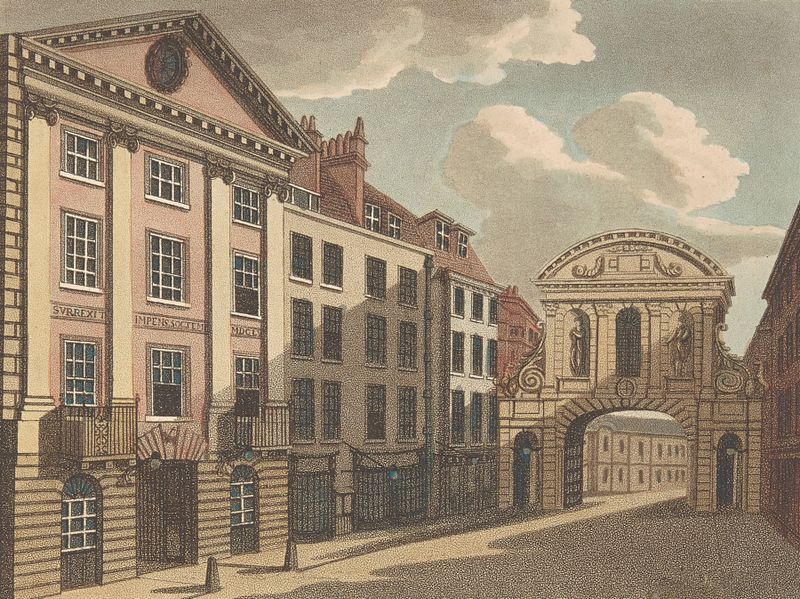
Middle Temple Gate
Samuel Ireland
Barnard’s Inn
Samuel Ireland

Westminster Hall
Samuel Ireland
Lincoln’s Inn Gate
Samuel Ireland





