
New Zealand Graphic and Descriptive. Wellington Harbour. — History & Facts
Who listens when art speaks of silence? In the still embrace of New Zealand Graphic and Descriptive, a profound ecstasy unfolds — a quiet celebration of nature's grandeur. Look to the left, where a gentle curve of the Wellington Harbour meets the horizon, a serene blue canvas stretching across the painting. The layered shades of azure and teal invite you to wander deeper into the scene, while wispy clouds punctuate the sky, suggesting a delicate, fleeting moment. Barraud's meticulous brushwork captures the soft ripples of water, shimmering under the afternoon sun, bringing a palpable vibrancy to the tranquil atmosphere. Within this idyllic panorama lies a contrast between the stillness of the harbour and the untamed wilderness in the background.
The distant hills stand watchful, their rugged peaks hinting at an ever-present wildness that lies beyond human reach. Birds skim the water’s surface, embodying freedom, yet their flight is a reminder of the solitude that the landscape offers. There’s an ecstasy in this serene isolation, an invitation to reflect on both the beauty and the silence of nature. In 1877, Charles Decimus Barraud painted this piece during a period of exploration and appreciation for New Zealand’s landscapes.
Having settled in Wellington, he sought to capture the essence of his surroundings at a time when the nation was still defining its identity. Barraud’s work reflects not only his personal connection to the land, but also the broader artistic movement of the time, as artists increasingly turned to nature for inspiration, capturing its timeless qualities amidst the changing world.
More Artworks by Charles Decimus Barraud
Browse all →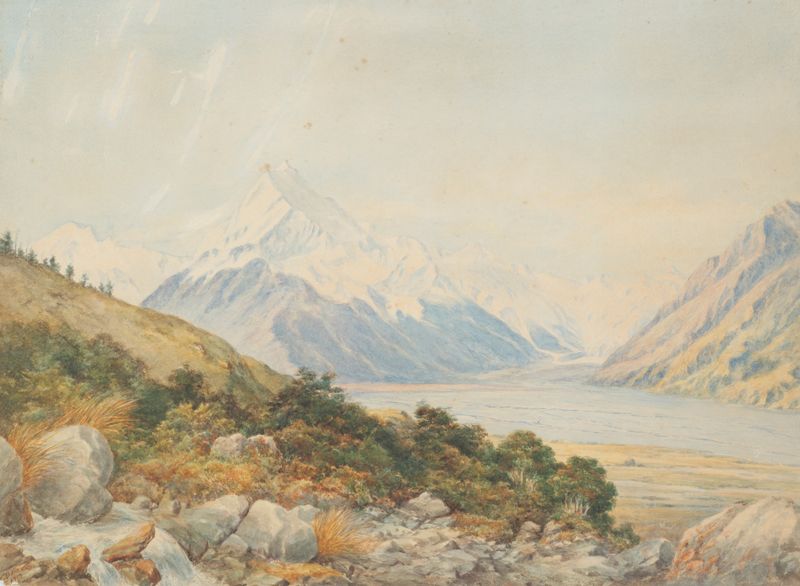
Mt. Cook from Tasman Valley
Charles Decimus Barraud
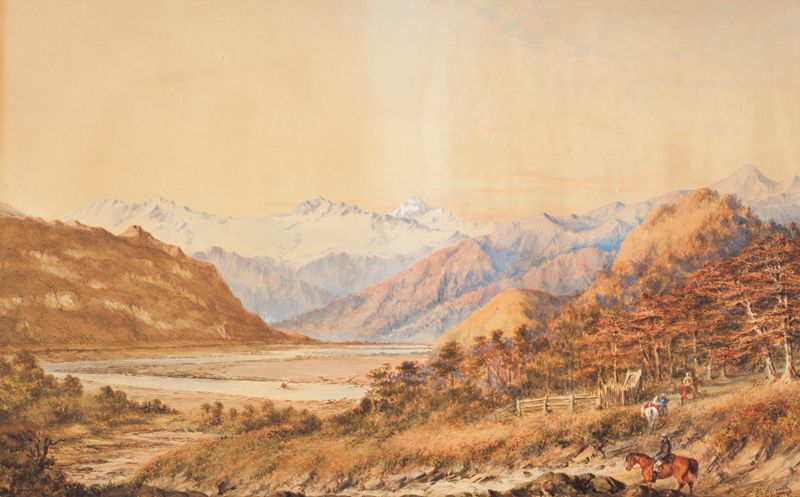
View of Mt. Aspiring, Province of Otago, looking north up the Valley of Matekitiki River from Dr Hector’s camp of 1863
Charles Decimus Barraud
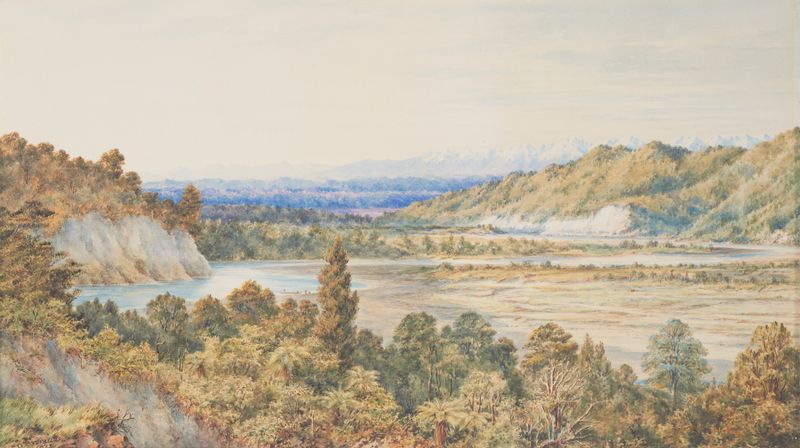
The Manawatu
Charles Decimus Barraud
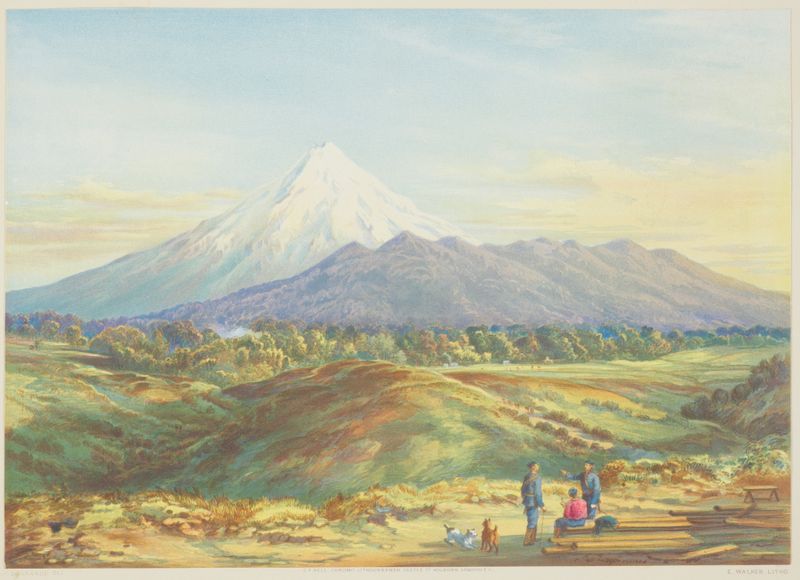
New Zealand Graphic and Descriptive. Mt Egmont.
Charles Decimus Barraud
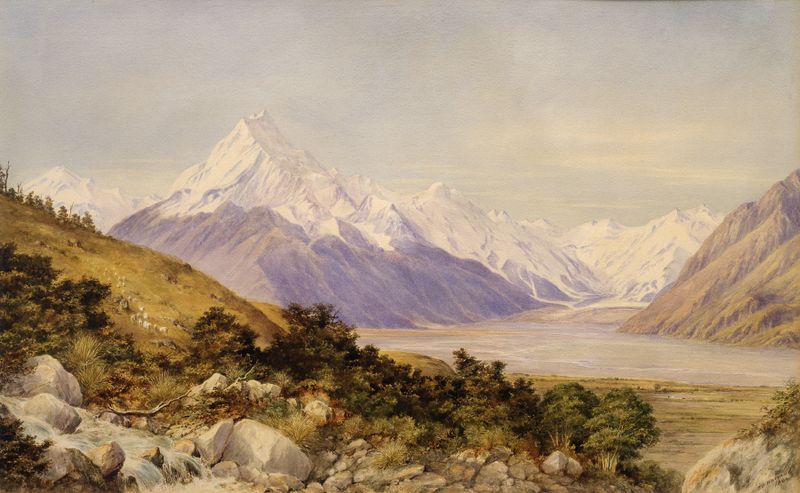
Mt. Cook
Charles Decimus Barraud
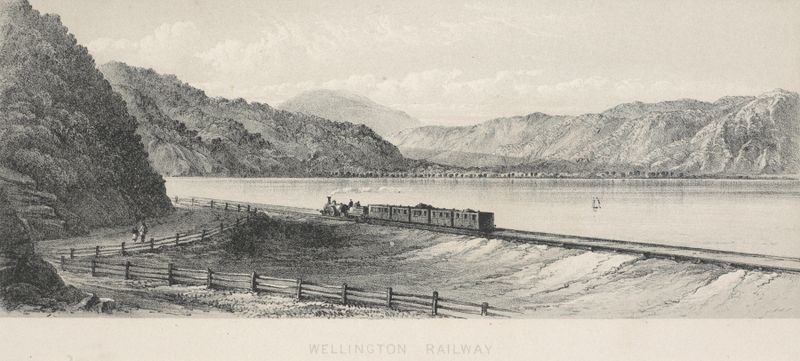
New Zealand Graphic and Descriptive. Plate I. Wellington Railway
Charles Decimus Barraud
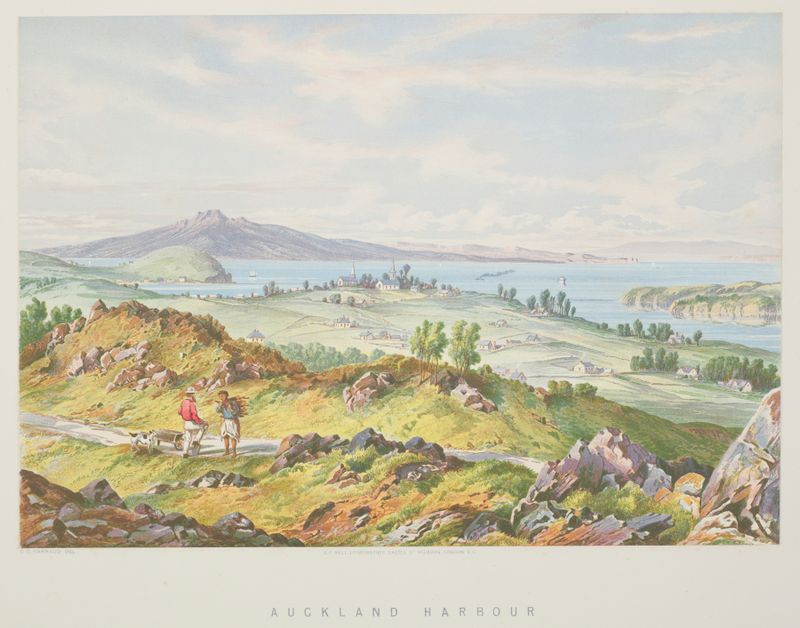
New Zealand Graphic and Descriptive. Auckland Harbour
Charles Decimus Barraud
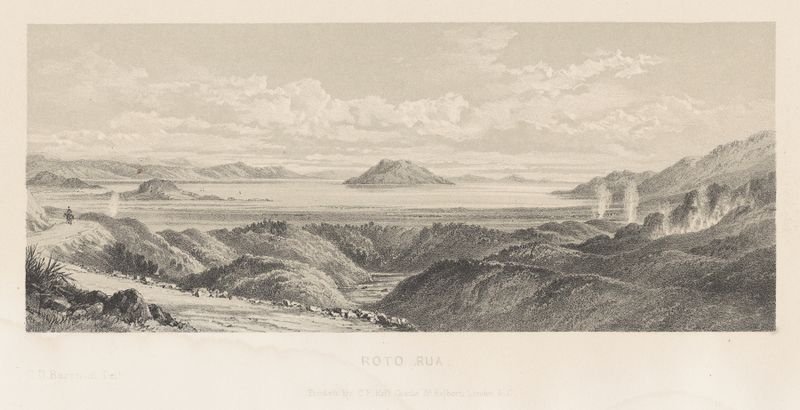
New Zealand Graphic and Descriptive. Plate III. Roto-rua
Charles Decimus Barraud
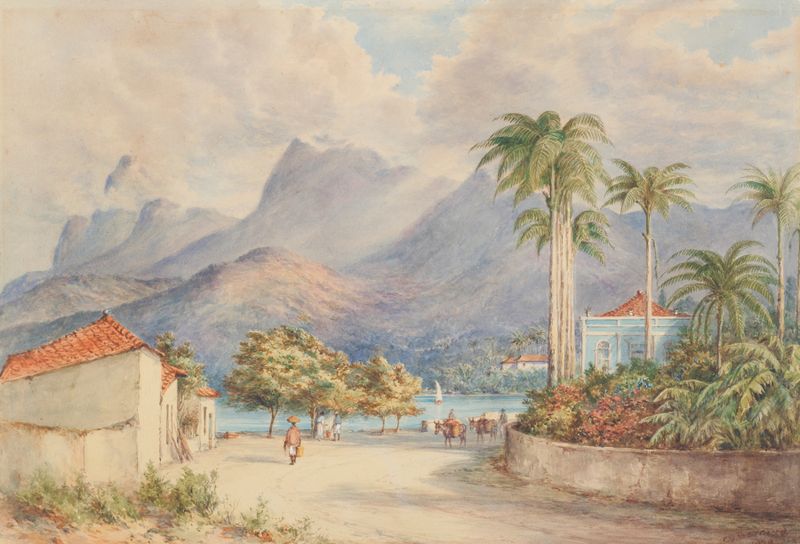
Rio de Janeiro
Charles Decimus Barraud
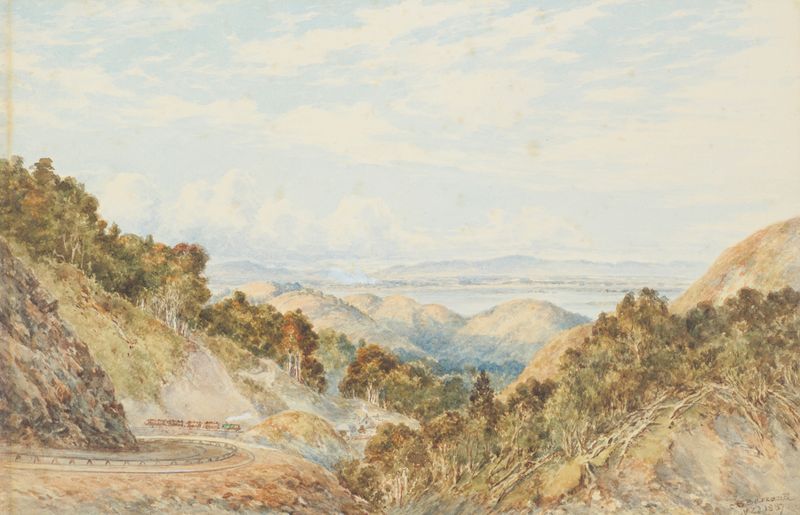
Rimutaka railway from above Cross Creek
Charles Decimus Barraud





