Niagara Falls Viewed from Goat Island — History & Analysis
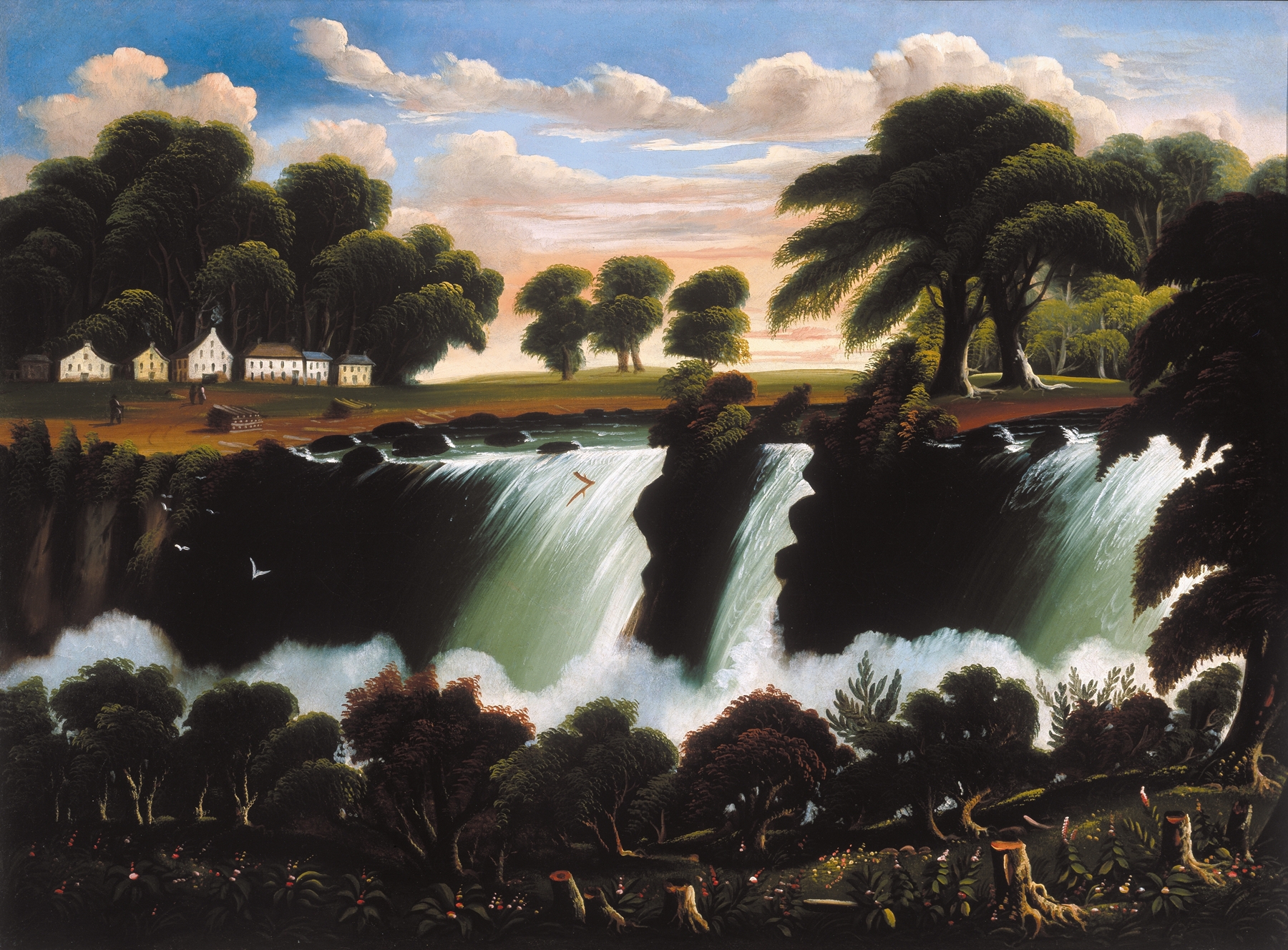
“The canvas doesn’t lie — it simply waits.” Each brushstroke carries the weight of remembrance, inviting us to witness the beauty that time often obscures. Look to the foreground, where the lively waters of Niagara cascade dramatically over the cliffs, creating a tumultuous dance of foam and mist. The vibrant blues and greens of the water contrast sharply with the tranquil earth tones of the surrounding landscape. Notice how the light captures the spray, transforming it into a shimmering veil that seems almost ethereal.
This interplay of color and movement draws the eye, inviting contemplation of the natural world’s grandeur. Yet, beneath the surface beauty lies an intricate tension between wildness and serenity. The viewer can sense the nostalgia that permeates the scene, a yearning for the unspoiled landscape of a bygone era. The juxtaposition of the roaring falls and the peaceful figures observing from a distance evokes both awe and introspection, suggesting a delicate balance between nature's power and human vulnerability.
Each small detail, from the distant trees to the figures engaged in quiet reverie, adds layers of meaning, reflecting the complexities of the human experience in relation to nature. In 1860, as Thomas Chambers painted this iconic view, he was navigating a rapidly changing world, where industrialization began to reshape both landscapes and lives. Based in America, Chambers sought to capture the sublime beauty of nature amidst these transformations. His landscapes reflect a longing for connection to the past, even as the world around him was evolving, revealing a timeless appreciation for the natural wonders that shaped the American identity.