Nice — History & Analysis
When did color learn to lie? In the vibrant hues of the Mediterranean, destiny weaves its intricate tapestry, blurring the lines between reality and illusion. Look to the bottom right at the gentle curve of the shoreline, where soft sand and azure waters meet. The sunlight shimmers across the surface, creating a dappled effect that draws the eye toward the horizon. Notice how the warm oranges and yellows of the sun contrast with the cool blues and greens of the sea, evoking a sense of serenity tinged with longing.
The composition skillfully guides the viewer’s gaze across the canvas, suggesting both movement and stillness, as if inviting us to pause and immerse ourselves in the idyllic scene. Within this seemingly tranquil landscape, hidden tensions emerge. The dark, shadowy cliffs on the left loom over the peaceful beach, hinting at an unseen force that can disrupt this perfect moment. The juxtaposition of light and dark not only heightens the visual drama but also conveys the fragility of happiness.
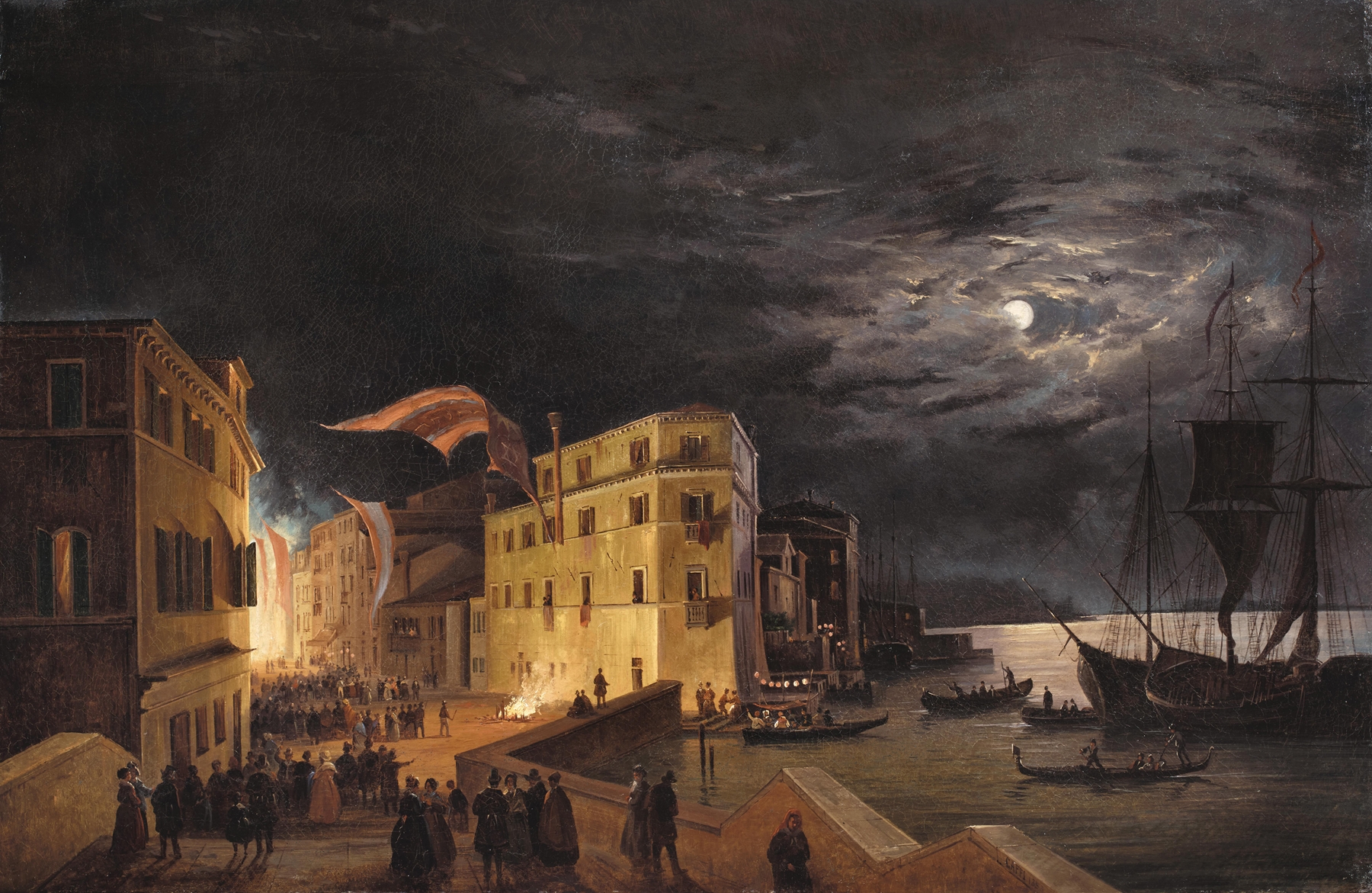
Every brushstroke seems to whisper a story of fleeting time, where beauty is both a blessing and a burden, forever intertwined with fate. In 1852, Ippolito Caffi painted this work in Nice, a city that was buzzing with artistic energy and burgeoning tourism. At this time, he was grappling with his own artistic identity, seeking to balance romanticism and realism in his depictions of the coastline. This painting, part of a series inspired by his travels, reflects the era’s fascination with light and atmosphere while revealing Caffi's deep connection to the landscapes that shaped his vision.