
Night fishing — History & Facts
What first catches the eye in Night fishing is not the figures themselves, but the way the last embers of daylight are caught and held by water and sky. The luminous band of sunset, pressed low against the horizon, is mirrored in the winding river, drawing your gaze through the darkness to a world beyond the immediate toil of the fishermen. The figures are almost swallowed by shadow, their forms emerging only as your vision adjusts, suggesting the quiet persistence of work that continues after the world has dimmed.
A lone cottage glows with a faint, warm light, hinting at life and shelter, while the silhouettes of windmills and masts anchor the scene in the lowlands of seventeenth-century Holland. The heavy, roiling clouds above seem to press down, amplifying the intimacy of the riverside activity below. This is the world of the Dutch Golden Age, when painters like Aert van der Neer made a specialty of night and twilight landscapes—scenes that celebrated both the beauty and the labor of ordinary life. In the mid-seventeenth century, such works were prized by the rising merchant class, who hung them in their homes as reminders of the land’s quiet abundance and the dignity of work.
Night fishing, now in the National Museum in Warsaw, is a testament to that era’s fascination with light in all its moods, and with the subtle drama of everyday existence. History has kept few traces of this particular canvas’s journey, but its atmosphere invites you to linger, searching out every glimmer in the dusk.
More Artworks by Aert van der Neer

A Moonlit River Landscape With Figures Standing By A Gate, A Village Beyond
Aert van der Neer
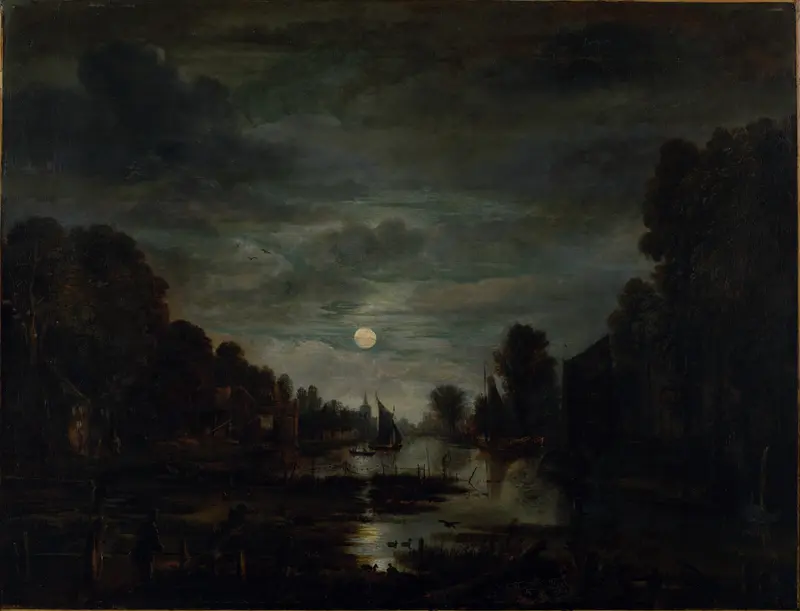
River Landscape in Moonlight
Aert van der Neer
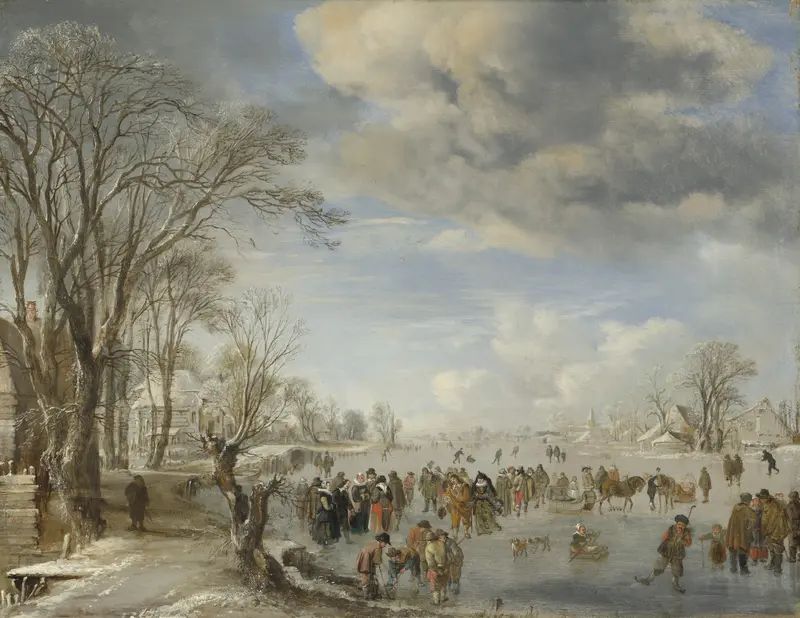
Winter in Holland – Skating Scene
Aert van der Neer

River Landscape
Aert van der Neer
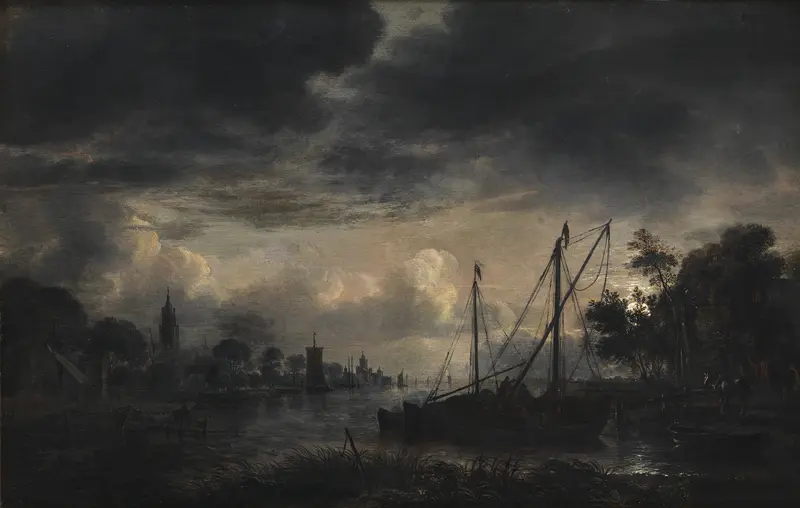
River Landscape in Moonlight
Aert van der Neer
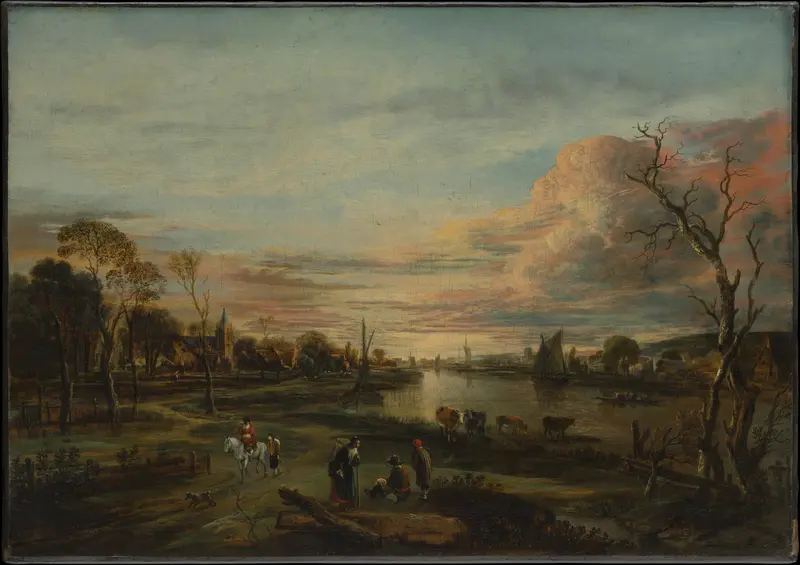
Landscape at Sunset
Aert van der Neer
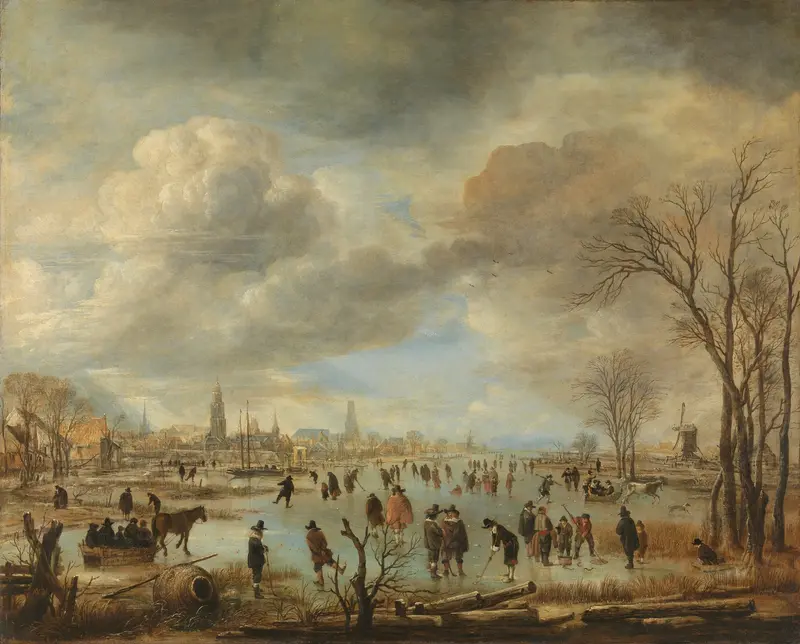
Winter Landscape near a Town with Kolf Players and Horse-Drawn Sleighs
Aert van der Neer

Winter Landscape with Skaters on a Frozen River
Aert van der Neer
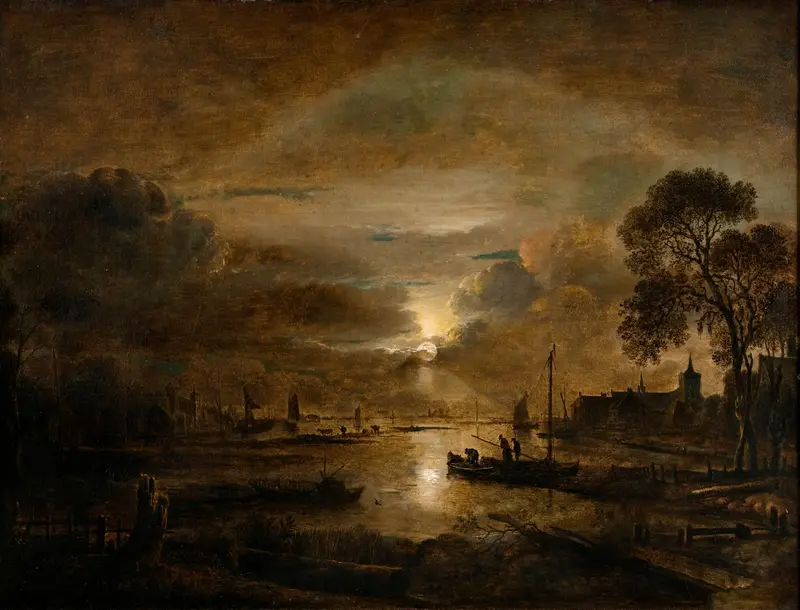
Moonlight at a Dutch River
Aert van der Neer
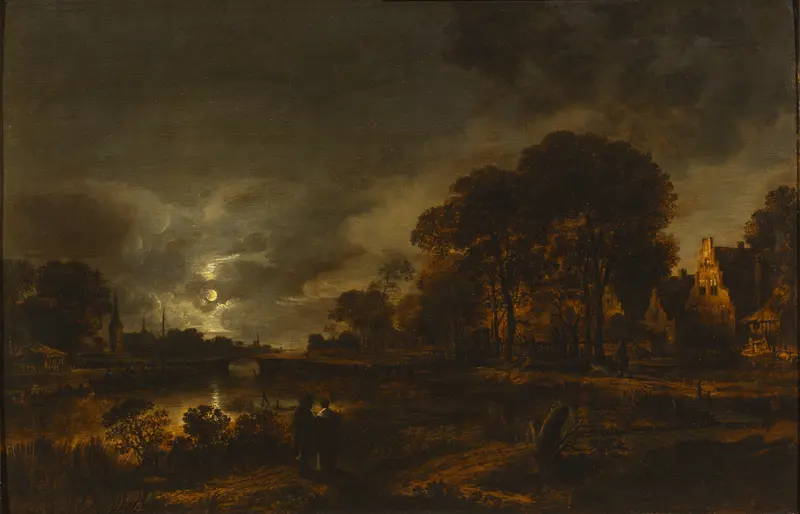
Moonlight Landscape
Aert van der Neer
More Landscape Art

The Starry Night
Vincent van Gogh

View of Delft
Johannes Vermeer

Water Lilies
Claude Monet

The Grand Canal, Venice, looking north-west from the Ca' Corner to the Ca' Contarini degli Scrigni, with the campanile of Santa Maria della Carità
Canaletto

Windsor Castle
Canaletto

The Grand Canal looking North-East from the Palazzo Dolfin-Manin to the Rialto Bridge
Canaletto