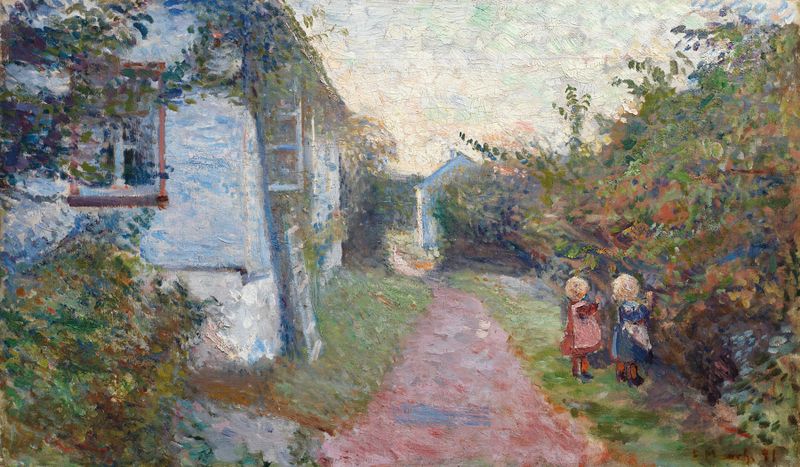
Night in Nice — History & Facts
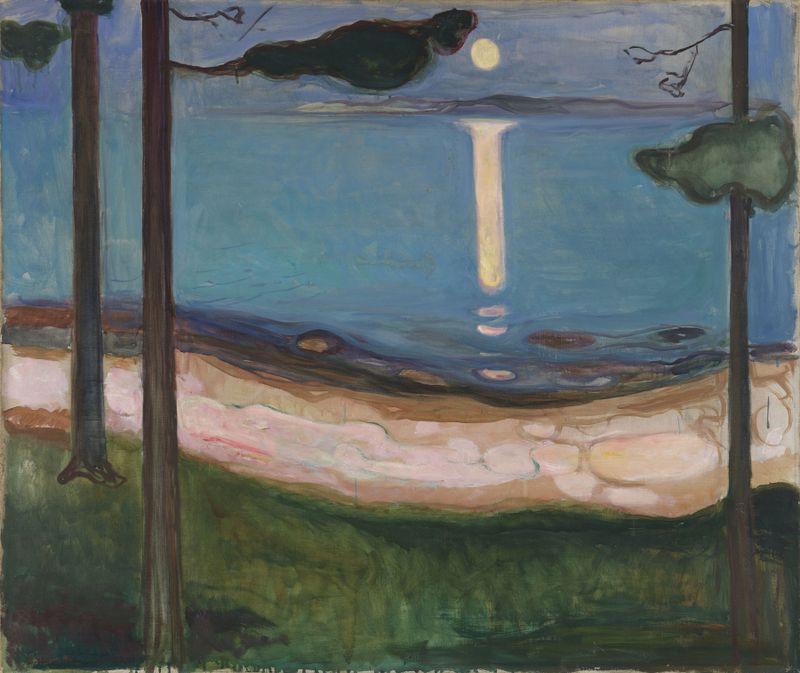
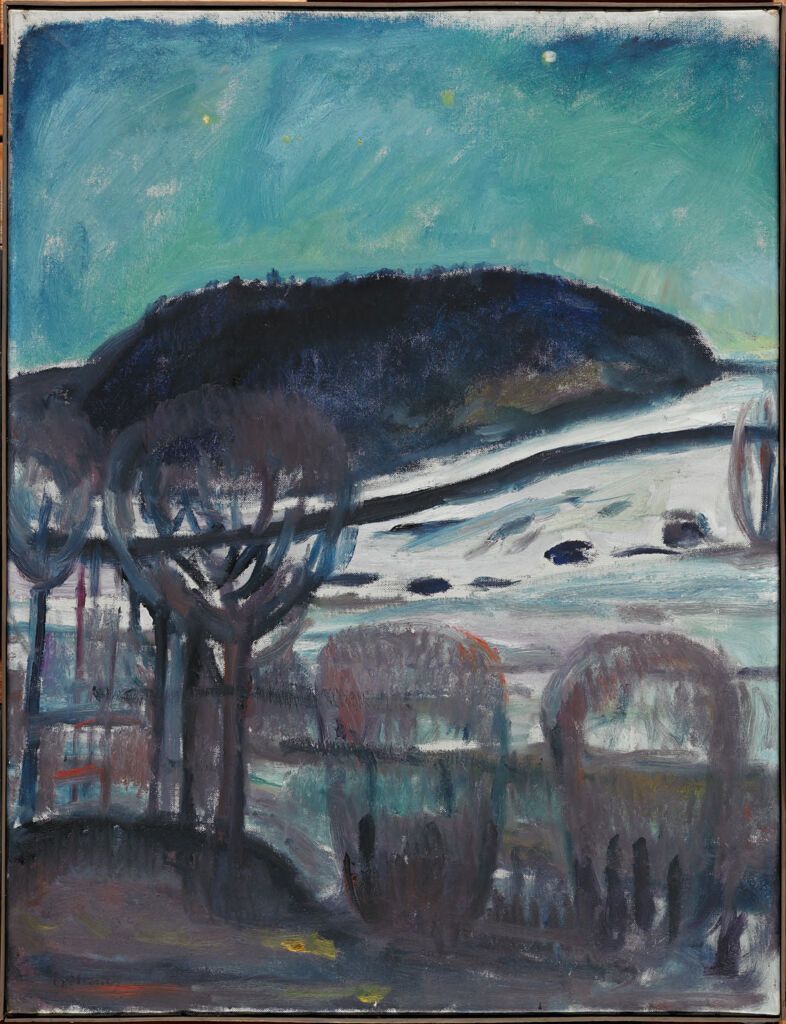
In the quiet of twilight, beauty whispers in hues that linger like unspoken thoughts. Edvard Munch elegantly captures the delicate balance between emotion and stillness, inviting the viewer to step into a world where nightfall weaves its magic. Look to the vibrant blues and deep indigos that envelop this nocturnal scene. The sky, a fluid canvas, swirls with color that draws your eyes upward, while the figures in the foreground remain shrouded in mystery.
Notice how the lamplight casts a warm glow, illuminating the faces of the people below, whose expressions narrate a story of longing and contemplation. The brushstrokes are both bold and fluid, underscoring the tension between the vibrancy of life and the ethereal tranquility of night. Within this nocturnal landscape lies a rich tapestry of hidden meanings. The juxtaposition of light and shadow evokes a sense of melancholy, as if the figures are caught between the beauty of the moment and the inevitable passage of time.
The silhouettes suggest connection and isolation, a dance between intimacy and solitude that resonates deeply. Each element—the serene landscape, the flickering light, the pensive figures—fuses to reveal a profound truth about the human condition. Munch created this masterpiece in 1891 during his time in France, where he was immersed in the vibrant art community of the period. This was a pivotal moment for the artist, as he sought to express deep emotional experiences through his work.
The rise of Symbolism and the exploration of psychological themes in art inspired him, allowing Night in Nice to emerge as a poignant reflection of both personal and universal truths amidst the cultural shifts of the late 19th century.