
Night View of a Seaport — History & Facts
Could beauty survive in a century of chaos? In an era marked by upheaval and transformation, the answer lies within the tranquil embrace of nature and the human spirit's resilience. Look at the sweeping horizon, where the dark waters of the harbor meet the deepening sky. Notice how the soft glow of the moon bathes the scene, illuminating the sails of anchored ships and casting gentle reflections on the rippling surface. The interplay of light and shadow creates a mesmerizing serenity, drawing your eye to the calm amidst the nocturnal spectacle.
The palette, rich in blues and silvers, speaks to the quiet majesty of nightfall, inviting contemplation of both the known and the unknown. Beneath the surface of this serene seaport, there exists a tension between the stillness of the water and the potential stirrings of life. The boats, seemingly at rest, allude to the journeys taken and those yet to come, echoing the duality of calmness and anticipation. The distant city, cloaked in darkness, suggests a world teeming with activity, poised on the cusp of dawn.
This juxtaposition of tranquility against the backdrop of unseen chaos invites reflection on the transient nature of beauty. During the late 1860s, Church was fully engrossed in the Hudson River School movement, a period characterized by a profound appreciation for landscapes that reflected both natural beauty and human emotion. In this time, he explored themes of harmony in nature, capturing the essence of the American romantic spirit. This particular painting emerged as he sought to reconcile the beauty of the world with the ever-present uncertainties of life, illustrating his unique vision against a historical backdrop of change.
More Artworks by Frederic Edwin Church
Browse all →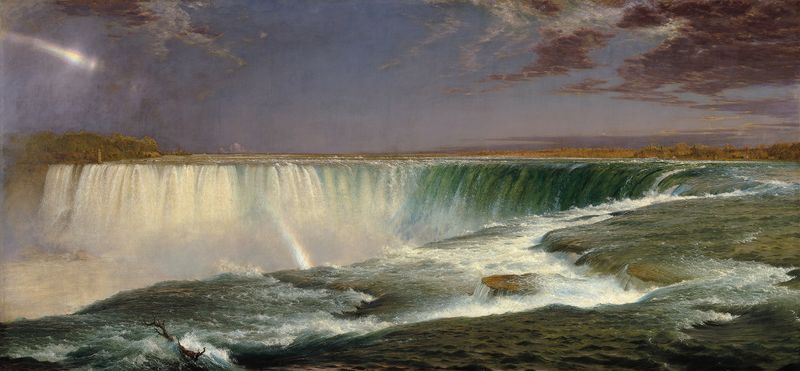
Niagara
Frederic Edwin Church
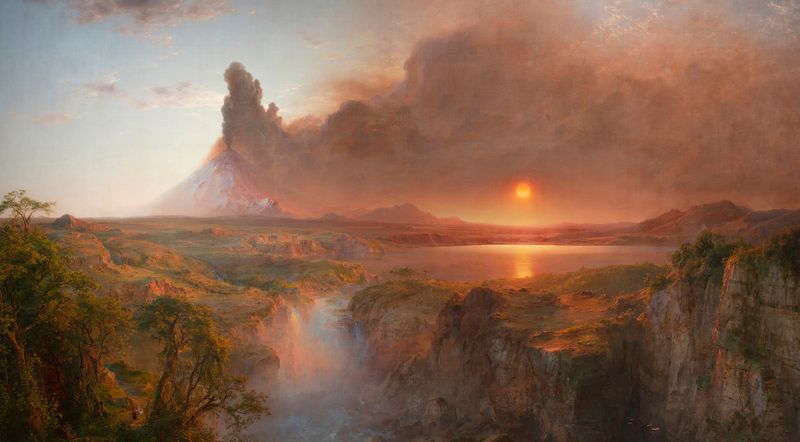
Cotopaxi
Frederic Edwin Church
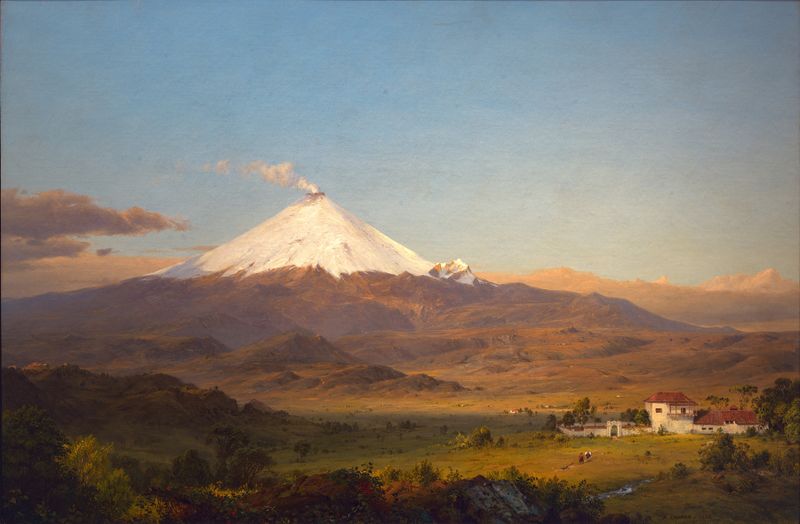
Cotopaxi
Frederic Edwin Church
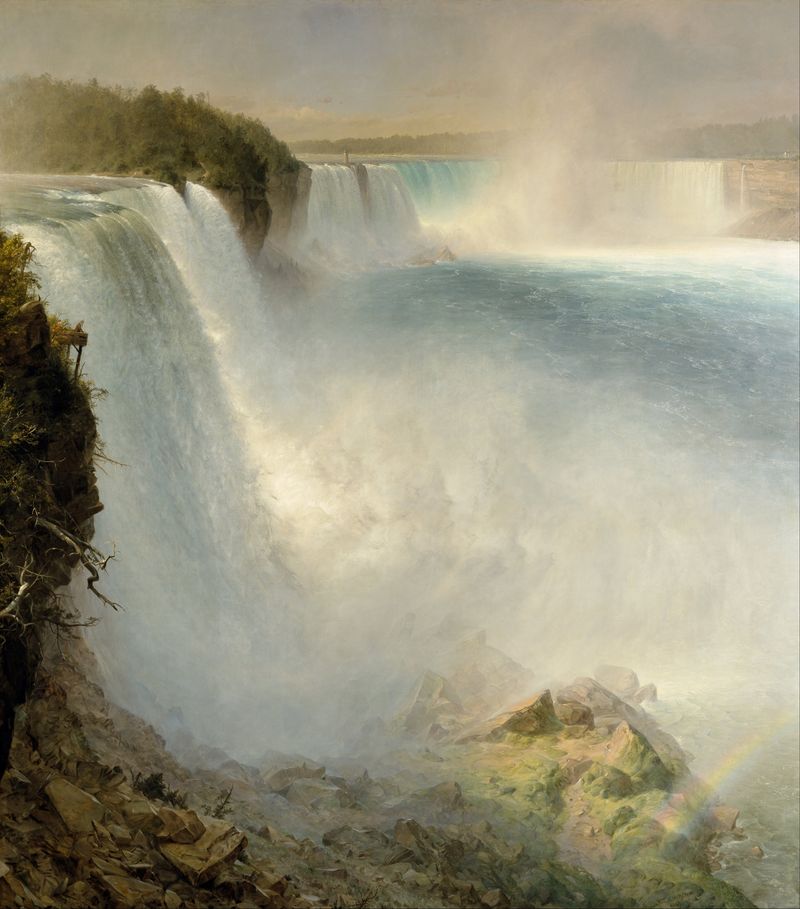
Niagara Falls, from the American Side
Frederic Edwin Church
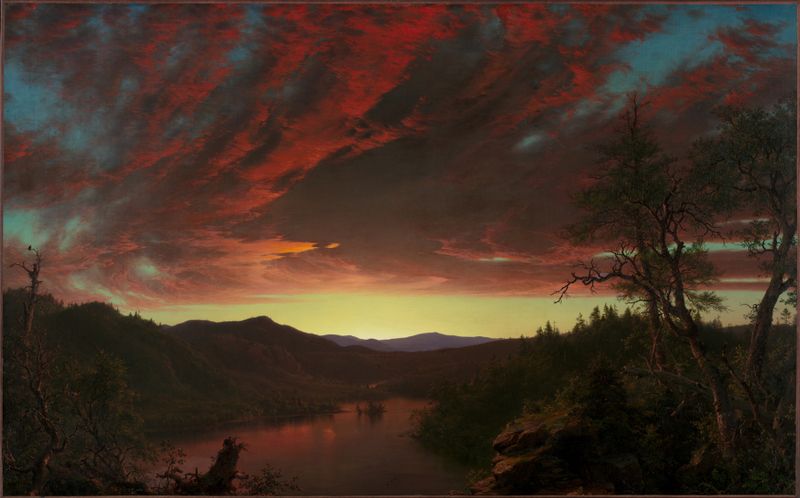
Twilight in the Wilderness
Frederic Edwin Church
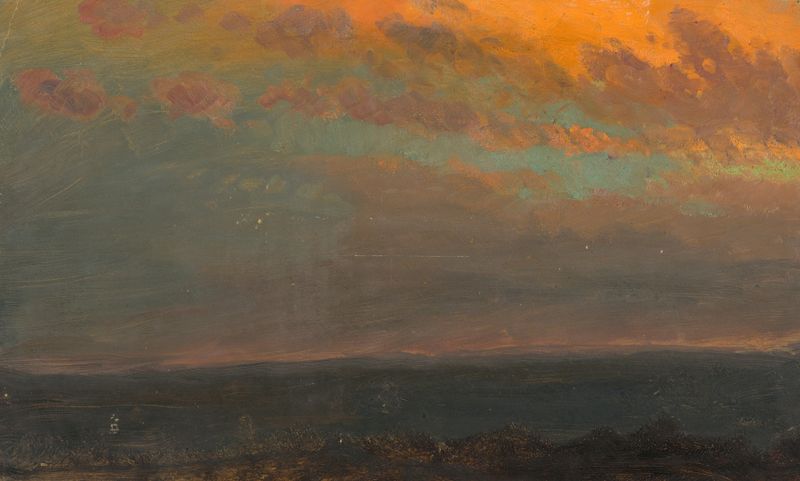
Hudson Valley at Sunset
Frederic Edwin Church
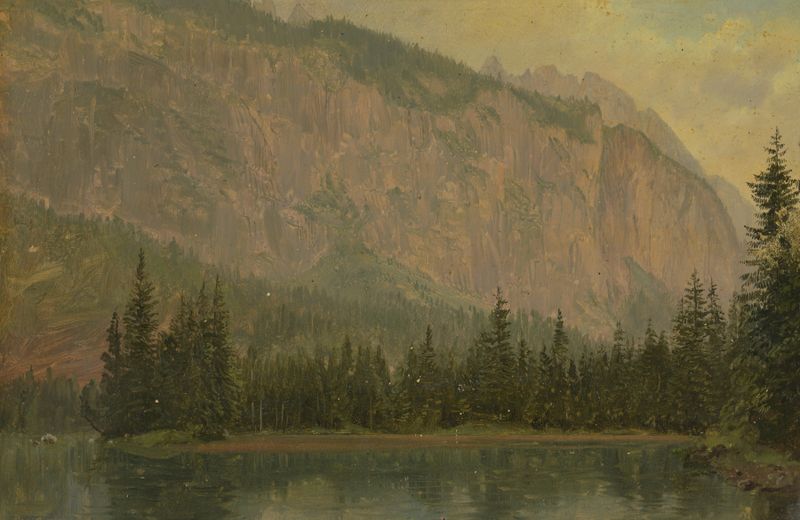
The Hintersee, near Berchtesgaden, Bavaria
Frederic Edwin Church
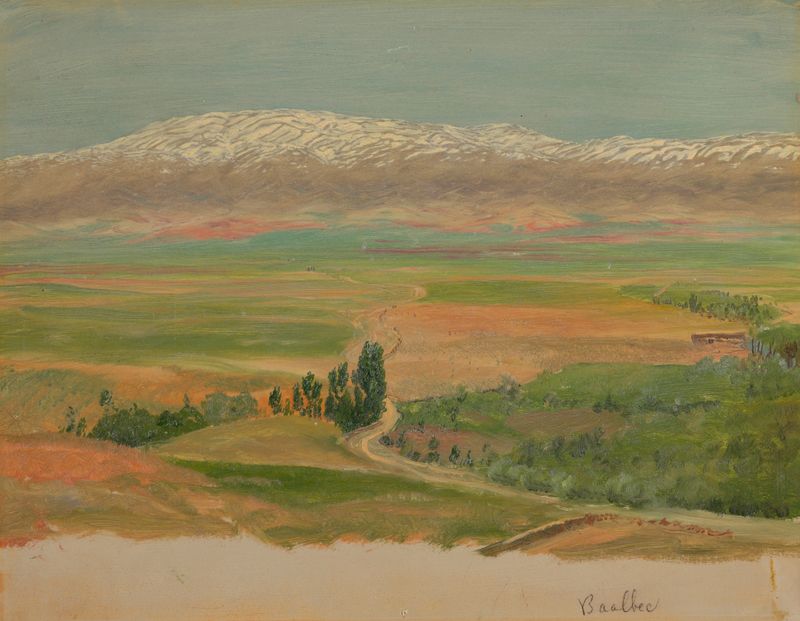
Mountains near Baalbec
Frederic Edwin Church
Aurora Borealis
Frederic Edwin Church
Cotopaxi
Frederic Edwin Church





