Nyroca — History & Facts
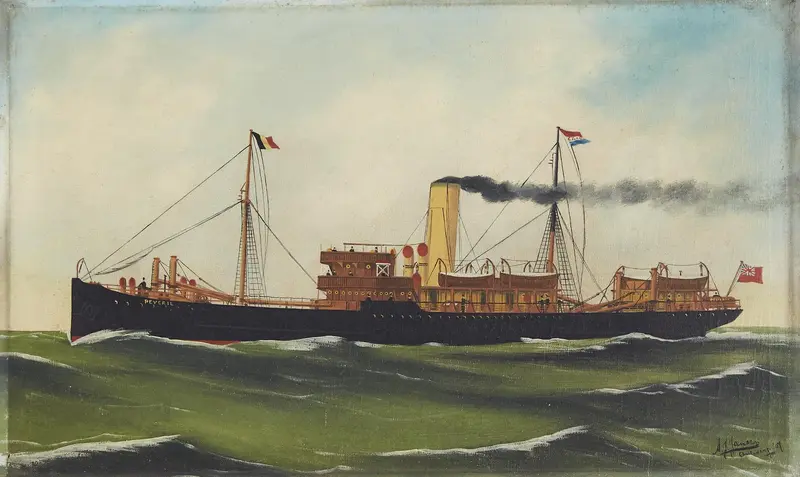
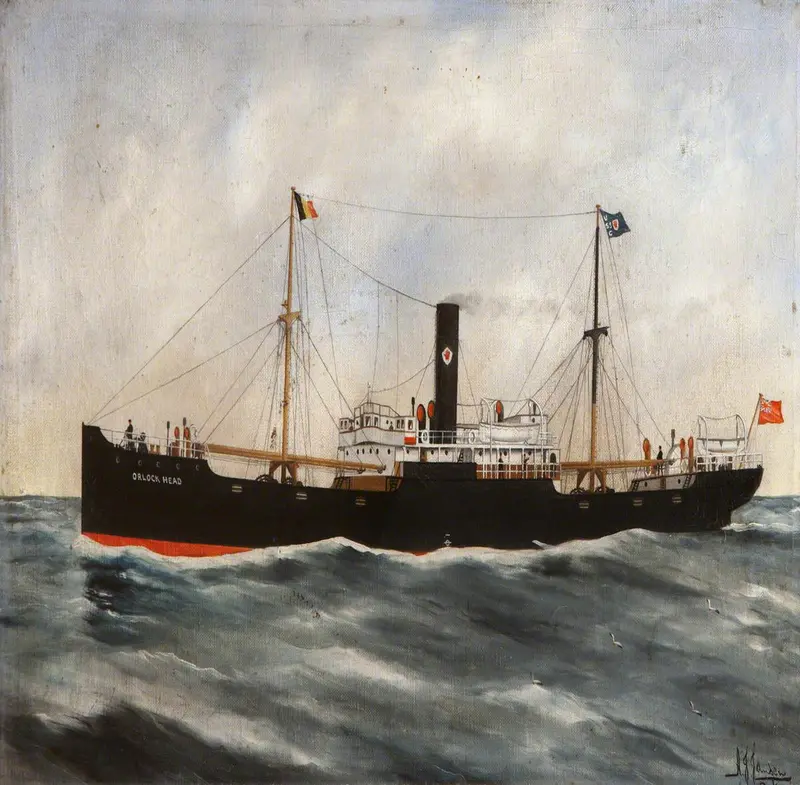
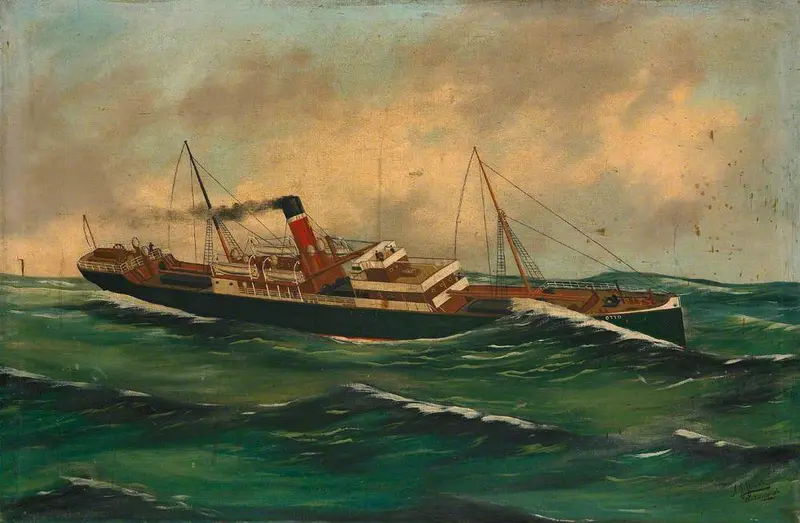
What first catches the eye in Nyroca is the proud, almost architectural clarity with which the ship slices through the green-grey waves, her hull rendered in sharp profile against a sky that seems to stretch forever. The artist, A. J.
Jansen, gives the vessel a sense of purpose and dignity, the black smoke trailing from her funnel a sign of relentless movement and modern industry. Flags snap crisply at bow and stern—the Belgian tricolor at the foremast, the Red Ensign at the aft—signaling both national pride and the international language of maritime identity. The ship’s name, painted in neat white letters, is as precise as the careful rigging and the tiny, attentive figures stationed along the deck.
The low horizon gives the sky a commanding presence, yet it is the ship that commands the scene, a floating world of iron and ambition. Painted in 1907, this work belongs to an era when steamships were the lifeblood of commerce and empire, and portraits of individual vessels were as much a record as a celebration. Such paintings were often commissioned by shipowners or captains, eager to commemorate a new launch or a successful voyage, and they were prized as tokens of achievement and pride. Little is recorded about A.
J. Jansen or this particular Nyroca, but the painting’s presence in a collection from Antwerp—a city whose fortunes were tied to its bustling port—hints at the world it comes from: a world in which ships like this one stitched continents together and artists found poetry in steel, smoke, and saltwater. The painting invites you to linger, to imagine the stories carried by that plume of smoke and the men who watched the horizon from her decks.
Sources: Wikidata Q124079769 · Image source (Wikimedia Commons)