
Odalisque After the Bath — History & Facts
A quiet sense of invitation radiates from the figure at the heart of Odalisque After the Bath, her gaze meeting the viewer’s with a blend of candor and practiced ease. The artist, Theodoros Ralli, chooses a moment of calm aftermath: the bather’s skin still glows with the warmth of water and privacy, while her body, arranged with deliberate grace, hints at both comfort and display. The light, entering from the right, caresses the curve of her shoulder and thigh, heightening the contrast between the softness of flesh and the cool geometry of the tiled bench beneath her.
A tall hookah stands sentinel at her side, its looping hoses and ornate base a reminder of leisure and ritual, while the wooden sandals at her feet suggest the recent transition from bath to boudoir. Painted in 1906, this work belongs to a tradition that flourished in the late nineteenth and early twentieth centuries, when European artists—often working far from the lands they depicted—created scenes of imagined Eastern luxury for Western audiences. Such odalisques were rarely portraits of real women, but rather projections of fantasy, shaped by the tastes and expectations of collectors and salons. Ralli was one of many who contributed to this genre, blending academic technique with the allure of the exotic.
History has kept few traces of this specific painting’s journey, but its presence in a modern collection invites us to look again—at the interplay of intimacy and artifice, and at the ways images like this both reveal and conceal the worlds they claim to show.
More Artworks by Theodoros Ralli

The Sleeping Concubine
Theodoros Ralli
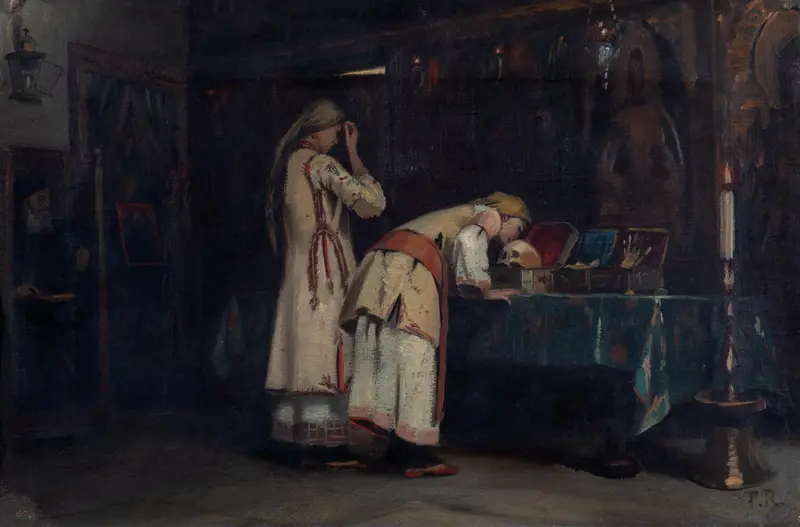
Holy Relics
Theodoros Ralli
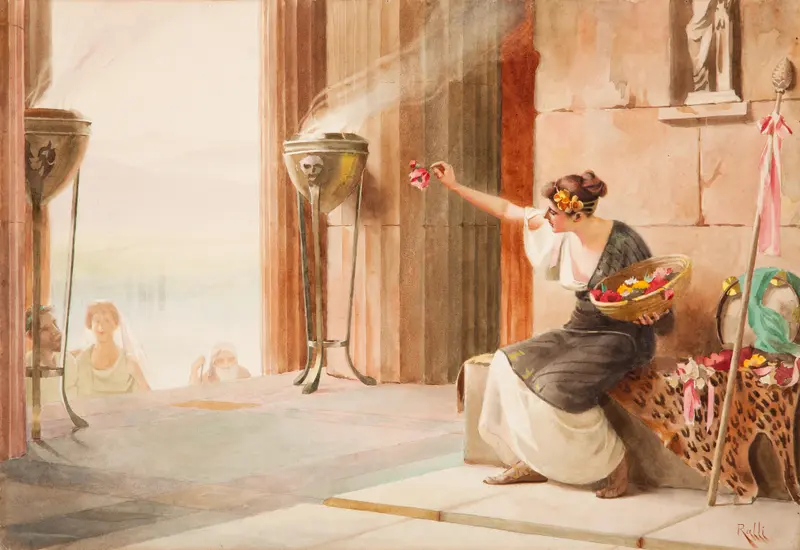
Flower Seller at the Parthenon
Theodoros Ralli
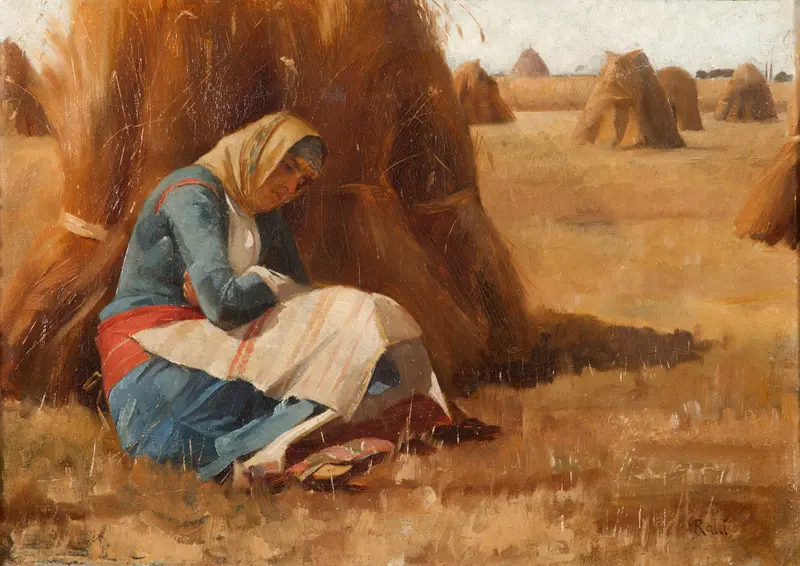
Resting by a Haystack
Theodoros Ralli
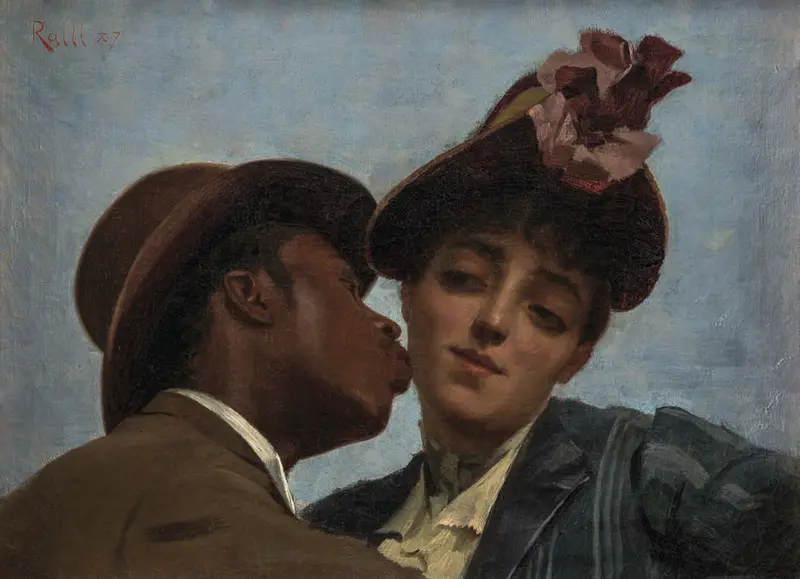
The Kiss (Ralli)
Theodoros Ralli
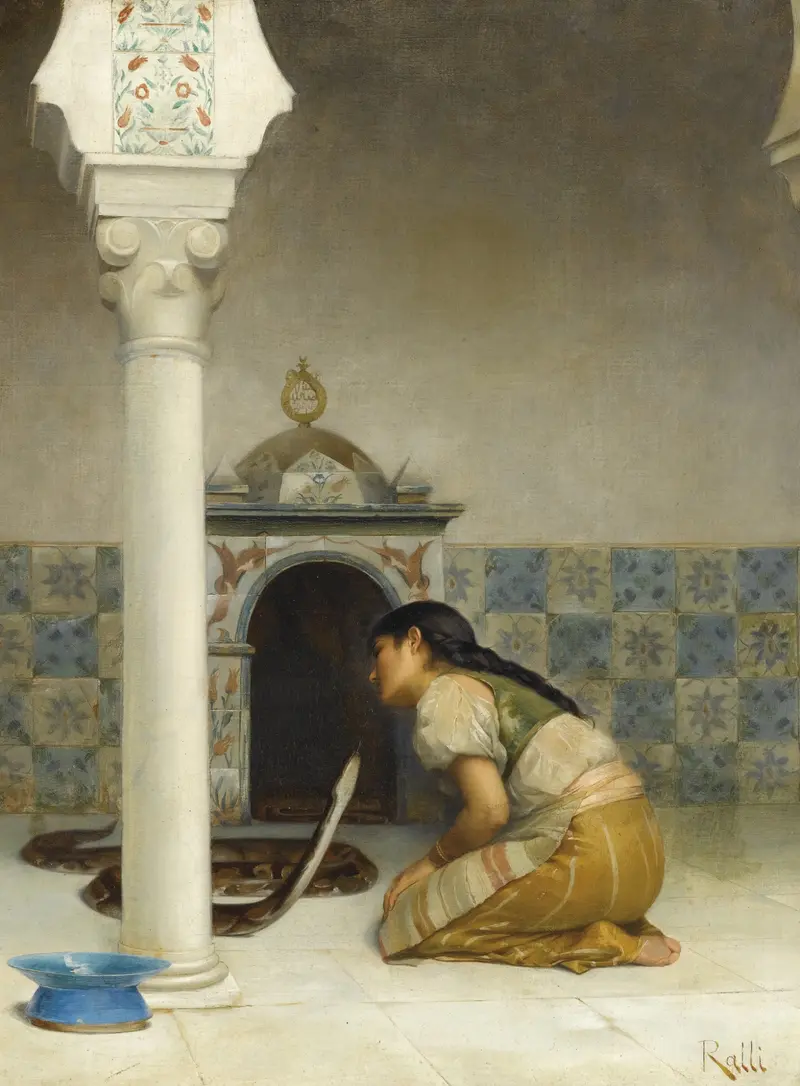
The Sacred Serpent
Theodoros Ralli
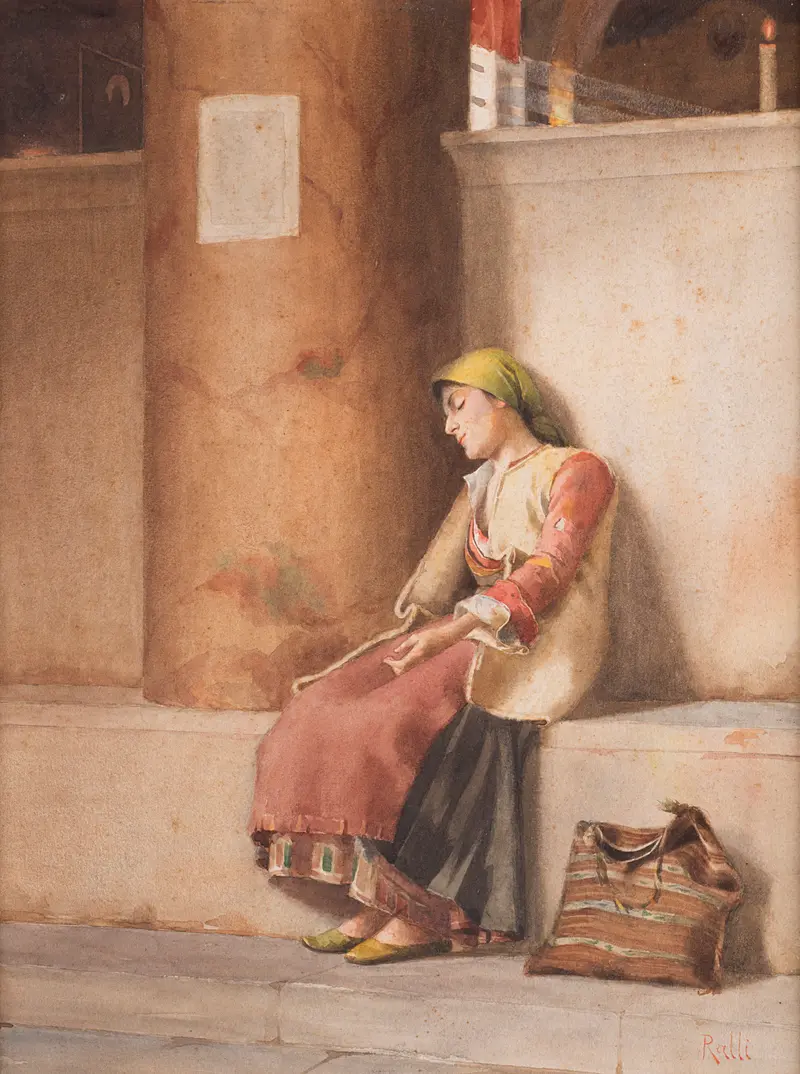
A Moment of Reflection
Theodoros Ralli
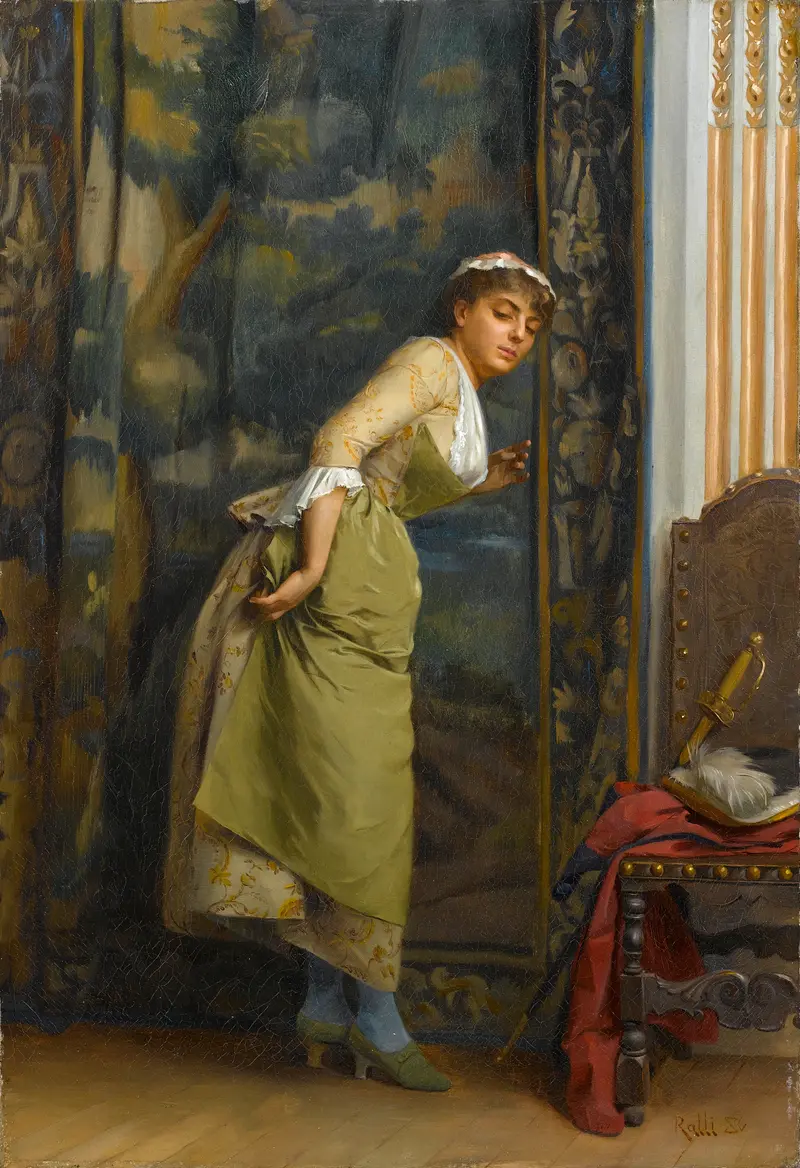
Eavesdropping (Ralli)
Theodoros Ralli
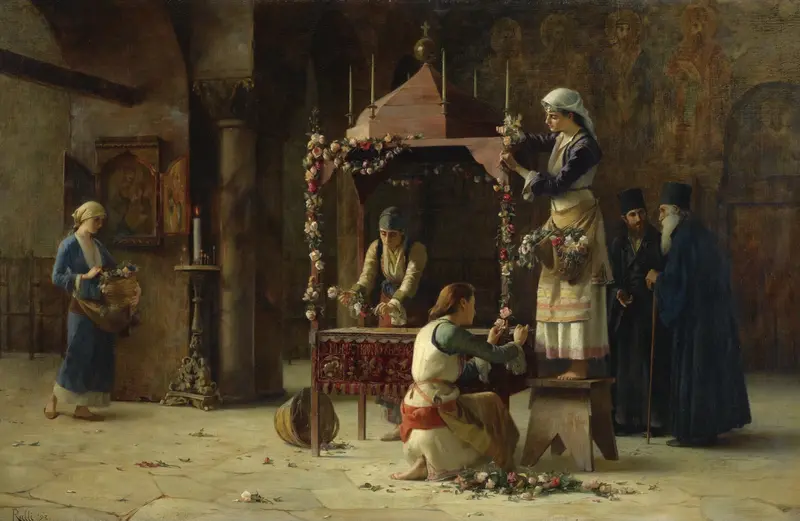
Holy Friday, Greece
Theodoros Ralli
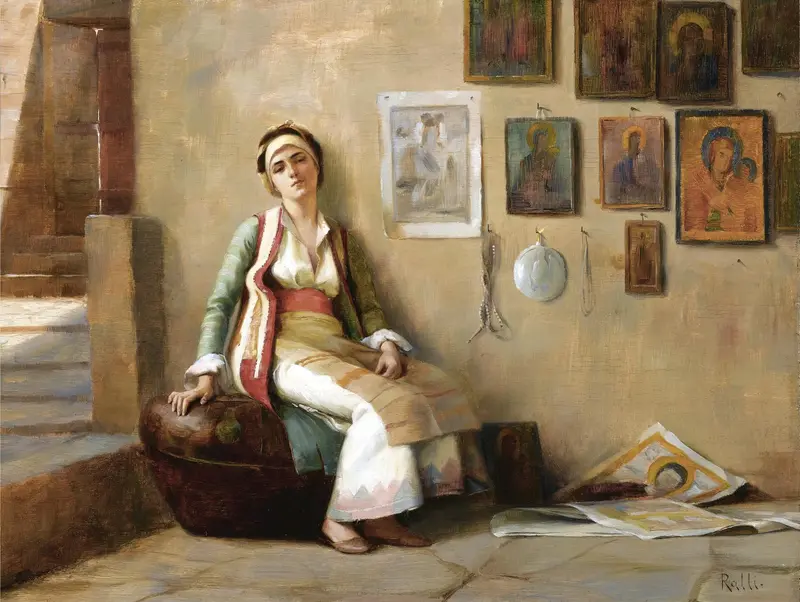
A Moment's Rest
Theodoros Ralli



