
Okiść — History & Facts
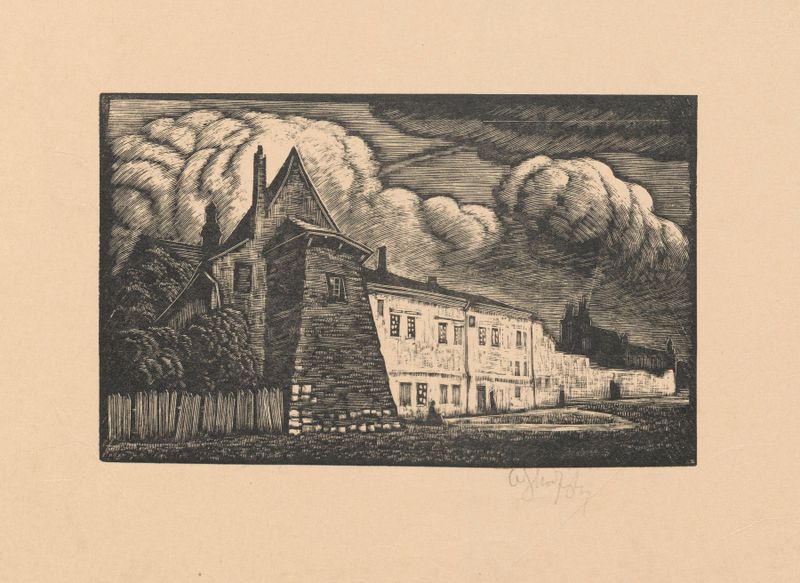
Can beauty exist without sorrow? In the interplay of light and shadow, this question lingers in the air, begging for exploration and understanding. Władysław Skoczylas's Okiść presents a visceral connection between grace and turmoil, drawing viewers to confront the inherent violence within beauty itself. Look to the center of the composition, where a dynamic figure emerges, its form both fluid and angular. The bold strokes of ochre and deep indigo dance against one another, creating a tension that captivates the eye.
Notice how the light catches the figure's contours, illuminating the muscles and tension, suggesting movement yet held in a moment of stillness. The swirling background further emphasizes this duality, with chaotic patterns that echo the internal struggle of the subject, inviting you to explore its emotional depths. As you delve deeper, the contrast becomes apparent — the power of the figure juxtaposed against the raw, almost turbulent backdrop. The starkness of the colors may evoke feelings of aggression and unease, hinting at the violence that underlies our search for beauty.
Each brushstroke seems to breathe life into the canvas, reflecting the nuanced relationship between vulnerability and strength, a dance of chaos and serenity. Skoczylas painted Okiść in 1913 during a transformative period in his life, as he embraced the influences of folk art while grappling with the turbulence of the early 20th century. At this time, Poland was experiencing significant political and cultural shifts, which undoubtedly informed his artistic vision. Striving to capture both the essence of humanity and the beauty of the natural world, he sought to merge tradition with modernism, a quest that resonates in this powerful piece.
More Artworks by Władysław Skoczylas
Browse all →
Motyw ze Starego Miasta
Władysław Skoczylas
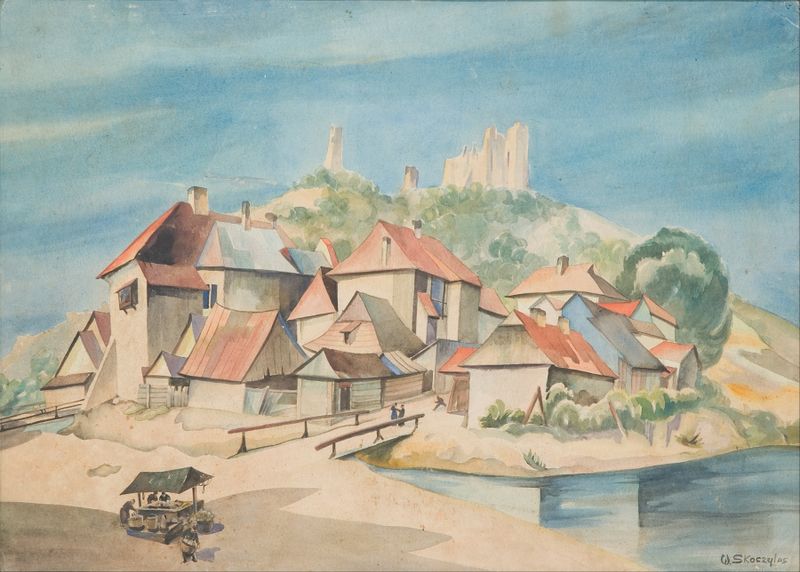
Widok Kazimierza nad Wisłą
Władysław Skoczylas
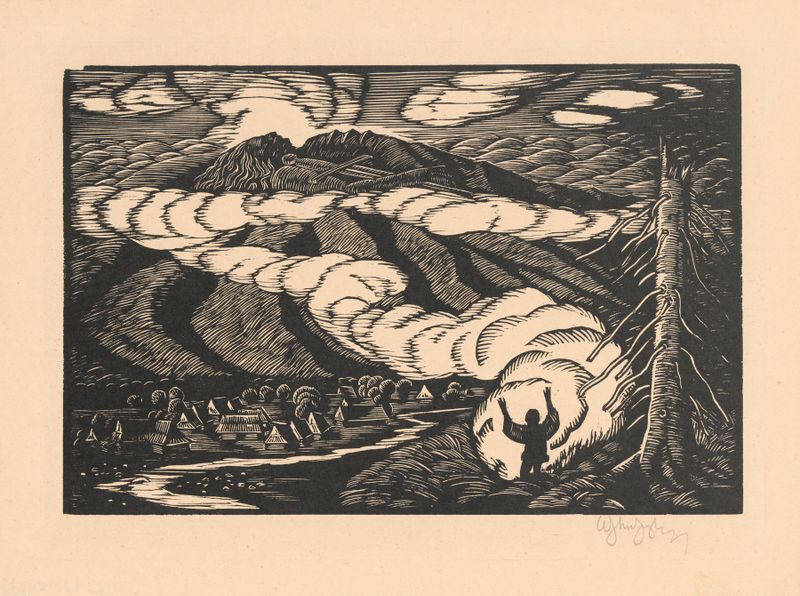
Giewont
Władysław Skoczylas
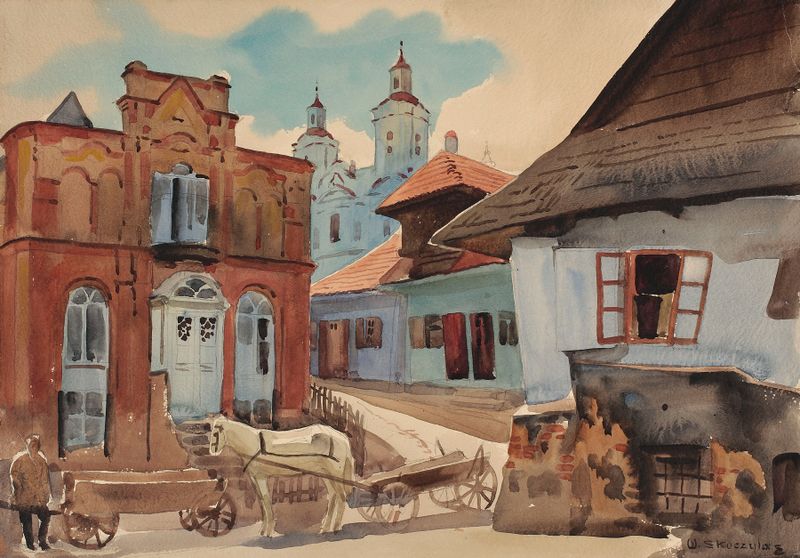
Fragment miasteczka
Władysław Skoczylas

Kościół w Dębnie
Władysław Skoczylas

Ulica w Kazimierzu
Władysław Skoczylas

Rynek w Kazimierzu nad Wisłą
Władysław Skoczylas
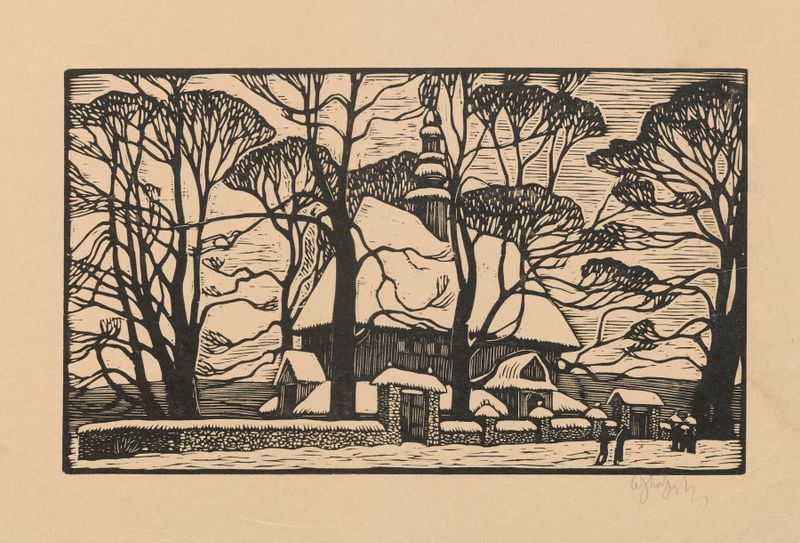
Kościółek w zimie
Władysław Skoczylas

Kolumna Zygmunta
Władysław Skoczylas
Motyw z Krakowa; Baszta Augustianów
Władysław Skoczylas





