
Old Pine Tree — History & Facts
What first draws the eye in Old Pine Tree by August Cappelen is the way the tree stands alone, its trunk rising with a quiet authority, every twist of its branches rendered with careful, searching lines. The artist’s pencil lingers on the rough, weathered bark and the dense, tufted needles, giving the pine a sense of age and endurance. Some branches are crisply defined, others dissolve into suggestion, as if the tree is half-emerging from memory.
The empty background offers no distractions; all the drama is in the tree’s contorted limbs, which seem to reach out and pull the viewer in. This is not just a study of nature but a portrait, the pine’s character captured in every stroke. Works like this, created between 1827 and 1852, belong to a period when artists across Northern Europe turned their attention to the landscape, seeking in trees and rocks the same individuality once reserved for human sitters. In Norway, where Cappelen worked, the pine was more than a botanical subject—it was a national symbol, a witness to centuries of wind and winter.
Drawings such as this were often made outdoors, sometimes as studies for larger paintings, sometimes as ends in themselves, treasured for their directness and truth to nature. Now held by the National Museum of Art, Architecture and Design, Old Pine Tree invites us to look closely, to see the living world as an artist once did: line by line, branch by branch, with patience and wonder.
More Artworks by August Cappelen

Landscape Study with a Precipice
August Cappelen

Decaying forest
August Cappelen
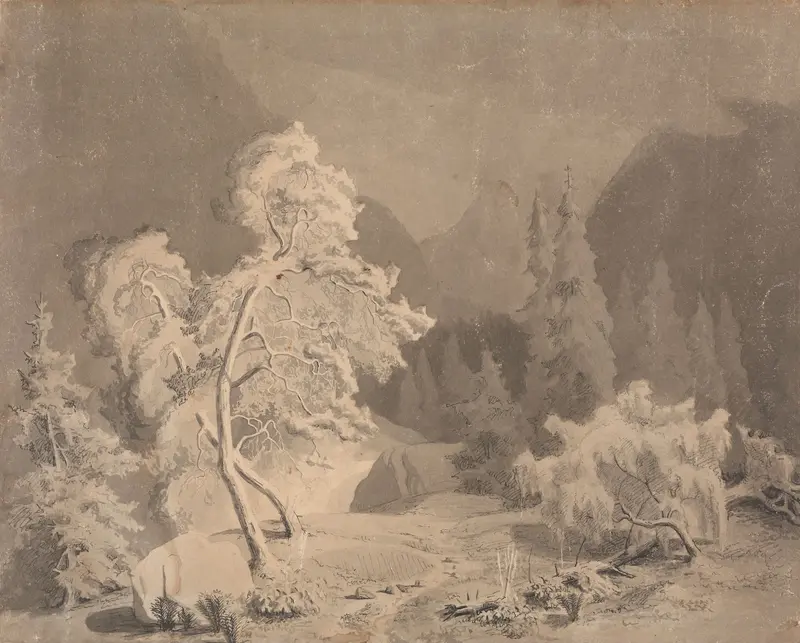
Forest Landscape
August Cappelen

Lake in Telemark
August Cappelen
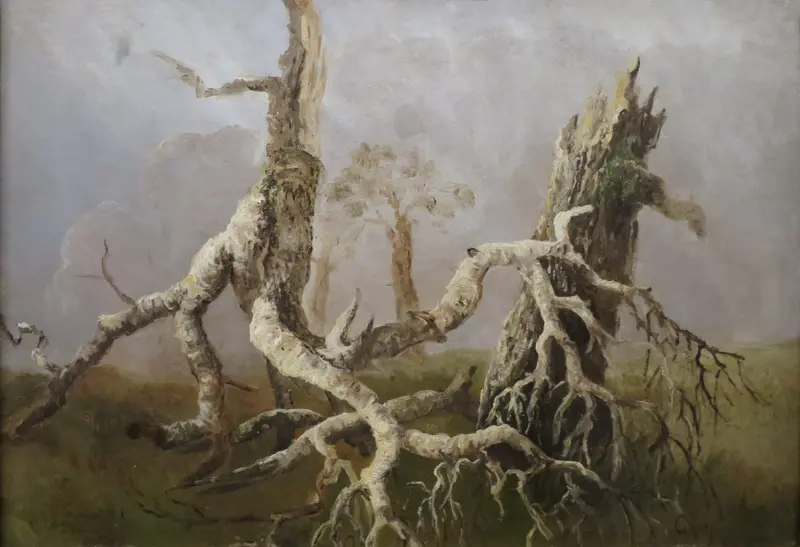
Dying Trees
August Cappelen
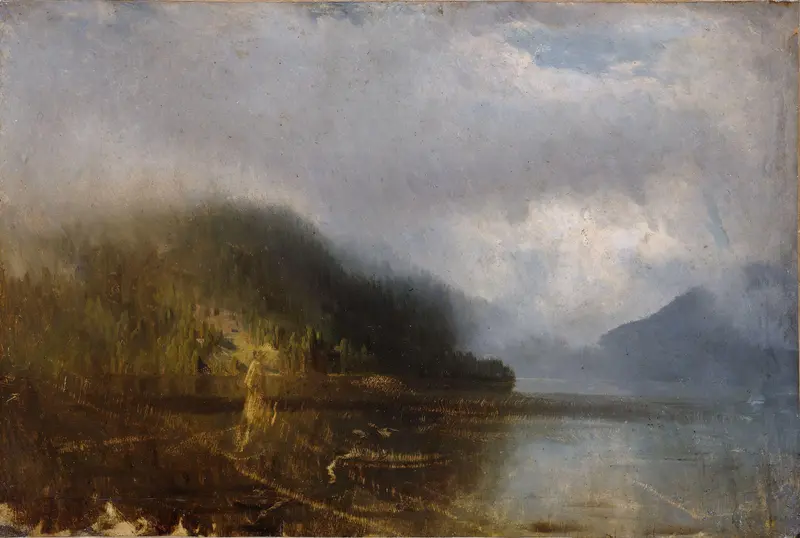
Lake in Fog
August Cappelen
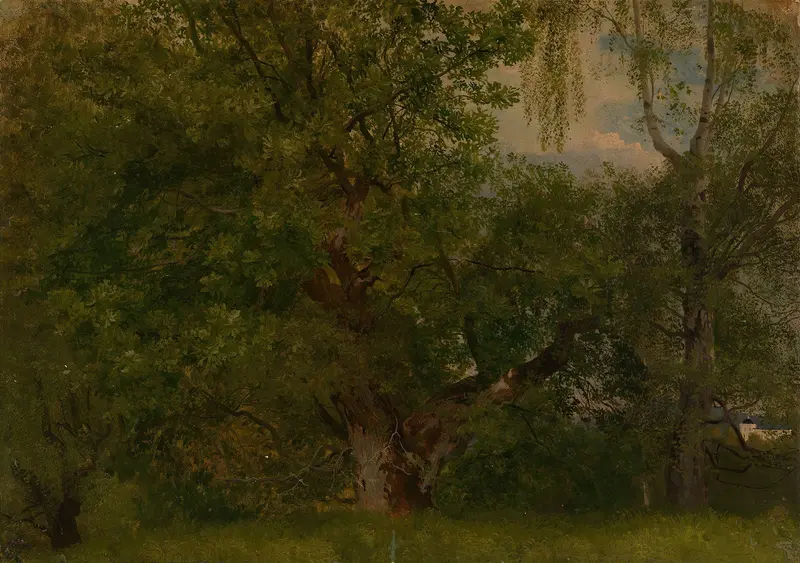
Wood near Ulefoss
August Cappelen
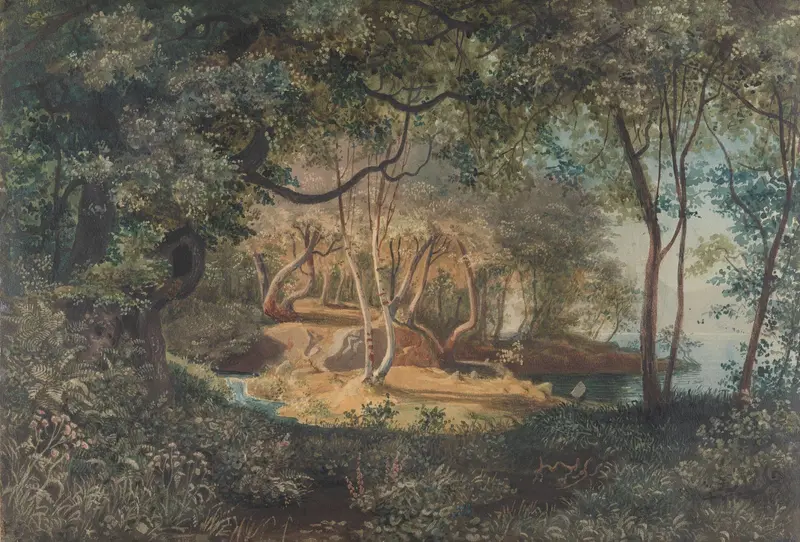
Woodland by the Fjord
August Cappelen
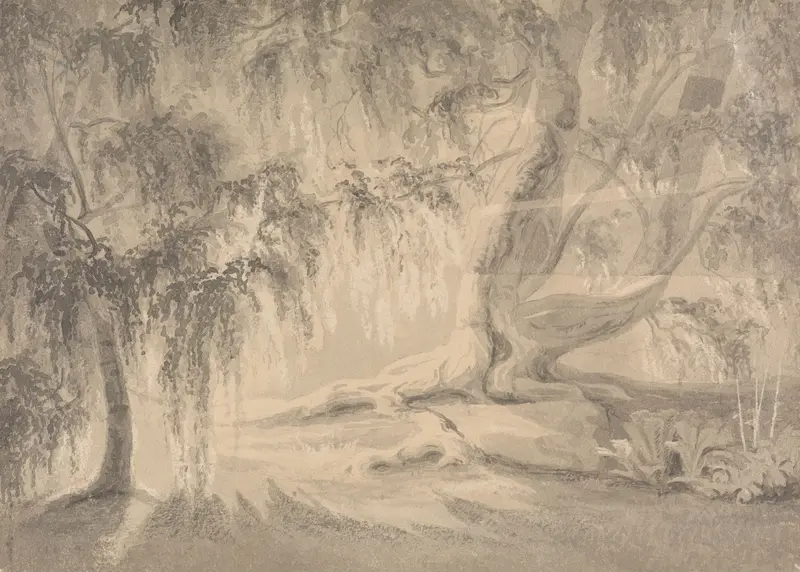
Forest Landscape with Sun Rays
August Cappelen
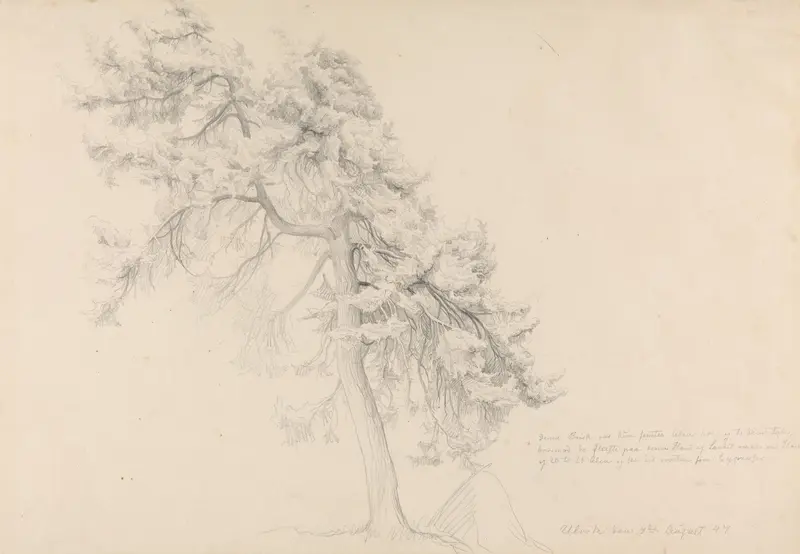
Juniper, Ulvik
August Cappelen
More Landscape Art

The Starry Night
Vincent van Gogh

View of Delft
Johannes Vermeer

Water Lilies
Claude Monet

The Grand Canal, Venice, looking north-west from the Ca' Corner to the Ca' Contarini degli Scrigni, with the campanile of Santa Maria della Carità
Canaletto

Windsor Castle
Canaletto

The Grand Canal looking North-East from the Palazzo Dolfin-Manin to the Rialto Bridge
Canaletto