
Olive tree, wall, wind — History & Facts
A single olive tree seems to lean and twist, its branches swept up in a silent force that animates the entire scene. The brushwork itself is restless, a flurry of short, curved strokes that pull the viewer’s gaze into the heart of the tree’s movement. The wall in the foreground is not a barrier but a stage, its pale, patchwork surface reflecting the same rhythm as the foliage above.
Every color—lavender, emerald, cobalt—feels chosen for its energy rather than its fidelity to nature, and the sky bends in sympathy with the wind’s invisible hand. The eye is led in a spiral, from the tree’s trunk outward, as if the painter wanted us to feel the gust, not just see its effects. Painted around 1907, Olive tree, wall, wind belongs to a moment when artists like Alexej von Jawlensky were breaking away from strict realism and searching for new ways to capture sensation and mood. This was the era when bold color and expressive brushwork were becoming the language of the avant-garde, especially in Germany and France.
Works like this were not typically made for grand salons or royal patrons, but for a new, more personal audience—collectors and artists who wanted to see the world through fresh eyes. Today, this painting is part of the collection at Dorotheum, a reminder of how early twentieth-century painters turned even the humblest landscape into a field for experiment. Stand before it and trace the wind with your own eyes; the story is in the movement.
More Artworks by Alexej von Jawlensky

Murnau
Alexej von Jawlensky
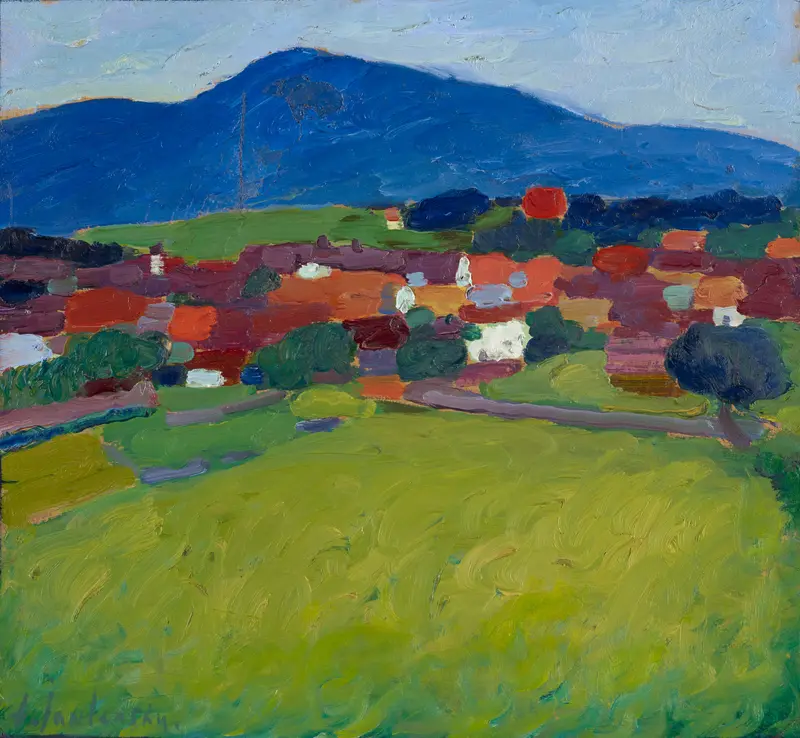
The Village Of Murnau
Alexej von Jawlensky
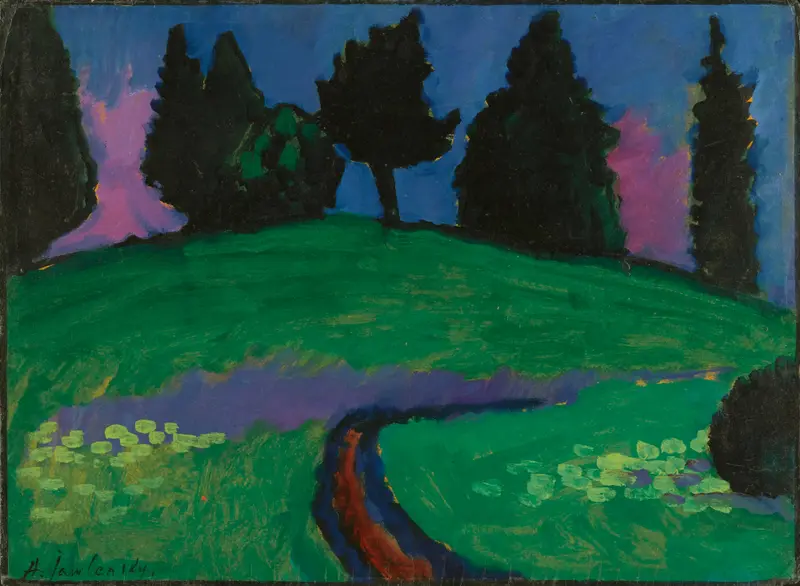
Dunkle Bäume über Grünem Hang (Dark Trees Over Green Slope)
Alexej von Jawlensky
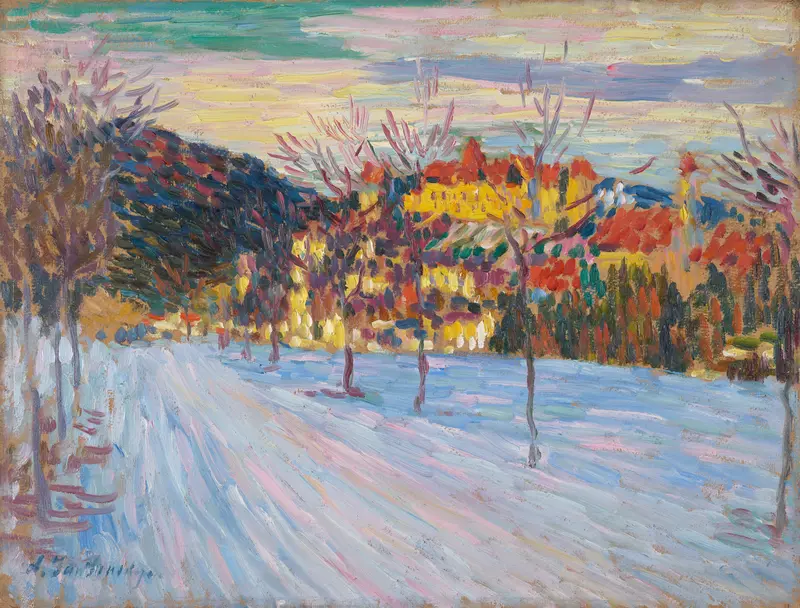
Füssen
Alexej von Jawlensky
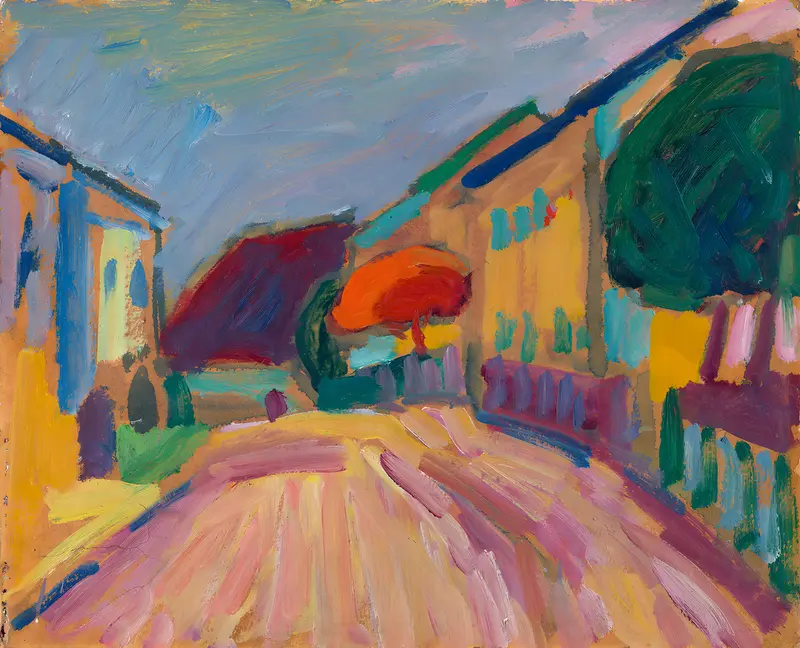
Sketch from Murnau
Alexej von Jawlensky
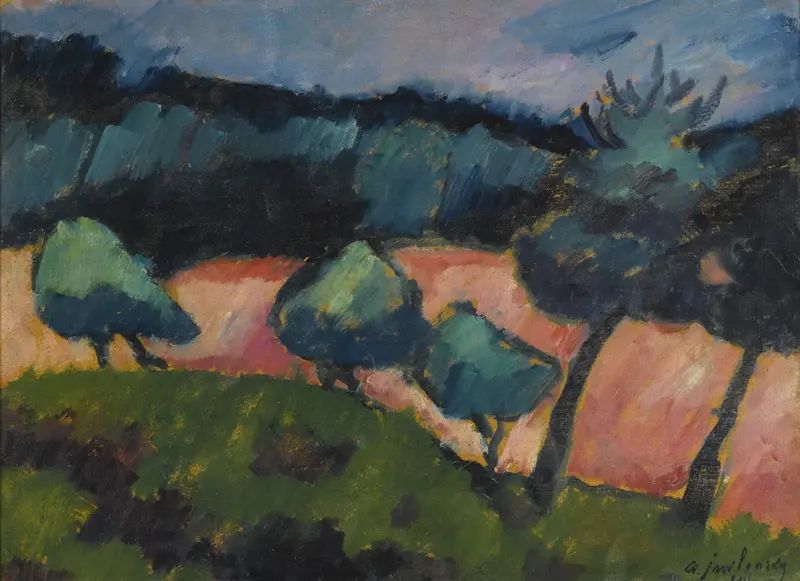
Bäume und Dünen in Prerow (Trees and dunes in Prerow)
Alexej von Jawlensky
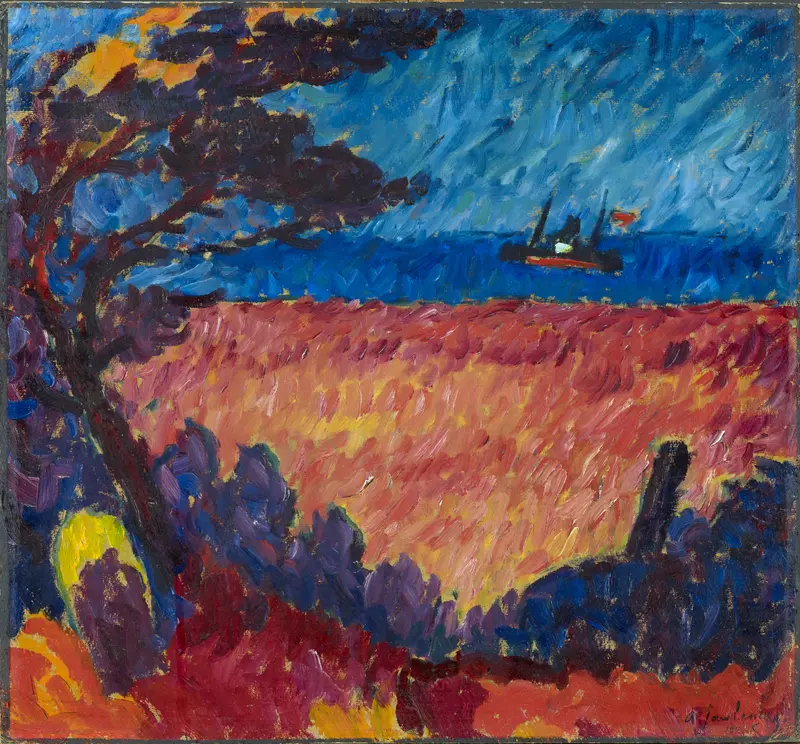
At The Baltic Sea
Alexej von Jawlensky
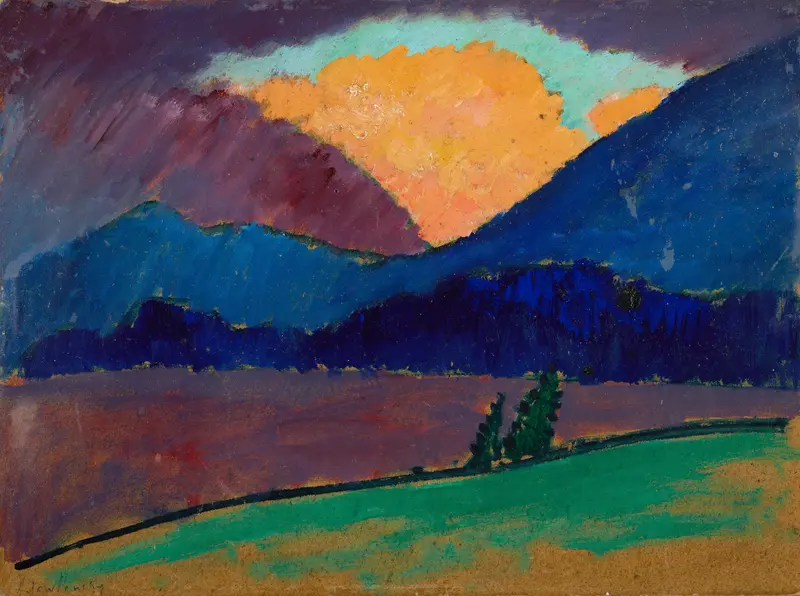
Summer evening in Murnau
Alexej von Jawlensky
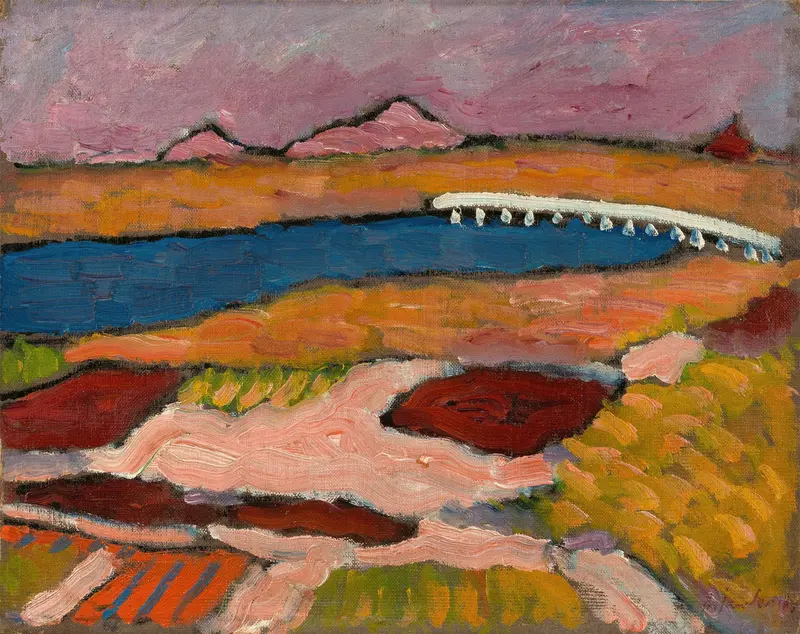
Prerow (Darß), Pommern
Alexej von Jawlensky
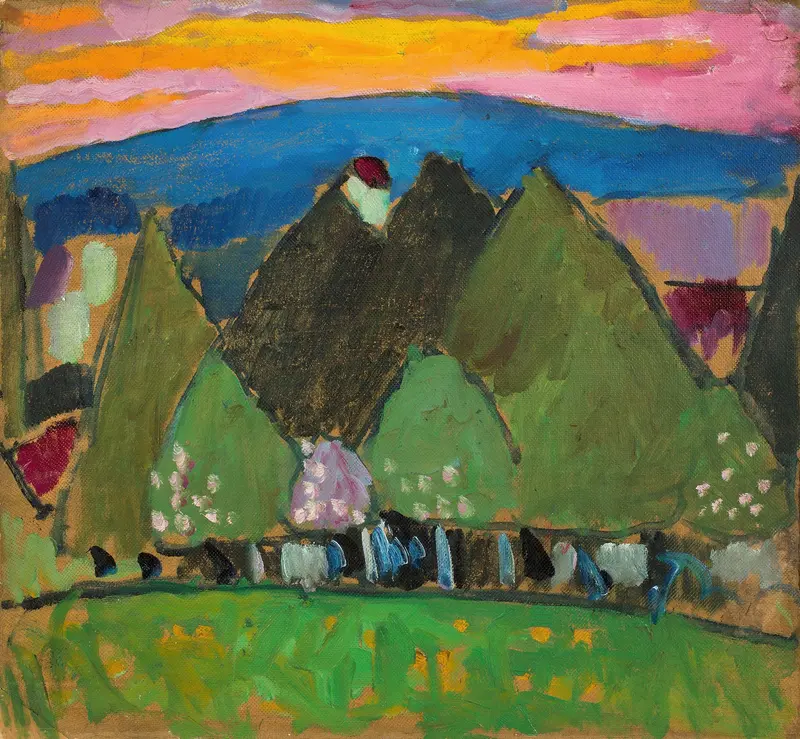
Landschaft mit Bäumen
Alexej von Jawlensky
More Landscape Art

The Starry Night
Vincent van Gogh

View of Delft
Johannes Vermeer

Water Lilies
Claude Monet

The Grand Canal, Venice, looking north-west from the Ca' Corner to the Ca' Contarini degli Scrigni, with the campanile of Santa Maria della Carità
Canaletto

Windsor Castle
Canaletto

The Grand Canal looking North-East from the Palazzo Dolfin-Manin to the Rialto Bridge
Canaletto