
On The Isis — History & Facts
Did the painter know this moment would outlive them? In the tranquil embrace of the English countryside, time seems suspended, inviting us to linger in its serene beauty. Look to the left at the glistening waters of the river, which reflect the soft pastels of a morning sky. Notice how the delicate brush strokes create an illusion of movement in the shimmering surface, while the gentle undulations of the shoreline lead your eye toward a distant horizon. The trees, with their rich greens, frame the scene, grounding it in nature’s symphony.
The composition captures not just a view, but a moment, where land meets water and the world feels boundless. There is a subtle tension between the idyllic landscape and the figures dotting the scene. The solitary boatman, casting his line, blends into the tranquility yet anchors the viewer in a narrative of simplicity and existence. Meanwhile, the interplay of light and shadow across the foliage evokes a sense of fleeting time, whispering the fragility of these moments.
The overall harmony of colors, from the soft blues to the vibrant greens, offers both solace and an unspoken yearning for permanence in a transient world. In 1764, amidst the burgeoning English landscape tradition, Paul Sandby was establishing his reputation as a master of watercolor. He was deeply influenced by the picturesque movement, which sought to elevate natural beauty into a refined art form. During this time, he was also exploring the contrasts of illusion and reality in his work, striving to convey the profound connection between humanity and nature, a theme that would resonate through the ages.
More Artworks by Paul Sandby
Browse all →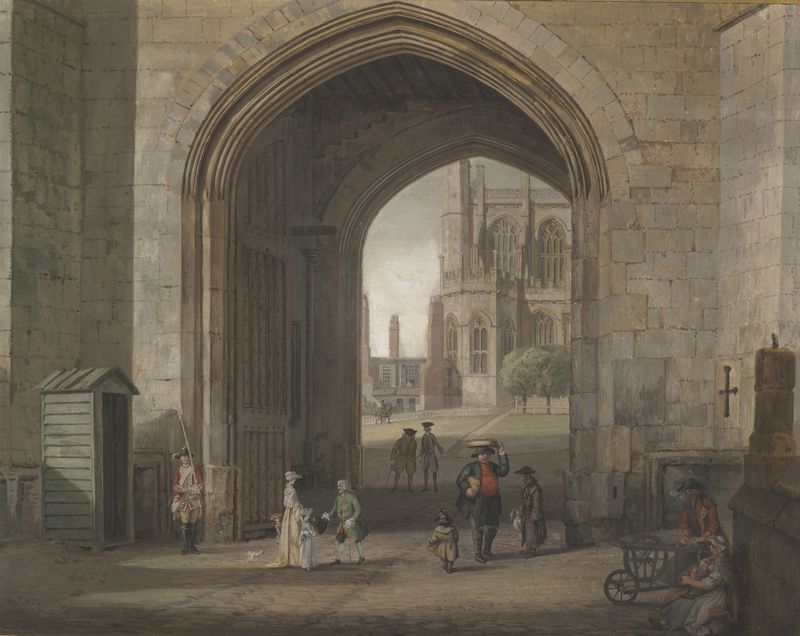
The Tower Gate at Windsor Castle
Paul Sandby

A Distant View of Maidstone, from Lower Bell Inn, Boxley Hill
Paul Sandby
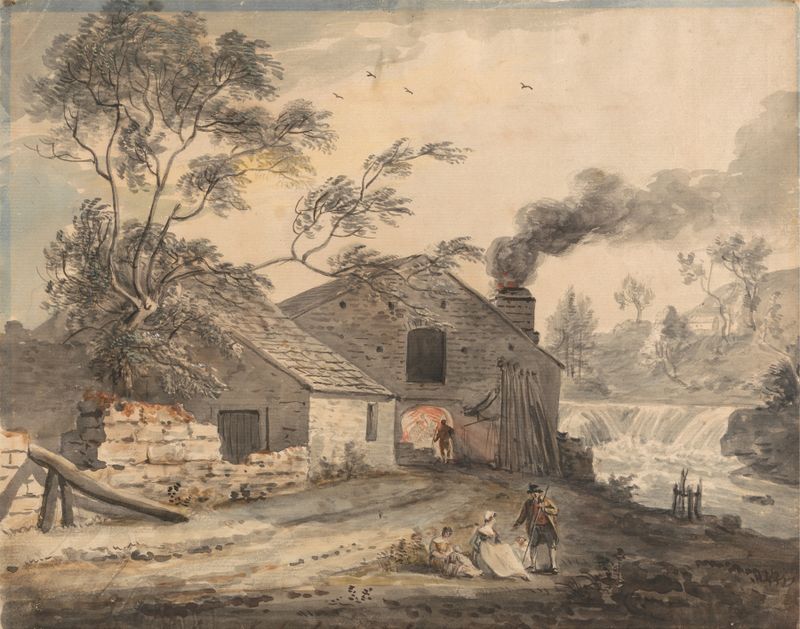
Iron Forge on the River Kent, Westmorland
Paul Sandby
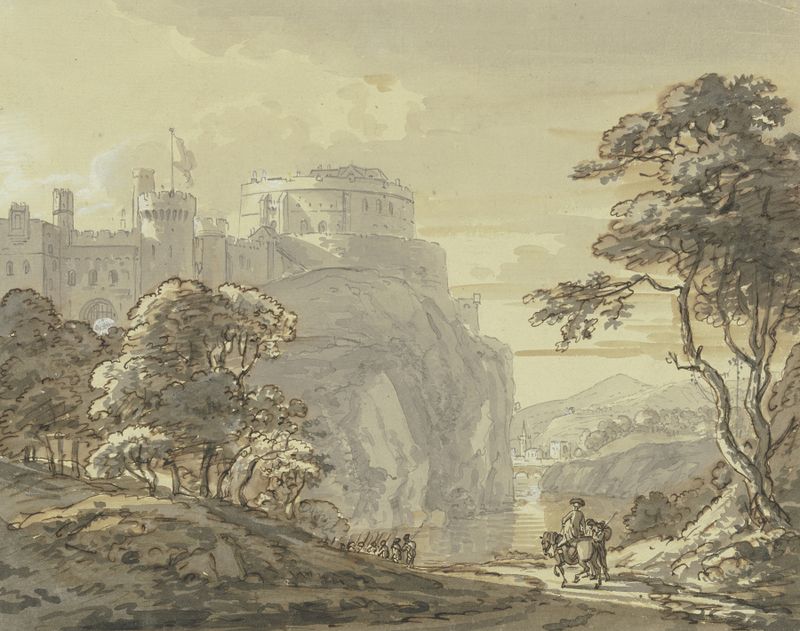
View of Windsor Castle
Paul Sandby

Hackwood Park, Hampshire
Paul Sandby

Roslin Castle, Midlothian
Paul Sandby
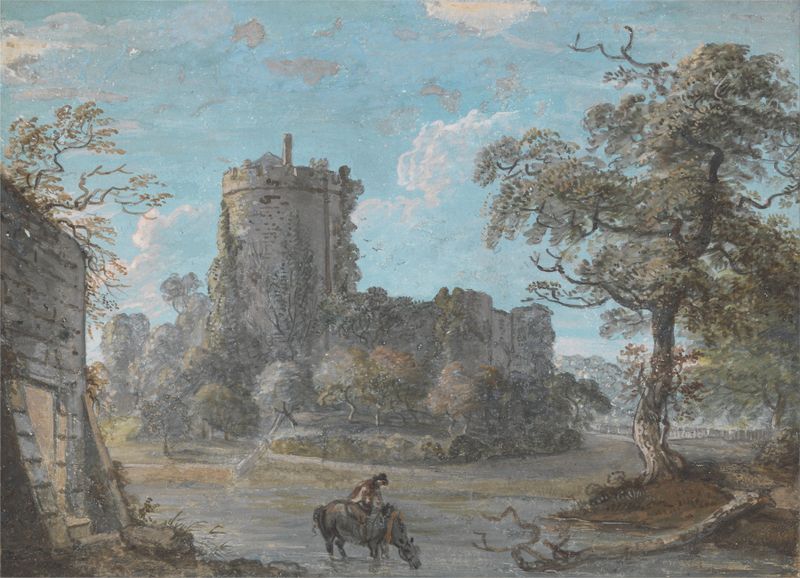
The Entrance to Chepstow Castle
Paul Sandby
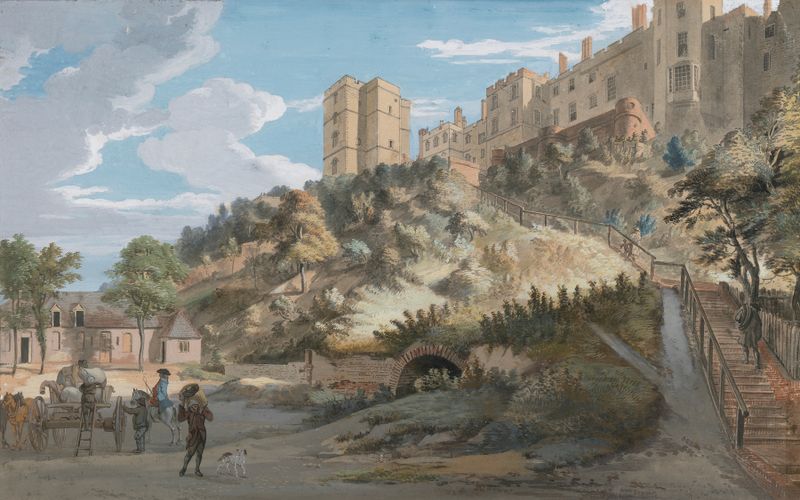
The Hundred Steps and Winchester Tower, Windsor Castle, Berkshire
Paul Sandby

Brook End, Essex
Paul Sandby
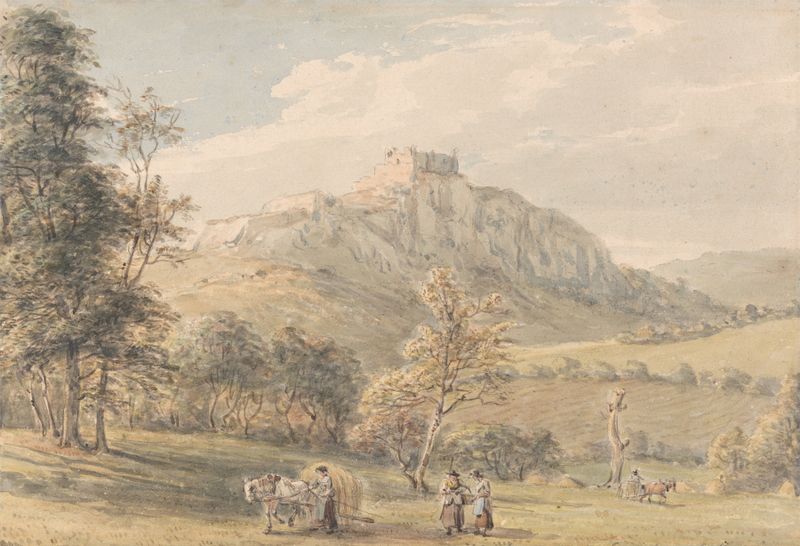
Carreg Cennen Castle
Paul Sandby





