
On the Road — History & Facts
What if beauty was never meant to be finished? In On the Road, the ephemeral quality of nature and its wildness speaks to an unsettling truth that lies beneath serene landscapes. Look to the center of the canvas, where a worn dirt path stretches toward the horizon, guiding the viewer’s eye into the heart of the composition. The muted greens and browns breathe life, while the textured brushwork evokes the roughness of earth underfoot. Notice how the light breaks through heavy clouds, casting a delicate glow on the foliage, creating an almost ghostly atmosphere, yet hinting at an impending storm.
The interplay of light and shadow not only carves depth but creates a tension that is both tranquil and charged. Hidden within this picturesque scene are the subtle reminders of violence; the chaos of nature is ever-present. The bending trees and turbulent sky suggest a world that remains untamed, a mirror reflecting humanity's own struggles with existence. Furthermore, the solitary figure on the path, though small, signifies the individual's vulnerability amidst surrounding forces, conveying a poignant solitude that begs for connection yet hints at isolation. Jules Dupré painted On the Road in 1856, a period marked by the Romantic movement’s embrace of nature's beauty and its unpredictability.
Residing in France, Dupré was navigating his artistic journey amid the changing tides of landscape painting, where emotion and realism intertwined. This work reflects not only his dedication to capturing the raw essence of the environment but also the tumultuous spirit of an age in which man grappled with the sublime power of nature.
More Artworks by Jules Dupré
Browse all →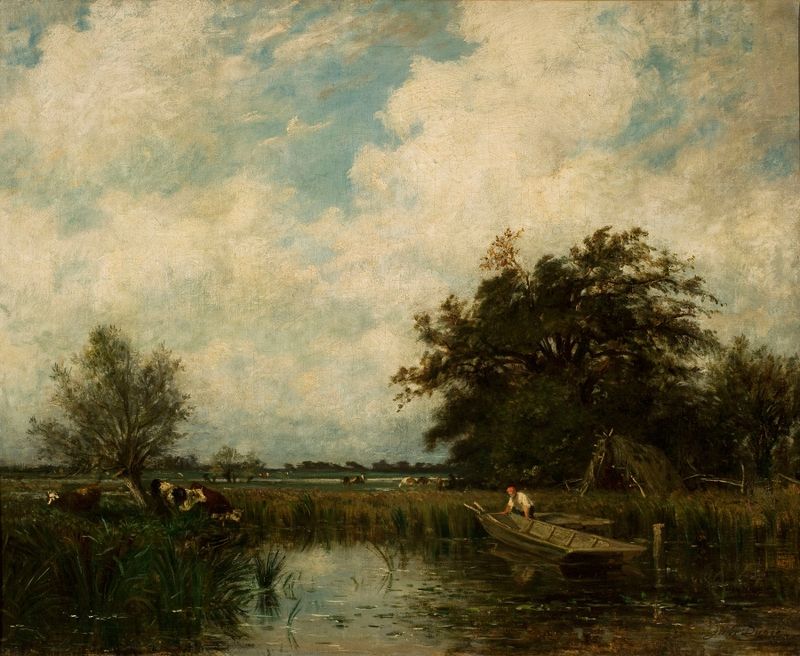
Landscape with a pond
Jules Dupré

The Cottage by the Roadside, Stormy Sky
Jules Dupré
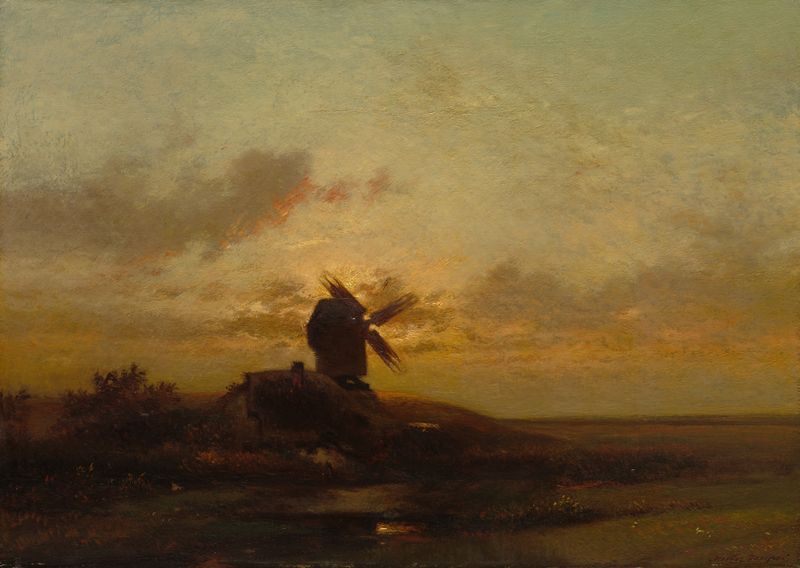
The Windmill
Jules Dupré

The Estuary Farm
Jules Dupré

Fontainebleau Oaks
Jules Dupré

Village Scene, Sunset
Jules Dupré

Barks Fleeing Before the Storm
Jules Dupré

Cows Crossing a Ford
Jules Dupré

The Old Oak
Jules Dupré

Weidelandschaft im Limousin
Jules Dupré





