
Onze-Lieve-Vrouwekathedraal te Antwerpen vanop de Handschoenmarkt — History & Facts
What secret hides in the quiet of the canvas? Beneath the layers of paint, a deep melancholy whispers, inviting the viewer to contemplate the passage of time and the stories woven into the fabric of a city. Look to the left, where the grand spires of the cathedral reach toward the heavens, their intricate details rendered with both care and finesse. The soft hues of twilight bathe the scene in a golden light, contrasting with the cool blues of the evening sky that envelop the buildings surrounding the square. The artist's brushstrokes breathe life into the cobblestone streets, creating a sense of movement even amidst the stillness.
Notice how the warm illumination glimmers on the façades, highlighting the architectural grandeur while casting long shadows that hint at the unseen lives of those who once walked here. Beneath the surface, the interplay between light and shadow evokes a sense of nostalgia, capturing a fleeting moment that seems both sacred and sorrowful. The empty square invites introspection, suggesting a longing for connection in a world that feels increasingly distant. The careful juxtaposition of the vibrant cathedral against the quiet spaces around it speaks to the resilience of faith amidst the passage of time, a meditation on the human experience echoed in every brushstroke. In 1911, as Ost painted this serene scene, he found himself in a Belgium that was undergoing profound changes.
The era was marked by an artistic revival, with a growing appreciation for both impressionism and the emerging modernist movements. Amidst these shifting tides, Ost’s work captured not only the beauty of Antwerp but also the melancholic sense of longing that accompanied progress, reflecting his own artistic journey and the collective spirit of a nation.
More Artworks by Alfred Ost
Browse all →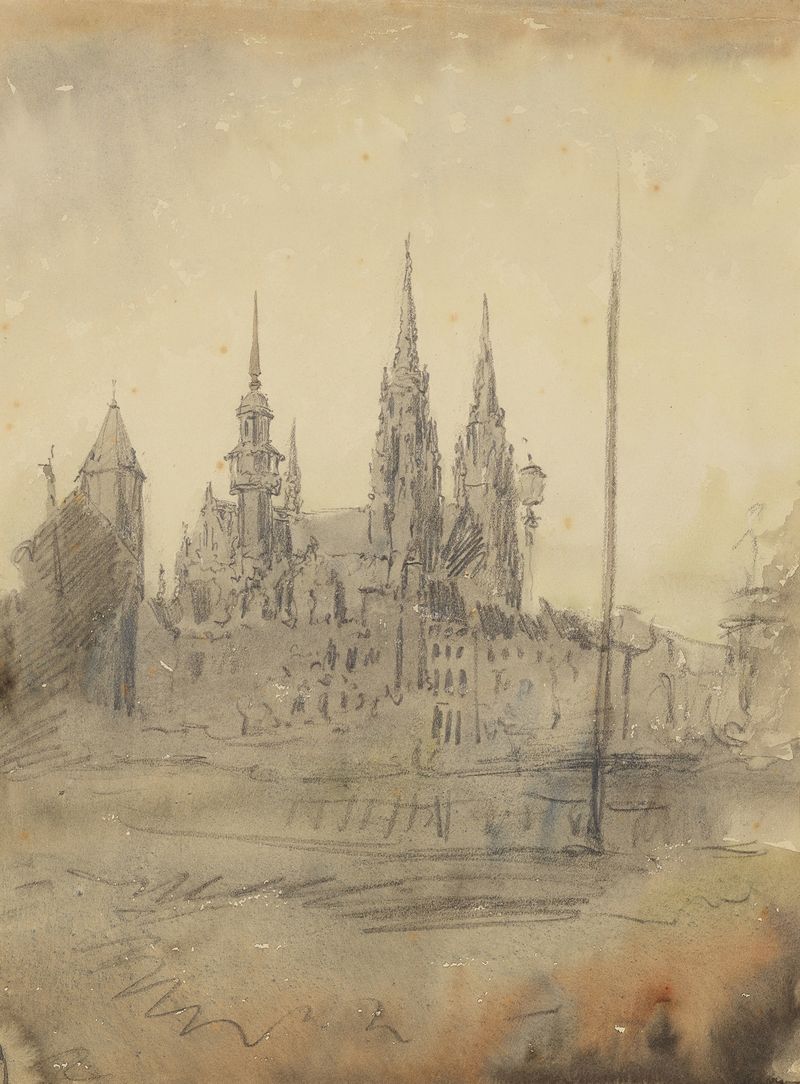
Oostende in de mist
Alfred Ost

Ypres Remember
Alfred Ost
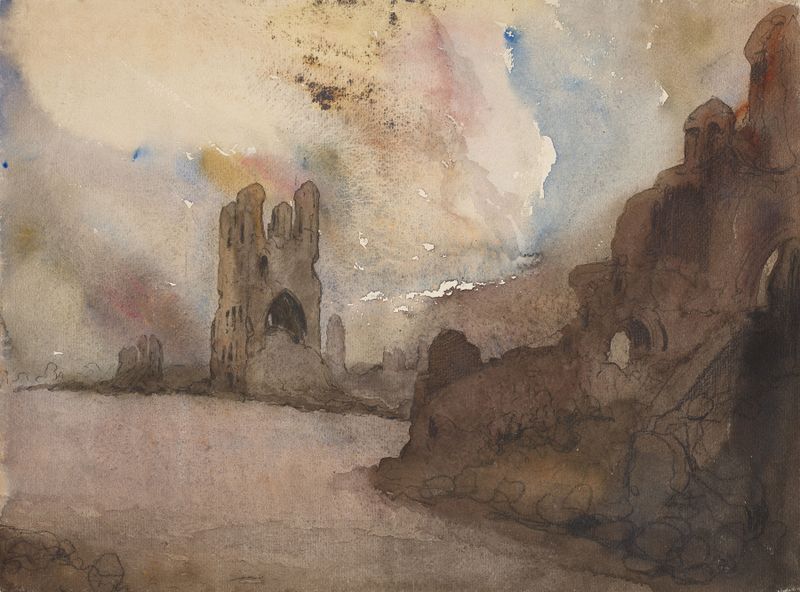
Ypres Remember
Alfred Ost
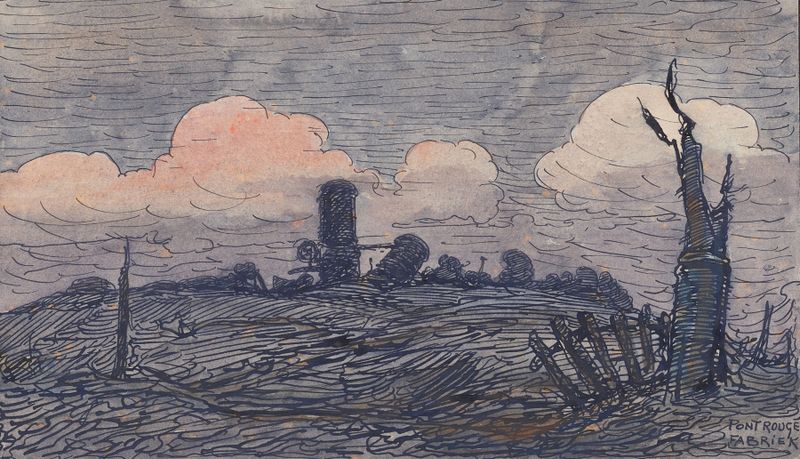
Ypres Remember
Alfred Ost

Bedevaarders op weg naar de Sint Salavtorkerk van Hakendover
Alfred Ost
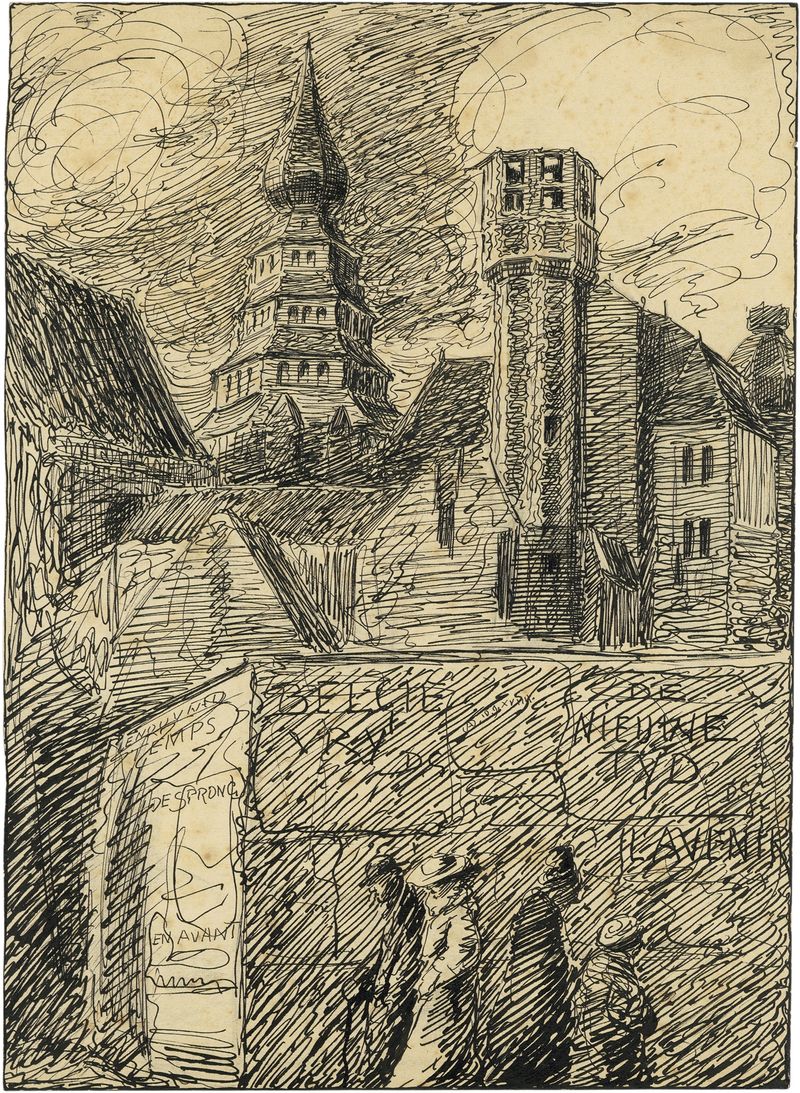
‘België vrij. De nieuwe tijd.’
Alfred Ost

Vierkantshoeve
Alfred Ost

Huis met rieten dak in een veld
Alfred Ost

Italiaanse kerk en bomen
Alfred Ost

Sint-Salvatorkerk in Hakendover – zijaanzicht
Alfred Ost
More Architecture Art
Browse all →
The statue of Liberty
Frédéric Auguste Bartholdi

View of Houses in Delft, Known as ‘The Little Street’
Johannes Vermeer

View of Houses in Delft, Known as ‘The Little Street’
Johannes Vermeer

The Cathedral in Rouen. The portal, Grey Weather
Claude Monet

The yellow house
Vincent van Gogh

The Church in Auvers-sur-Oise, View from the Chevet
Vincent van Gogh