Orange Branch with Giant Silk Moth — History & Facts
What first seizes the eye in Orange Branch with Giant Silk Moth is the sense of a moment caught mid-transformation: a caterpillar arches across the orange’s curve, while above, a moth hovers with wings outspread, their intricate patterns echoing the foliage below. The artist, Maria Sibylla Merian, invites the viewer to follow the life cycle in a single glance—egg, larva, cocoon, and adult—each stage rendered with a clarity that feels both scientific and intimate. The orange’s glossy surface and the delicate white blossoms draw the gaze upward, guiding us from fruit to flower to the moth’s triumphant emergence, as if the branch itself is a stage for nature’s quiet drama. Created in 1705, this work belongs to a world where art and natural history were inseparable pursuits.
Merian’s Metamorphosis insectorum surinamensium was a landmark, born from her travels in Suriname and her insistence on observing insects in their true habitats. Such illustrations were more than decoration—they were tools for discovery, commissioned by collectors and scholars eager to unlock the secrets of distant lands. Few records remain of individual pages like this, but each one testifies to a moment when the boundaries between art, science, and wonder were still gloriously porous.
Look again, and notice how every vein and petal is a record of patient observation—an invitation to see the world as Merian saw it, alive with transformation.
More Artworks by Maria Sibylla Merian
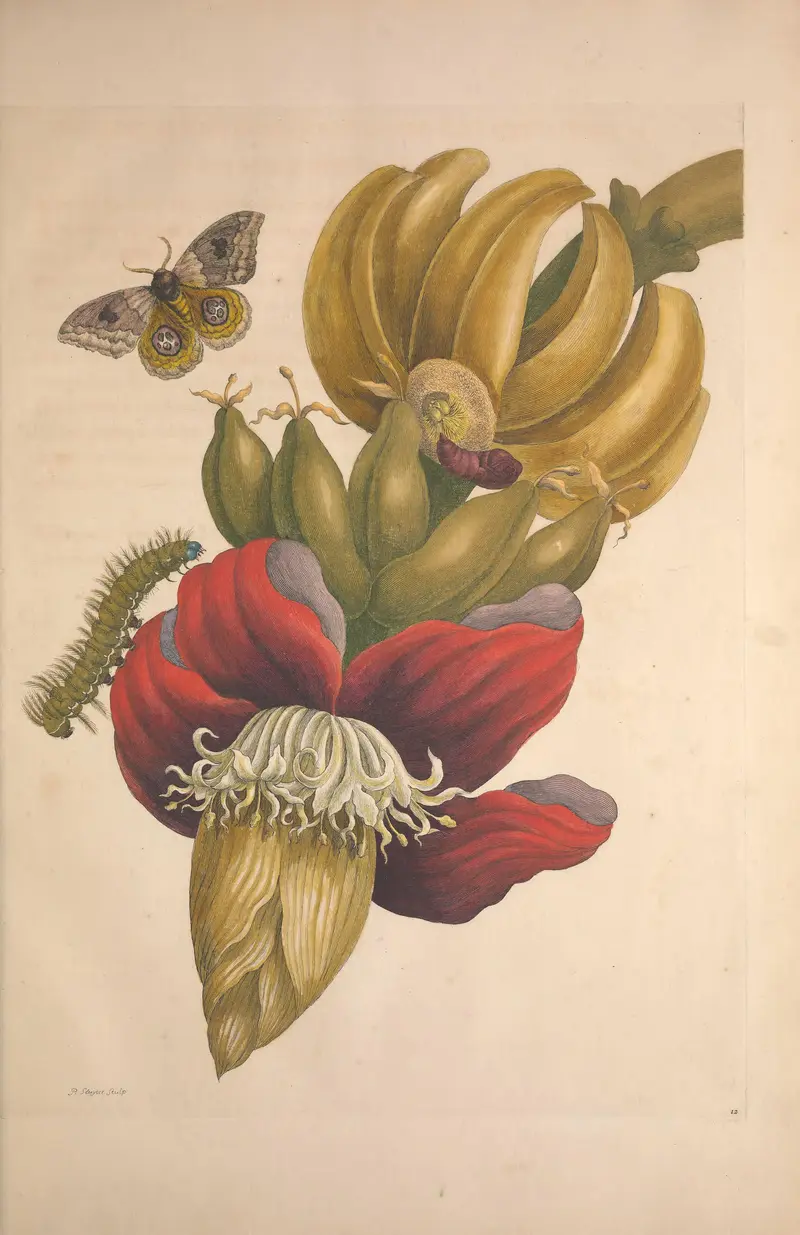
Banana with Bullseye Moth and Caterpillar
Maria Sibylla Merian
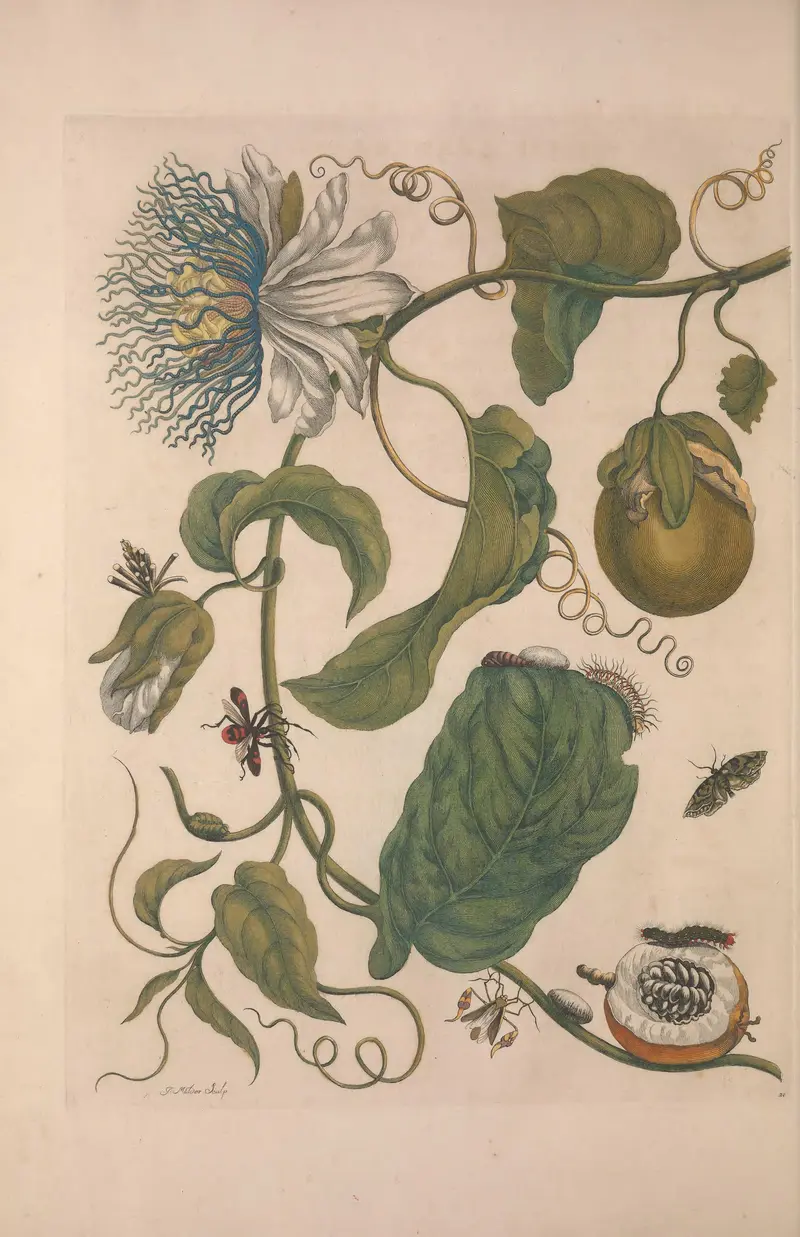
Passionflower with Caterpillars and Insects
Maria Sibylla Merian
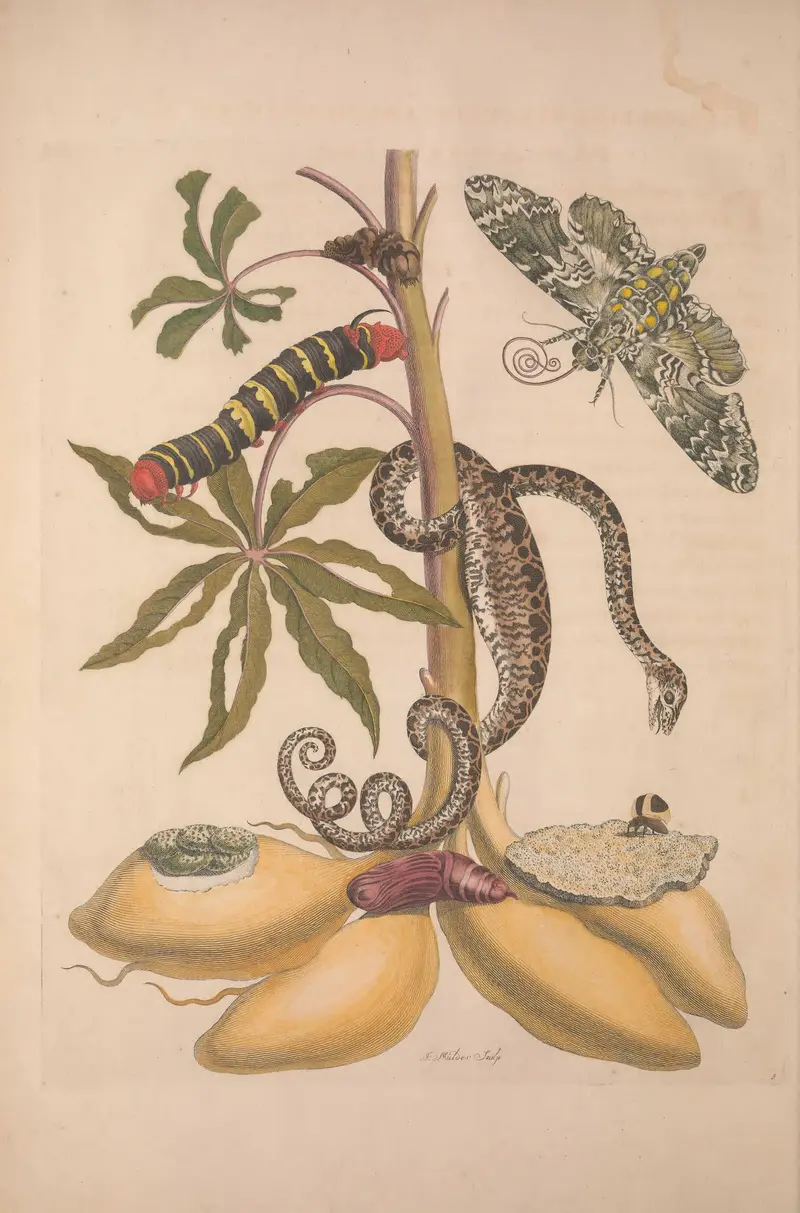
Cassava Root with Tree Boa and Sphinx Moth
Maria Sibylla Merian
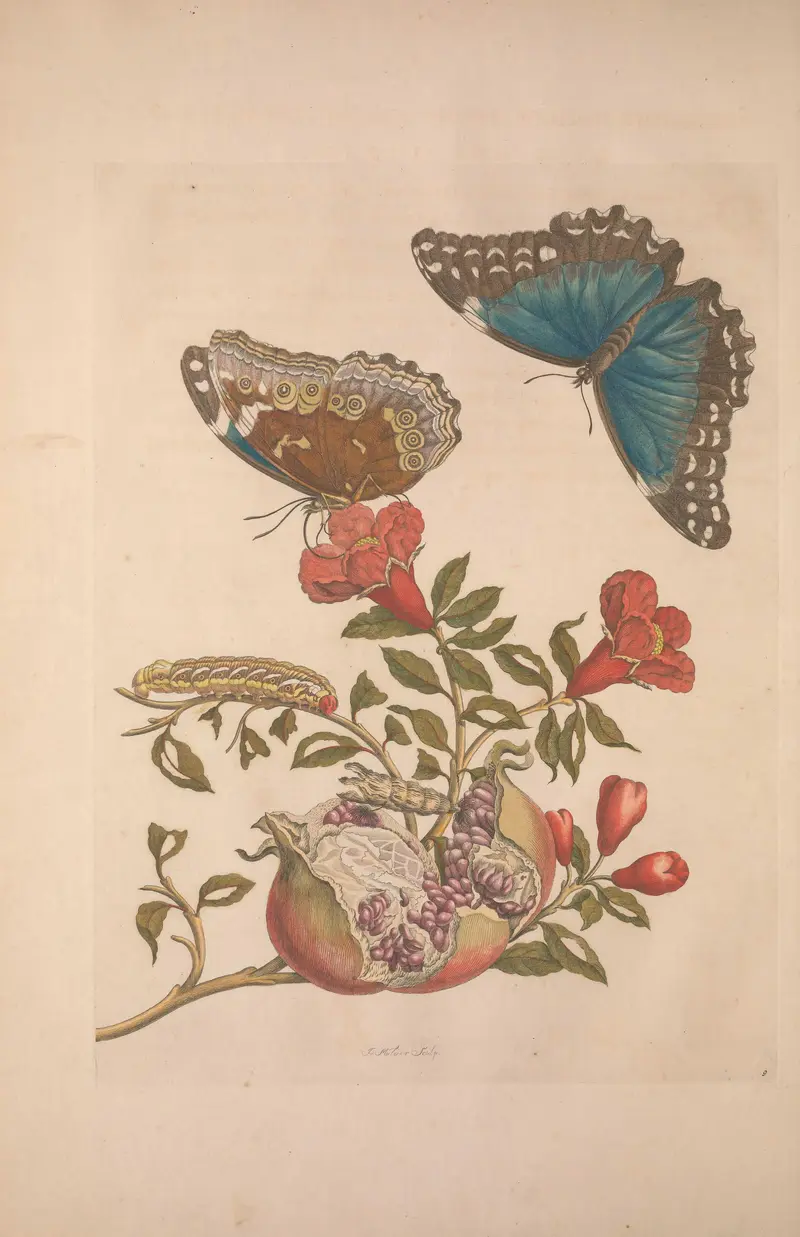
Pomegranate with Caterpillar, Pupa and Blue Butterfly
Maria Sibylla Merian
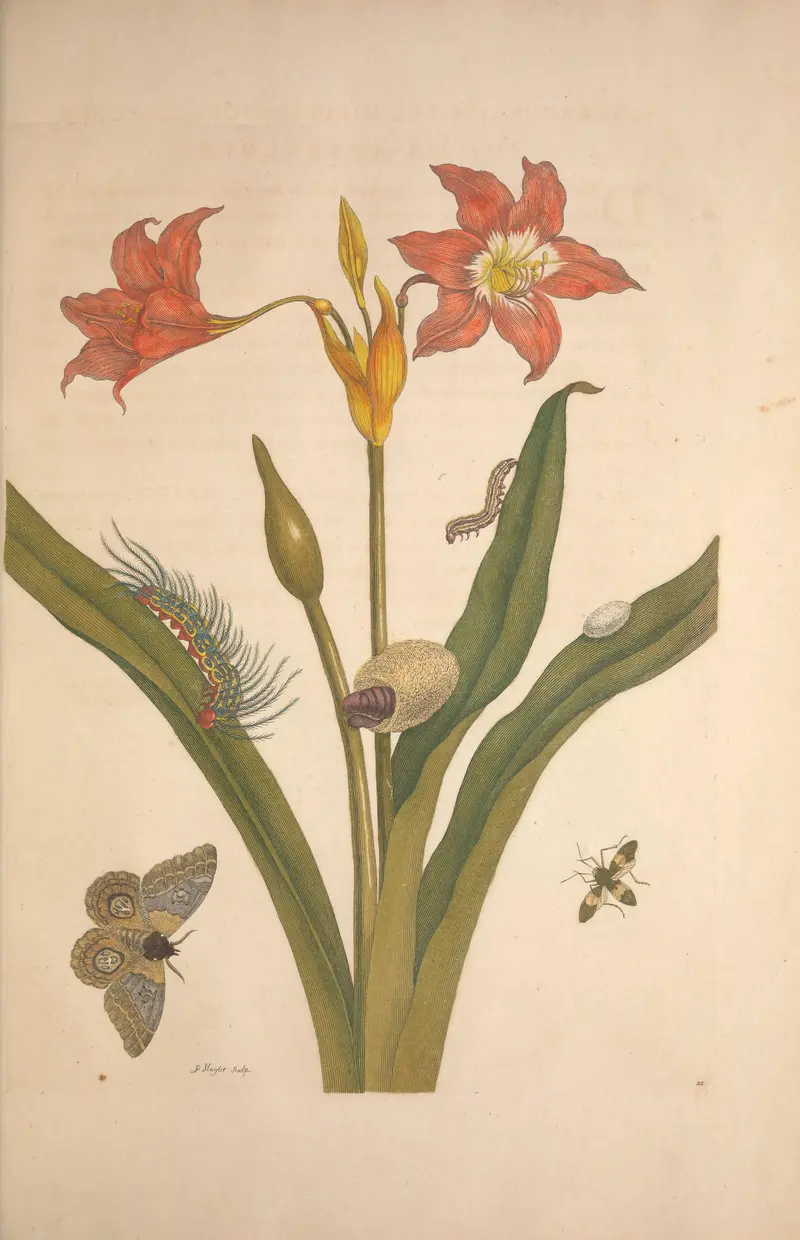
Red Amaryllis Lily with Moth and Caterpillars
Maria Sibylla Merian
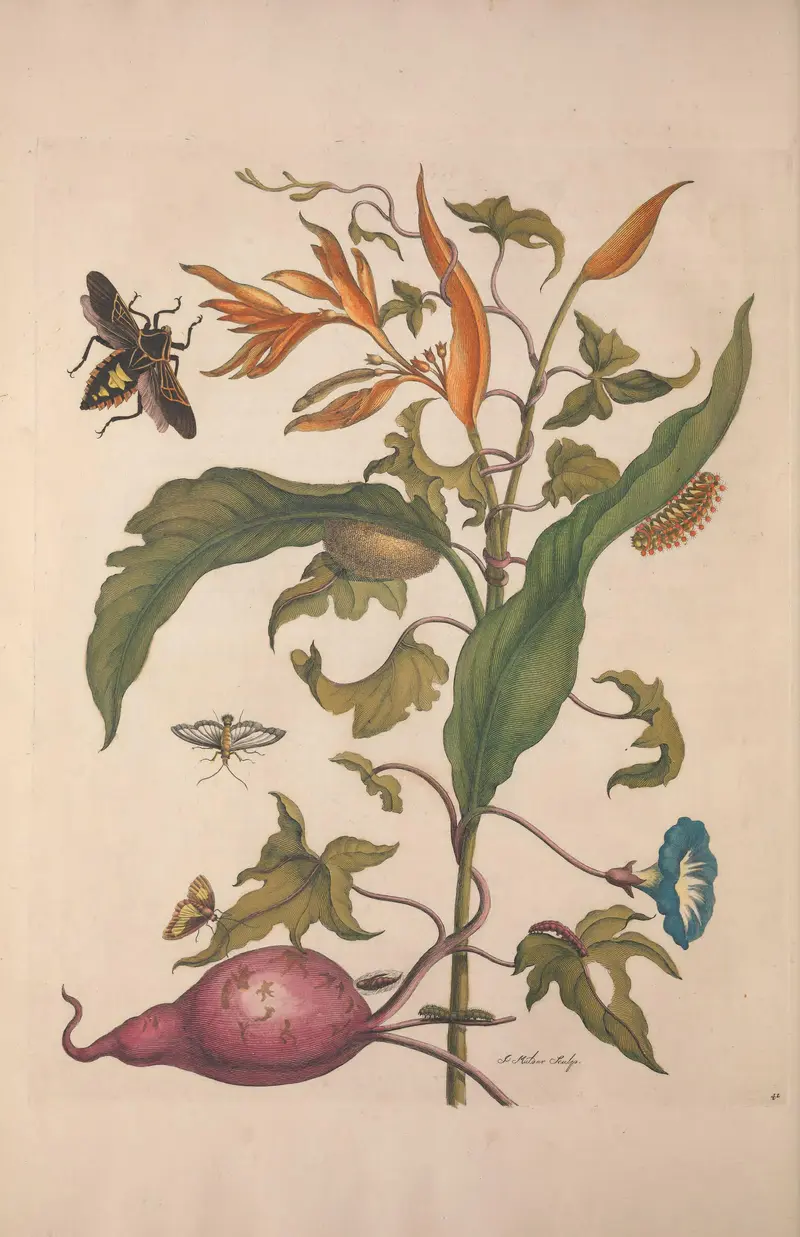
Sweet Potato with Beetle and Butterfly
Maria Sibylla Merian
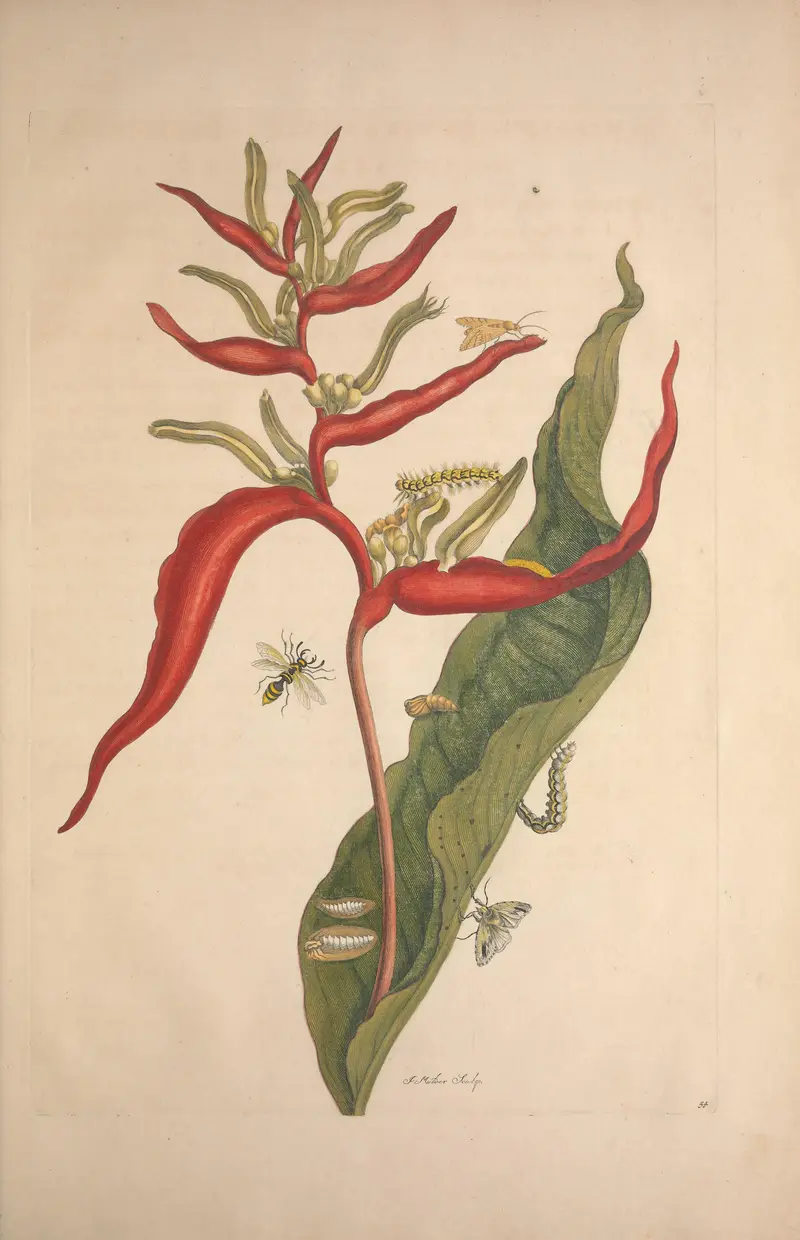
Heliconia with Moth
Maria Sibylla Merian
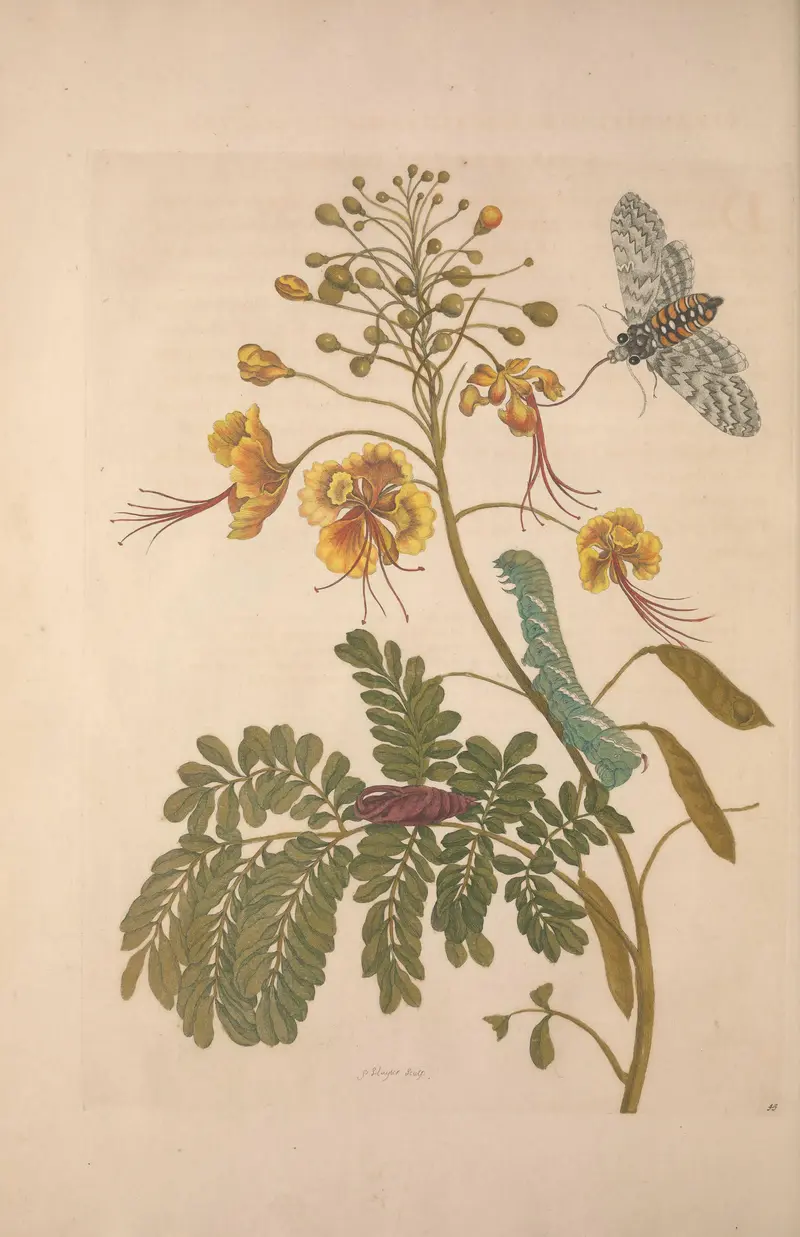
Mimosa with Moth and Caterpillar
Maria Sibylla Merian

Grapevine with Caterpillar and Moth
Maria Sibylla Merian
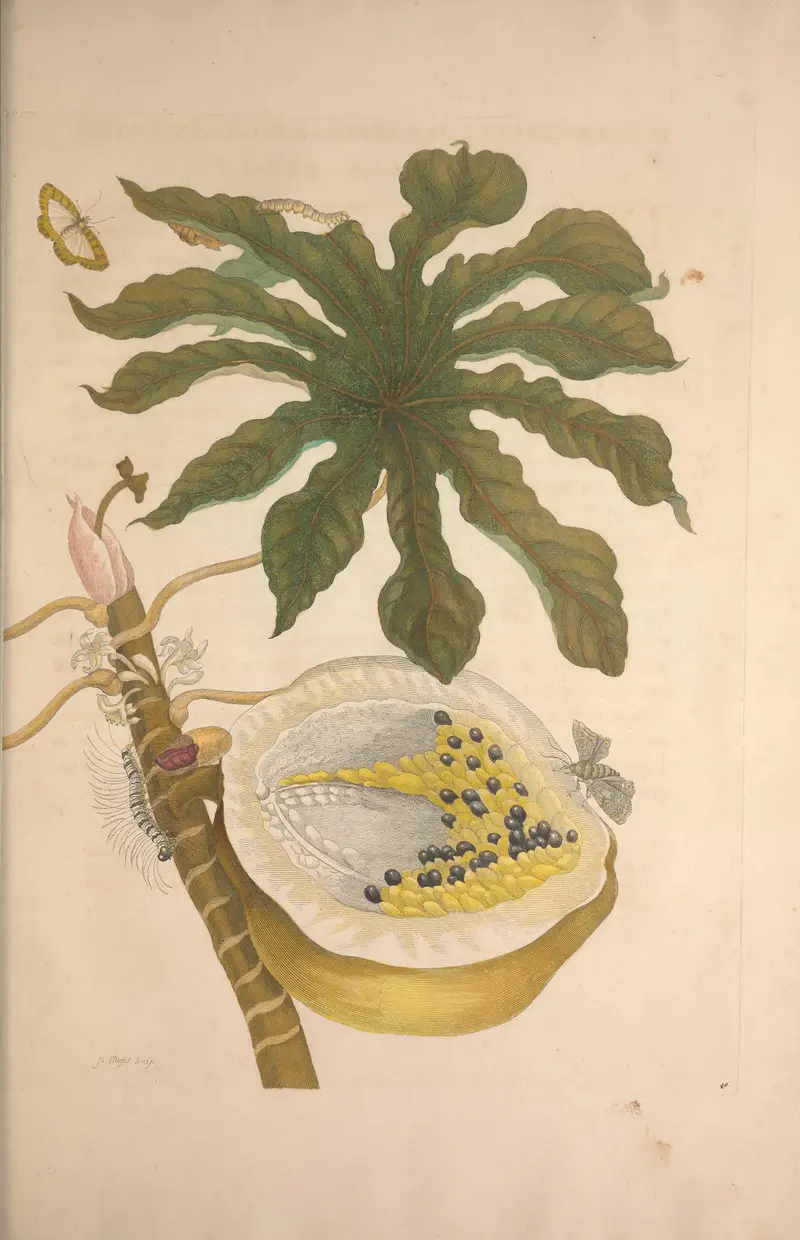
Papaya with Moth and Caterpillar
Maria Sibylla Merian