
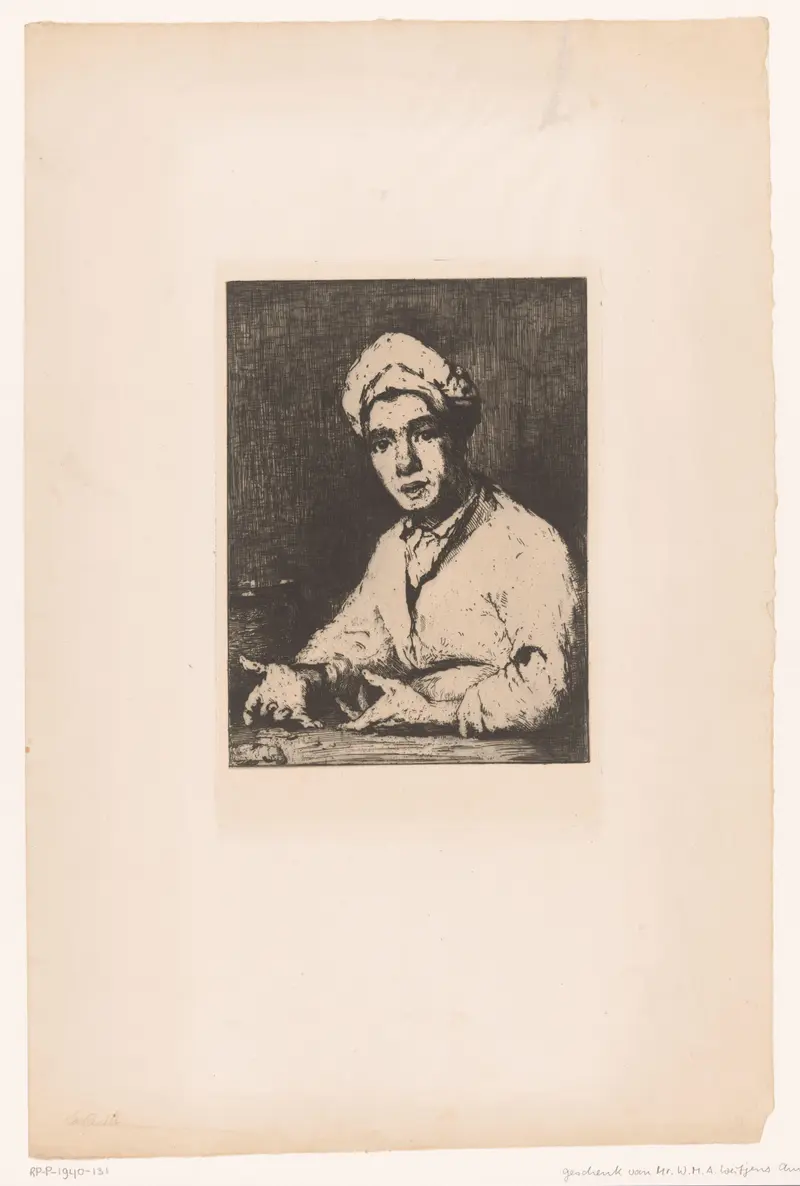
Oude man met baard en hoed met veren, zijn armen voor zich gekruist — History & Facts
What draws the eye first in this print is the gravity of the old man’s posture—arms crossed, head bent, as if weighed down by the years or by secrets known only to him. The feathered hat, almost theatrical, adds a touch of faded grandeur, while the heavy cloak swallows his figure in shadow. Light falls gently across his beard and hands, focusing our attention on these signs of age and experience.
The etched lines are loose but deliberate, creating a sense of quiet isolation; the background offers no distraction, only a subtle suggestion of space. This is not a portrait of power or pride, but of reflection—perhaps resignation—caught in a single, private moment. Augustin Théodule Ribot worked in nineteenth-century France, a time when artists were increasingly fascinated by character studies and the honest depiction of everyday people. Prints like this were not grand commissions for palaces, but intimate works meant for collectors or connoisseurs who valued psychological depth over spectacle.
Ribot’s contemporaries, too, often turned to the old and humble as subjects, seeking truth in faces marked by life. Little is recorded about the journey of this particular print, now held in the Rijksmuseum, but it stands as a quiet testament to an era when the drama of a life could be found in a single, silent gesture. Look again at the man’s hands—how much of his story is held in their gentle clasp.
More Artworks by Augustin Théodule Ribot

The Scullion
Augustin Théodule Ribot
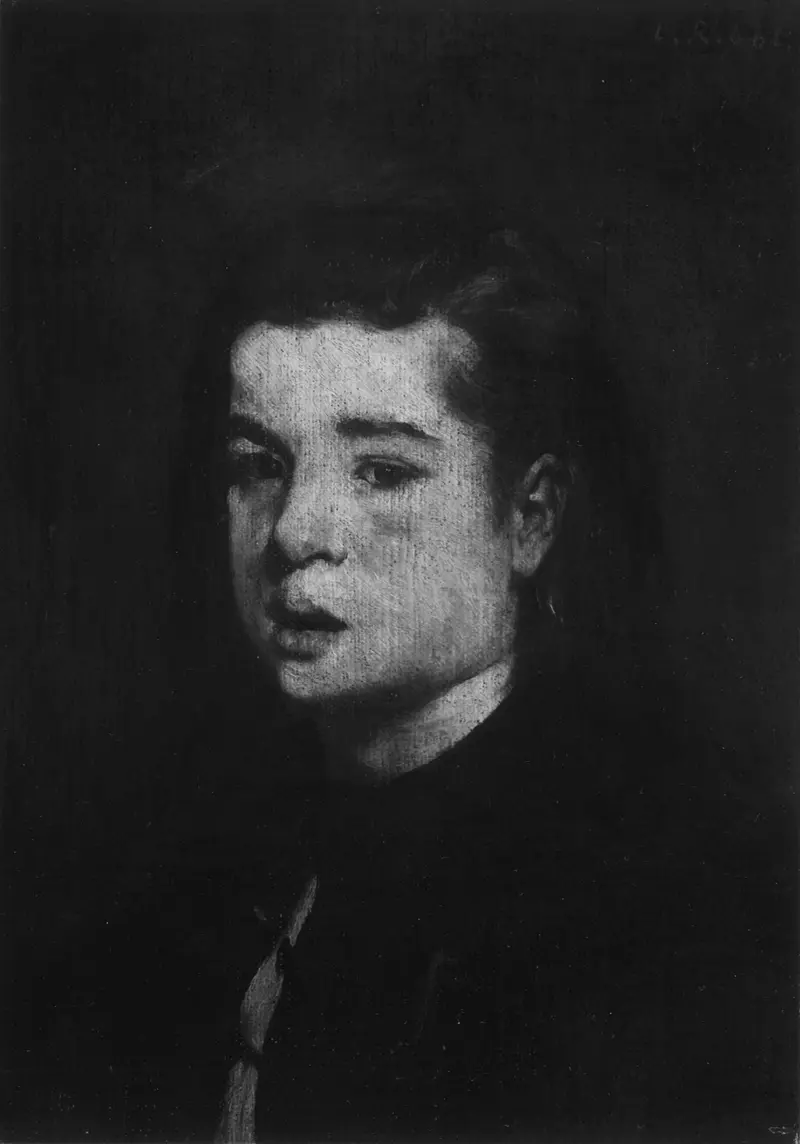
The Artist's Daughter
Augustin Théodule Ribot
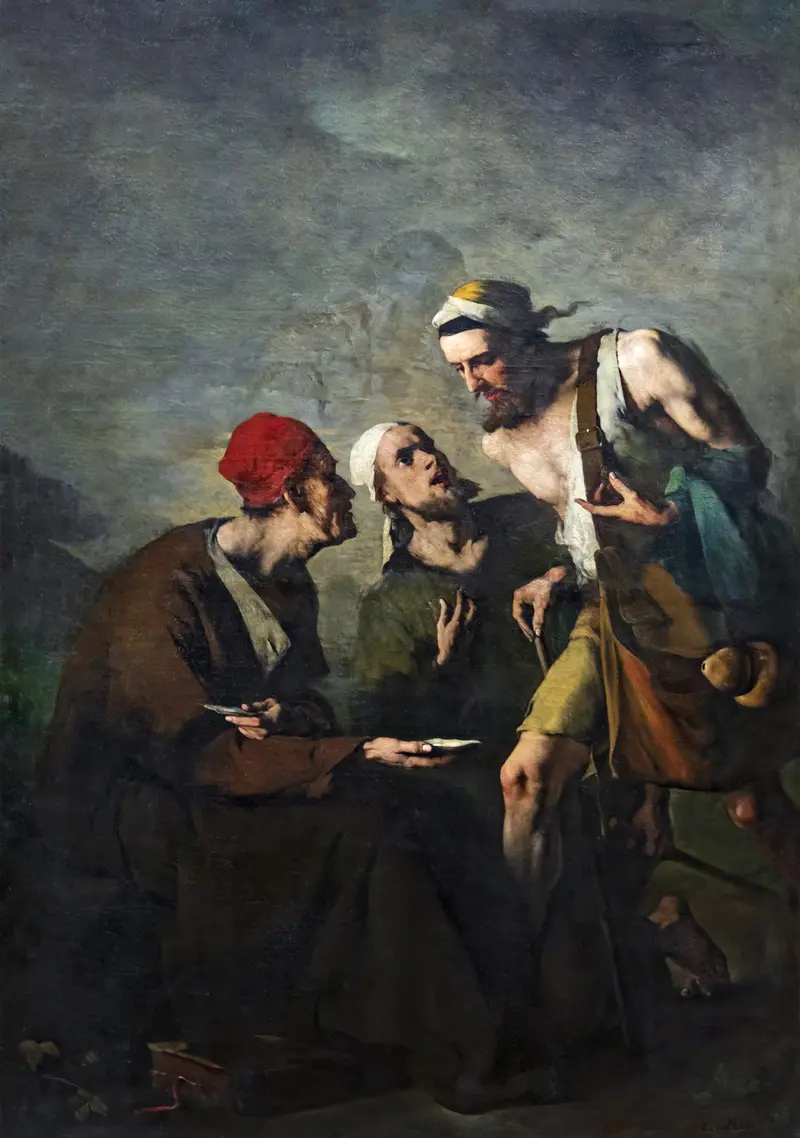
The oyster and the Litigant's
Augustin Théodule Ribot
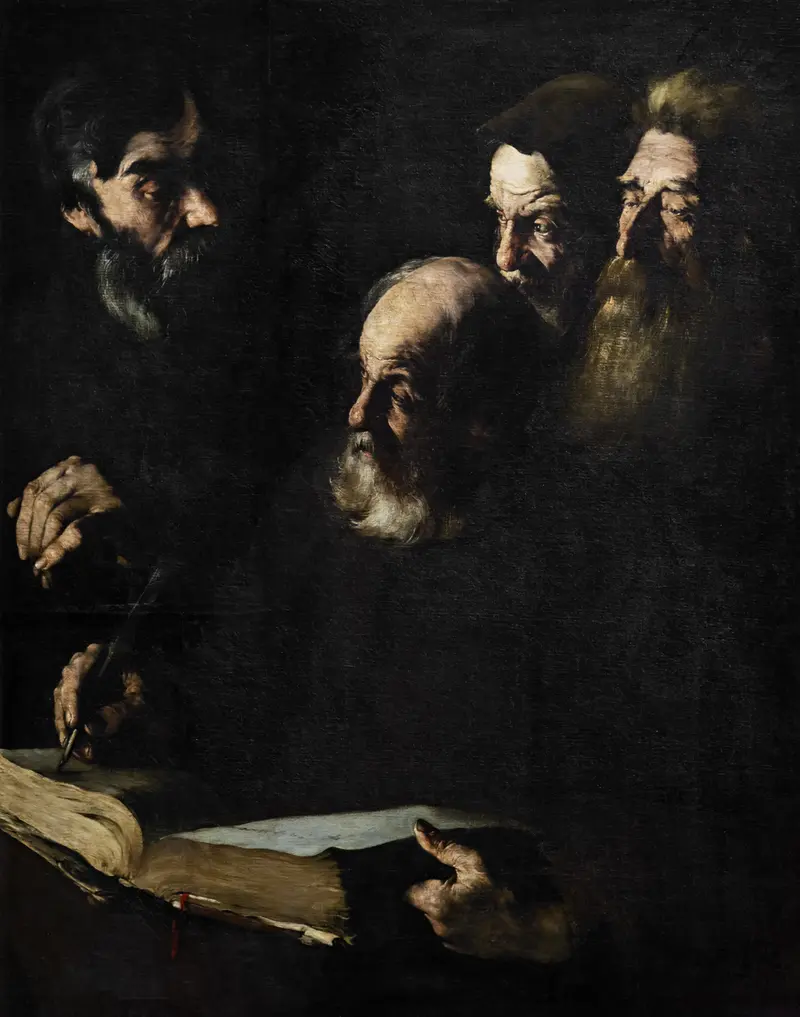
The philosophers
Augustin Théodule Ribot
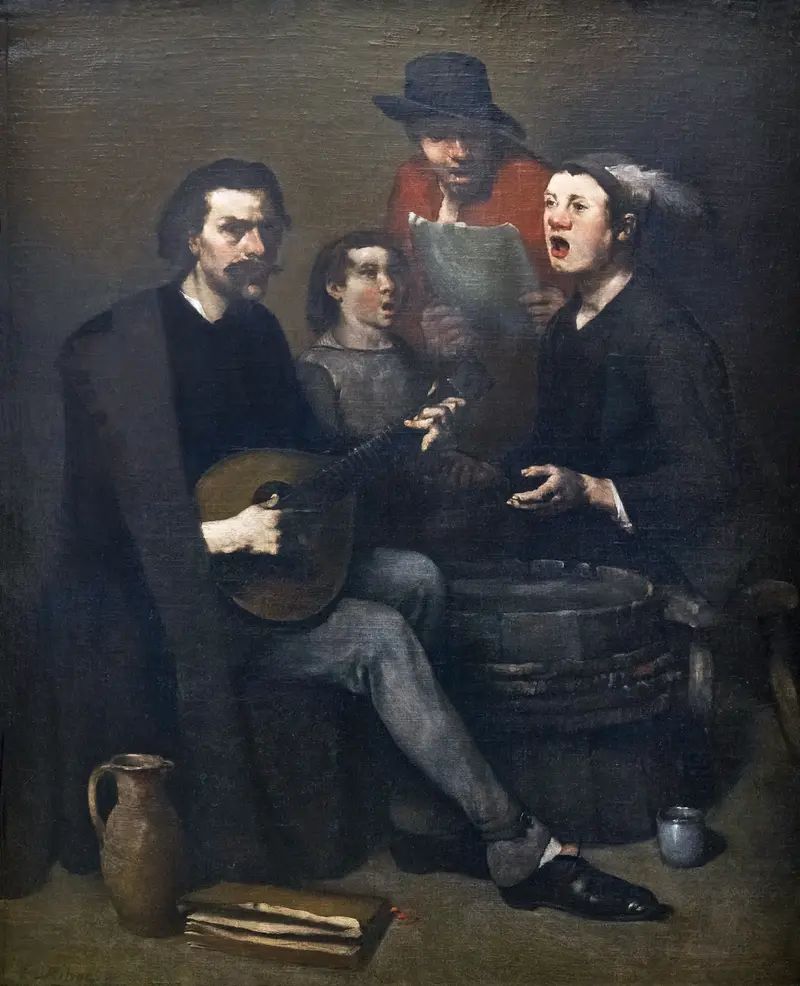
Singers
Augustin Théodule Ribot
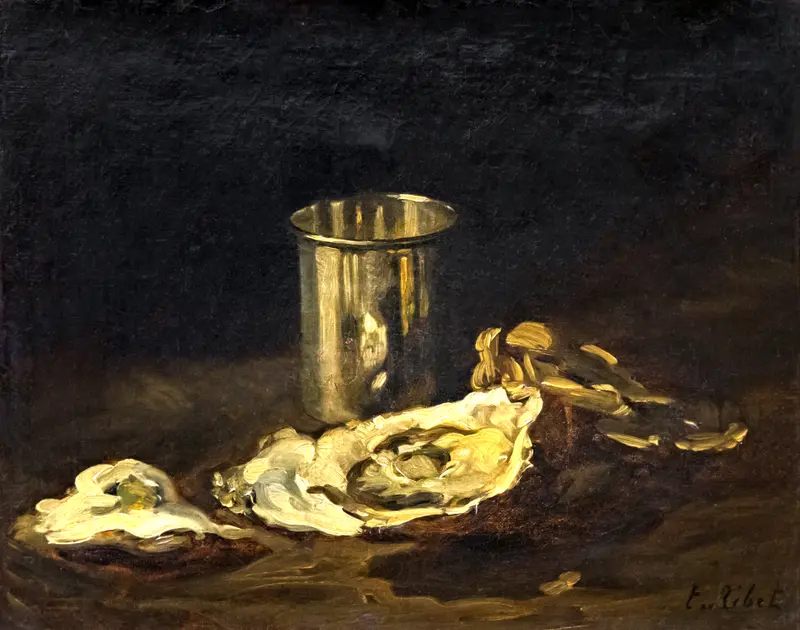
Oyster and timbale
Augustin Théodule Ribot
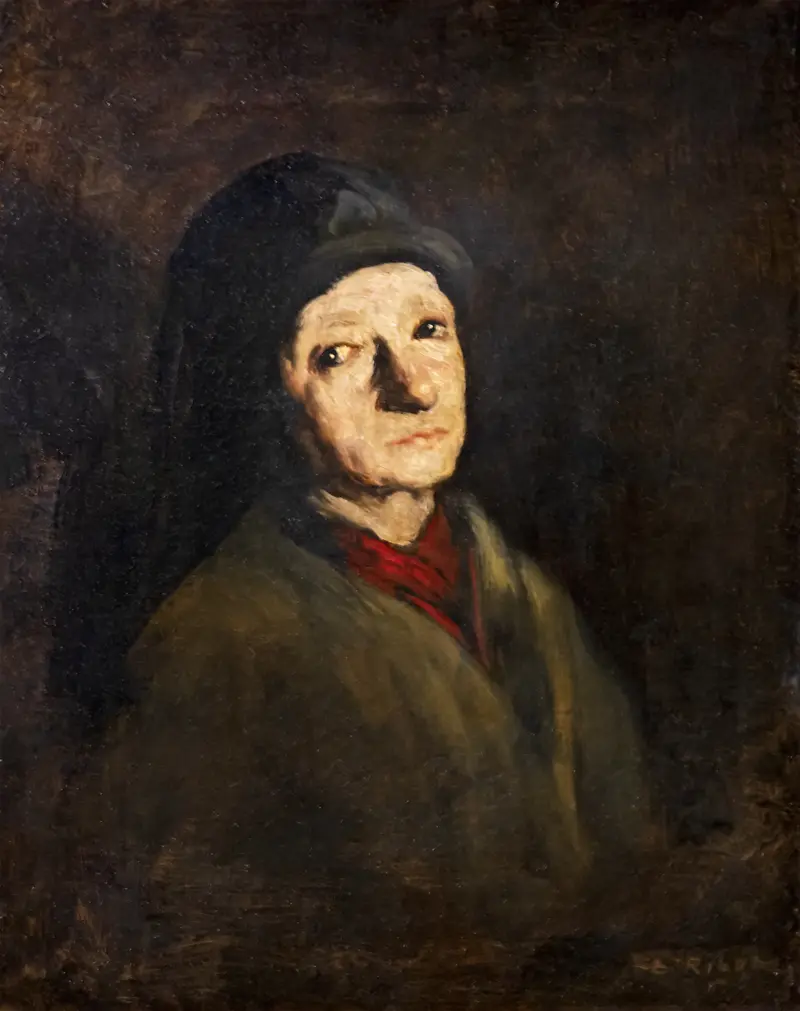
Portrait of the artist's mother
Augustin Théodule Ribot
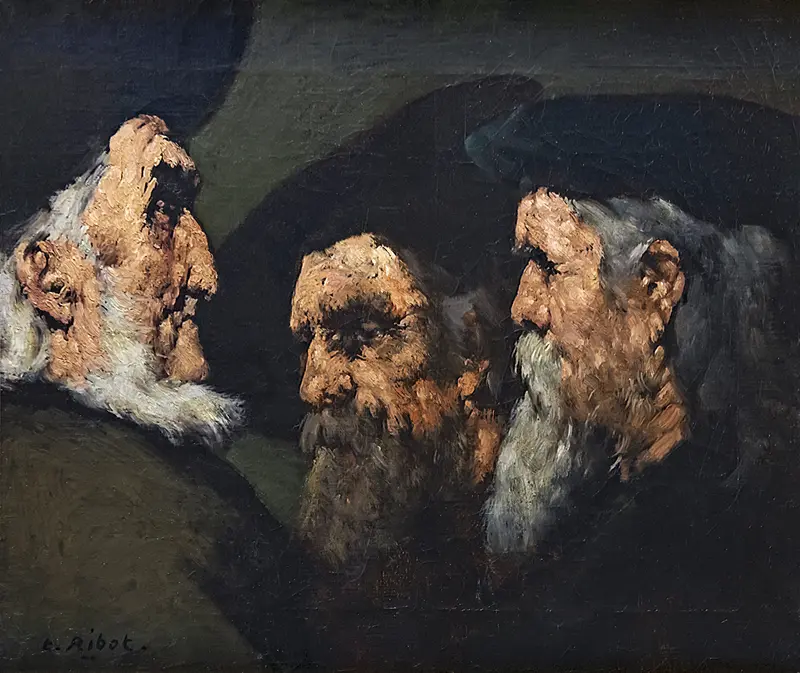
Three old jews
Augustin Théodule Ribot
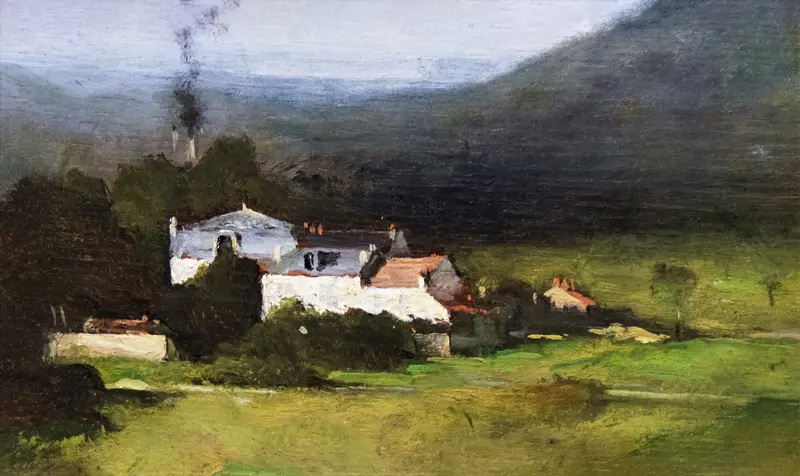
' Landscape ', known as ' La Maison de Corot in Ville-d'Avray '
Augustin Théodule Ribot
La recette du cuisinier
Augustin Théodule Ribot





