
Palermo, Sicily, with Monte Pellegrino — History & Facts
Is this a mirror — or a memory? The vibrant hues of the landscape invite contemplation, drawing one into the depths of awe inspired by nature's grandeur. Look to the left at the sweeping vista of lush greenery that cascades down toward the azure sea. Notice how the sunlight dances across the water’s surface, creating a shimmering pathway that leads to the distant horizon. The mountain, Monte Pellegrino, rises majestically in the background, its rocky facade rendered with delicate brushstrokes that convey both strength and fragility.
The artist employs a warm palette of greens, blues, and earth tones, harmonizing them to evoke a sense of peace and wonder. As you absorb the scene, consider the contrast between the serene foreground and the commanding presence of the mountain. The intricate details of the trees, swaying gently, whisper of life's quiet resilience, while the distant peaks symbolize the enduring challenges of existence. This delicate balance fosters an emotional tension, prompting the viewer to contemplate life's dualities: tranquility and turmoil, the fleeting and the eternal. In 1860, while living in Italy, Edward Lear created this work amid a period of personal exploration and artistic growth.
The Romantic movement was influencing many artists, emphasizing the sublime beauty of nature, and Lear was deeply inspired by the landscapes around him. His experiences in Sicily not only enriched his artistic expression but also placed him in a unique cultural context, allowing him to blend observational skill with emotional resonance in his landscapes.
More Artworks by Edward Lear
Browse all →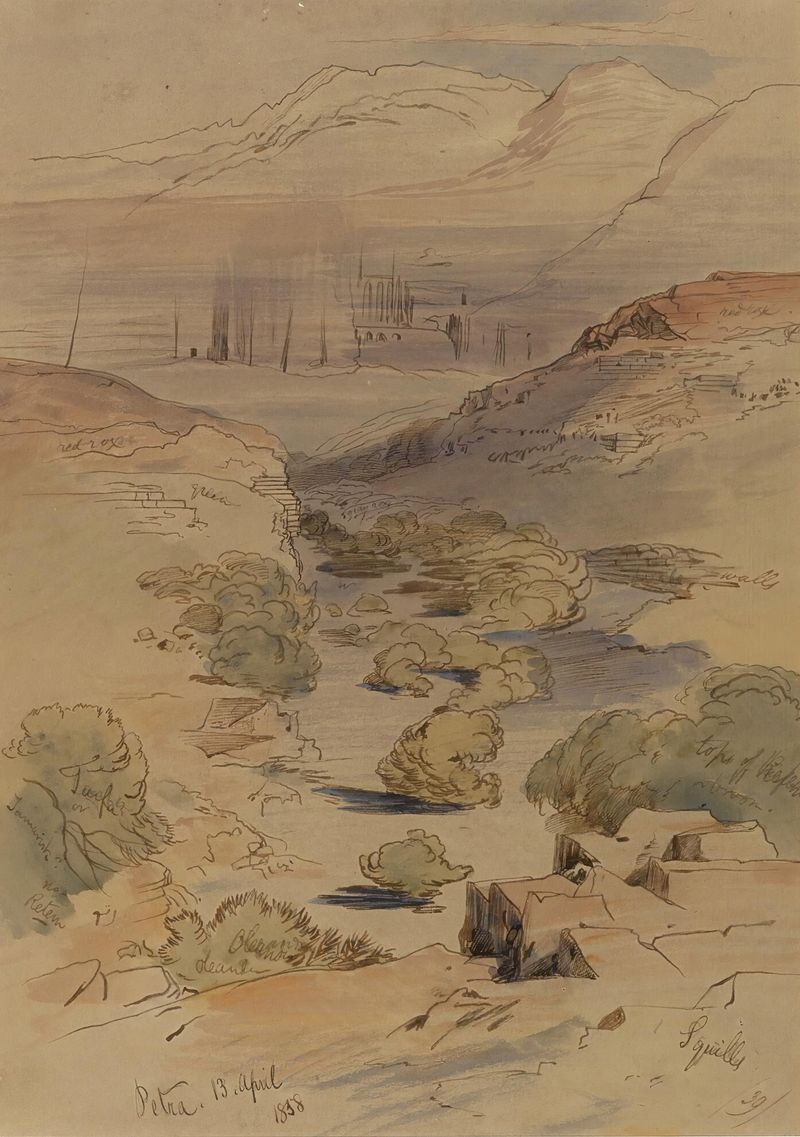
Petra
Edward Lear
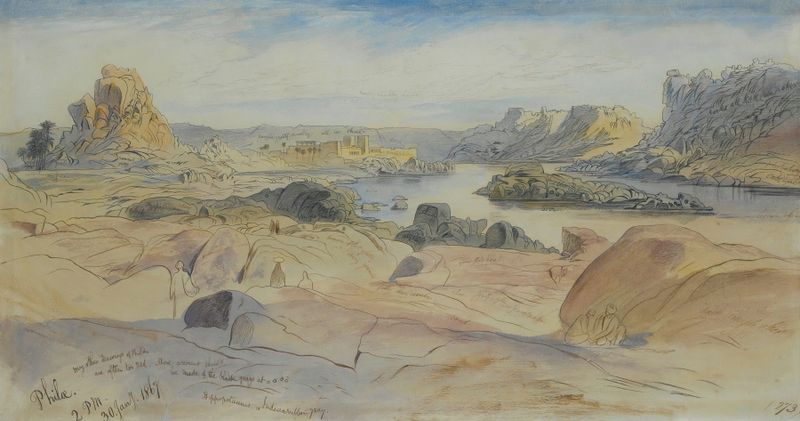
Philae, Egypt
Edward Lear
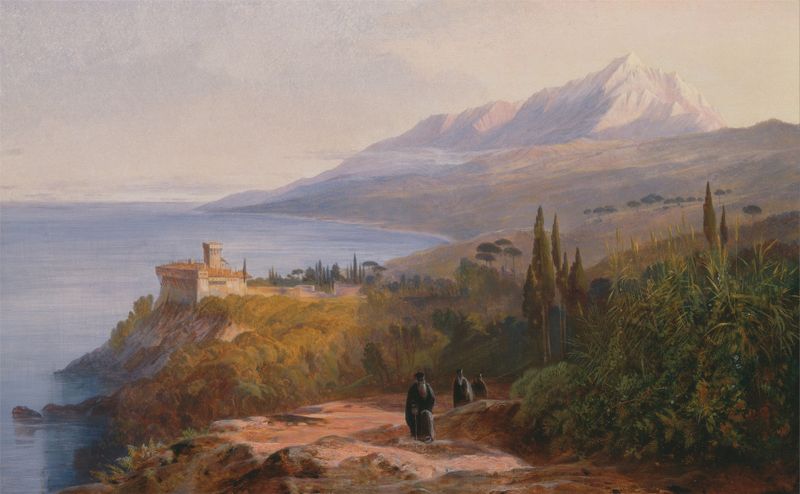
Mount Athos and the Monastery of Stavronikétes
Edward Lear
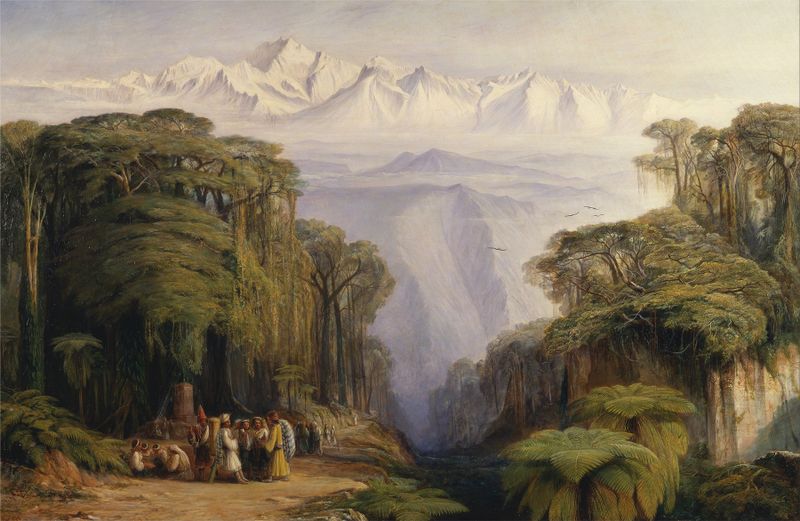
Kangchenjunga from Darjeeling
Edward Lear
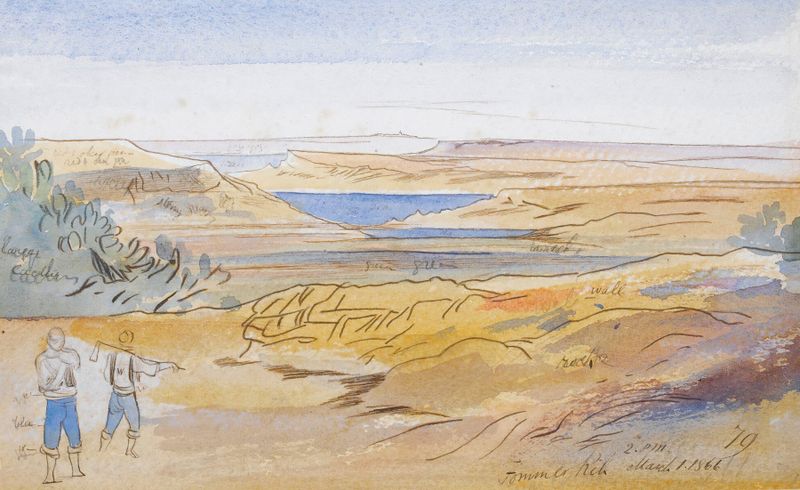
Fomm Ir-Rih, Malta
Edward Lear
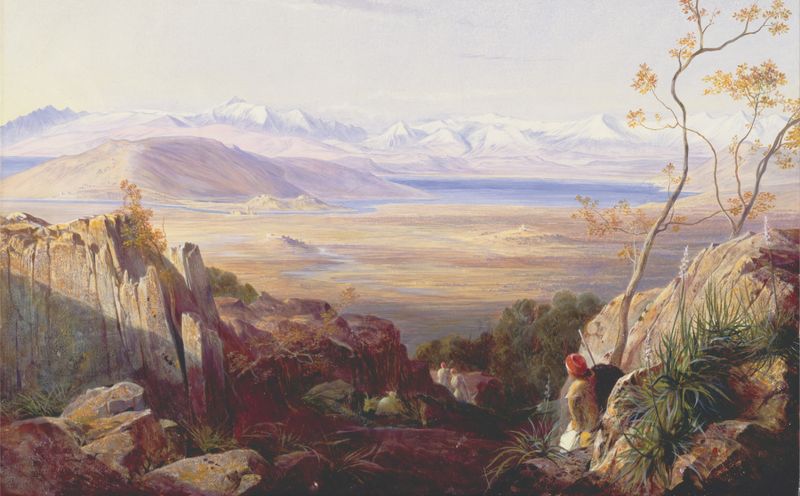
Butrinto, Albania
Edward Lear
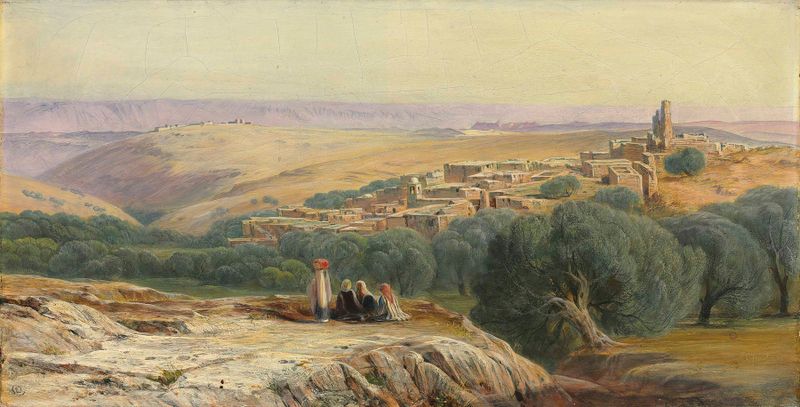
The Plains of Bethany
Edward Lear

Karnak, 9-30 pm, 22 January 1867
Edward Lear
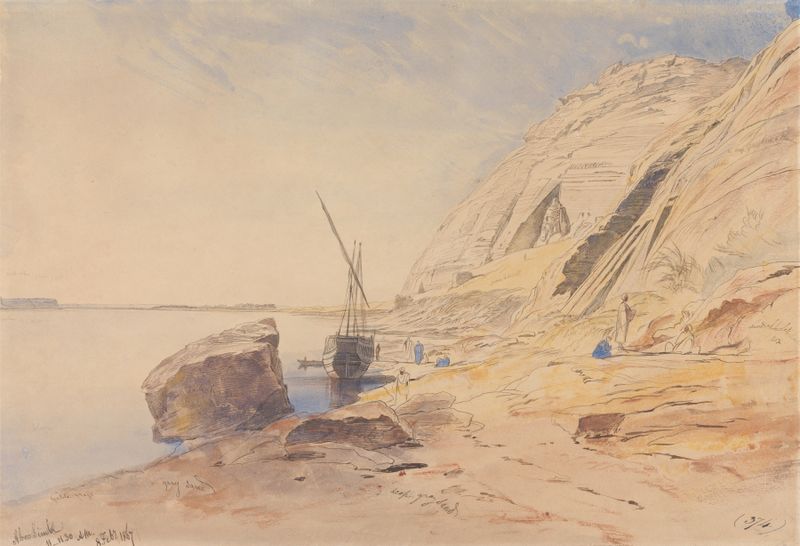
Abu Simbel, 11-11;30 am, 8 February 1867 (374)
Edward Lear

A View Of Mount Athos And The Pantokrator Monastery, Greece
Edward Lear





