
Palm Trees and Housetops, Ecuador — History & Facts
In the interplay of sky and land, we find the fragile dance between life and inevitability. Look to the horizon, where the vibrant greens of palm trees rise against a backdrop of delicate blues and whites. The composition draws your eye seamlessly from the foreground’s lush foliage, rich in detail, to the soft, almost ethereal clouds that stretch across the canvas. Church employs a masterful gradation of color, creating a sense of depth that invites the viewer into this serene yet charged landscape. Delve deeper, and you’ll notice the juxtaposition of vitality and stillness.
The palm trees, symbols of endurance, stand proud and unyielding, while the distant rooftops suggest human presence and fragility, hinting at mortality. The interplay between the natural and the built environment evokes a meditation on transience, reminding us that human life, while vibrant, is as fleeting as a passing breeze. Frederic Edwin Church painted Palm Trees and Housetops, Ecuador in 1857 during a pivotal moment in his career. Fresh from a transformative journey to South America, he sought to capture the exotic beauty and diverse landscapes of the continent.
This period was marked by the burgeoning popularity of the Hudson River School, which celebrated nature’s grandeur and its emotional resonance, allowing Church to explore new themes of life and impermanence through his art.
More Artworks by Frederic Edwin Church
Browse all →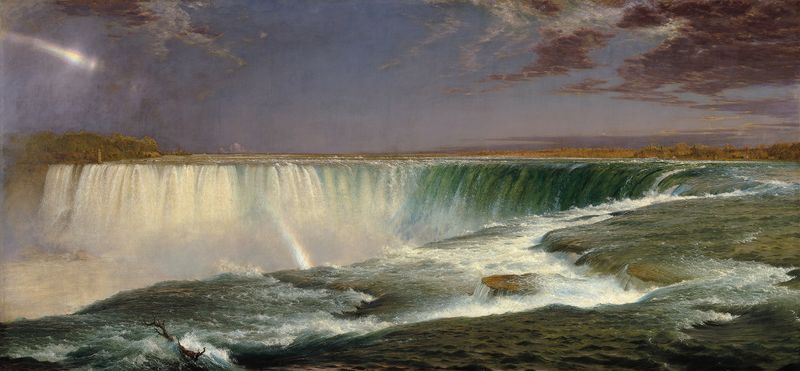
Niagara
Frederic Edwin Church
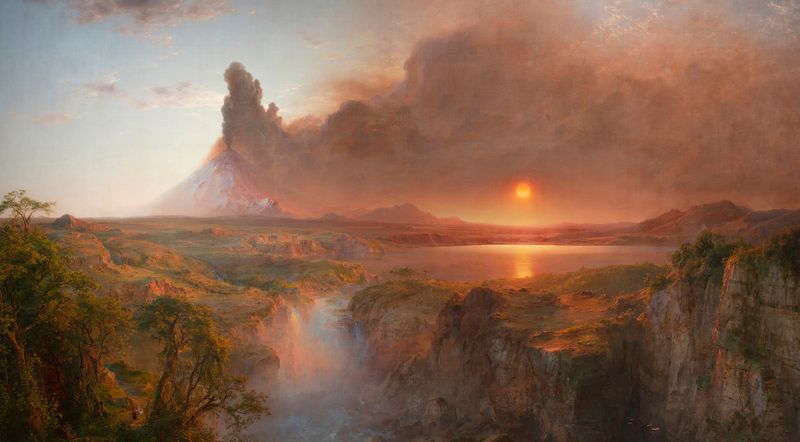
Cotopaxi
Frederic Edwin Church
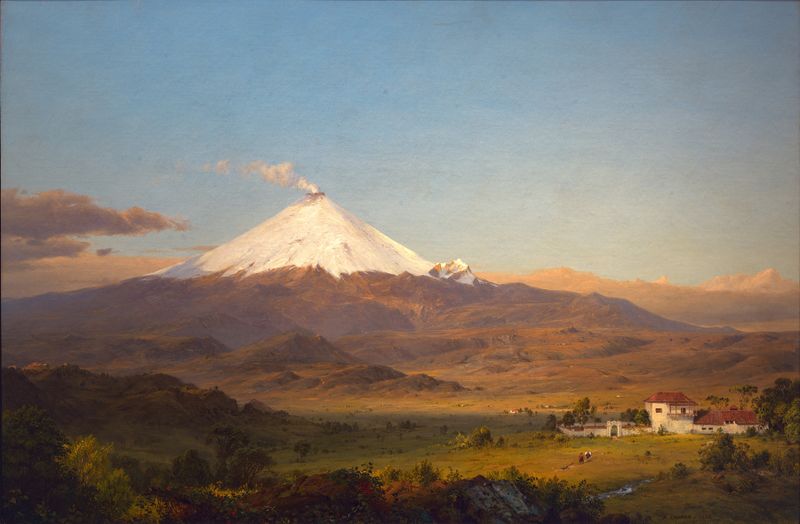
Cotopaxi
Frederic Edwin Church
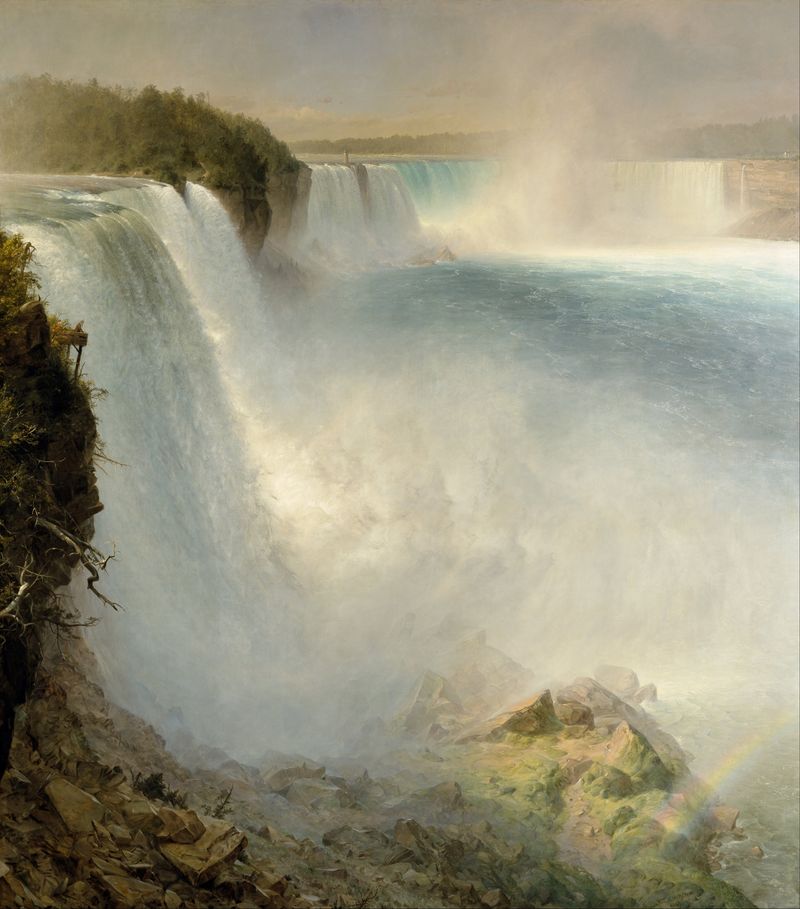
Niagara Falls, from the American Side
Frederic Edwin Church
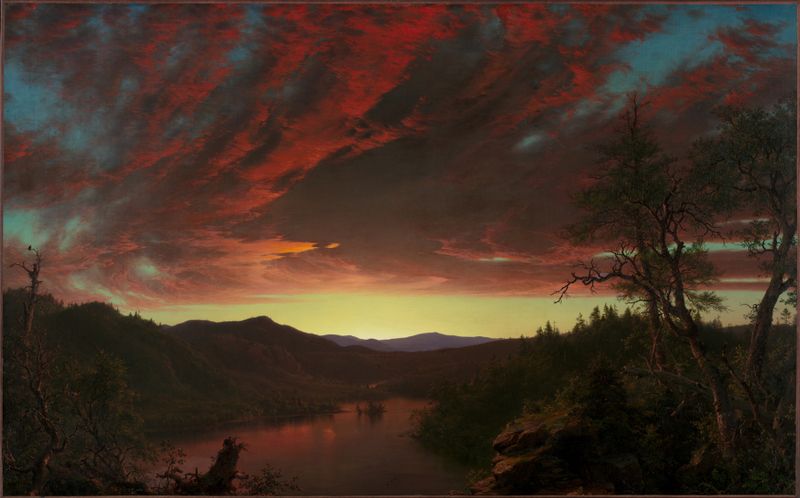
Twilight in the Wilderness
Frederic Edwin Church
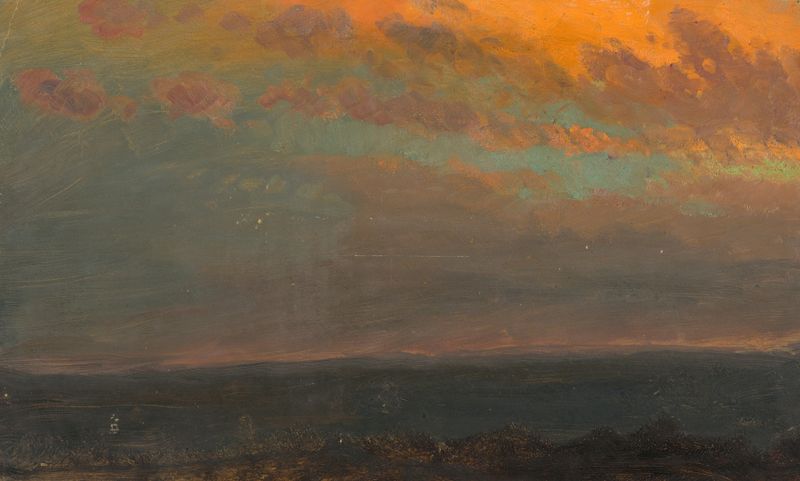
Hudson Valley at Sunset
Frederic Edwin Church
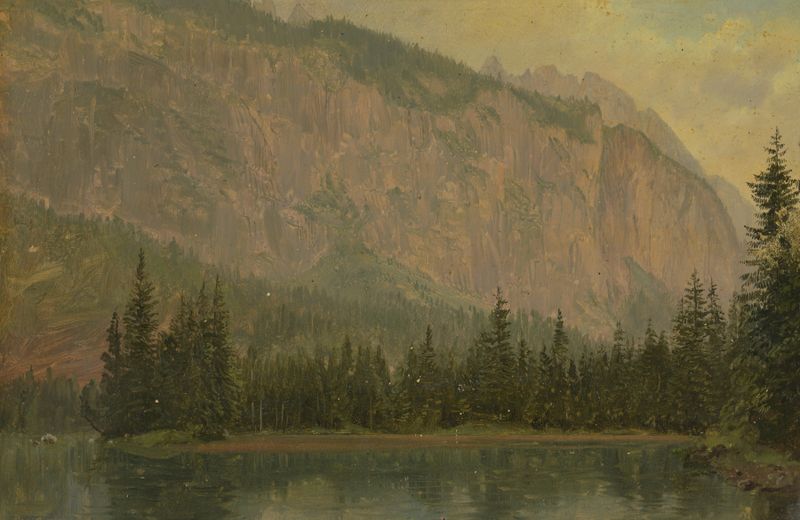
The Hintersee, near Berchtesgaden, Bavaria
Frederic Edwin Church
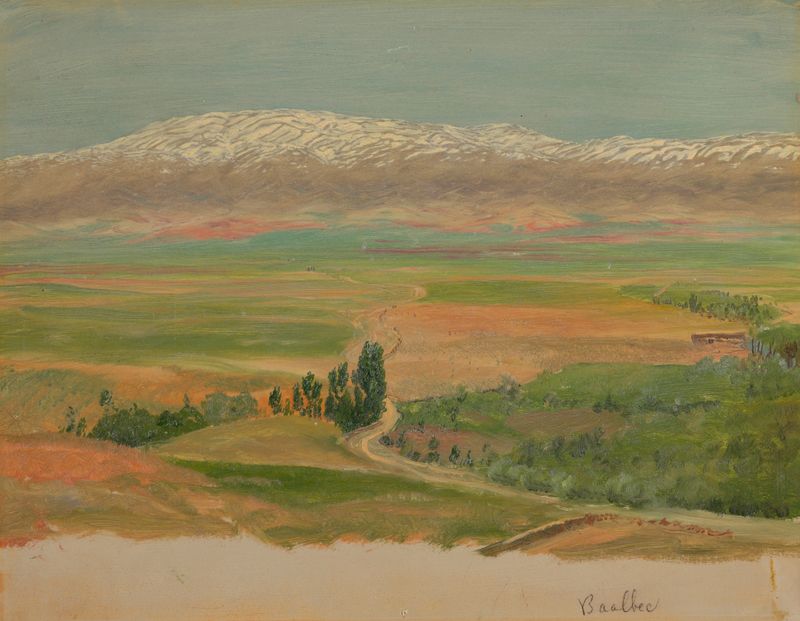
Mountains near Baalbec
Frederic Edwin Church
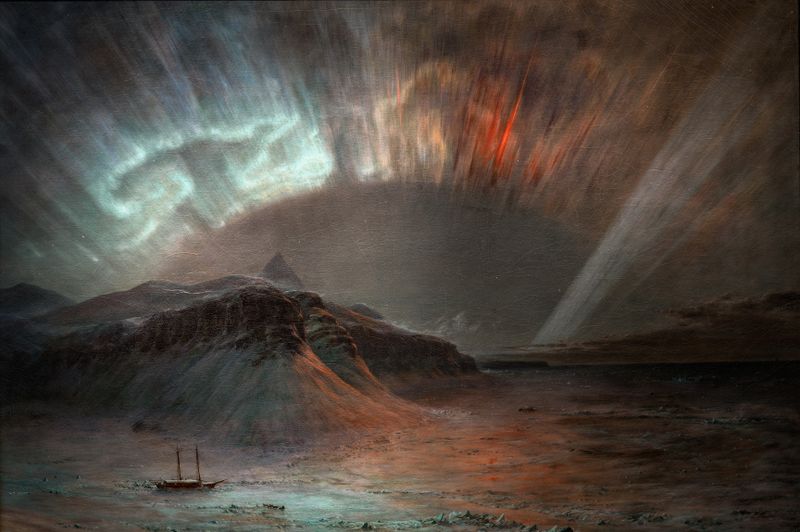
Aurora Borealis
Frederic Edwin Church
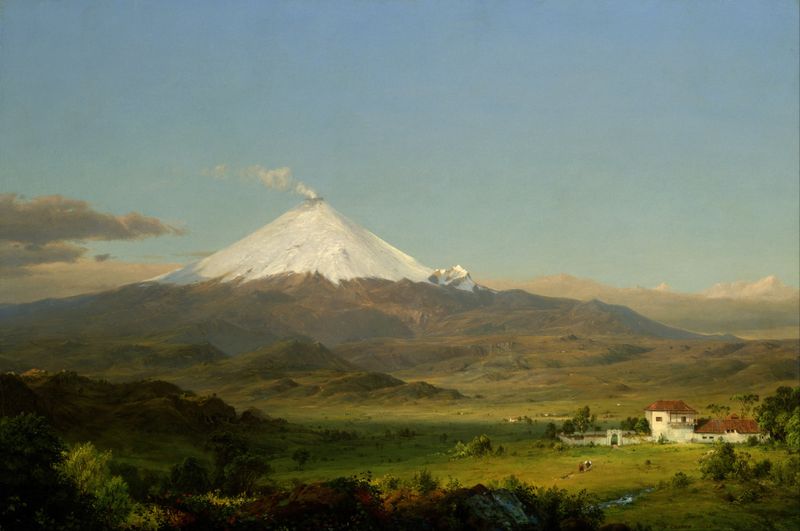
Cotopaxi
Frederic Edwin Church





