
Papandajan auf Java — History & Facts
In the stillness of observation, one uncovers the delicate truths of existence, revealing the fragility woven into the fabric of life. Look to the foreground, where soft pastel colors entwine, inviting your gaze to explore the gentle curves of the landscape. The rolling hills, tenderly painted in hues of green and gold, lead your eyes upward toward the majestic silhouette of Papandajan. Notice how the light cascades down the slopes, illuminating the ephemeral nature of the moment.
This careful interplay of shadow and brightness not only defines the scene but also evokes a sense of serenity penetrated by vulnerability. Beneath the surface, there’s an emotional tension at play. The mountain stands resolutely against the sky, yet its fragile beauty hints at the precariousness of nature. Each brushstroke captures the essence of transience, as if the artist is reminding us of life's fleeting moments.
The delicate flowers in the foreground serve as a poignant contrast to the imposing mountain, embodying the lingering sense of impermanence that pervades the composition. In 1900, the artist created this piece during a transformative period in the world of art, as Impressionism began to give way to more modern expressions. Hauck, immersed in the vibrant artistic communities of Europe, sought to convey the beauty of landscapes through a lens of emotional depth. His exploration of light, color, and form during this era reflects both personal introspection and the broader shifts occurring in the artistic landscape of his time.
More Artworks by Fritz Hauck
Browse all →
Olivenbaumgruppe an einem italienischen See
Fritz Hauck
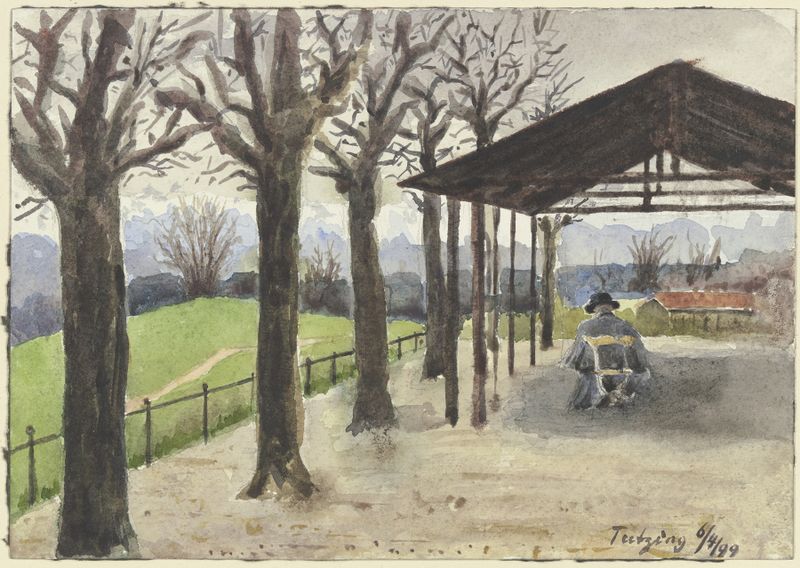
View from Tutzing
Fritz Hauck
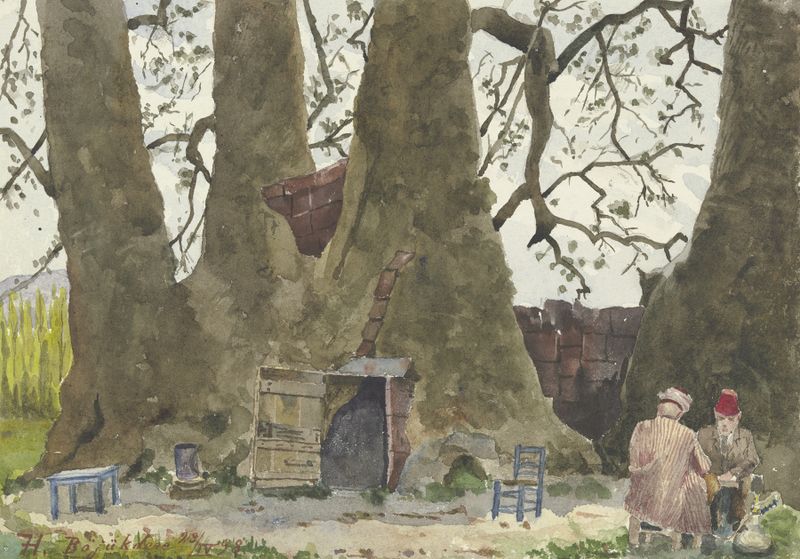
Zwei Araber vor einem Riesenbaum, der als Wohnung genutzt wird
Fritz Hauck
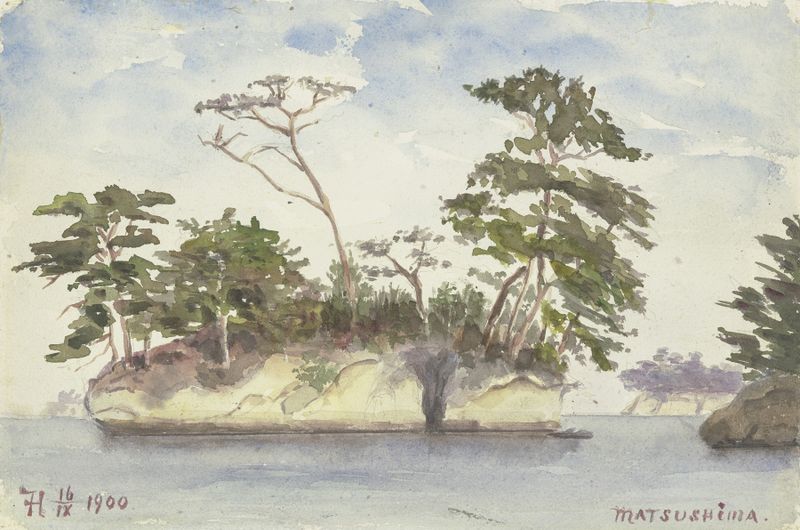
Group of islands off Matsushima
Fritz Hauck

Teilansicht von Jerusalem, Blick auf die Omar-Moschee
Fritz Hauck

Small island off Matsushima
Fritz Hauck
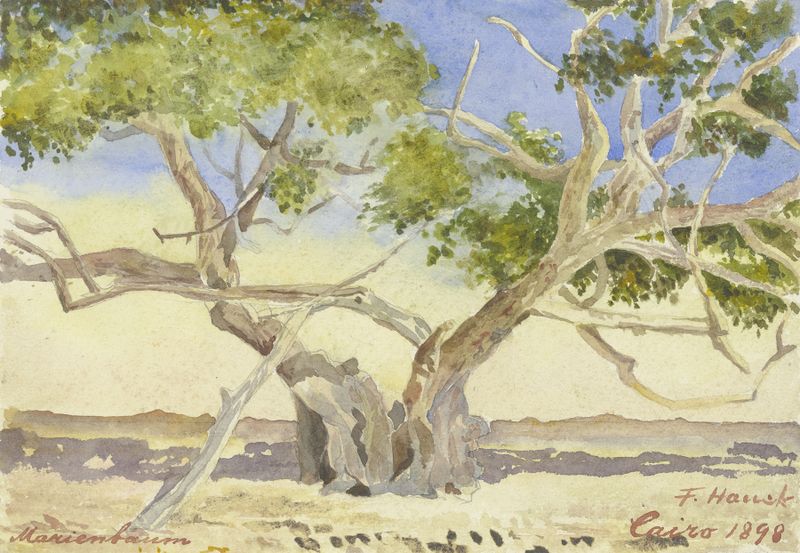
Mary’s tree near Cairo
Fritz Hauck

Küste von Feuerland mit Ortschaft, im Hintergrund Hochgebirge
Fritz Hauck
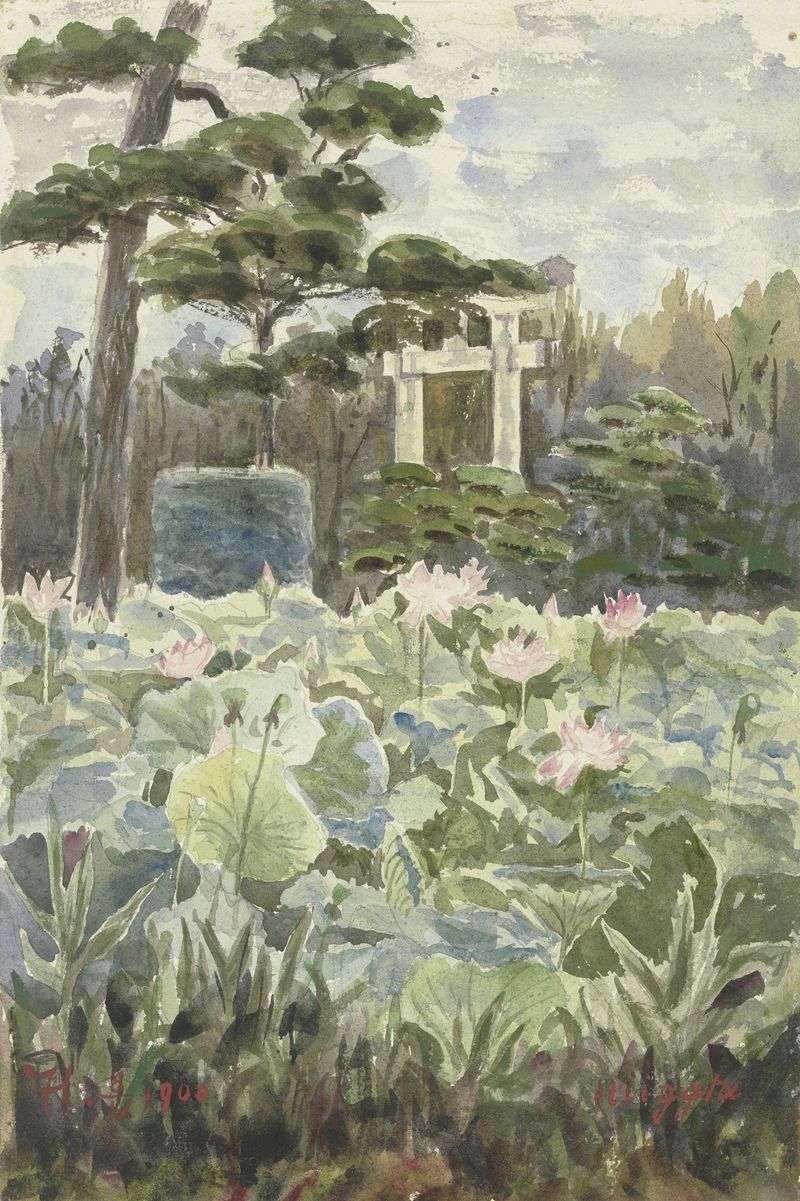
Partie eines japanischen Gartens
Fritz Hauck
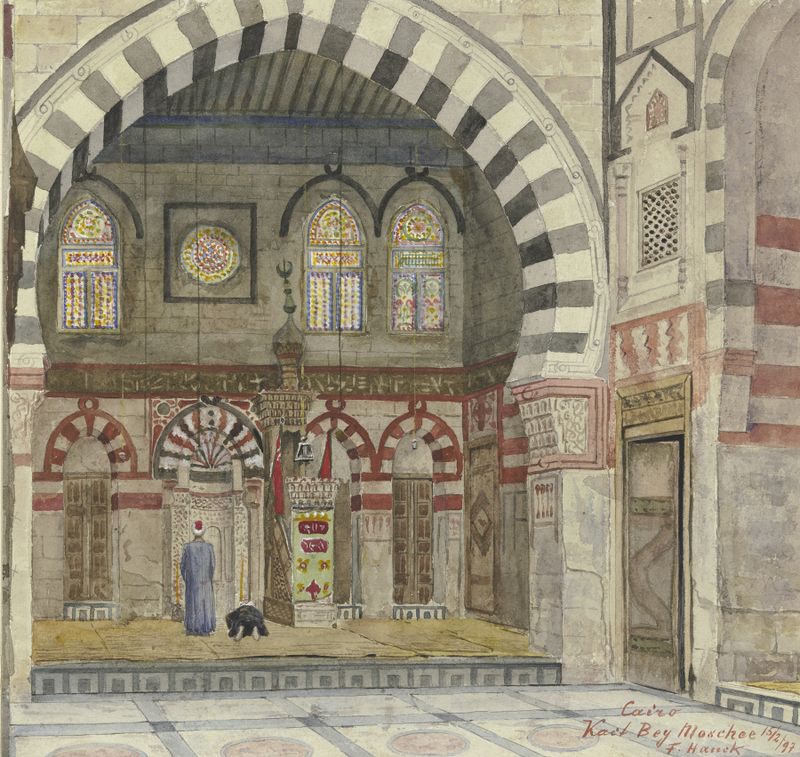
Kait Bey Moschee in Kairo
Fritz Hauck





