
Passage des Jacobins, rue Saint Jacques. — History & Facts
In the quiet corners of a bustling city, a moment suspended in time reveals the profound duality of existence—a glimpse into both the sacred and the painful. Look to the foreground, where the worn cobblestones whisper stories of countless footsteps. The archway frames the scene like a portal to another realm, drawing the eye inward towards the soft, warm glow spilling from the building’s windows. Observe the play of light and shadow; the golden hues ineffably contrast the deep blues and muted earth tones, creating a rhythm that mirrors the heartbeat of the city.
Each brushstroke suggests a dance between the ordinary and the divine, inviting one to ponder the lives within. The juxtaposition here is striking: the passage, a symbol of transition, resonates with the tension between the sacred and the mundane. The ethereal light beckons one to reflect on the lives hidden behind those walls, hinting at joys and sorrows intertwined. This painting casts a spell, suggesting the divine exists not in the grand but in the everyday nuances, where beauty emerges from hardship and hope lives alongside despair. In 1810, Bénard worked in Paris, a city teeming with artistic experimentation and political change.
As Romanticism flourished, he sought to capture the essence of contemporary life with an emotive lens, navigating his own challenges while surrounded by the works of his peers. This was a time when art began to move beyond mere representation, embracing the profound complexities of humanity, and Passage des Jacobins serves as a testament to that evolution.
More Artworks by Auguste-Sébastien Bénard
Browse all →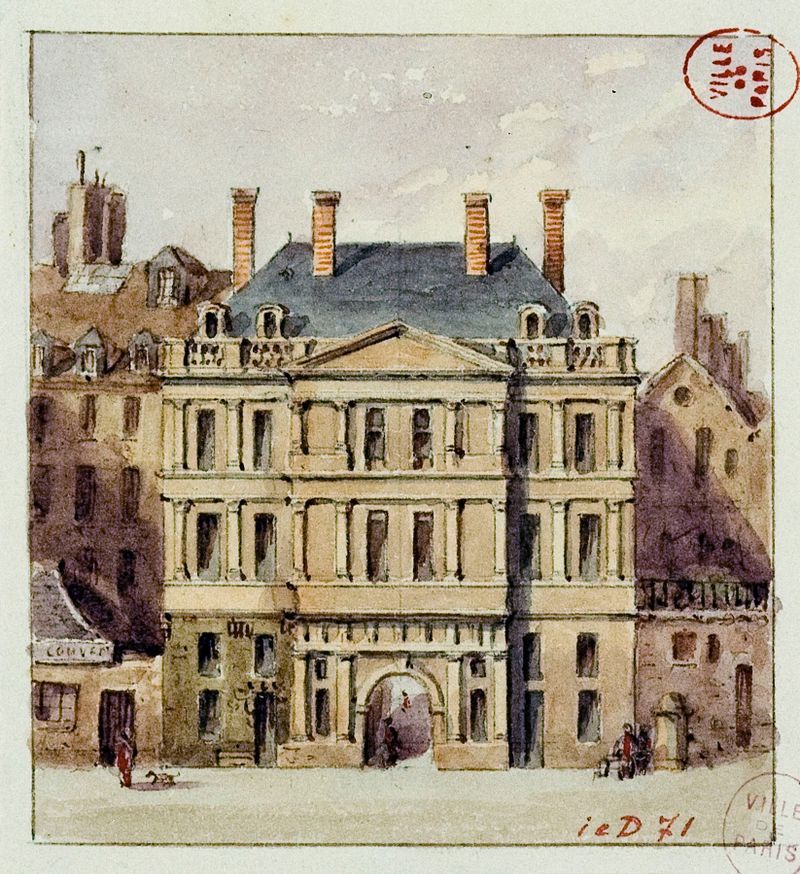
Cour de la Sainte Chapelle.
Auguste-Sébastien Bénard
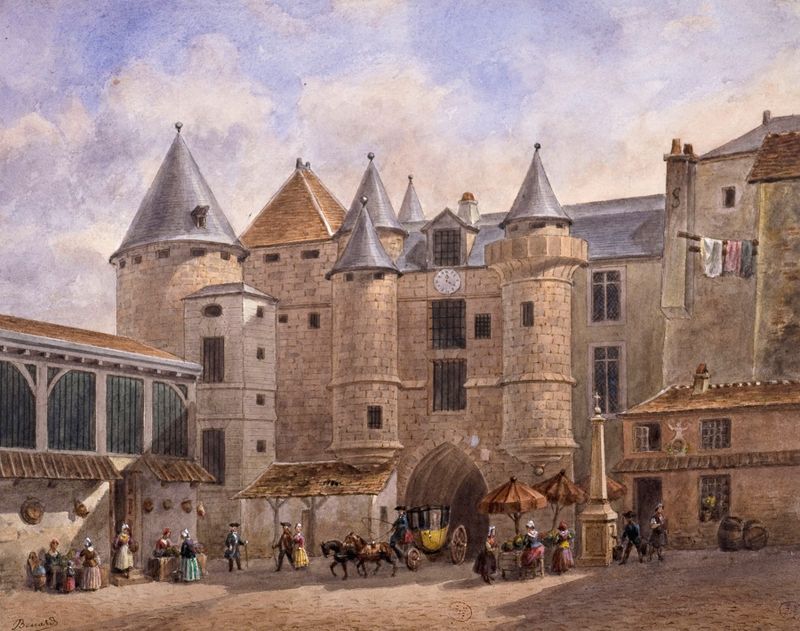
Le Grand Châtelet du XVIIIème siècle.
Auguste-Sébastien Bénard

Place de l’Hôtel de Ville.
Auguste-Sébastien Bénard

Salle souterraine du Palais de Justice.
Auguste-Sébastien Bénard

Voûtes du quai de Gesvres
Auguste-Sébastien Bénard

Monument expiatoire élevé à la mémoire du duc de Berry, à l’emplacement de l’ancien Opéra
Auguste-Sébastien Bénard
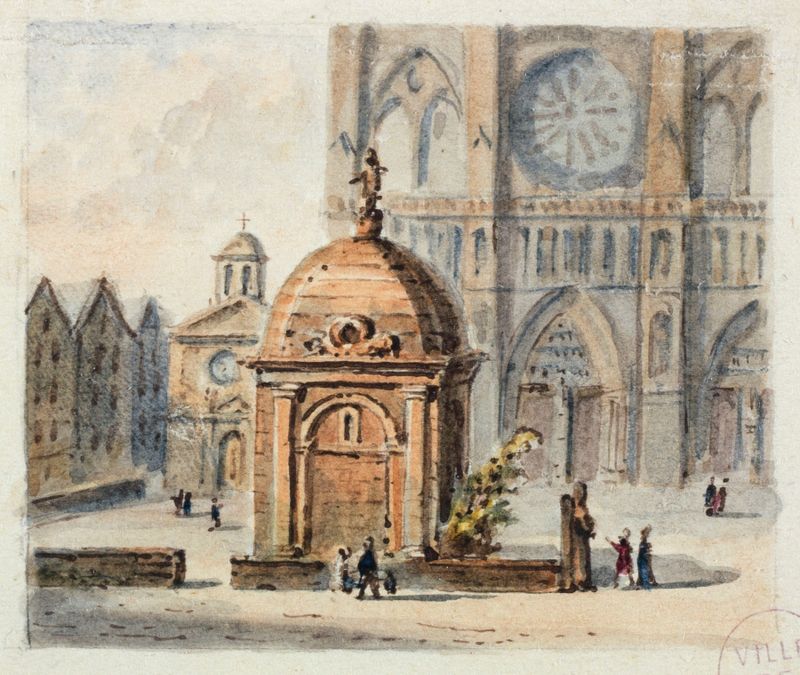
Le parvis de Notre-Dame de Paris
Auguste-Sébastien Bénard

Rue des chantres (entre le quai aux fleurs et la rue Chanoinesse).
Auguste-Sébastien Bénard

L’entrée de l’ancienne forteresse du Grand Châtelet, un jour de Carnaval
Auguste-Sébastien Bénard
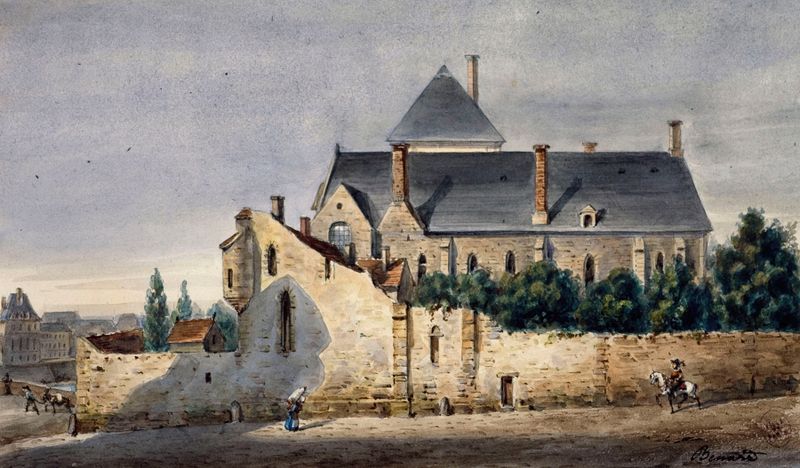
Les restes des bâtiments de l’hôtel du Petit Bourbon.
Auguste-Sébastien Bénard





