
Pasterze — History & Facts
When did color learn to lie? In the interplay of hues and shadows, nostalgia weaves itself through the canvas, whispering secrets of forgotten moments and landscapes that linger in the heart. Begin your journey by focusing on the sweeping vista that dominates the scene. Notice how the deep greens of the foreground swell into the breathtaking peaks, their snow-capped summits elegantly piercing the cerulean sky. The artist employs a rich palette, where vibrant shades create a sense of warmth, offering a stark contrast to the cooler, more distant hues.
The meticulous brushwork captures the rugged texture of the mountains and the delicate play of light, guiding your gaze across the expanse as if you are walking through the very landscape itself. Yet, within this idyllic portrayal lies an undercurrent of longing. The juxtaposition of serene nature and the sublime hints at the fragility of memory, evoking a yearning for a time that may never have existed. The clouds, though beautifully rendered, appear as fleeting thoughts—echoes of past emotions, drifting just out of reach.
Each brushstroke encapsulates a moment suspended in time, inviting reflection on the bittersweet nature of reminiscence. Compton created this piece during a significant period in his artistic career, likely in the late 19th to early 20th century. During this time, the artist was immersed in the Romantic tradition, deeply influenced by the awe of nature and the human experience within it. The world was transforming, and as society began to embrace modernity, his work stood as a testament to the enduring allure of nature—a nostalgic reminder of a simpler existence.
More Artworks by Edward Theodore Compton
Browse all →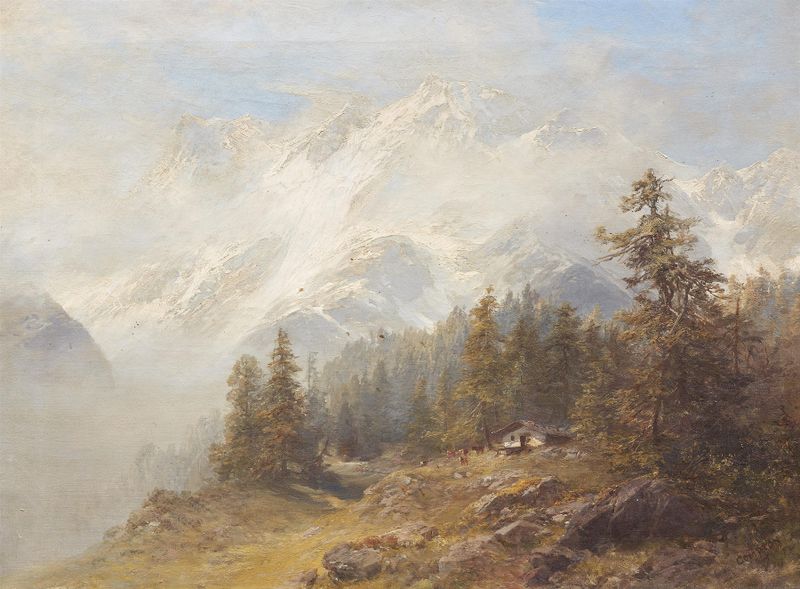
Alpenlandschaft vor schneebedecktem Massiv
Edward Theodore Compton
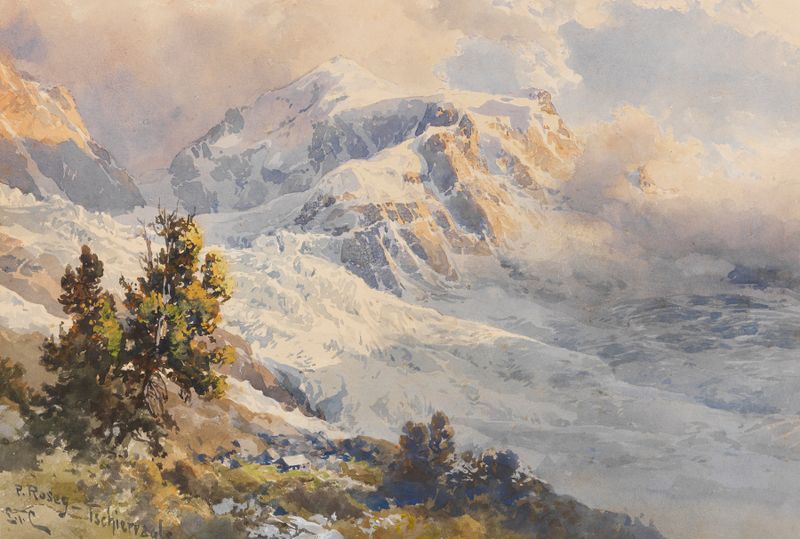
Piz Roseg – Tschiervagletscher
Edward Theodore Compton
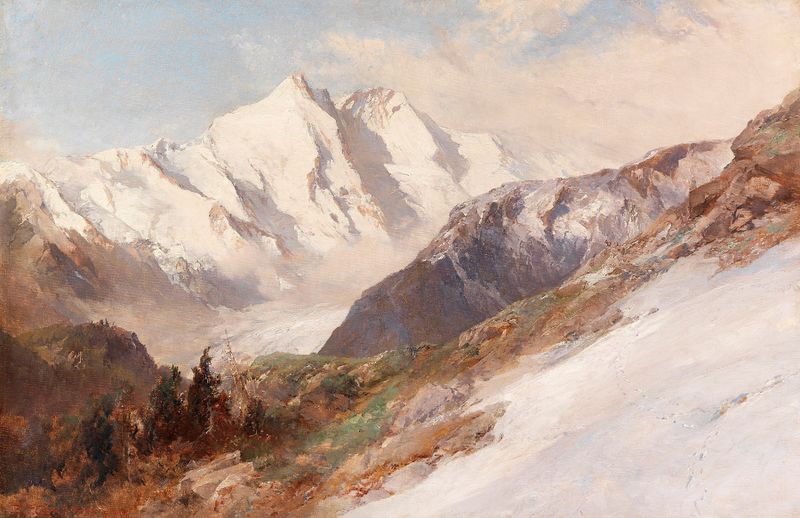
Blick auf die Nordseite des Großglockners
Edward Theodore Compton
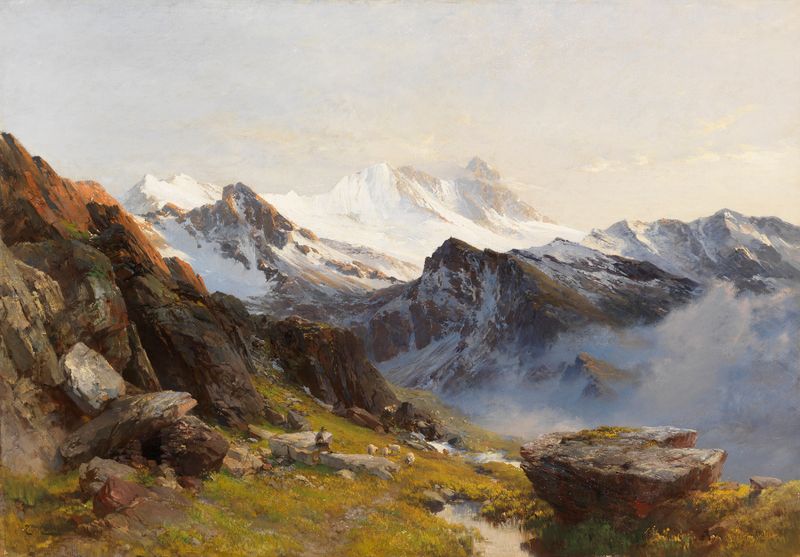
Großglockner von der Prager Hütte aus, früh
Edward Theodore Compton
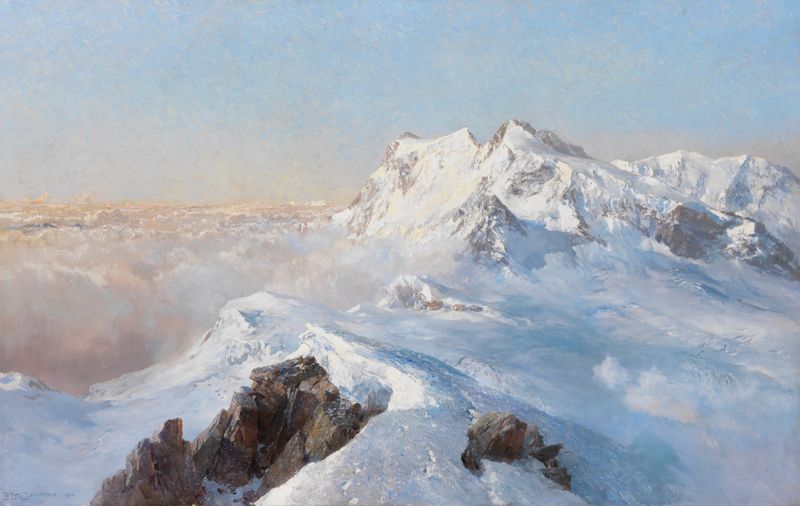
Über dem Nebelmeer (Monte Rosa vom Rimpfischhorn)
Edward Theodore Compton
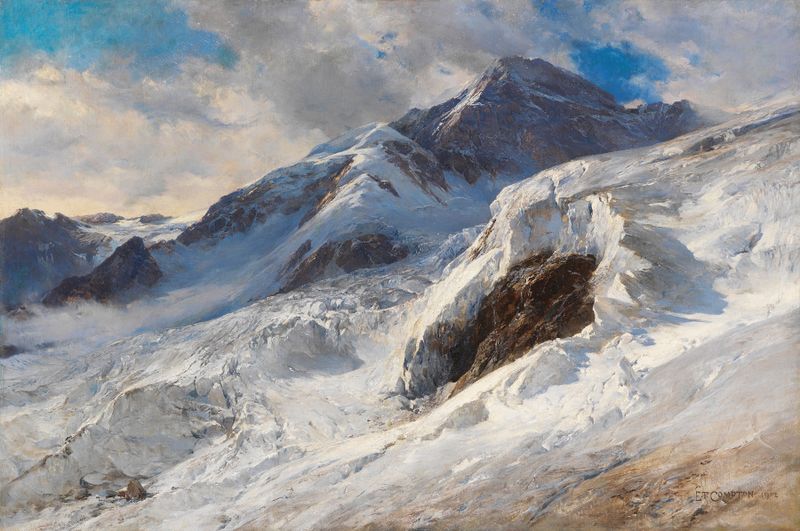
Lyskamm (Monte-Rosa)
Edward Theodore Compton
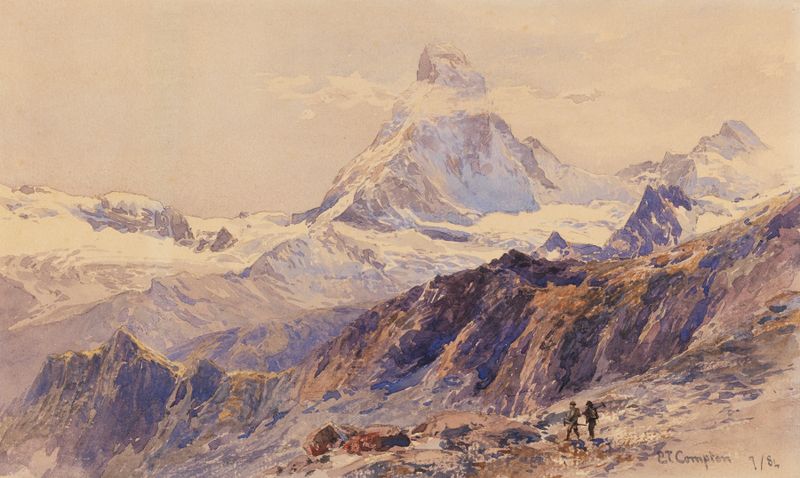
Das Matterhorn von der Triftkumme
Edward Theodore Compton
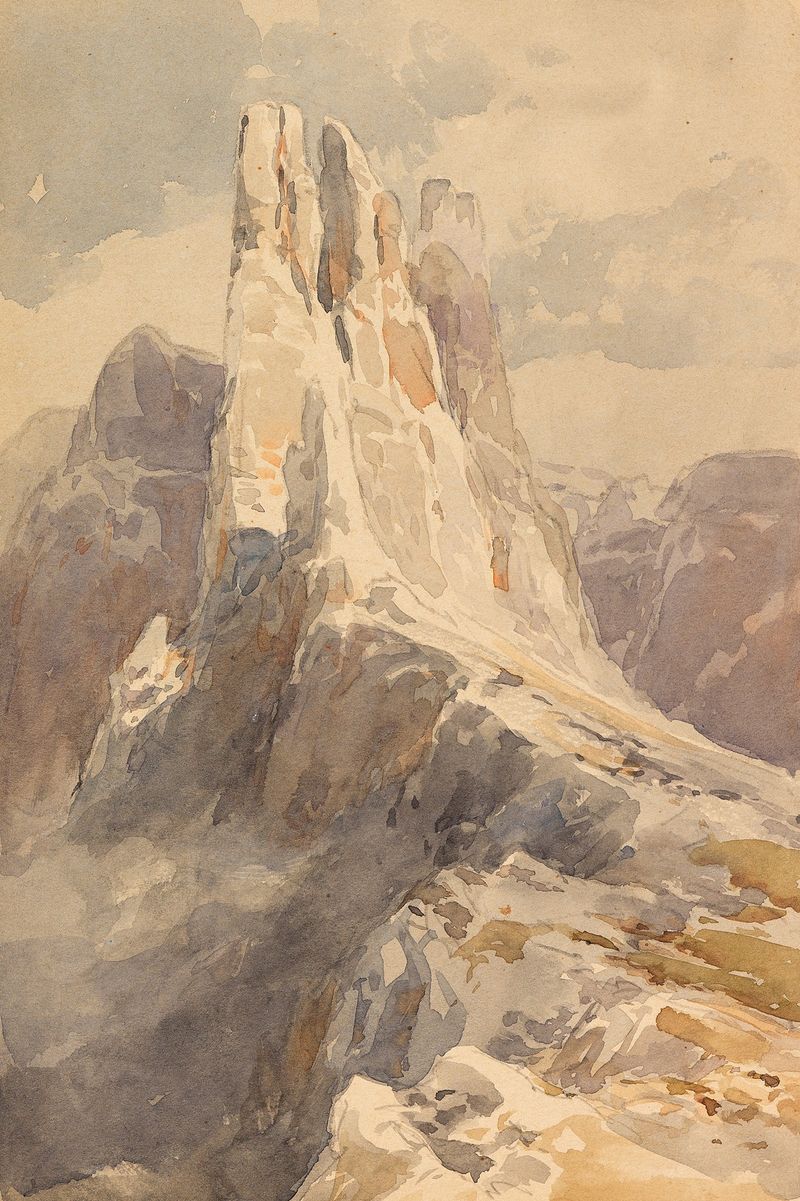
Blick auf die Vajolet-Türme in den Dolomiten
Edward Theodore Compton
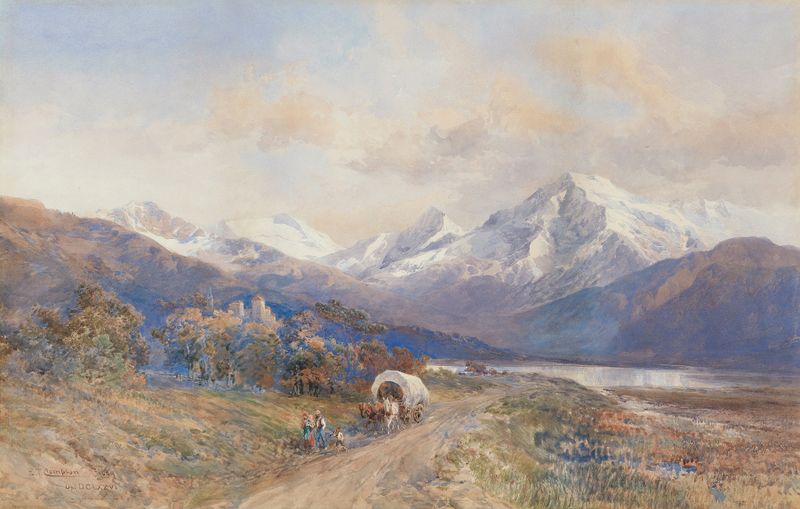
Blick auf den Ortler von St. Valentin
Edward Theodore Compton
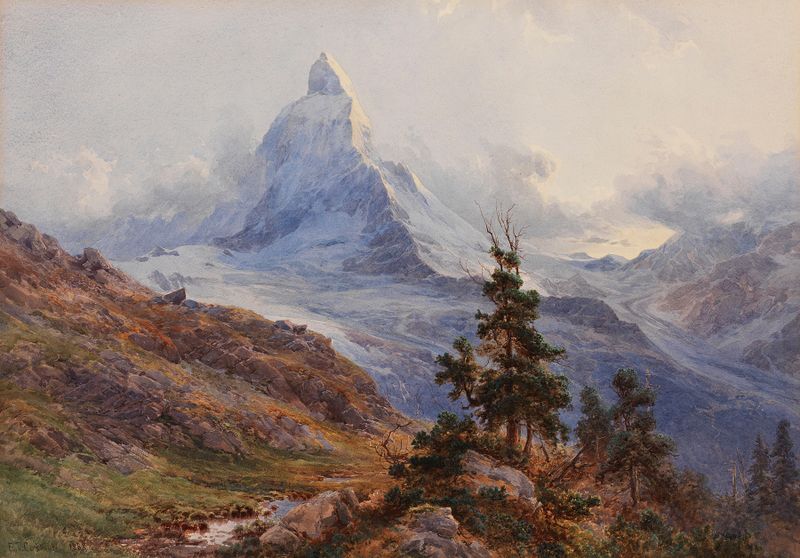
View of the Matterhorn
Edward Theodore Compton





