
Paysage D’île De France — History & Facts
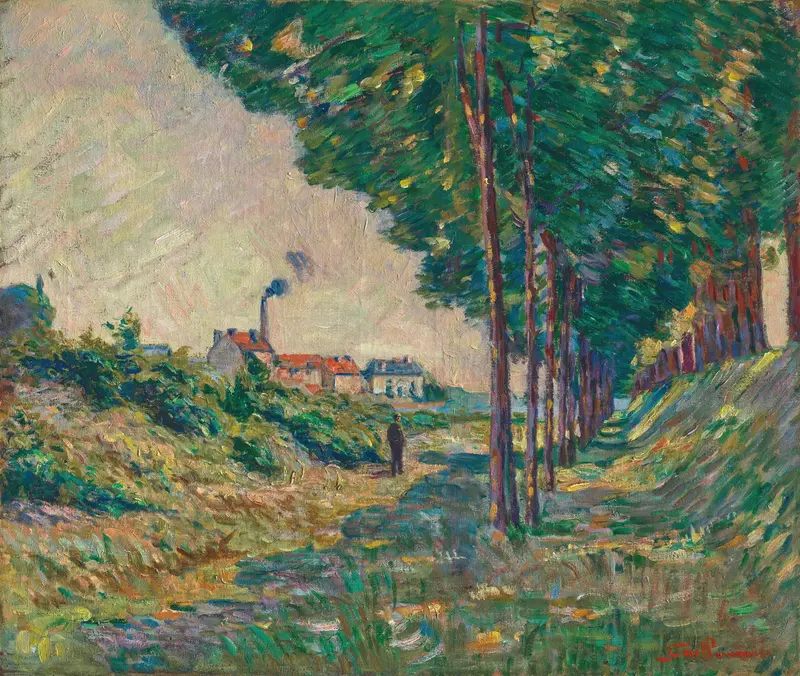
In Paysage D’île De France, we see a vibrant landscape filled with lush greenery and a bright sky. The colors are rich, with various shades of green and blue dominating the scene. The brushwork is loose and fluid, typical of the Impressionism style.
There are no figures present, allowing the viewer to focus solely on the beauty of the natural setting. The painting is created using oil on canvas, a common medium for the Impressionism movement. The approximate dimensions are 60 x 80 cm, making it a medium-sized work. The application of paint is thick in some areas, giving texture and depth to the foliage and sky.
The use of light and shadow enhances the three-dimensionality of the landscape. Armand Guillaumin was a key figure in the Impressionism movement, known for his vibrant color palette and expressive brushwork. This work, painted in the 1880s, reflects his fascination with the landscapes of France. Interestingly, Guillaumin was also a close friend of Vincent van Gogh, and their artistic exchanges influenced both of their works.
His paintings often capture the beauty of everyday scenes, making them relatable and accessible to viewers.
More Artworks by Armand Guillaumin

La Seine À Charenton
Armand Guillaumin
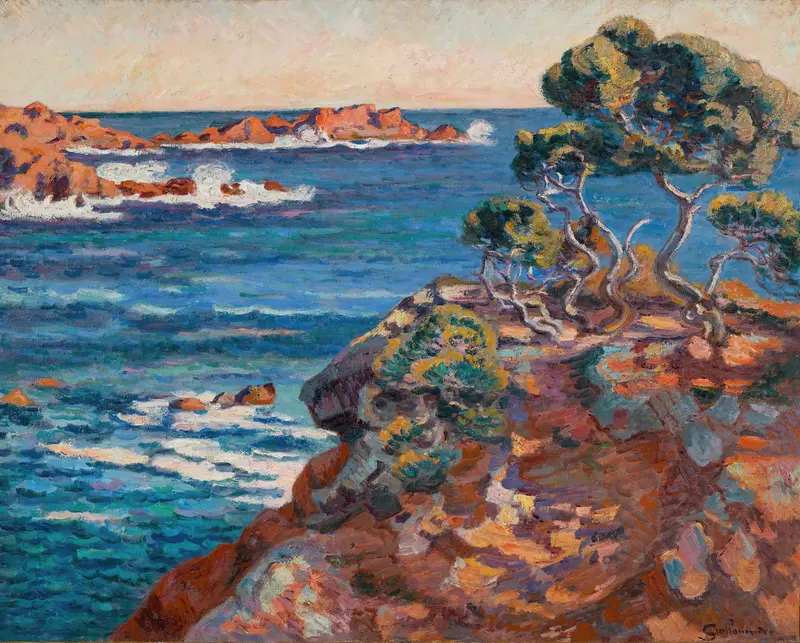
Bord De Mer À Agay
Armand Guillaumin
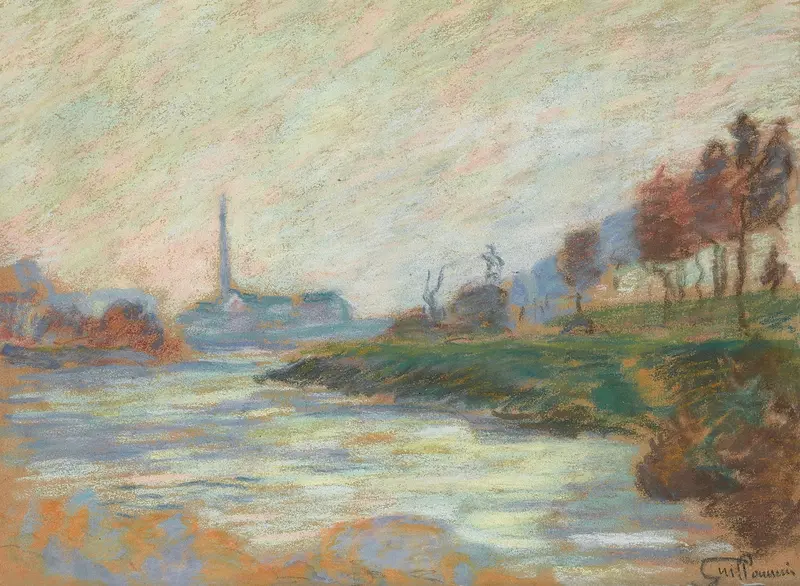
Confluent De La Marne Et De La Seine, Île De La France
Armand Guillaumin
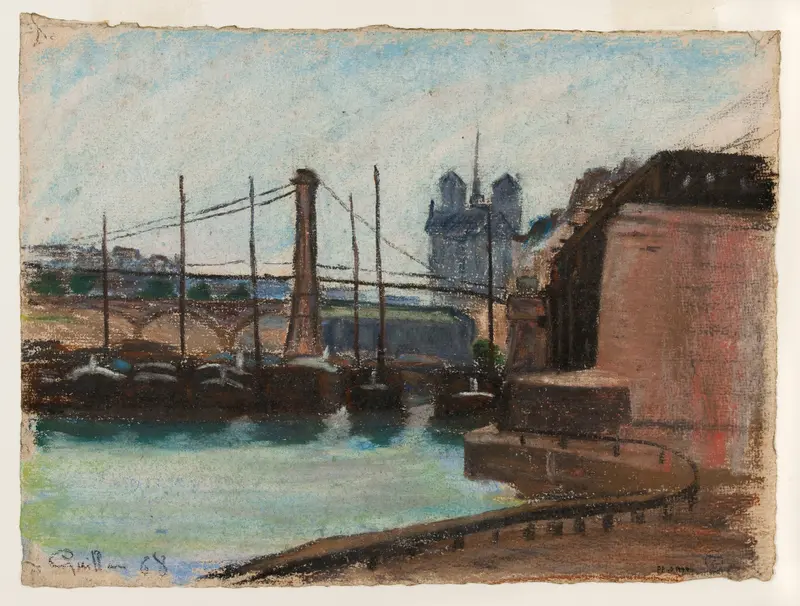
Le Pont d’Austerlitz
Armand Guillaumin
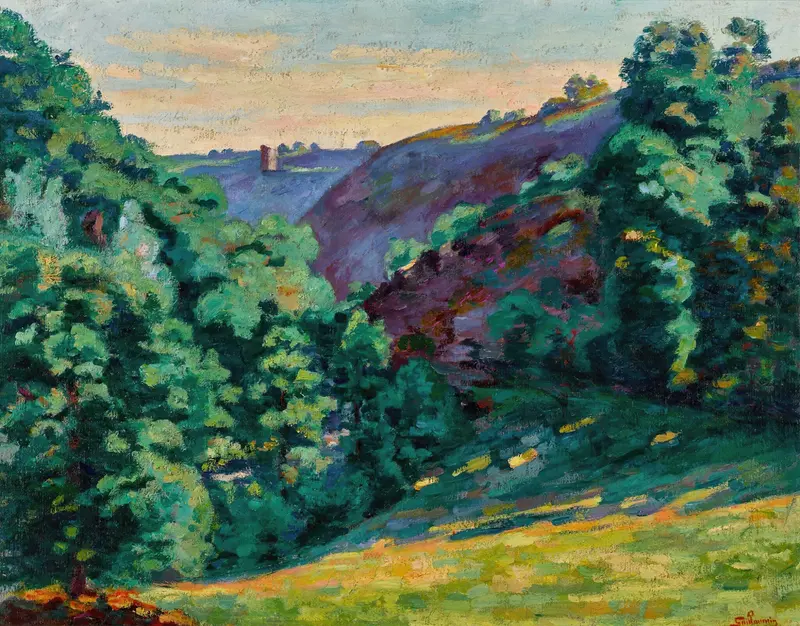
Le Ravin de la folie, vue de Chateau Crozant
Armand Guillaumin
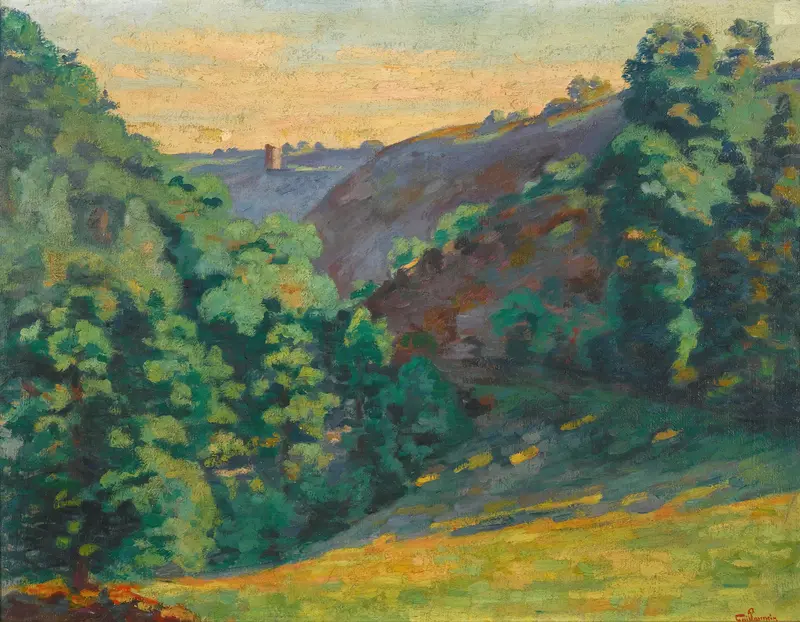
Crozant, Le Ravin De La Sedelle À La Folie
Armand Guillaumin
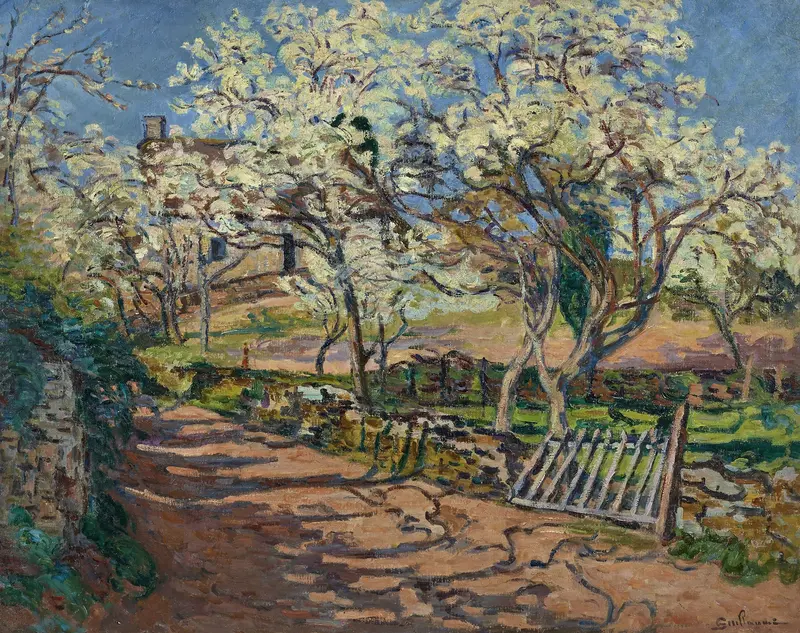
Paysage de Printemps
Armand Guillaumin
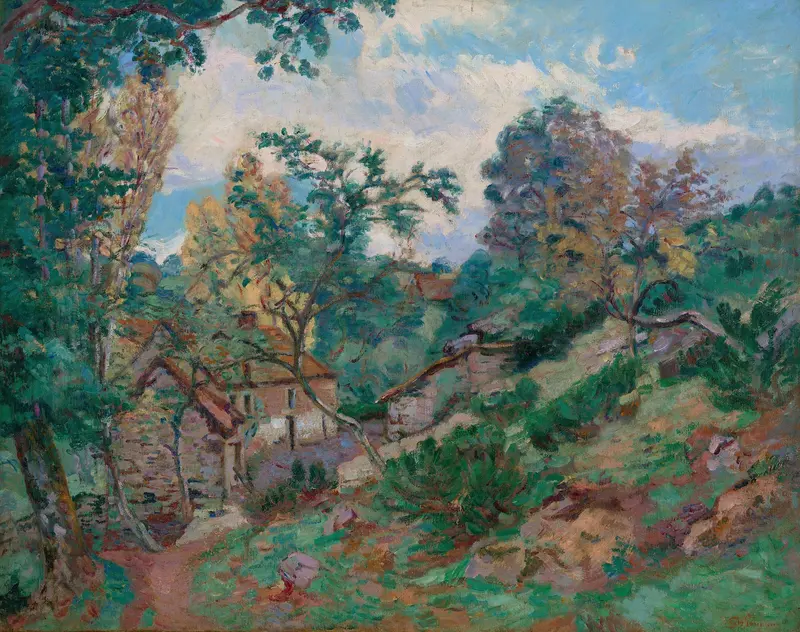
Paysage
Armand Guillaumin
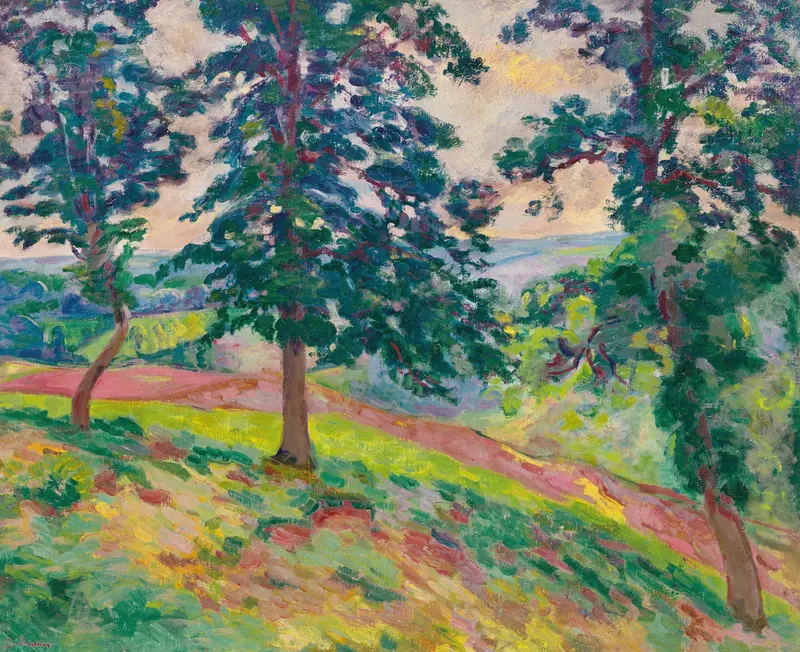
La vallée de la creuse
Armand Guillaumin
Le chemin de halage à Charenton, Ile de France
Armand Guillaumin
More Landscape Art

The Starry Night
Vincent van Gogh

View of Delft
Johannes Vermeer

Water Lilies
Claude Monet

The Grand Canal, Venice, looking north-west from the Ca' Corner to the Ca' Contarini degli Scrigni, with the campanile of Santa Maria della Carità
Canaletto

Windsor Castle
Canaletto

The Grand Canal looking North-East from the Palazzo Dolfin-Manin to the Rialto Bridge
Canaletto