
Paysage de Bretagne — History & Facts
The landscape whispers secrets of both beauty and madness, drawing you into its vibrant depths, where colors sing—a chaotic harmony of nature’s wildness. Focus on the foreground, where the vivid greens and blues intertwine, pulsating with life yet tinged with a strange disquiet. Notice how the brushstrokes are both confident and erratic, creating a rhythmic flow that invites your gaze to explore the rolling hills and expansive sky. The contrast of the bright hues against darker undertones hints at an emotional tumult, as if the landscape itself is teetering on the brink of a revelation. As you delve deeper, consider the way the sharp lines of the trees clash with the soft curves of the hills, symbolizing a battle between the serene and the chaotic.
The juxtaposition of the vibrant colors can evoke an unsettling tension, a reflection of the artist's own journey through madness. Each element seems to hold a secret, revealing layers of emotion that echo the struggles between tranquility and inner turmoil, ultimately creating a space that feels both inviting and haunting. Created in 1894 during his time in Brittany, the artist was exploring his own aesthetic voice amid a growing disillusionment with contemporary society and the pressures of conventional art. This period marked a significant turning point, as Gauguin sought to capture not only the physical world but also the emotional and spiritual essence of his subjects.
His vibrant palette and bold strokes were both a departure from and an evolution of the Impressionist ideals that had shaped his earlier works.
More Artworks by Paul Gauguin
Browse all →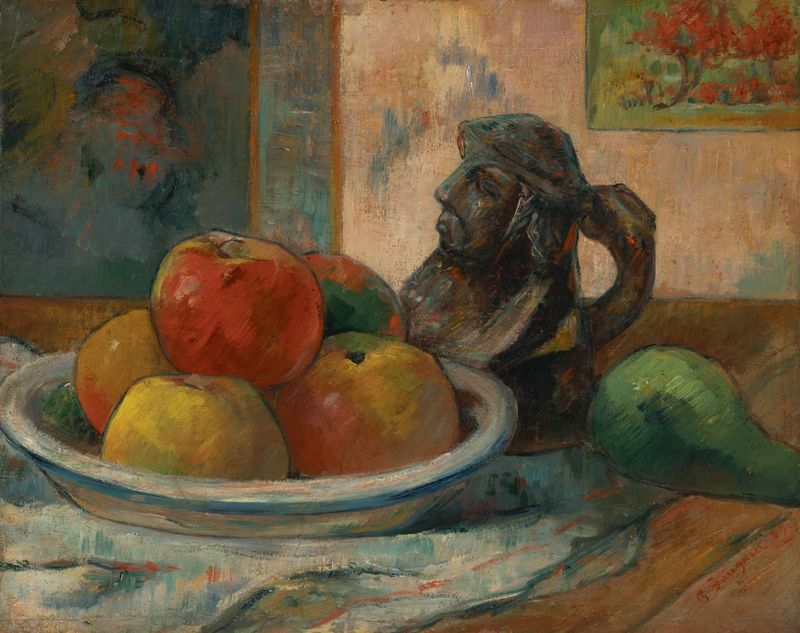
Still Life with Apples, a Pear, and a Ceramic Portrait Jug
Paul Gauguin
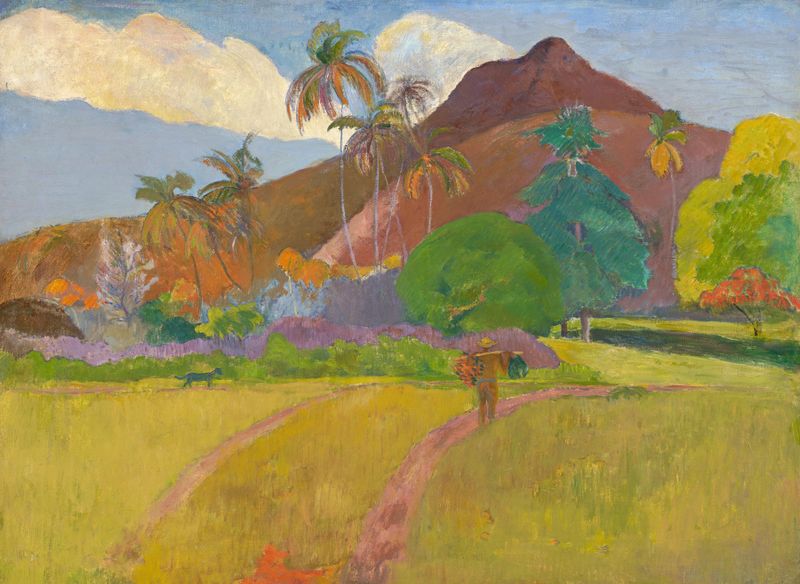
Tahitian Landscape
Paul Gauguin

Landscape near Pont-Aven
Paul Gauguin

No te aha oe riri (Why Are You Angry?)
Paul Gauguin
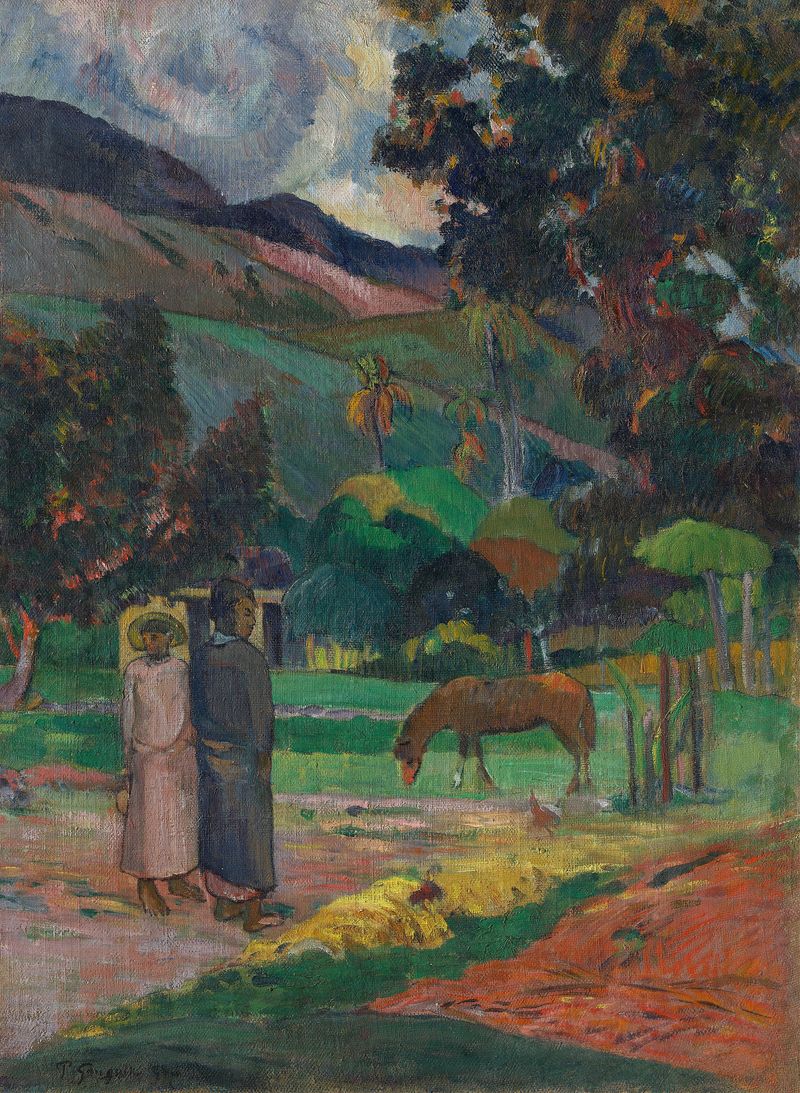
Tahitian Landscape
Paul Gauguin
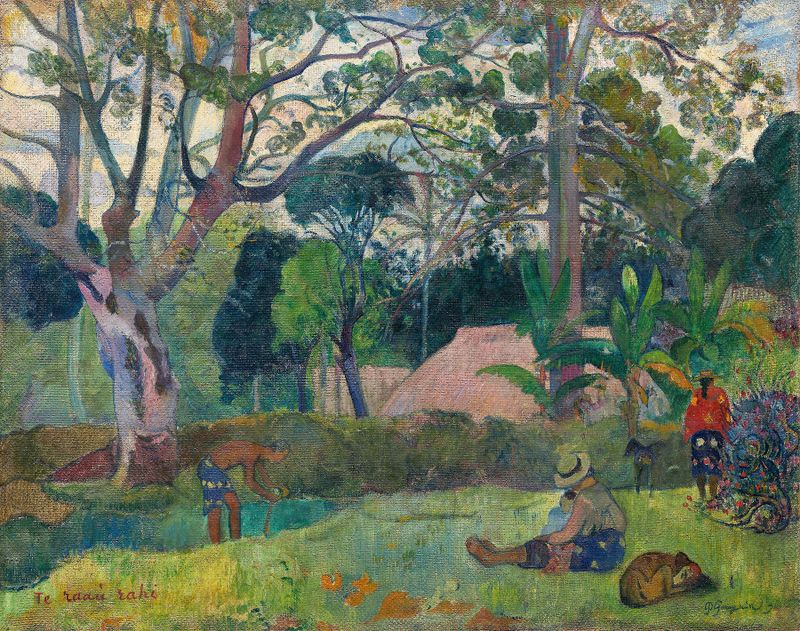
Te raau rahi (The Big Tree)
Paul Gauguin

Landscape at Le Pouldu
Paul Gauguin

Landscape of Brittany
Paul Gauguin

Poèmes Barbares
Paul Gauguin
Mahana no atua (Day of the God)
Paul Gauguin





