
Paysage De Crozant — History & Facts
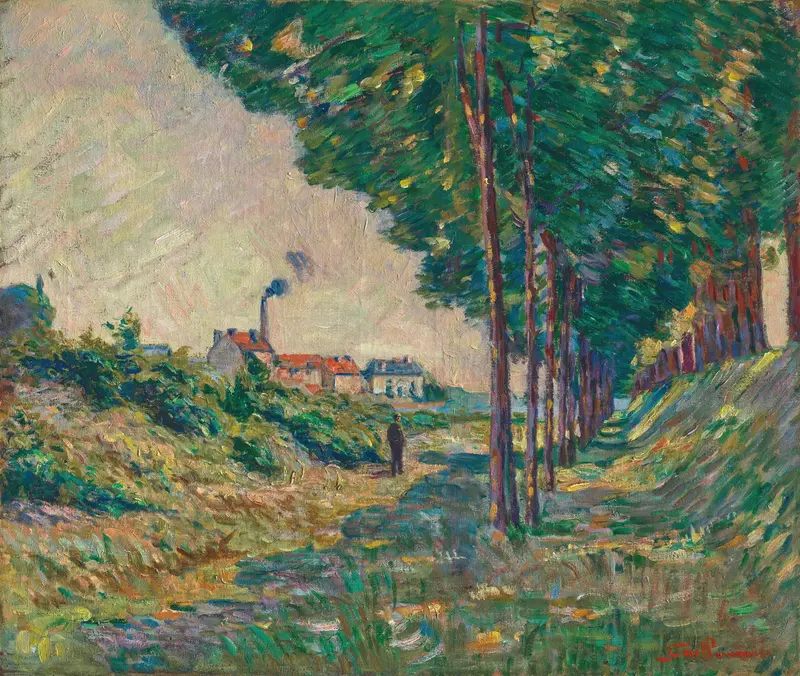
In Paysage De Crozant, Armand Guillaumin captures a serene landscape filled with lush greenery and a tranquil river. The painting is dominated by vibrant greens and soft blues, creating a harmonious atmosphere. The sky is painted with gentle strokes, suggesting a peaceful day.
The overall composition invites the viewer to immerse themselves in the beauty of nature. The painting is executed in oil on canvas, a medium that allows for rich color application and texture. Guillaumin's brushwork is loose and expressive, typical of the Impressionist style. The use of light and shadow adds depth to the scene, enhancing the three-dimensional quality of the landscape.
Viewers can appreciate the artist's technique in the way the colors blend seamlessly. Armand Guillaumin was a key figure in the Impressionist movement, known for his vibrant landscapes. Paysage De Crozant is significant as it reflects his love for the French countryside, particularly the region of Crozant, which inspired many artists. An interesting fact about this work is that it showcases Guillaumin's ability to capture light and atmosphere, making it a notable piece in his oeuvre.
More Artworks by Armand Guillaumin

La Seine À Charenton
Armand Guillaumin
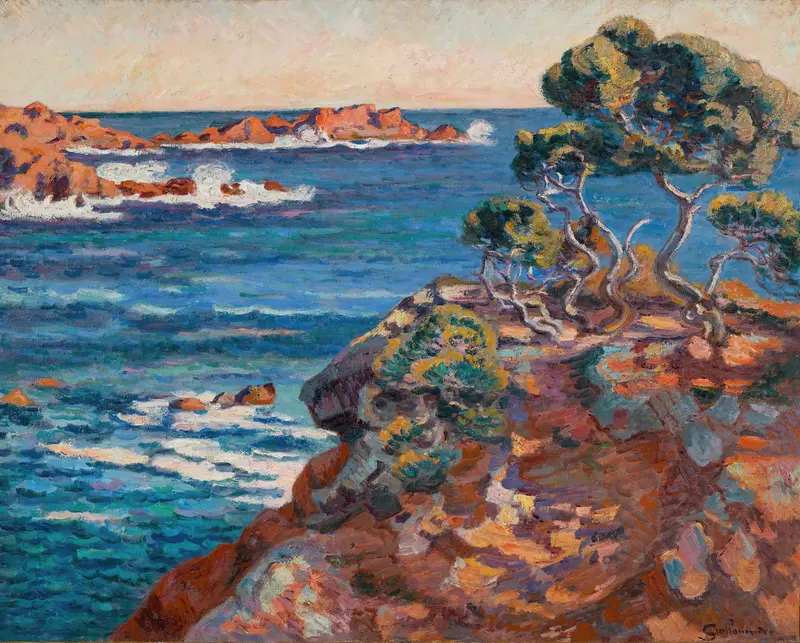
Bord De Mer À Agay
Armand Guillaumin
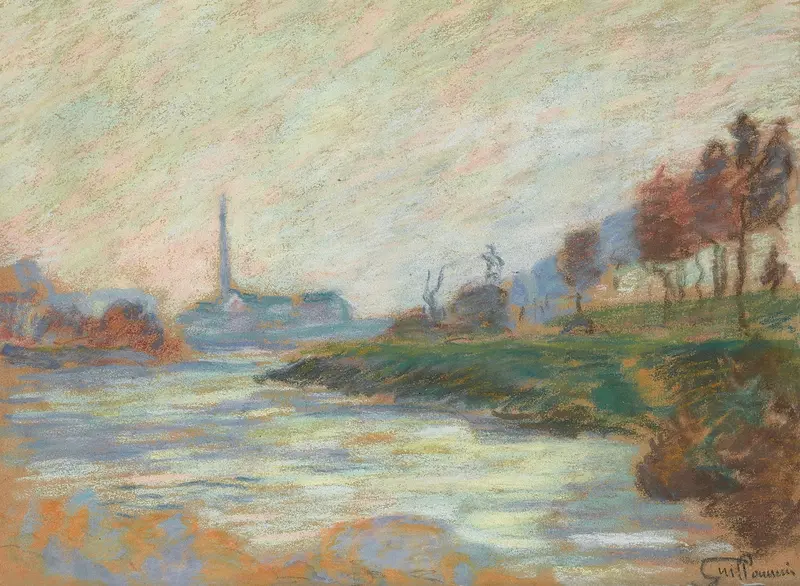
Confluent De La Marne Et De La Seine, Île De La France
Armand Guillaumin
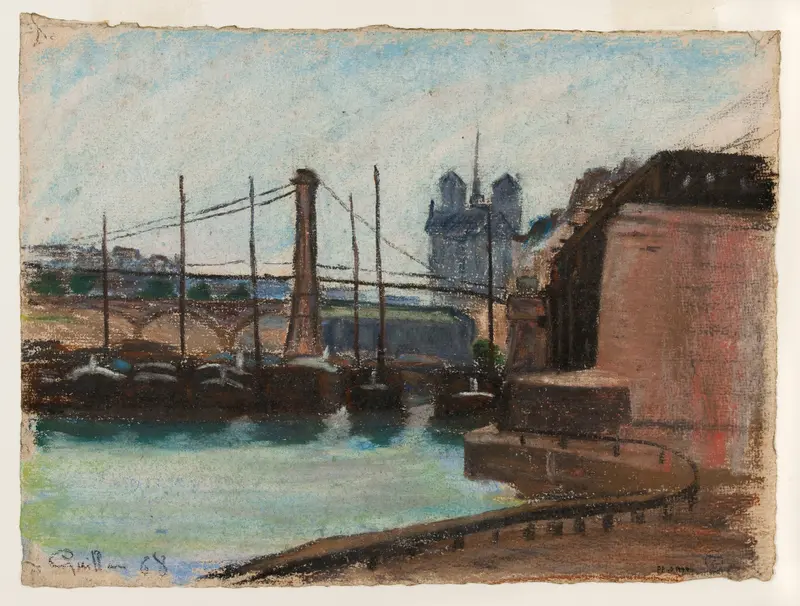
Le Pont d’Austerlitz
Armand Guillaumin
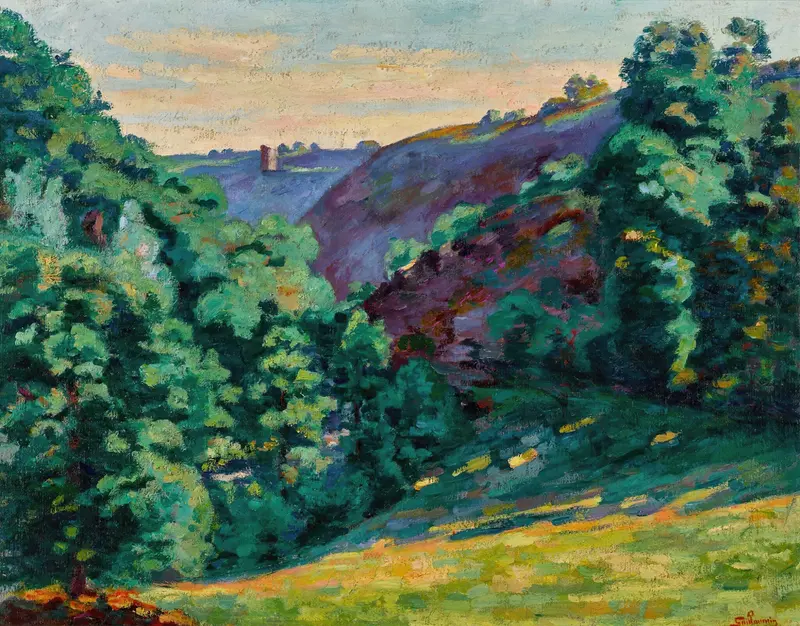
Le Ravin de la folie, vue de Chateau Crozant
Armand Guillaumin
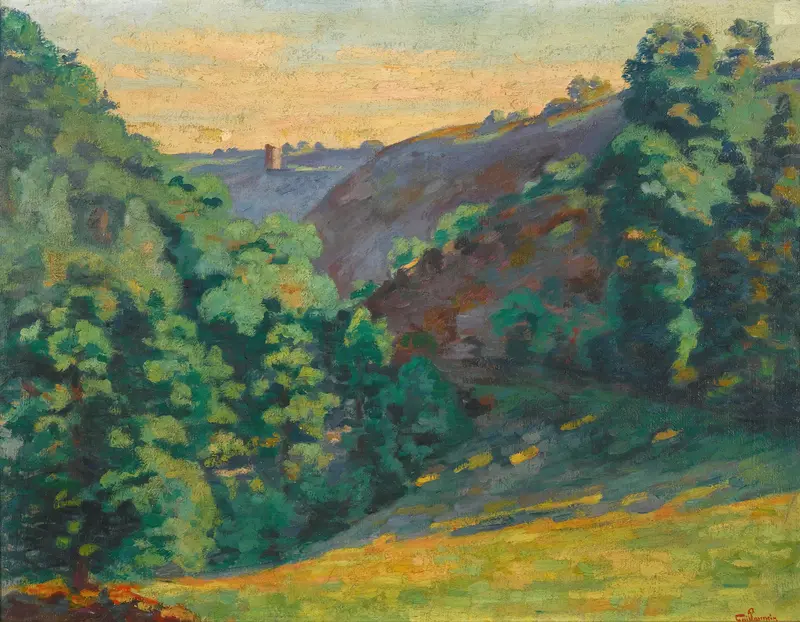
Crozant, Le Ravin De La Sedelle À La Folie
Armand Guillaumin
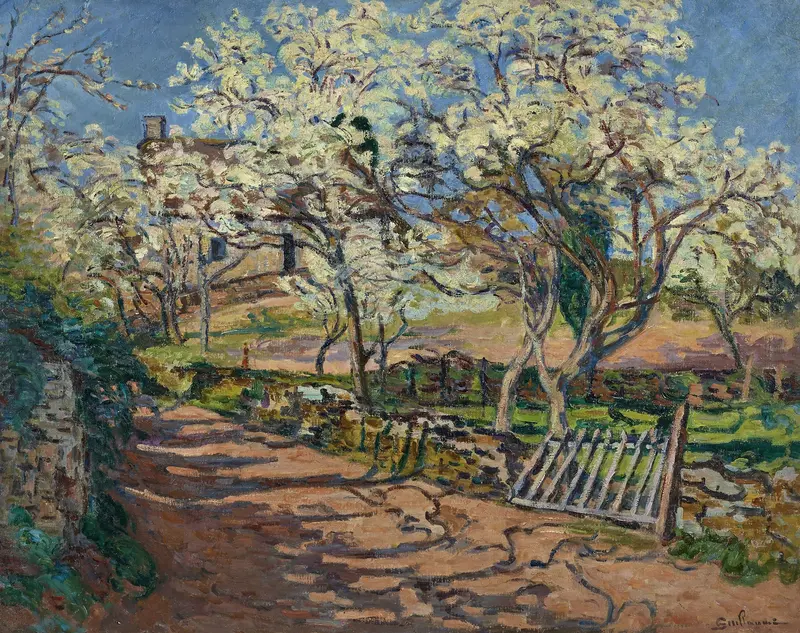
Paysage de Printemps
Armand Guillaumin
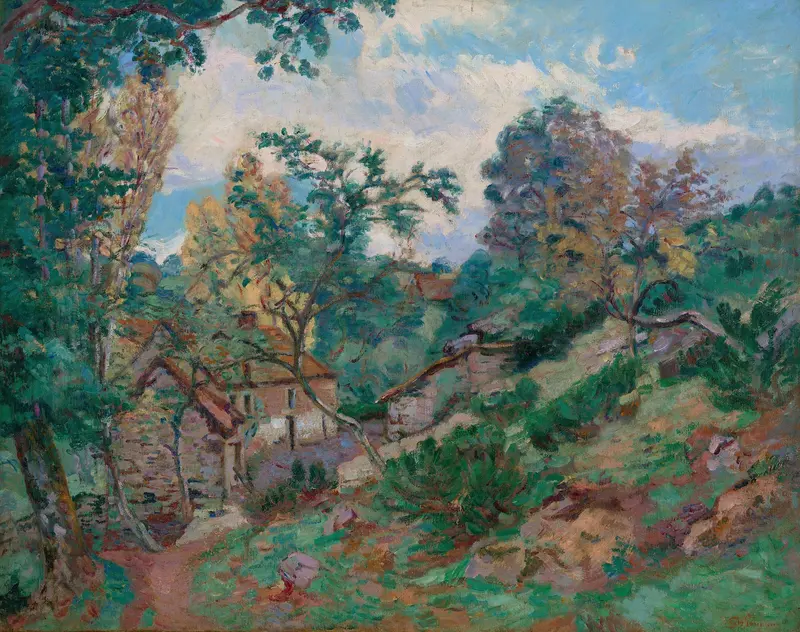
Paysage
Armand Guillaumin
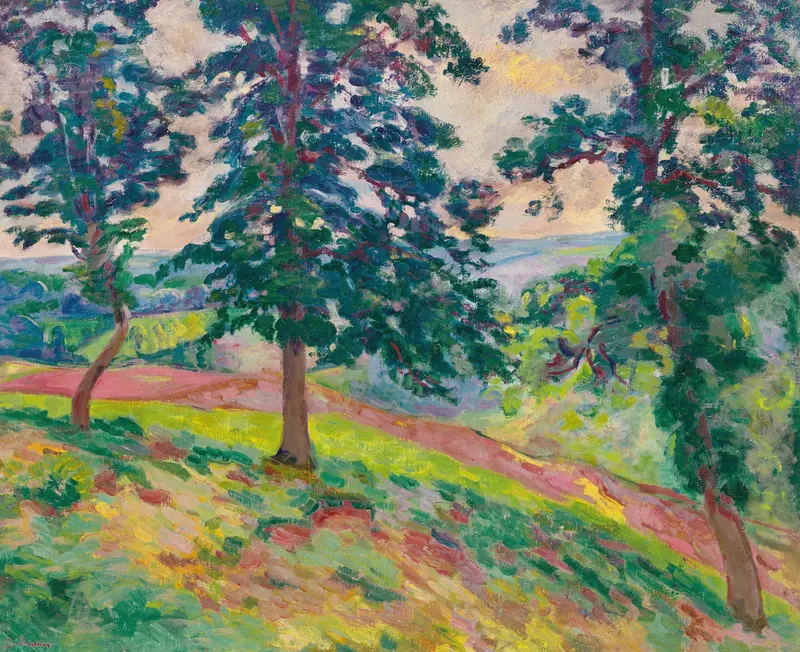
La vallée de la creuse
Armand Guillaumin
Le chemin de halage à Charenton, Ile de France
Armand Guillaumin
More Landscape Art

The Starry Night
Vincent van Gogh

View of Delft
Johannes Vermeer

Water Lilies
Claude Monet

The Grand Canal, Venice, looking north-west from the Ca' Corner to the Ca' Contarini degli Scrigni, with the campanile of Santa Maria della Carità
Canaletto

Windsor Castle
Canaletto

The Grand Canal looking North-East from the Palazzo Dolfin-Manin to the Rialto Bridge
Canaletto