
Paysage de montagne — History & Facts
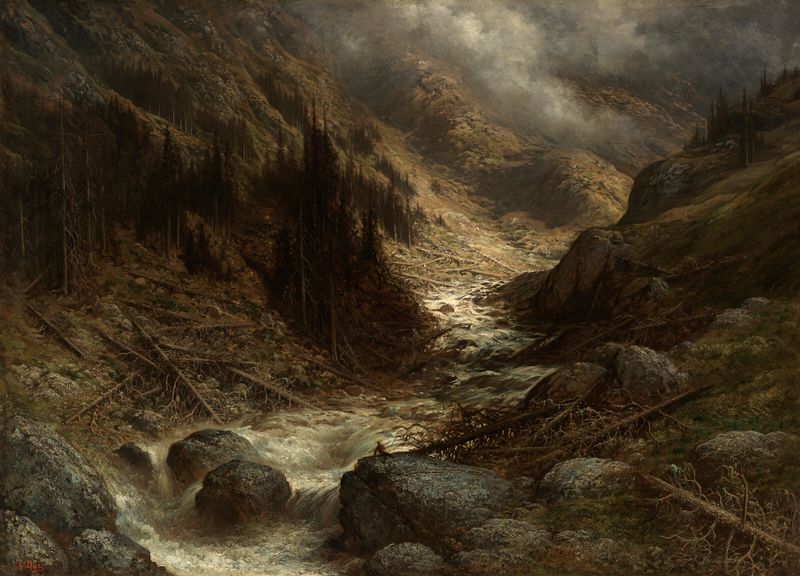
Could a single brushstroke hold eternity? In Paysage de montagne, the balance between chaos and calm is masterfully captured, inviting us to explore the profound interplay of nature and artistry. Look to the foreground, where bold strokes of green and earthy browns form a rugged terrain that rises steeply. The sweeping curves of the mountains dominate the background, their soft blue hues and delicate blending contrasting starkly with the harshness of the land below. Notice how the light dances across the peaks, creating an ethereal glow that seems to beckon the viewer into this serene yet formidable landscape.
The intricate details of the trees and rocks reveal a careful hand, demonstrating the artist's deep connection to the natural world. Delve deeper into the painting's emotional undercurrents, where the tension between the wildness of the mountains and the serene sky above conveys a sense of balance amid turmoil. The interplay of light and shadow evokes a feeling of transience, suggesting that even in the most chaotic moments, there exists a certain harmony. The juxtaposition of the robust earth with the delicate atmosphere speaks to the dualities of life and nature, inviting contemplation on our place within this vast landscape. Gustave Doré created this composition in 1881 during a time when he was exploring the boundaries of Romanticism and realism in art.
Living in Paris and well-regarded for his illustrations, Doré sought to express both the majesty and the fragility of nature in this work, reflecting the growing fascination with landscapes and the natural world in the art movements of his time.
More Artworks by Gustave Doré
Browse all →
A Rider and a Dead Horse in a Landscape
Gustave Doré

Fairy Land
Gustave Doré
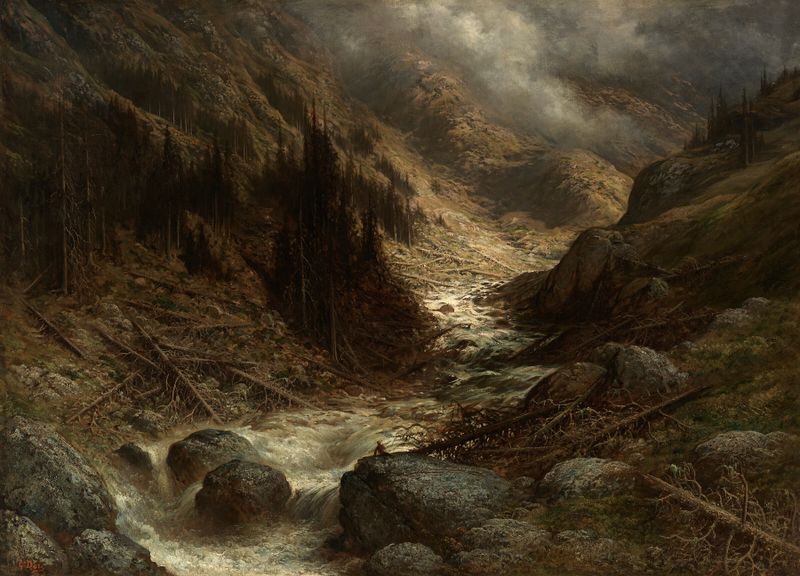
Un torrent dans l’Engadine
Gustave Doré
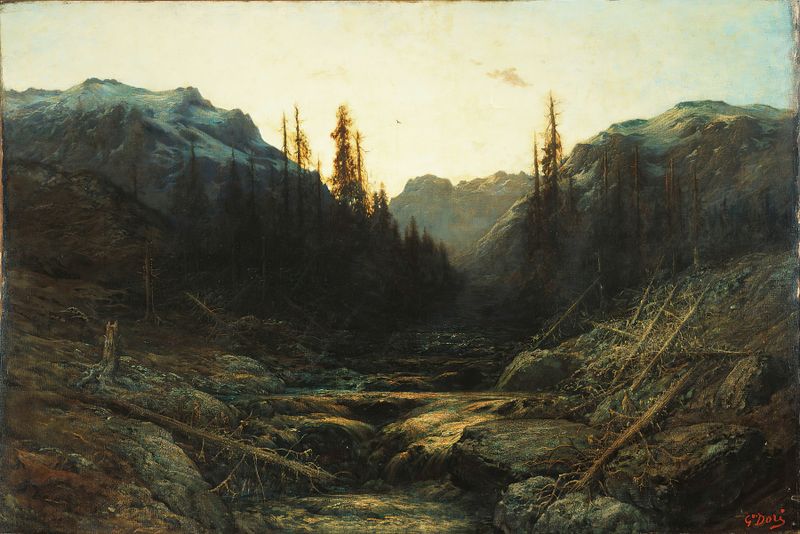
Stream in Mountains at Dusk
Gustave Doré
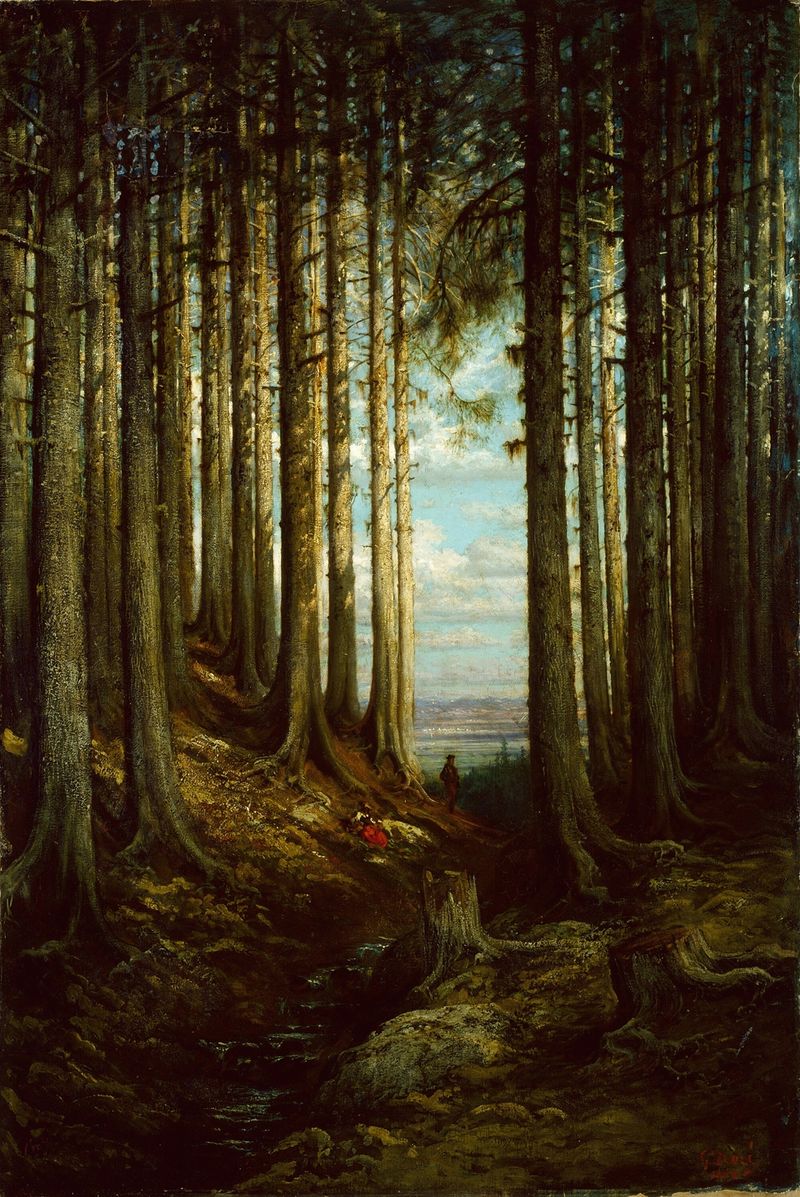
Alpine Scene
Gustave Doré

Torrent in the Highlands
Gustave Doré

An Alpine Valley with Trees and Boulders
Gustave Doré
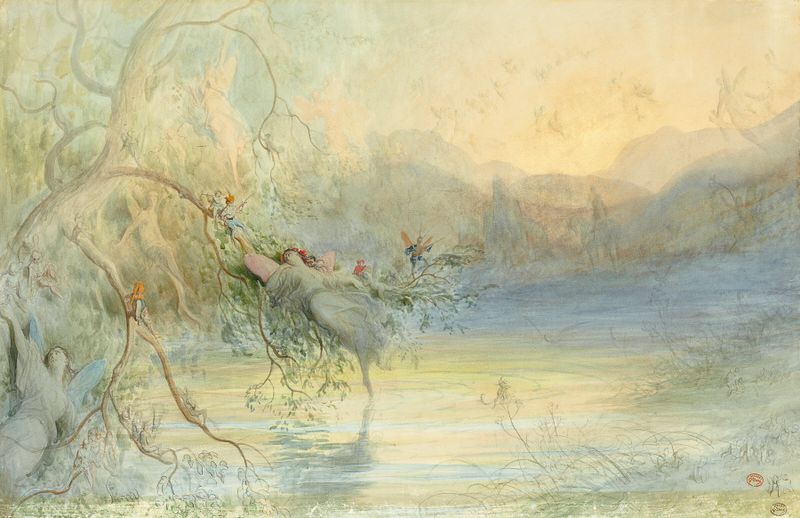
Étude pour ‘Les Fées’
Gustave Doré

Via Mala
Gustave Doré
Un torrent dans l’Engadine
Gustave Doré





