
Paysage de Montagnes (Mountain Landscape) — History & Facts
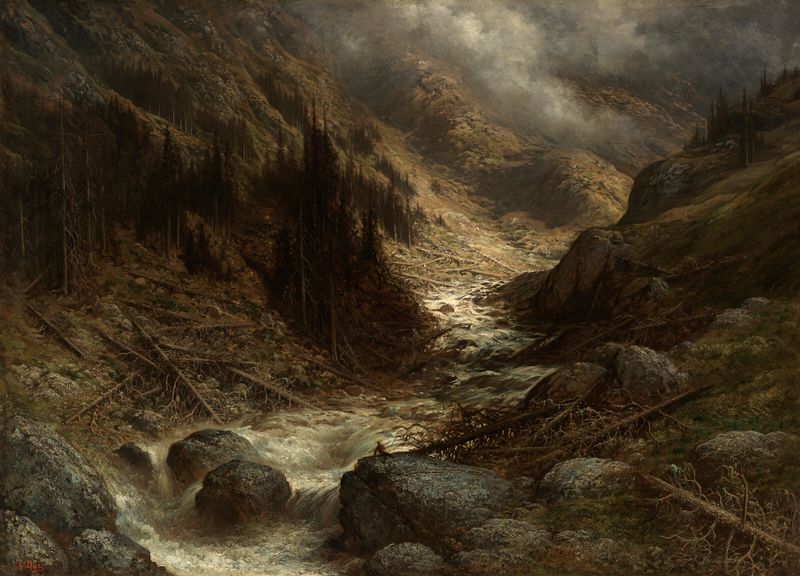
In the heart of a breathtaking mountain landscape, emotion intertwines with the silent betrayal of nature’s grandeur. Here, beneath the towering peaks, a sense of solitude mingles with the weight of unfulfilled promises, capturing the essence of longing. Look to the left at the stark contrast between the rugged mountain faces and the soft, inviting hues of the valleys below. Notice how Doré’s masterful use of light and shadow creates a dynamic interplay, with the sun casting a golden glow on the textured crags, while the valleys remain cloaked in purple shadows.
Every brushstroke breathes life into the scene, drawing you deeper into its vastness, while the palette evokes both serenity and a sense of foreboding. The emotional tension lies in the juxtaposition of the sublime beauty and the underlying sense of abandonment. The imposing mountains, often interpreted as symbols of stability and permanence, resonate with the pang of betrayal—reminders of promises broken by the passage of time. The delicate interplay of light suggests hope, yet the shadows whisper of solitude and the inescapable reality of nature’s indifference. Gustave Doré created this work in 1868 during a pivotal era in the art world, characterized by a shift towards romanticism and realism.
Living in Paris, he was navigating the complexities of his career as a prominent illustrator and painter, reflecting the tumultuous societal changes of the time. Paysage de Montagnes embodies both his artistic vision and his personal grappling with the contradictions of beauty and despair in the natural world.
More Artworks by Gustave Doré
Browse all →
A Rider and a Dead Horse in a Landscape
Gustave Doré

Fairy Land
Gustave Doré
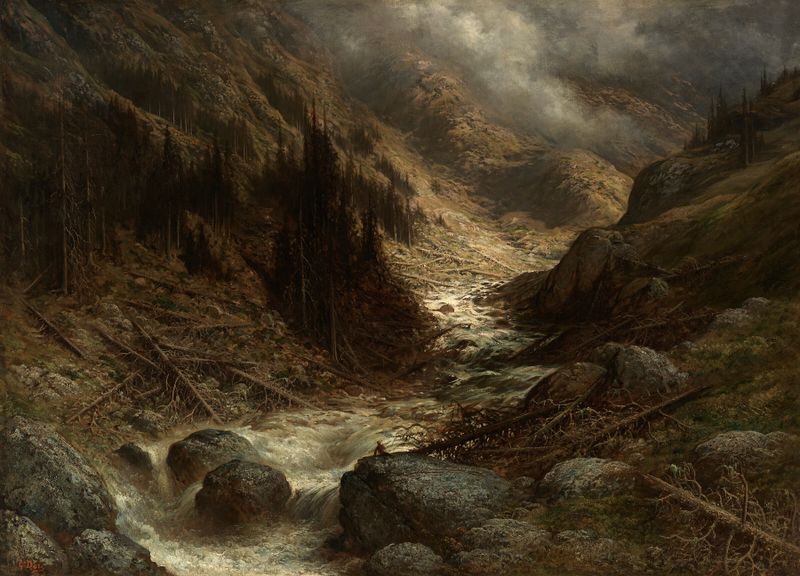
Un torrent dans l’Engadine
Gustave Doré
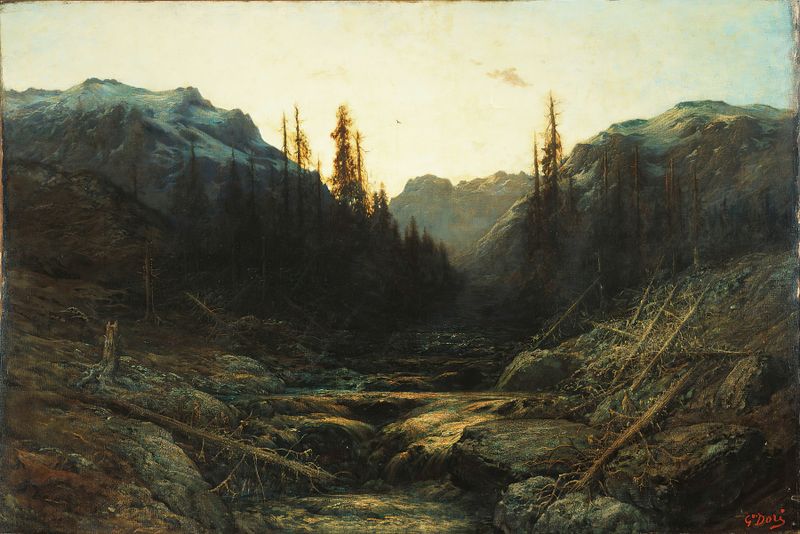
Stream in Mountains at Dusk
Gustave Doré
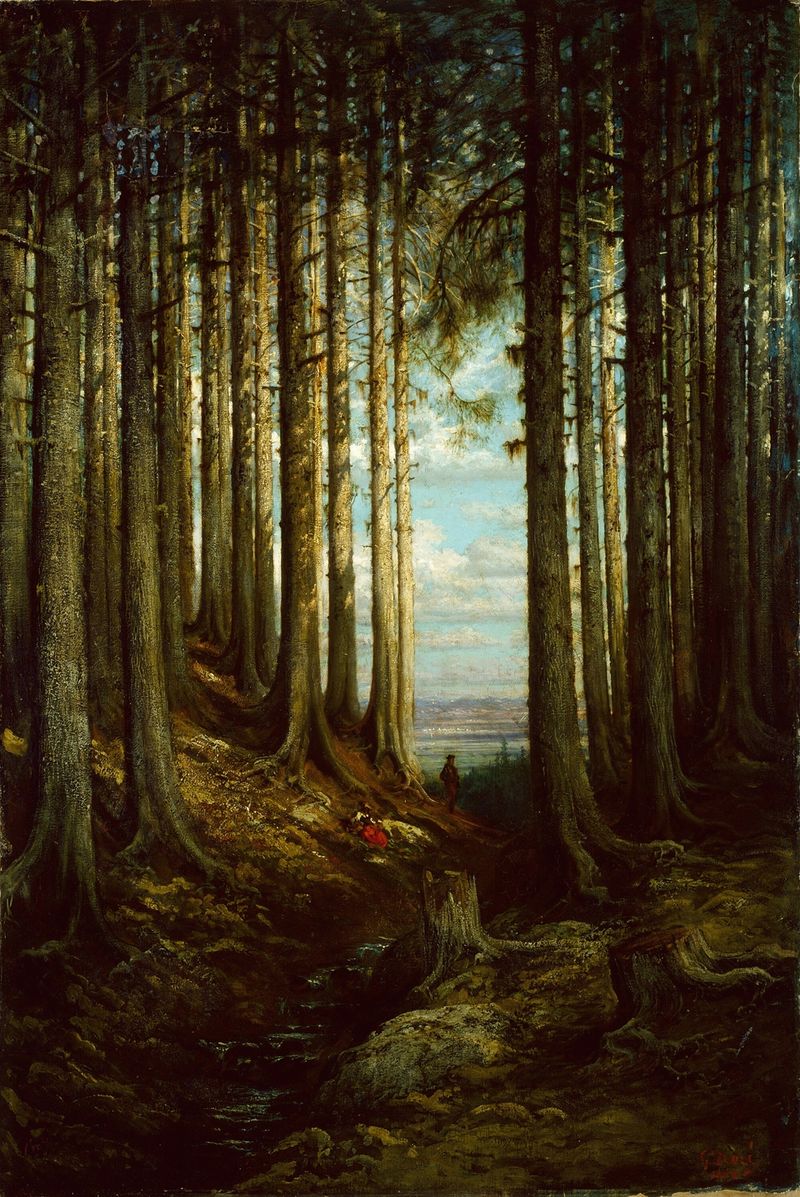
Alpine Scene
Gustave Doré

Torrent in the Highlands
Gustave Doré

An Alpine Valley with Trees and Boulders
Gustave Doré
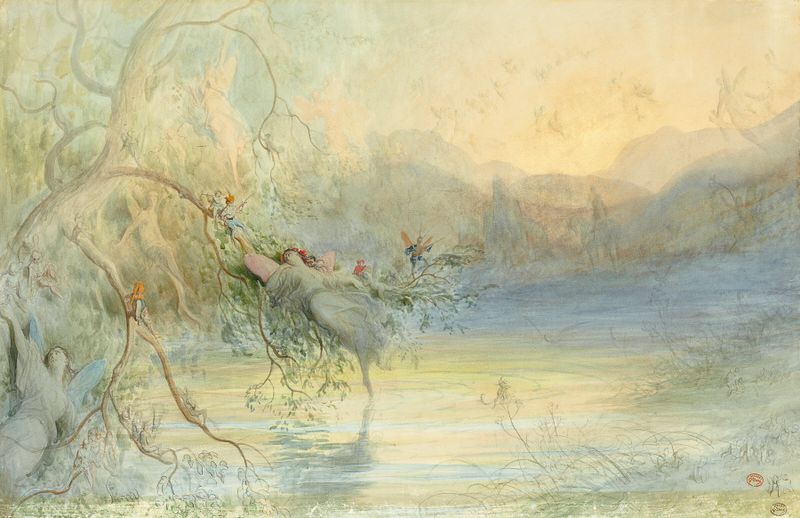
Étude pour ‘Les Fées’
Gustave Doré

Via Mala
Gustave Doré
Un torrent dans l’Engadine
Gustave Doré





