
Paysage montagneux (Pastoral Landscape) — History & Facts
In this pastoral landscape, the artist transforms nature’s wildness into a harmonious tableau that whispers of serenity and beauty. Look to the left at the towering mountains, their peaks rendered with meticulous strokes that contrast against a gently rolling foreground. The lush greenery and vibrant blooms provide a vivid tapestry that dances across the canvas, while soft clouds float lazily in the azure sky. Notice how the light falls upon the scene, creating a gentle glow that enhances the delicate interplay between shadows and highlights, inviting the viewer deeper into this idyllic moment. As you explore further, subtle contrasts emerge: the robust mountain silhouettes suggest strength, while the tranquil water below reflects a sense of calm.
The playful mingling of colors—rich greens against soft blues—evokes a feeling of awe, as if nature is holding its breath in quiet reverence. Small details, like the distant figures engaged in pastoral tasks, hint at the harmony between humanity and nature, embodying an era where man coexisted with the landscape rather than dominated it. In the 1770s, Pillement painted this work during a time when the Rococo style was evolving, moving towards more naturalistic and serene representations of landscapes. Living in France, he observed the changing tides of art and society, embracing a deep appreciation for pastoral beauty as Europe's aristocracy sought escape into nature.
This piece reflects not only his artistic intentions but also the broader cultural shifts of his time, capturing a world on the brink of transformation.
More Artworks by Jean-Baptiste Pillement
Browse all →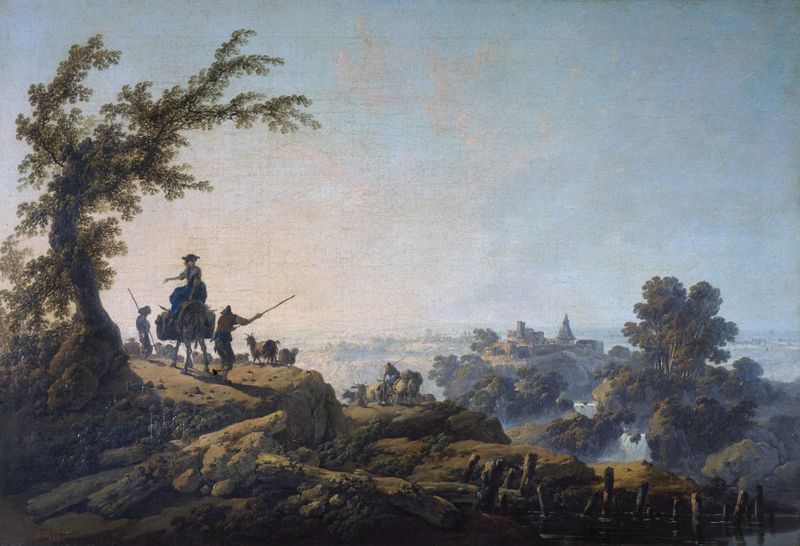
Paysage animé
Jean-Baptiste Pillement
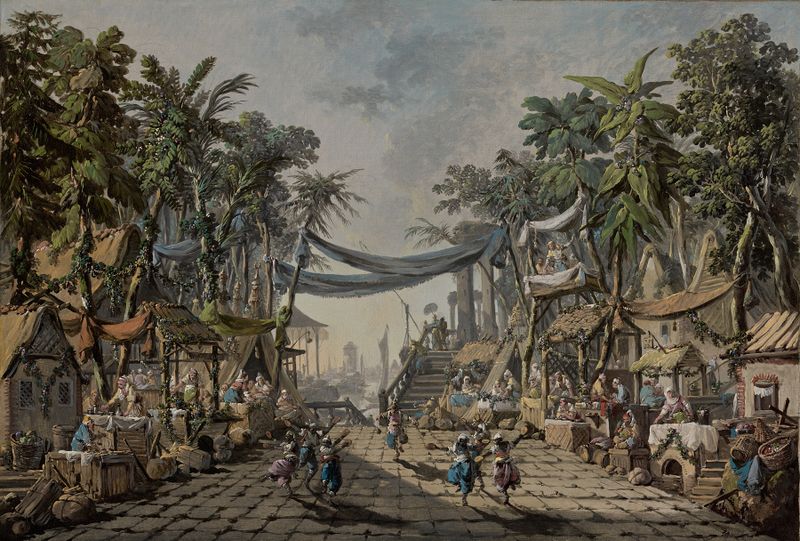
Market Scene in an Imaginary Oriental Port
Jean-Baptiste Pillement
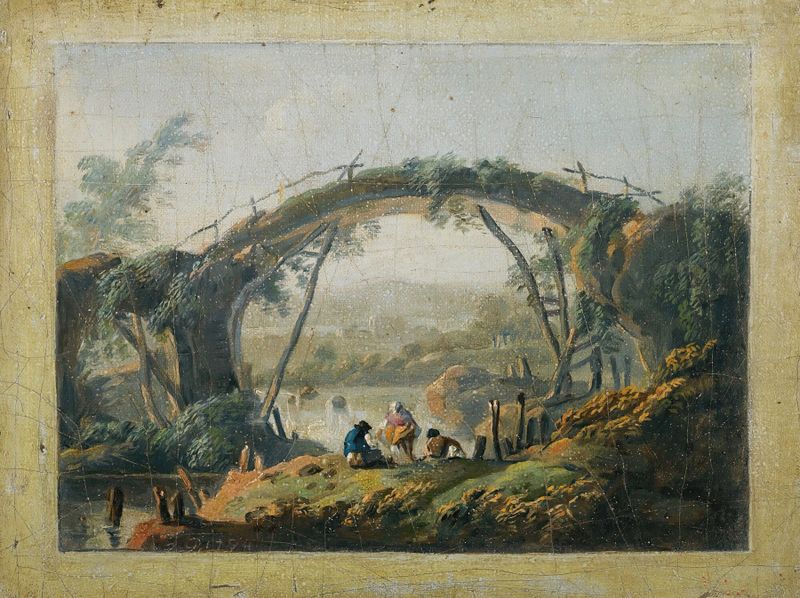
A Pair Of River Landscapes With Figures Approaching A Bridge
Jean-Baptiste Pillement
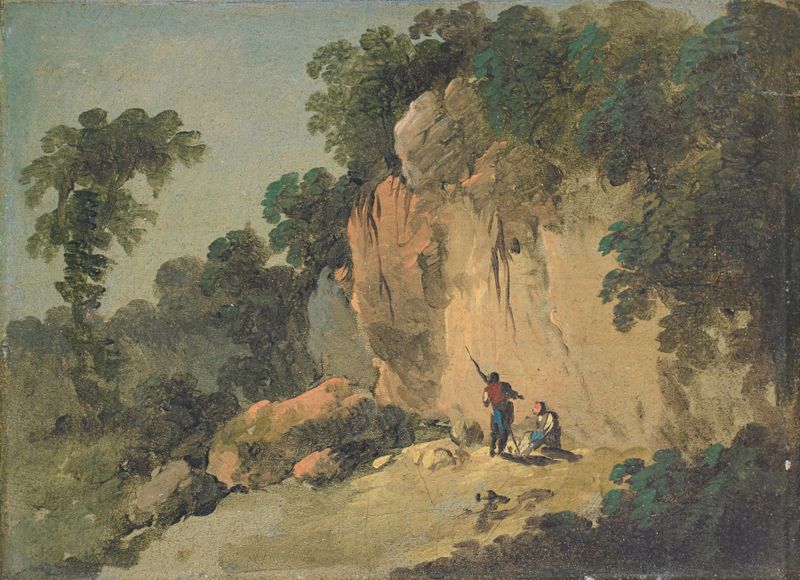
À falaises (Pastoral Landscape).
Jean-Baptiste Pillement
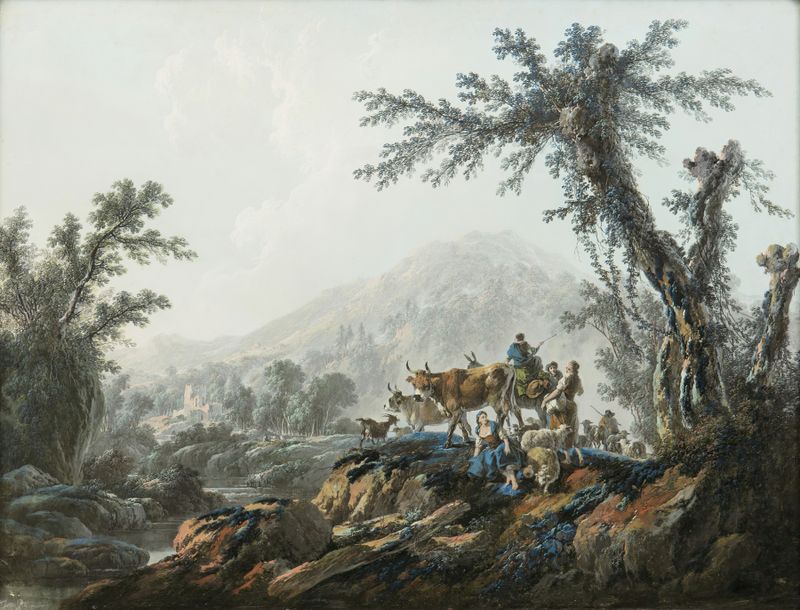
Pastoral Landscape
Jean-Baptiste Pillement
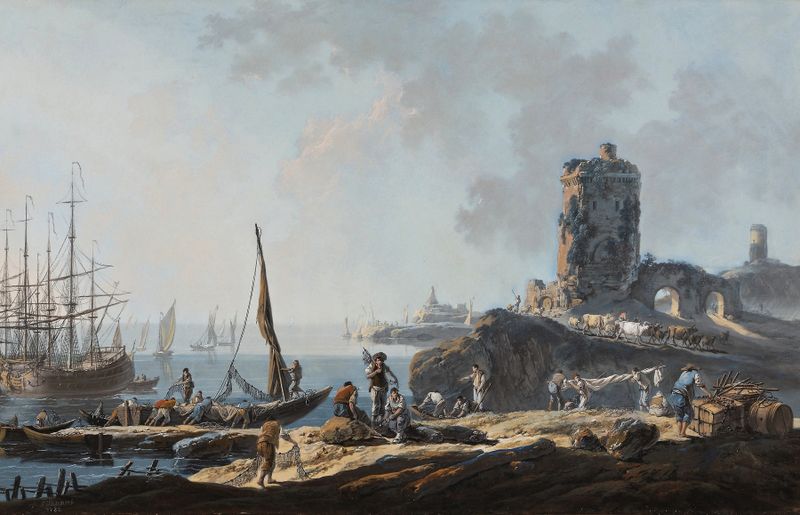
Port Scene in Calm Weather
Jean-Baptiste Pillement
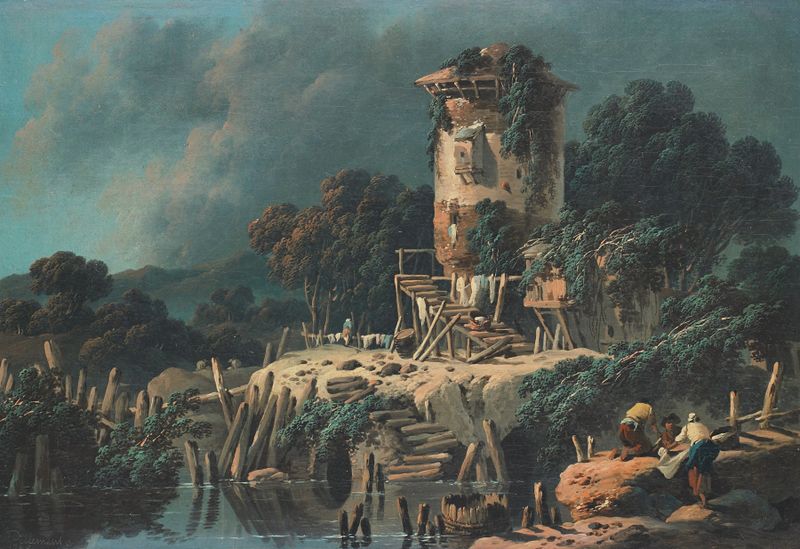
La Vielle Tour (Pastoral Landscape)
Jean-Baptiste Pillement
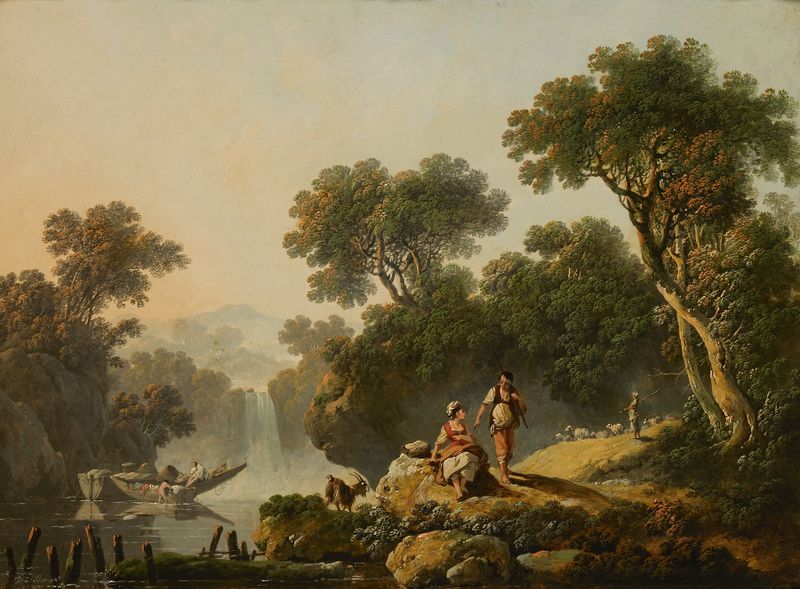
Landschap
Jean-Baptiste Pillement
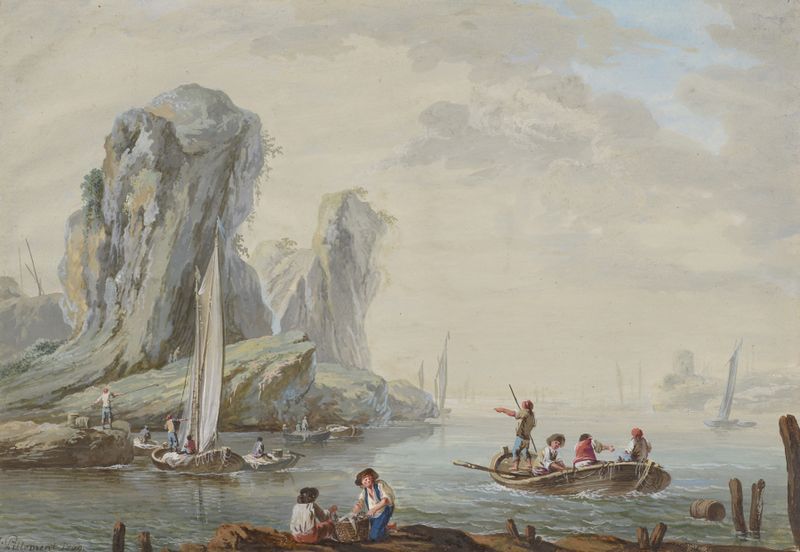
Meeresbucht mit großen Felsen links und Fischern
Jean-Baptiste Pillement
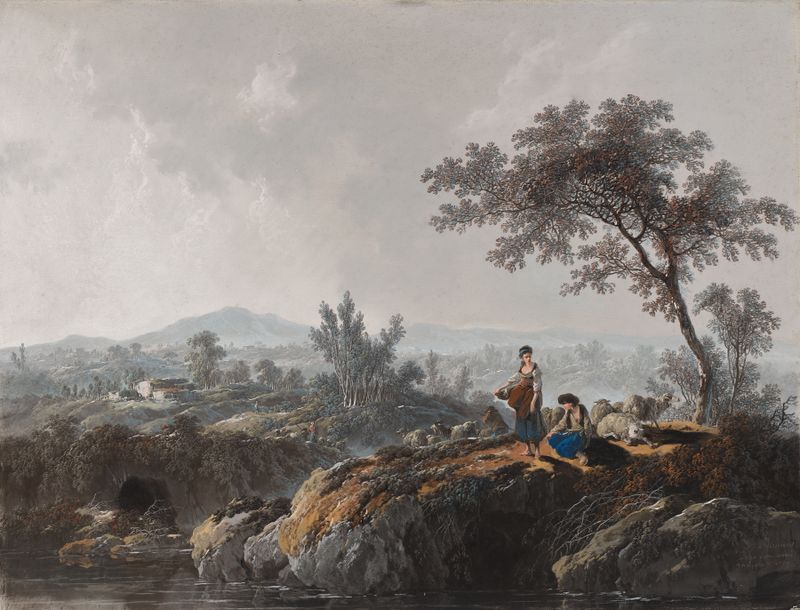
Shepherds in a Landscape
Jean-Baptiste Pillement





