
Paysans aux grands arbres — History & Facts
When did color learn to lie? In the hands of a master, every hue whispers stories of stillness and tranquility, beckoning the viewer to pause and reflect. Look to the left at the towering trees, their branches stretching wide, capturing soft, golden light that filters through the leaves, creating a serene canopy. The earthy tones of the landscape provide a grounding backdrop, while the figures of the peasants, modest and almost ethereal, seem to blend into nature itself. The brushwork—delicate yet confident—allows the colors to dance, revealing layers of texture that evoke a profound sense of calm. Beneath this tranquil surface lies a tension between man and nature, highlighted by the juxtaposition of the peasants’ labor and the timelessness of the landscape.
The gentle curves of the trees flow against the straight lines of the figures, symbolizing an intricate relationship where humanity is both a part of and separate from the world around them. This harmony invites us to meditate on our own place within the natural order, raising questions of existence and purpose. During his career, the French artist created this piece in a period marked by a burgeoning interest in the Impressionist movement. Working during the late 19th century, Guigou was influenced by the shifting dynamics of art that celebrated light and color.
At this time, he sought to capture the profound beauty of rural life, reflecting a growing appreciation for the simplicity and serenity found in everyday scenes.
More Artworks by Paul-Camille Guigou
Browse all →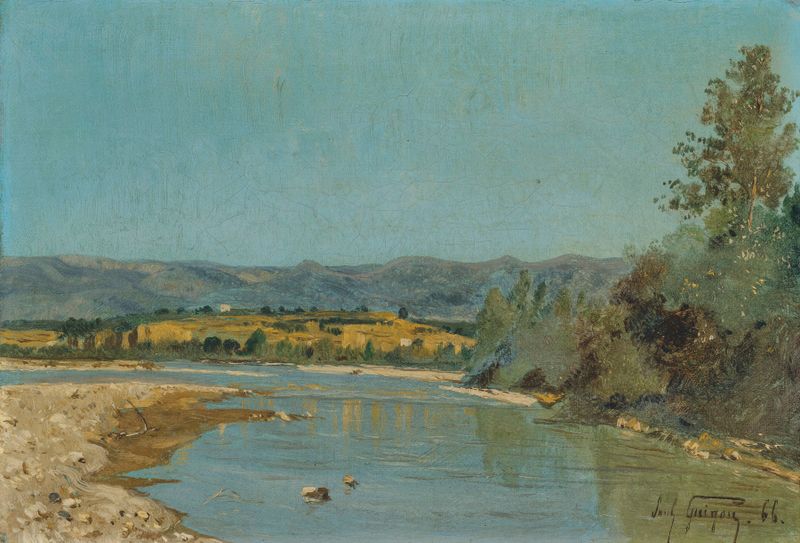
Les Bords de la Durance à Puyvert
Paul-Camille Guigou
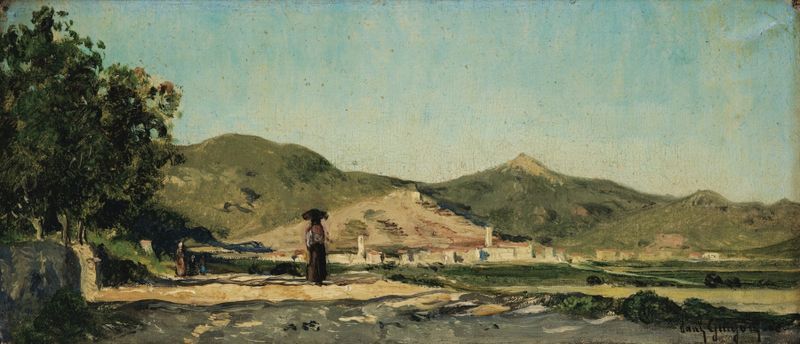
Paysanne sur un chemin en Provence
Paul-Camille Guigou
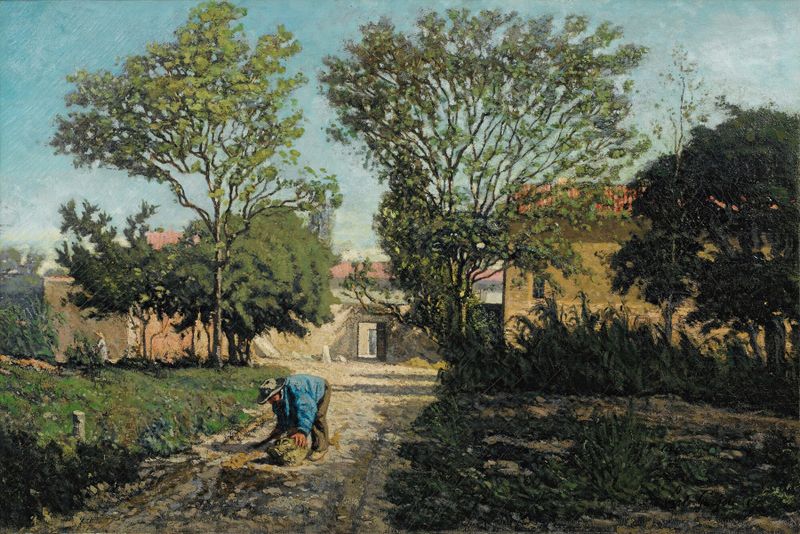
Ferme Aux Environs De Marseille
Paul-Camille Guigou

Hut by the sea shore (Cabane au bord de la mer)
Paul-Camille Guigou
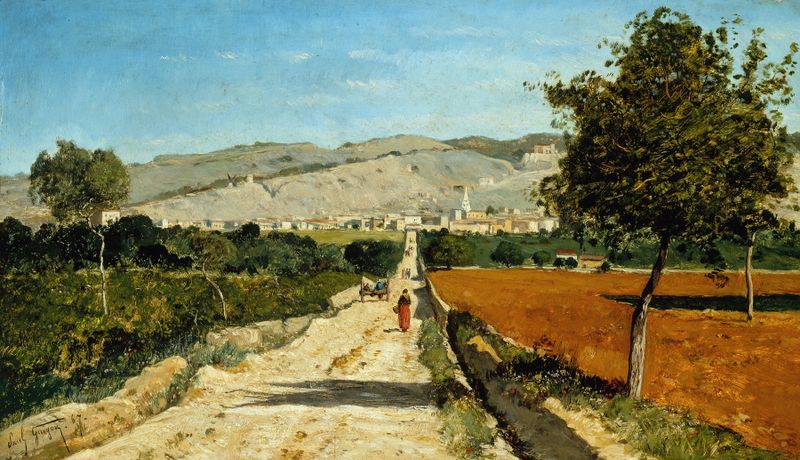
Paysage de Provence. Vue de Saint-Saturnin-les-Apt.
Paul-Camille Guigou

Barques sur la Durance
Paul-Camille Guigou
Souvenir de la Crau, Provence
Paul-Camille Guigou
Bords De Durance
Paul-Camille Guigou

Am Ufer der Durance
Paul-Camille Guigou
Rue À Lourmarin (Vaucluse)
Paul-Camille Guigou





