
Peasants with Cattle in a Cave — History & Facts
Is this a mirror — or a memory? In Peasants with Cattle in a Cave, the boundaries of time blur as simple rural life unfolds in a setting that feels both timeless and fleeting. The intimate connection between humans and their animals evokes a nostalgia that transcends mere observation. Look to the left at the sturdy figures of the peasants, their postures relaxed yet purposeful as they interact with the cattle. Notice how the warm, earthy tones of ochre and umber envelop them, creating a harmony between the figures and the rugged cave backdrop.
The interplay of light and shadow, skillfully rendered, draws the eye toward the soft expressions of the peasants, illuminating their toil and artistry amidst the muted surroundings. Berchem's brushwork lends a palpable texture, inviting you to feel the coolness of the cave and the warmth of the sun beyond. Delve deeper into the composition, where the cave itself symbolizes shelter and the complexity of existence. The juxtaposition of the peasants’ humble interactions with the animals against the vast, unyielding cave walls speaks to the fragility of memory and the passage of time.
The cattle, both a source of livelihood and companionship, reveal the interdependence of nature and humanity — a poignant reminder of what is often forgotten in the rush of modernity. In 1654, Berchem painted this scene during a period when Dutch art was vibrant with genre scenes that celebrated everyday life. Working in the Netherlands, he was influenced by the rich traditions of realism and the emerging focus on landscapes. At this time, the art world was evolving, reflecting a society that cherished both the simplicity and the complexity of rural existence.
More Artworks by Nicolaes Pietersz Berchem
Browse all →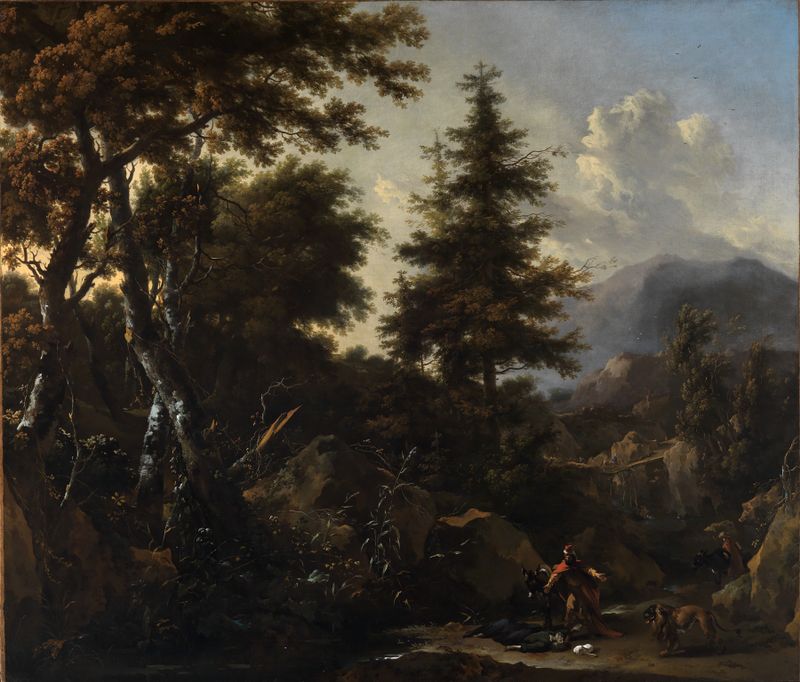
Schlucht im Bergwald mit alttestamentlicher Staffage
Nicolaes Pietersz Berchem
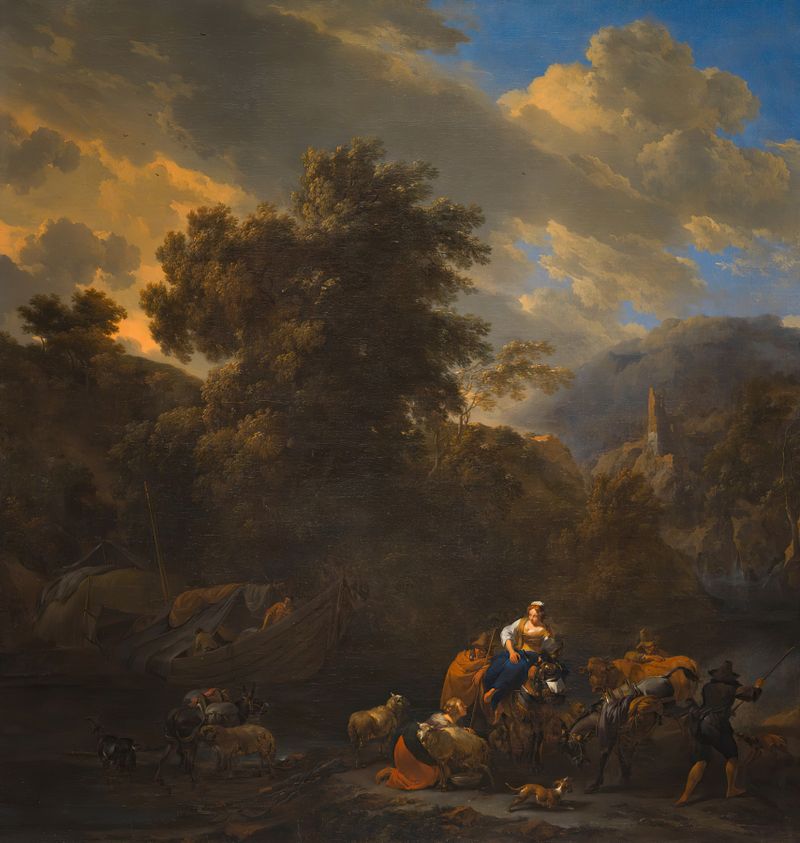
Italianate Landscape with Figures and Pack Animals on the Banks of a River
Nicolaes Pietersz Berchem
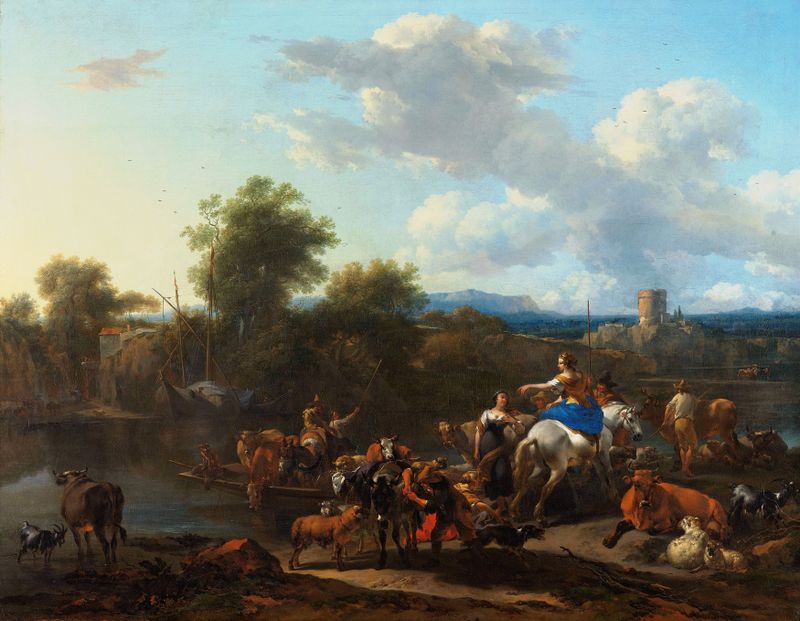
The Cattle Ferry
Nicolaes Pietersz Berchem
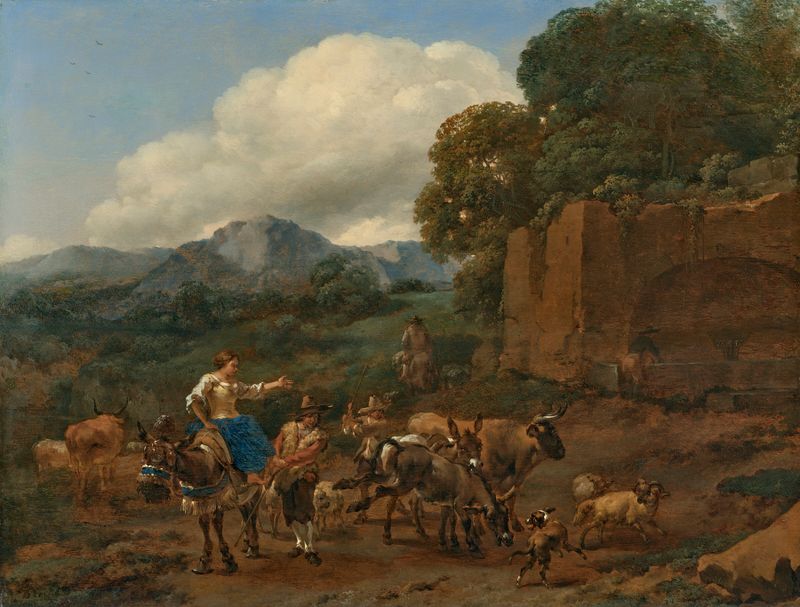
An Italianate landscape with a shepherdess on a mule and a shepherd, herding cattle, sheep, donkeys and dogs on a mountain track next to ruins
Nicolaes Pietersz Berchem
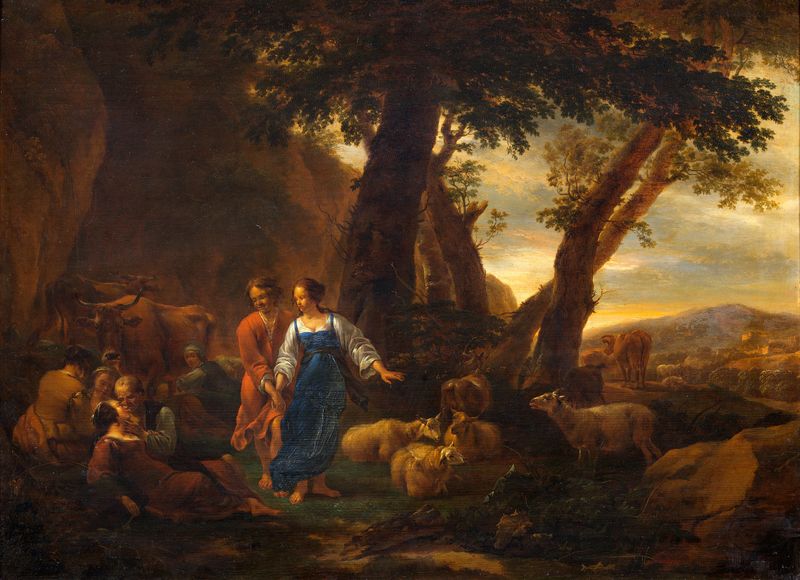
Landscape with Peasants and Cattle
Nicolaes Pietersz Berchem
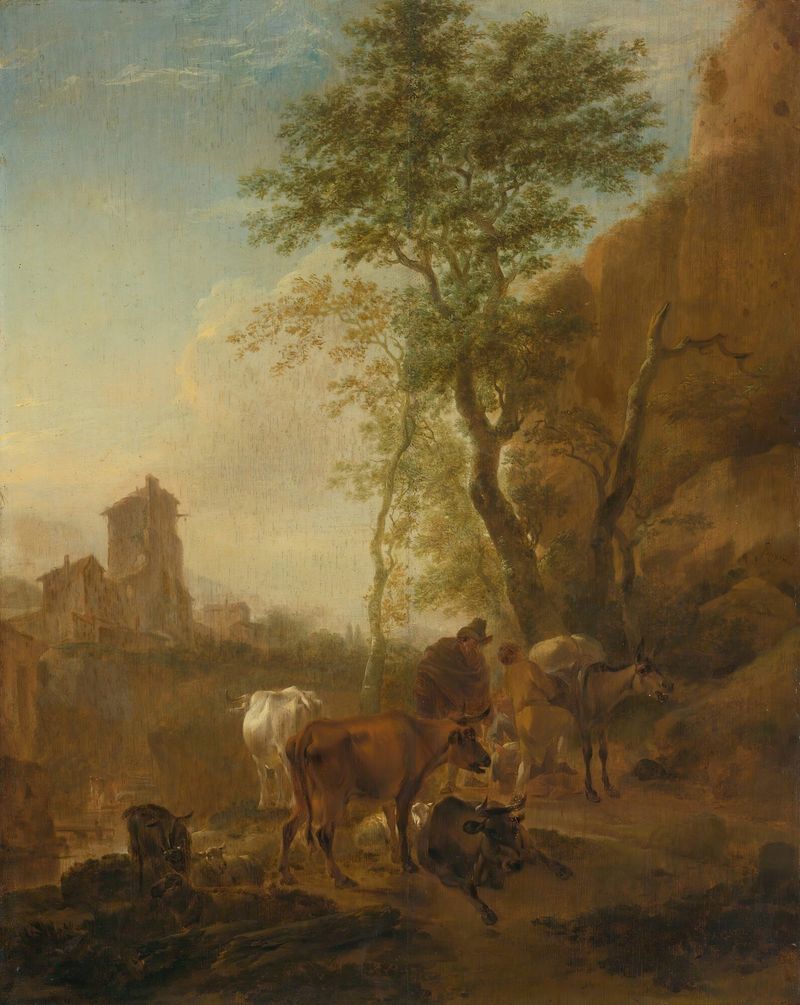
Italianate Landscape With Cows
Nicolaes Pietersz Berchem
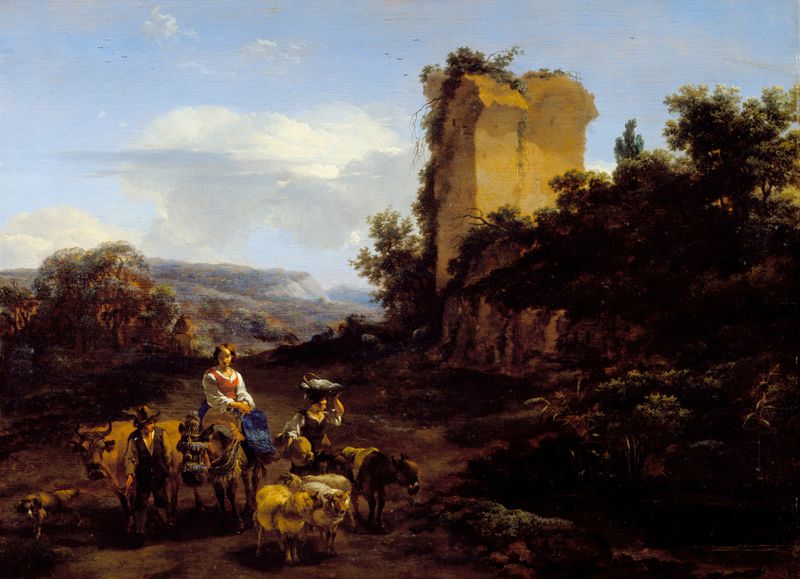
Landscape with Ruins and Travelers
Nicolaes Pietersz Berchem
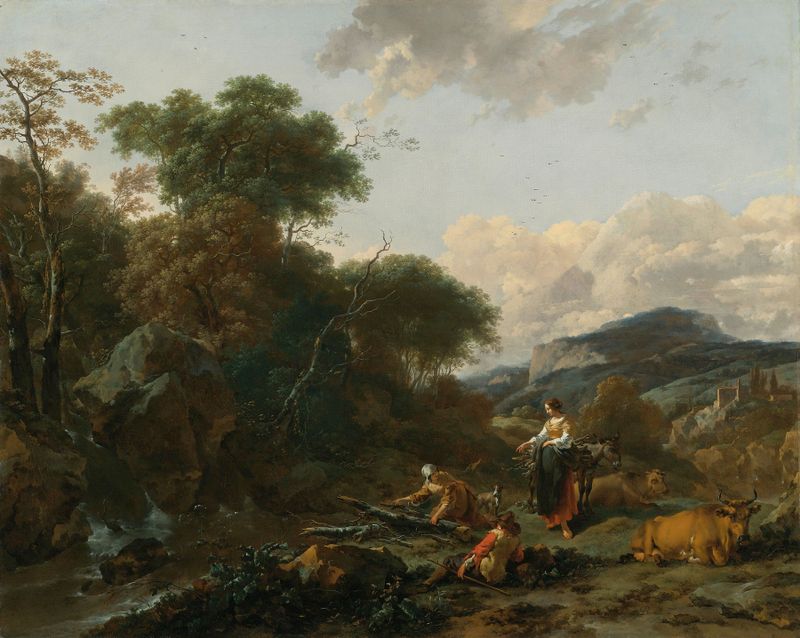
A Landscape With Figures
Nicolaes Pietersz Berchem
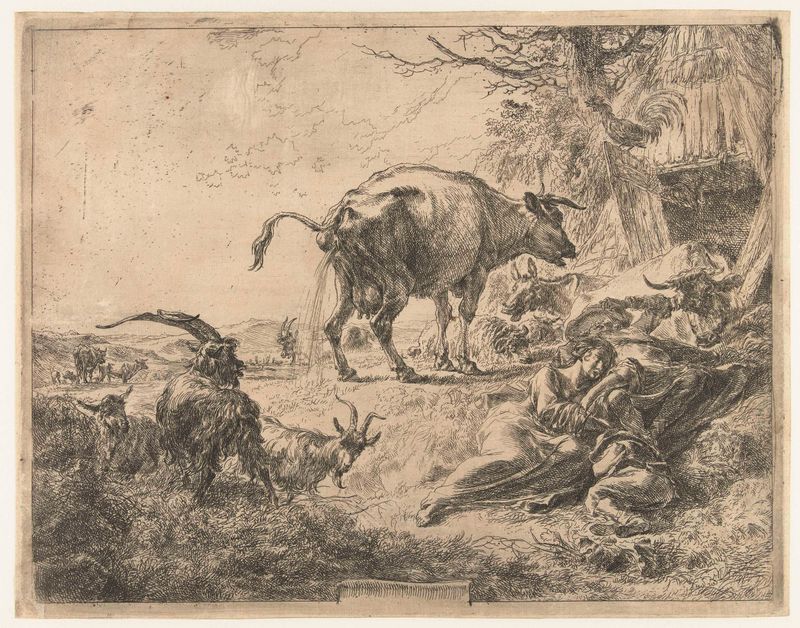
Slapende herdersfamilie en rustend vee
Nicolaes Pietersz Berchem
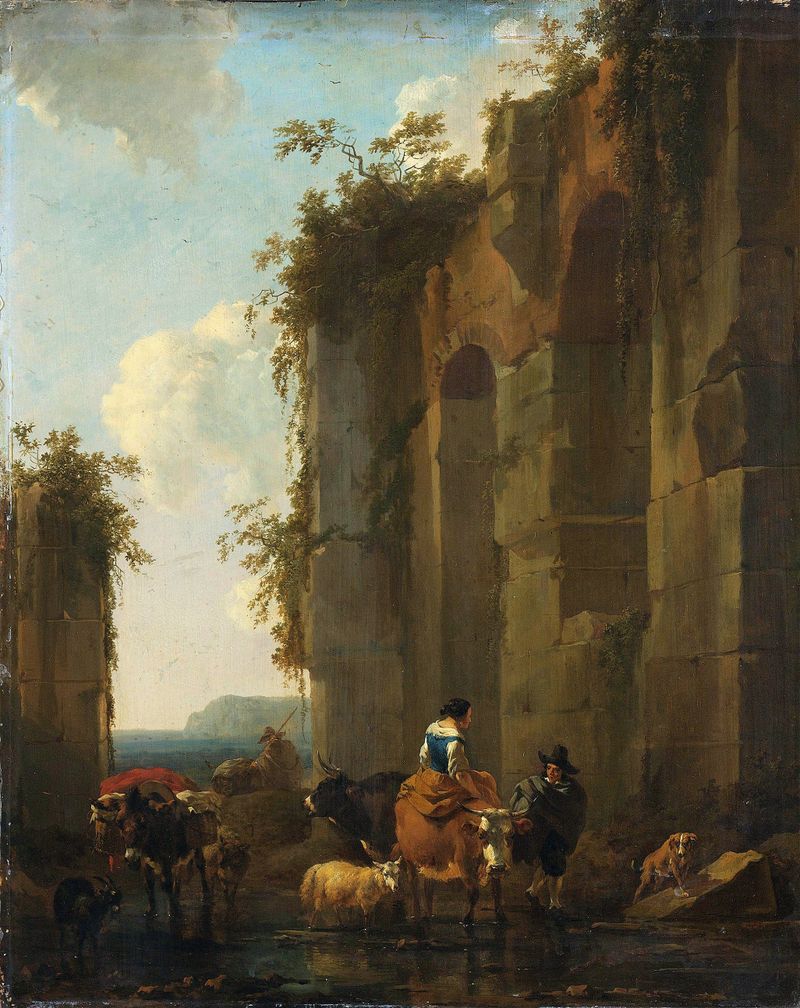
Ruins in Italy
Nicolaes Pietersz Berchem





