
Piccadilly Palaces — History & Facts
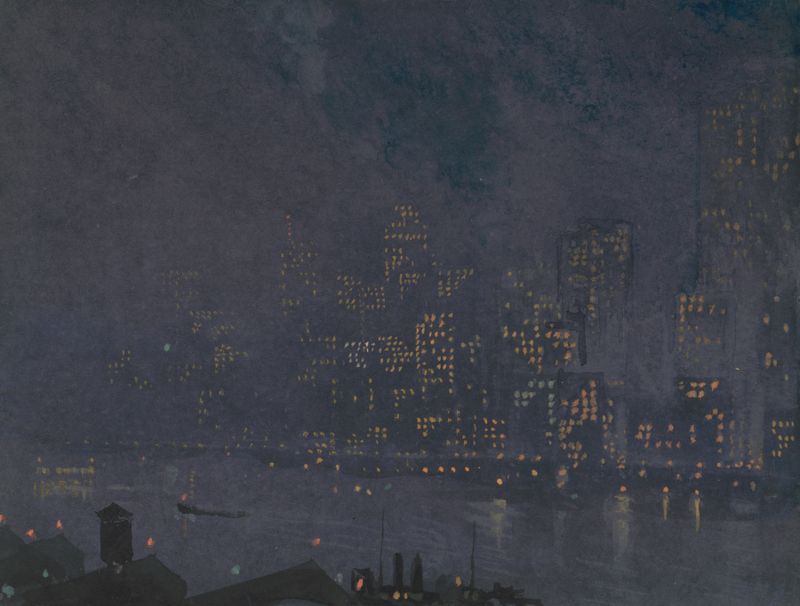
Who listens when art speaks of silence? In Joseph Pennell's Piccadilly Palaces, an unspoken revelation unfolds amidst the urban cacophony, inviting us to ponder the unseen narratives of everyday life. Focus on the majesty of the architectural details that dominate the canvas. Look closely at the elaborate facades, the interplay of shadows, and the subtle gradient of grays that create a moody atmosphere. The thick lines and energetic brushstrokes evoke the pulse of the city, while the ethereal sky looms above, drenched in a wash of soft blues and whites.
This juxtaposition of structure and space invites contemplation of both the grandeur and the isolation that city life can evoke. Yet, beneath the surface lies a profound dialogue between past and present. The intricacy of the buildings suggests a rich history, while the empty streets hint at a world paused, perhaps in reflection or resignation. The tension between the vitality of the city and its moments of stillness reveals layers of emotional complexity.
Pennell captures not just the architecture, but the essence of urban life—a place teeming with stories yet often overlooked in the rush of existence. In 1928, Pennell painted this work during a time of significant change in both his personal life and the broader art scene. Residing in London after a period of travel, he witnessed the transition of the city, grappling with modernity while embracing traditional forms. This artwork stands as a testament to his keen observation of the world around him, merging artistic innovation with a profound understanding of social dynamics.
More Artworks by Joseph Pennell
Browse all →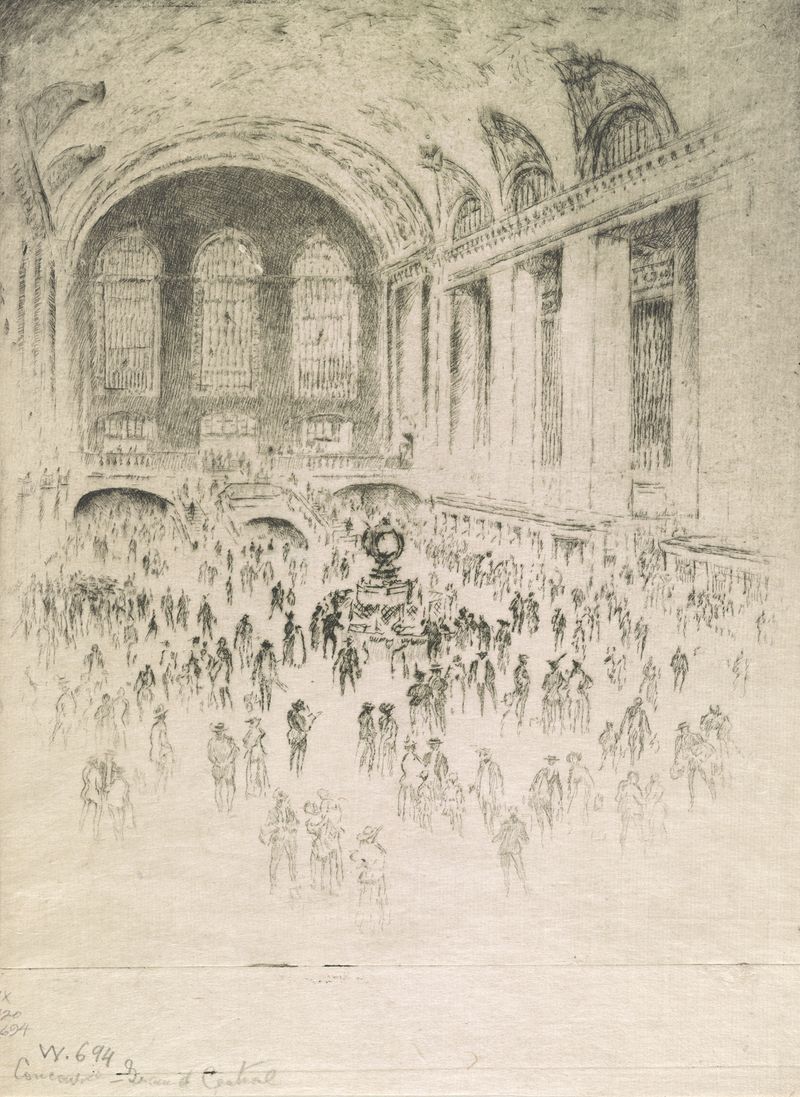
Concourse, Grand Central
Joseph Pennell
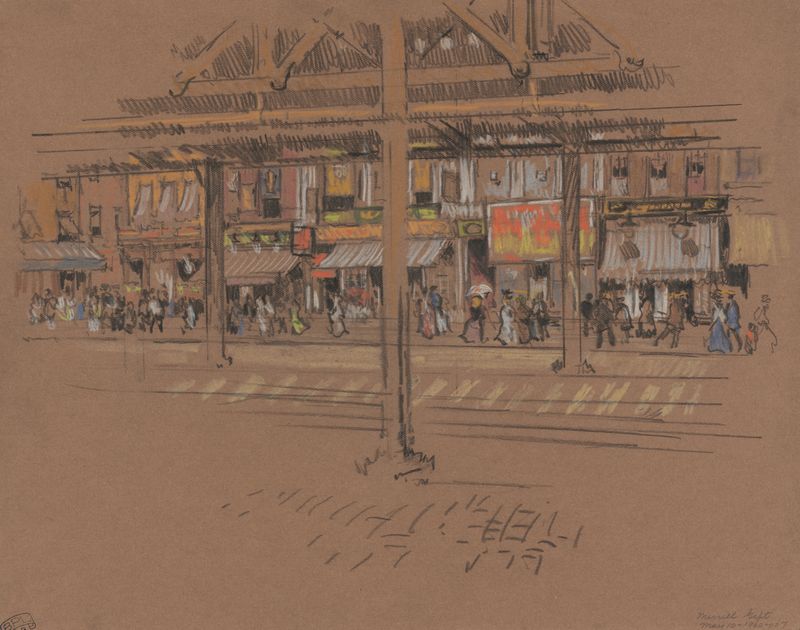
Sixth Avenue
Joseph Pennell
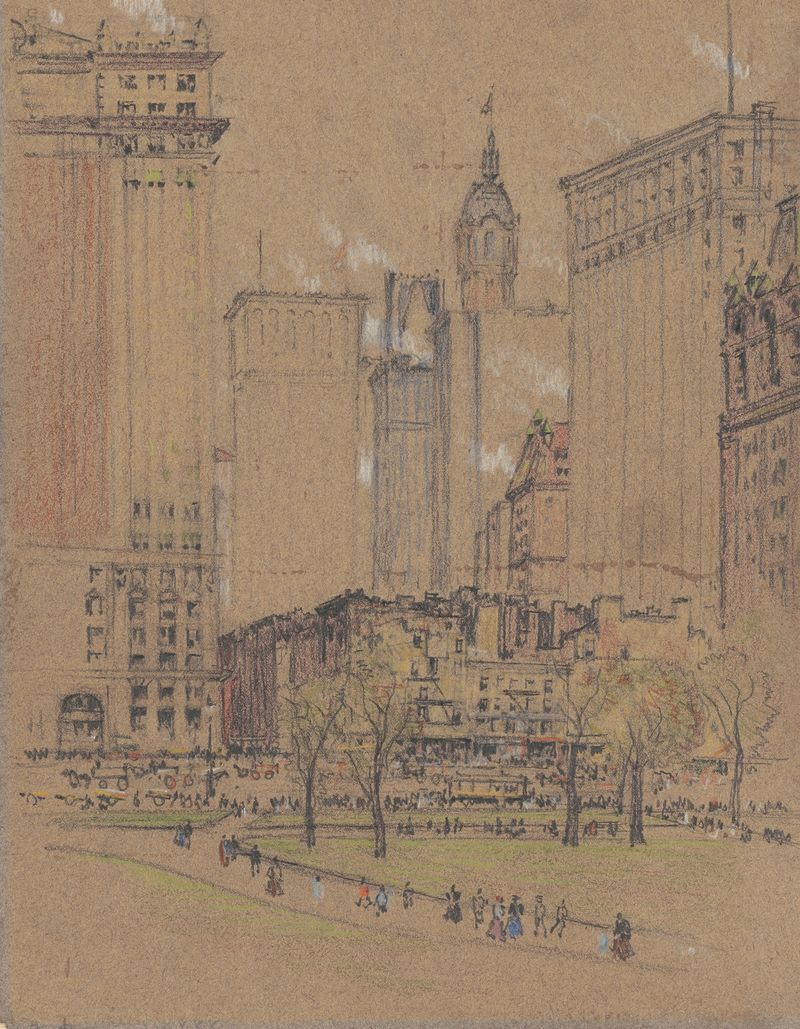
New York,the Old and the New
Joseph Pennell
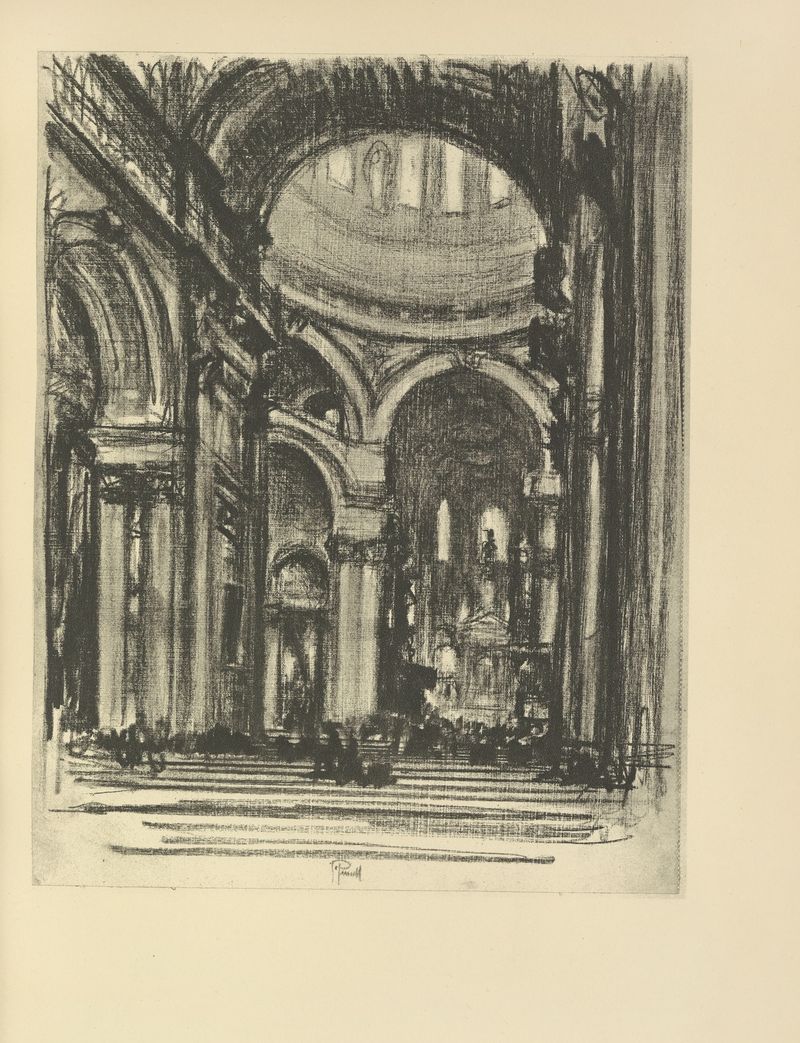
St. Paul’s, The Nave
Joseph Pennell
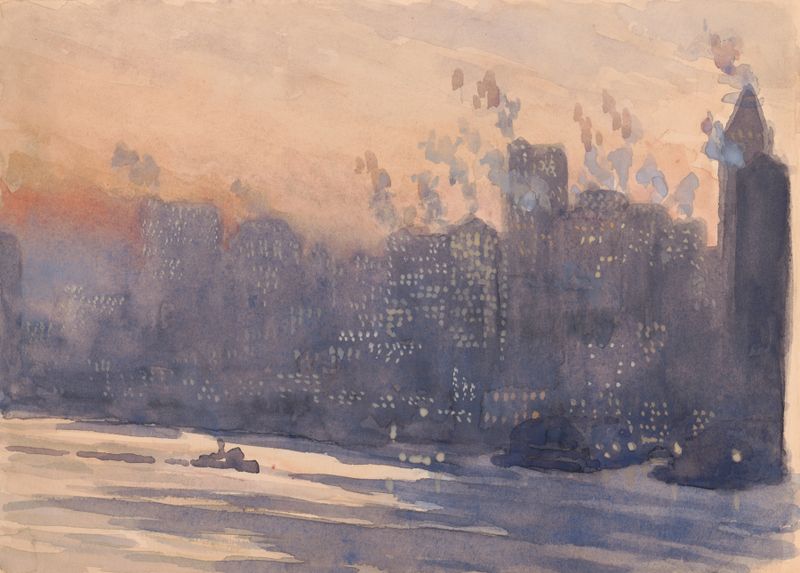
New York City harbor and skyline at night
Joseph Pennell
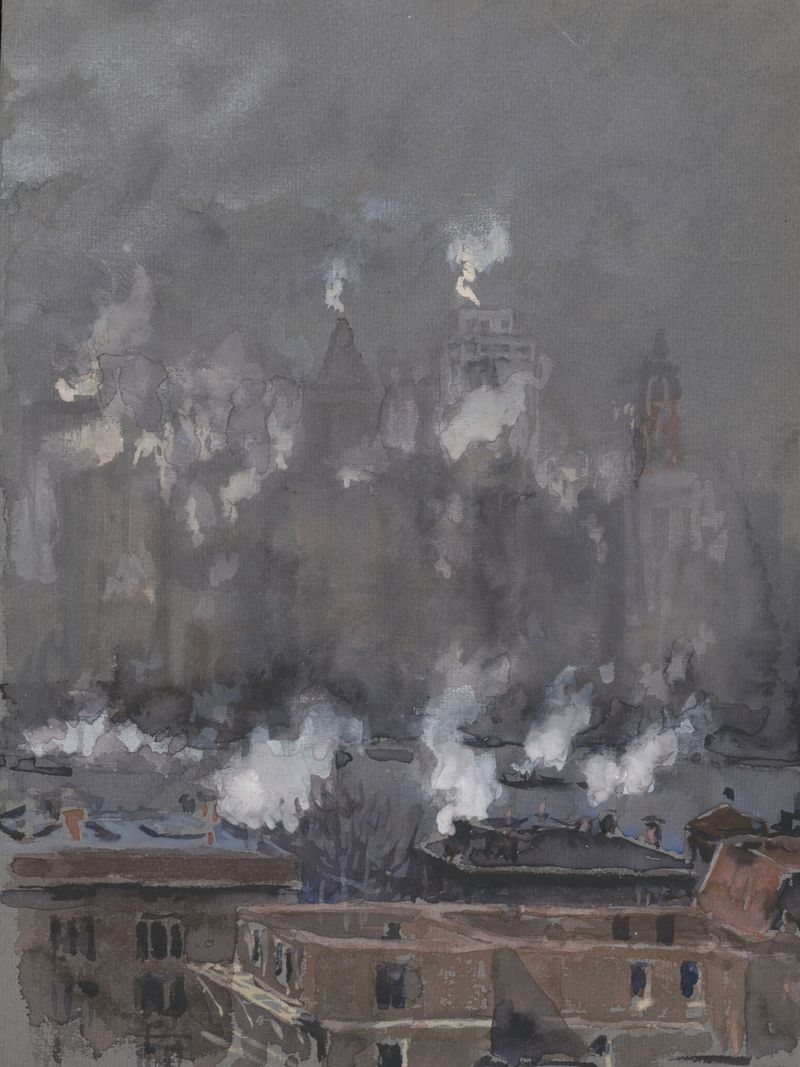
Smoke and fog on gray day, New York City
Joseph Pennell
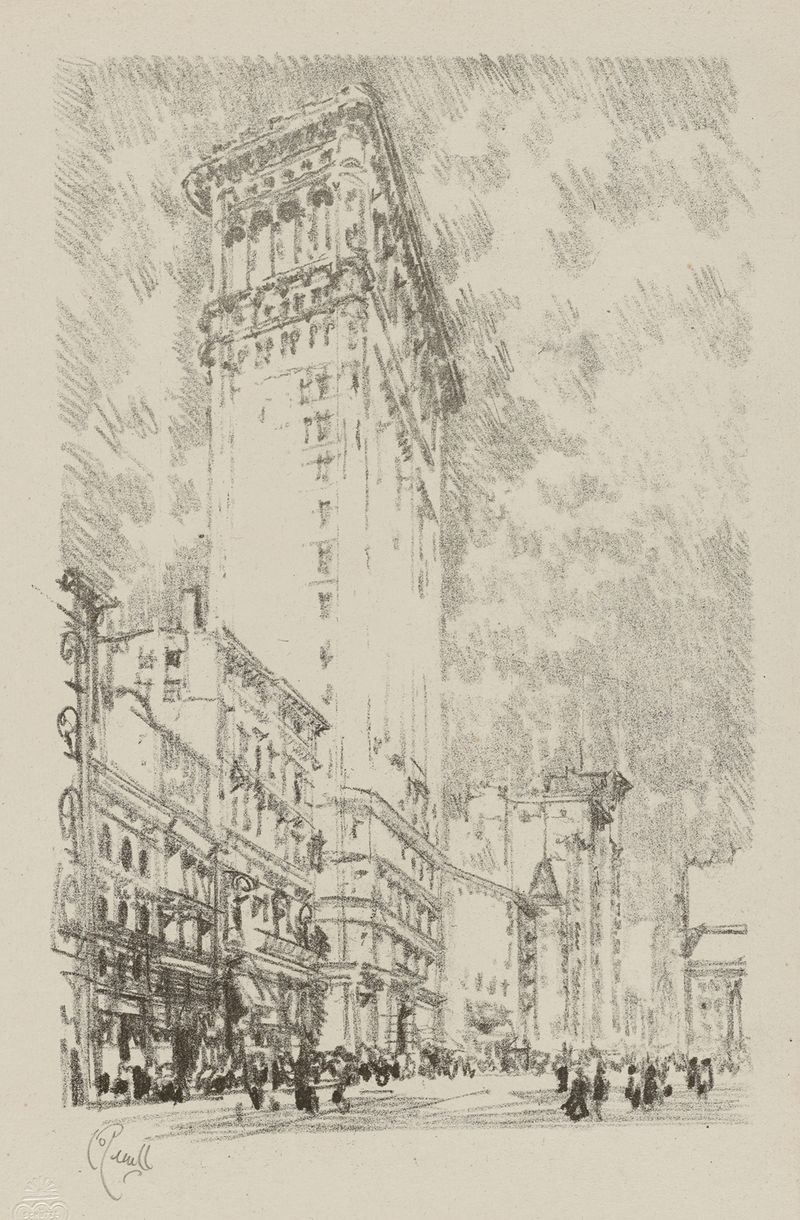
The Flat Iron
Joseph Pennell
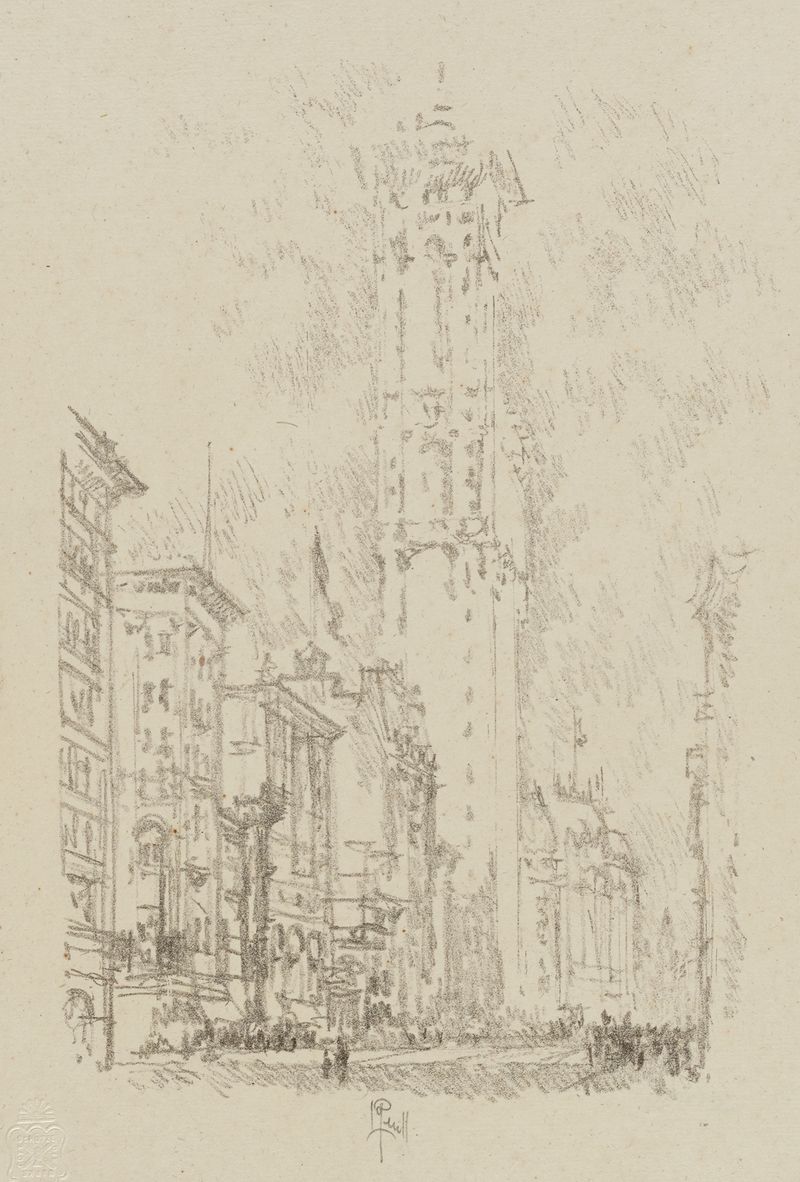
The Times Building
Joseph Pennell
Skyscrapers at night
Joseph Pennell

St. James’ Park
Joseph Pennell
More Architecture Art
Browse all →
The statue of Liberty
Frédéric Auguste Bartholdi

View of Houses in Delft, Known as ‘The Little Street’
Johannes Vermeer

View of Houses in Delft, Known as ‘The Little Street’
Johannes Vermeer

The Cathedral in Rouen. The portal, Grey Weather
Claude Monet

The yellow house
Vincent van Gogh

The Church in Auvers-sur-Oise, View from the Chevet
Vincent van Gogh