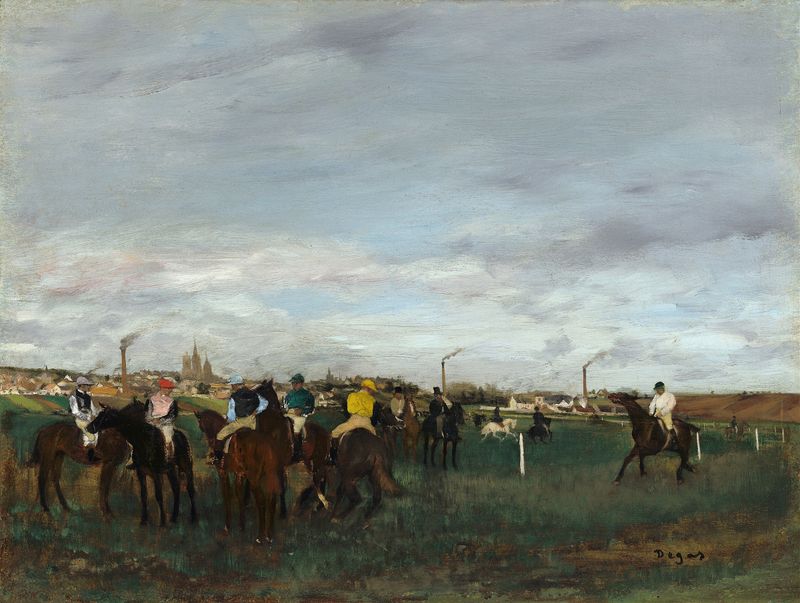
Pissende ooi en een schaap — History & Facts
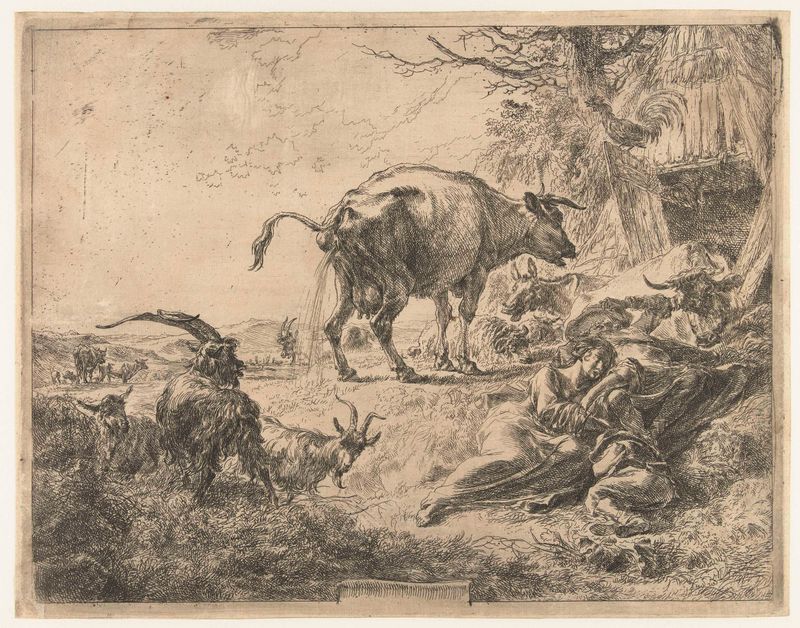
In the muted tones of Pissende ooi en een schaap, a profound stillness envelops the viewer, evoking feelings of introspection and solitude amidst the pastoral chaos. This moment calls forth reflections on the void, the unspoken, and the poignant truths that lie within the simplest of acts. Look to the center of the canvas, where the sheep stands, brilliantly illuminated against a backdrop of muted greens and browns. Notice how the artist plays with light, allowing it to cascade softly over the woolly figure, creating a gentle contrast with the darker shadows around it.
The carefully rendered details of the sheep's fleece emphasize its texture, while the delicate play of the brushwork invites the viewer to linger longer in this serene yet charged scene. Yet, beneath the tranquility, there are layers of meaning to unravel. The choice of depicting an act often considered mundane—nature’s own routine—places an emphasis on life's cycles and the interdependence of existence. The sheep's posture, both vulnerable and serene, speaks to the themes of innocence and solitude in a world that often leans towards chaos, inviting us to consider the deeper connections we share with our environment and the quiet moments that speak volumes. During the years 1646 to 1652, Berchem painted this piece while immersed in the flourishing art scene of the Dutch Golden Age.
His work often celebrated rural life and landscapes, reflecting the growing interest in naturalism and serene pastoral scenes. This was a time of great change and economic growth, where art not only captured the essence of daily life but also delved into deeper existential themes, such as the balance between human presence and the natural world.
More Artworks by Nicolaes Pietersz Berchem
Browse all →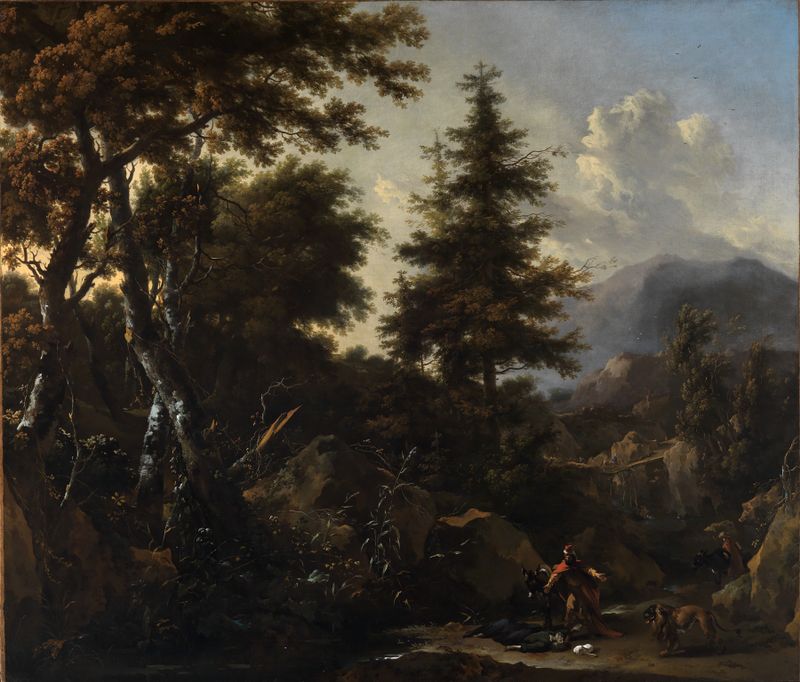
Schlucht im Bergwald mit alttestamentlicher Staffage
Nicolaes Pietersz Berchem
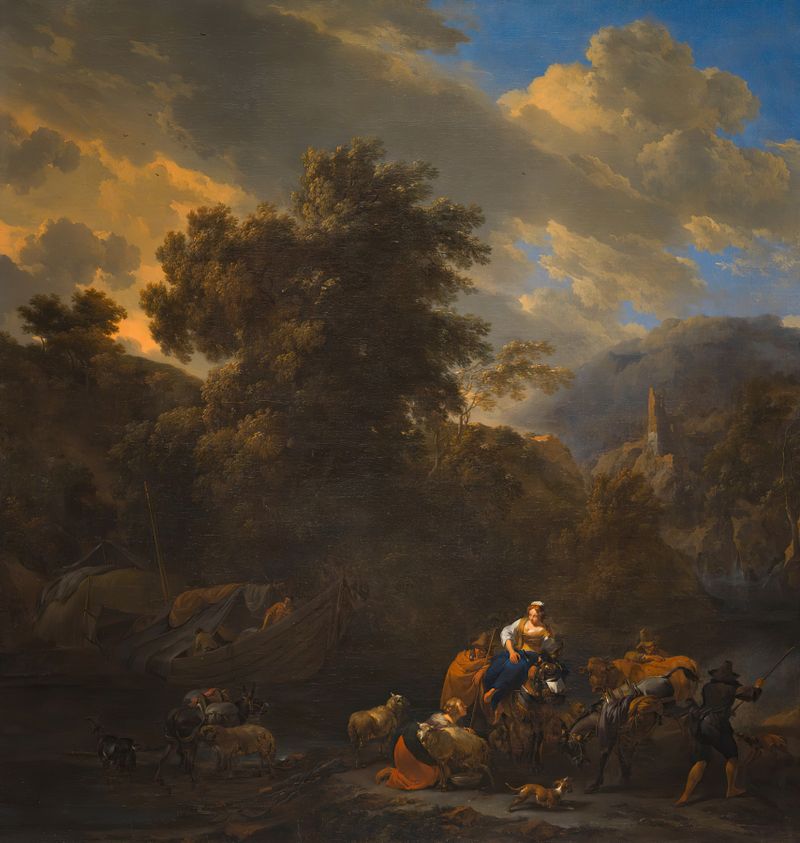
Italianate Landscape with Figures and Pack Animals on the Banks of a River
Nicolaes Pietersz Berchem
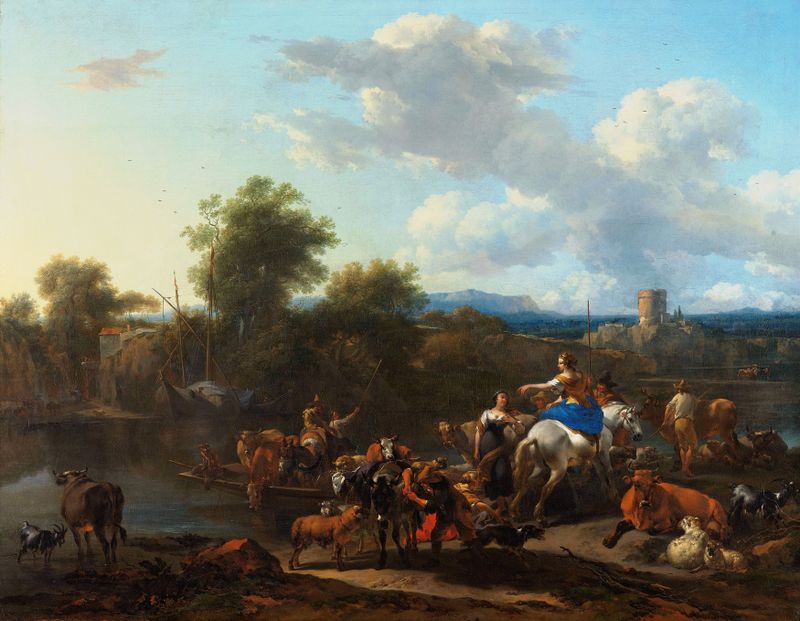
The Cattle Ferry
Nicolaes Pietersz Berchem
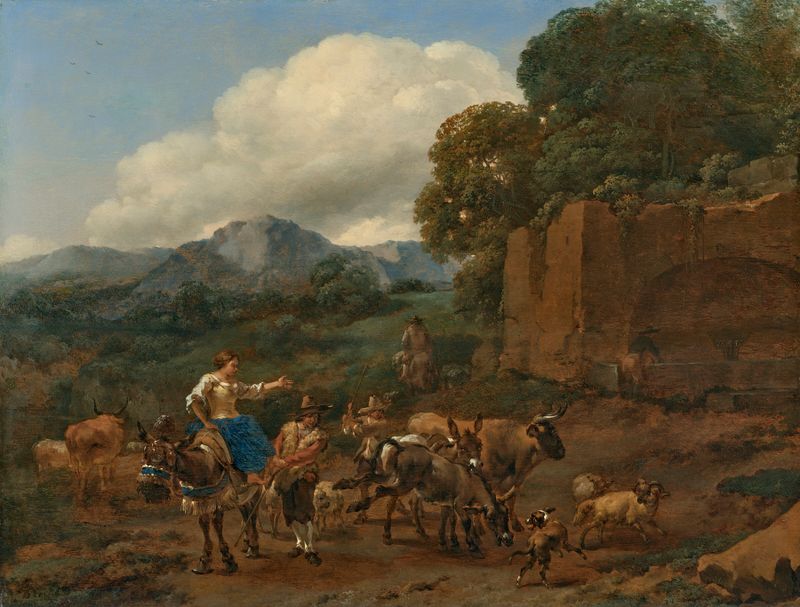
An Italianate landscape with a shepherdess on a mule and a shepherd, herding cattle, sheep, donkeys and dogs on a mountain track next to ruins
Nicolaes Pietersz Berchem
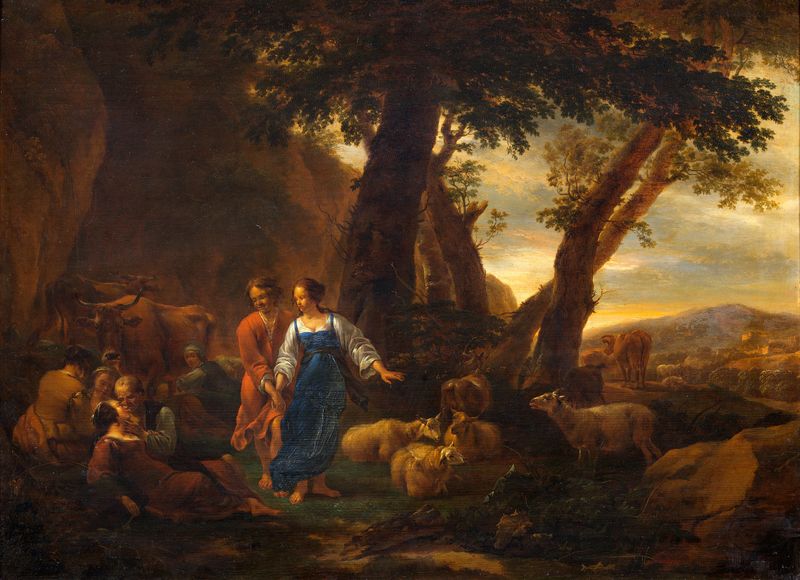
Landscape with Peasants and Cattle
Nicolaes Pietersz Berchem
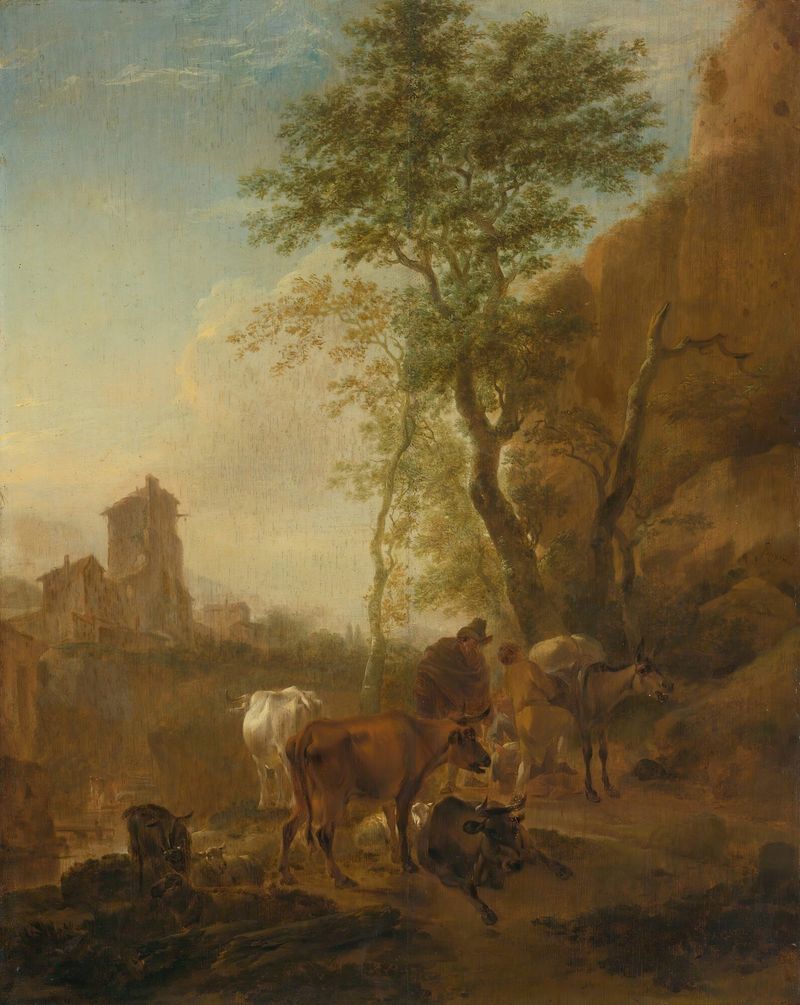
Italianate Landscape With Cows
Nicolaes Pietersz Berchem
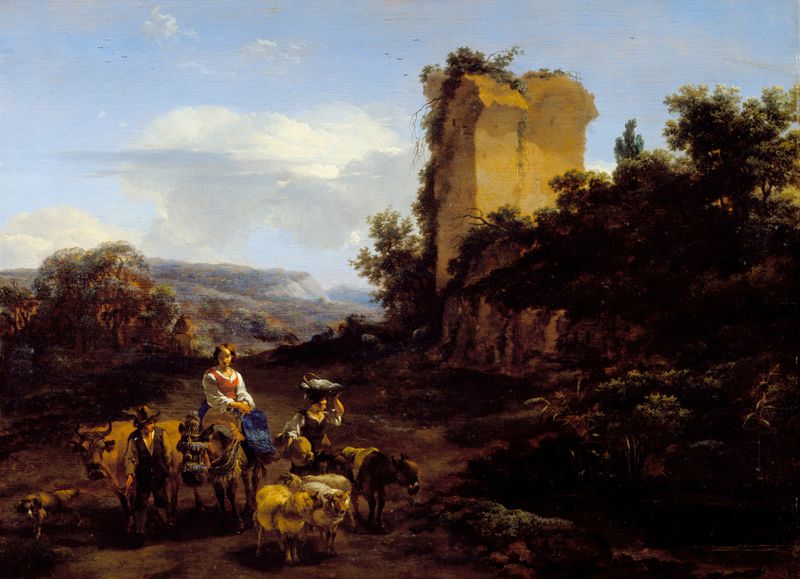
Landscape with Ruins and Travelers
Nicolaes Pietersz Berchem
A Landscape With Figures
Nicolaes Pietersz Berchem
Slapende herdersfamilie en rustend vee
Nicolaes Pietersz Berchem
Ruins in Italy
Nicolaes Pietersz Berchem