
Planter and his Wife, with a Servant — History & Facts
What first catches the eye is the careful choreography of gesture and gaze: a man in a pale suit points assertively into the distance, his attention fixed on the woman beside him, who stands poised, her hand resting lightly on her skirt. Between them and the lush tropical backdrop, a third figure—dressed in a bright red skirt and white headscarf—stands slightly apart, her posture reserved, eyes cast downward. The palette is crisp and sunlit, the whites and pastels of the planter couple’s clothing setting them apart from the earthier tones of the servant’s dress and the landscape.
Every detail, from the woman’s coral jewelry to the man’s polished shoes, signals status and self-possession, while the servant’s modest attire and deferential stance quietly reinforce the social order on display. Painted circa 1780, Planter and his Wife, with a Servant by Agostino Brunias belongs to a genre that flourished in the Caribbean during the height of European colonial rule. Artists like Brunias were often commissioned to create scenes that flattered plantation society, presenting a vision of order, prosperity, and civility amid the exotic landscape. Such works were prized by colonial elites and absentee landowners alike—tokens of ownership and reassurance in a rapidly changing world.
Though the individual histories of many of these paintings have faded, this example, preserved in the collection documented as KwEjZqo3XBfIyw, remains a vivid record of the social hierarchies and aspirations of its era. Look again at the trio: every brushstroke is a negotiation of distance—social, emotional, and geographic.
More Artworks by Agostino Brunias
Indigenous Kalinago of St. Vincent [Aboriginal Caraibs of St. Vincents]
Agostino Brunias
View on the River Roseau, Dominica
Agostino Brunias
Francophone Women of Color and a Young Attendant, Dominica [French Mulatresses of Dominica in their Proper Dress]
Agostino Brunias
View on the River Roseau, Dominica
Agostino Brunias
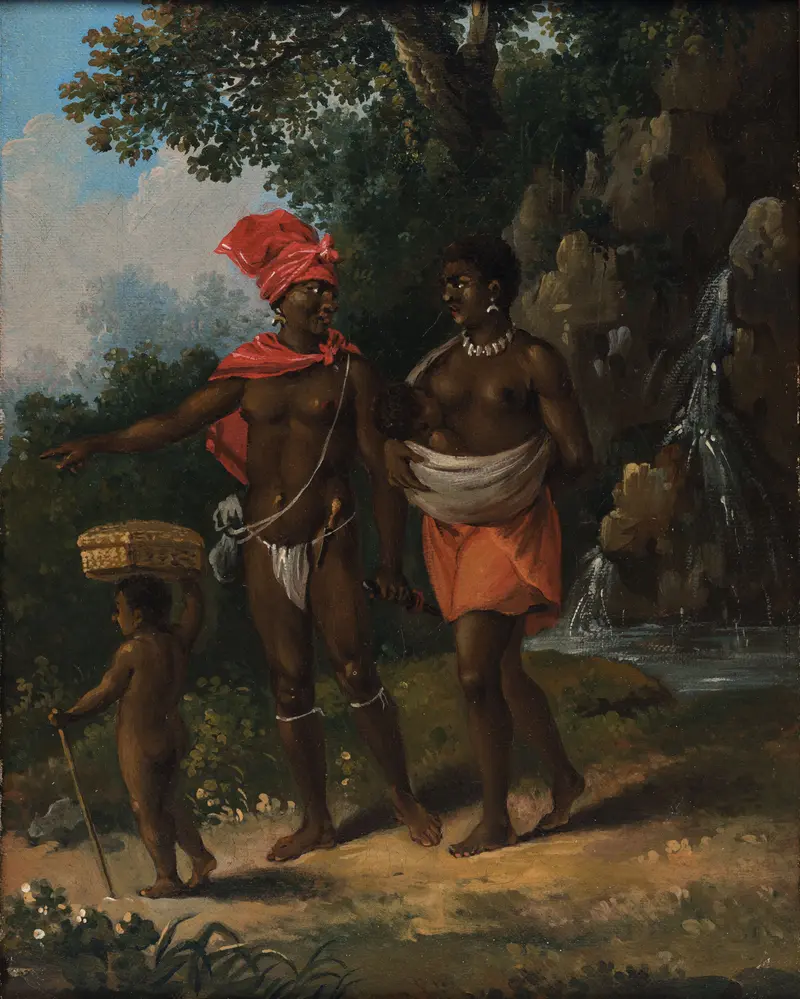
Garifuna Peoples of St. Vincent [Caraibs of St. Vincents]
Agostino Brunias
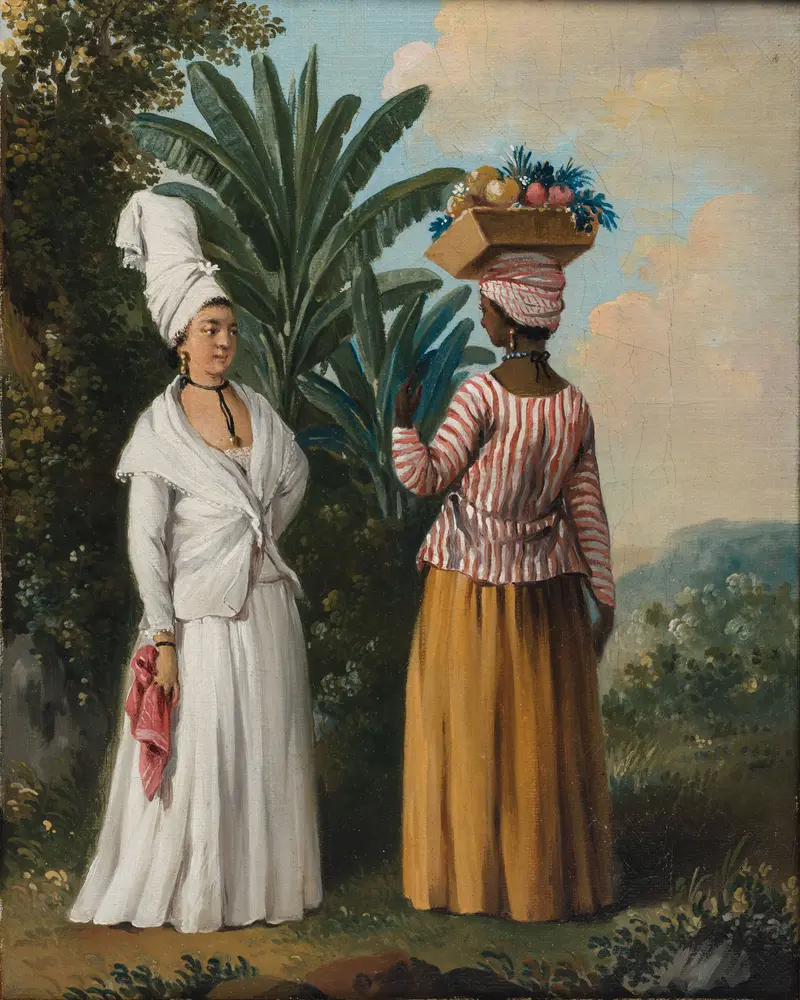
Two Women of Color, Dominica [French Mulatress of Dominica and a Negro Woman in their Proper Dress]
Agostino Brunias

Purchasing Fruit [A French Mulatress Purchasing Fruit from a Negro Wench]
Agostino Brunias

Women of Color Bathing and a Voyeur [Mulatresses and Negro Woman Bathing]
Agostino Brunias
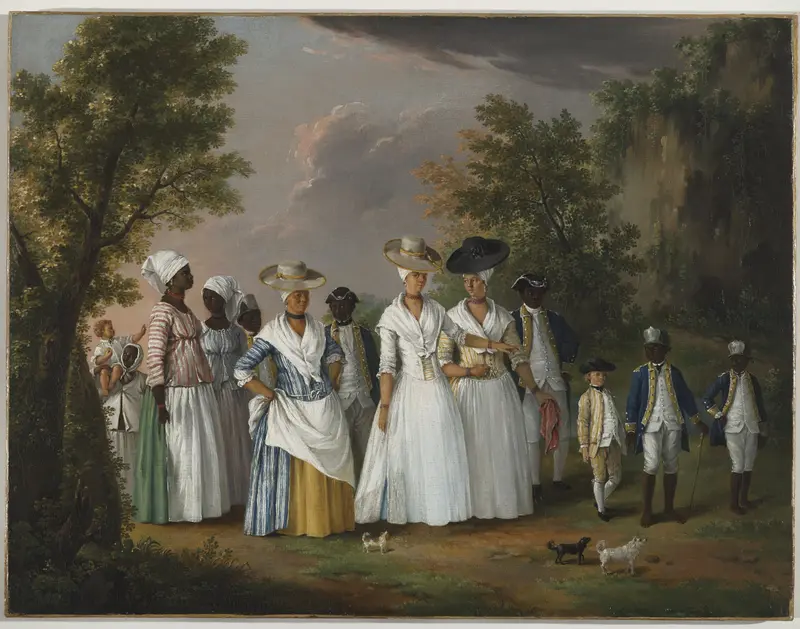
Free Women of Color with their Children and Servants in a Landscape
Agostino Brunias
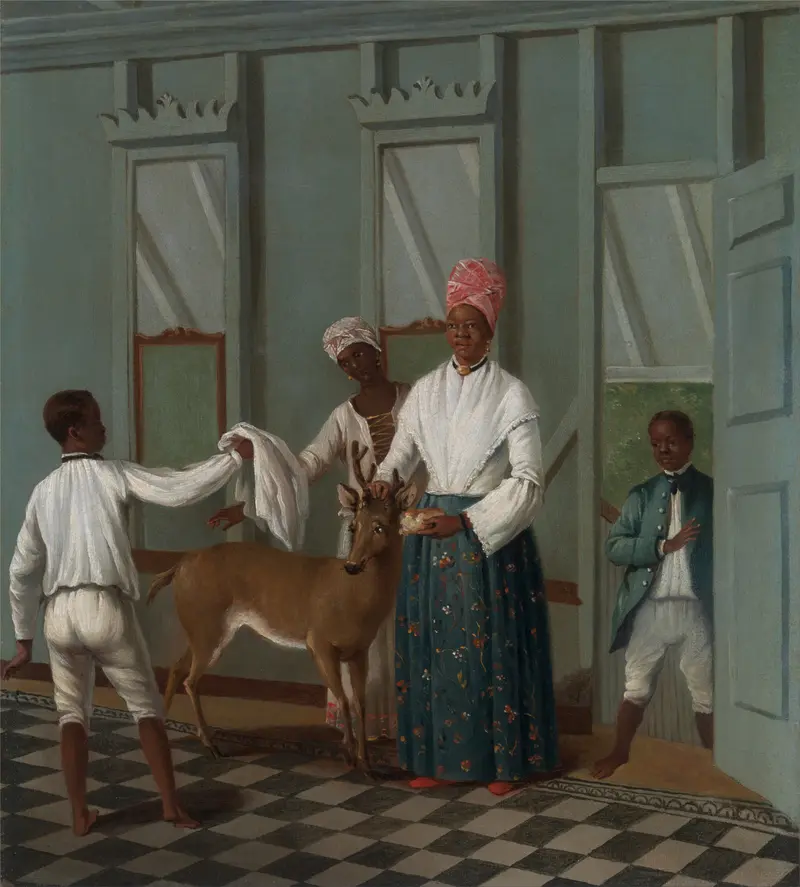
Servants Washing a Deer
Agostino Brunias
More Genre Scene Art

Banquet of the Officers of the St George Civic Guard
Frans Hals

Rembrandt and Saskia in the Scene of the Prodigal Son
Rembrandt van Rijn

Bal du moulin de la Galette
Pierre-Auguste Renoir

Quadrille at the Moulin Rouge
Henri de Toulouse-Lautrec

A Burial at Ornans
Gustave Courbet

When Will You Marry?
Paul Gauguin